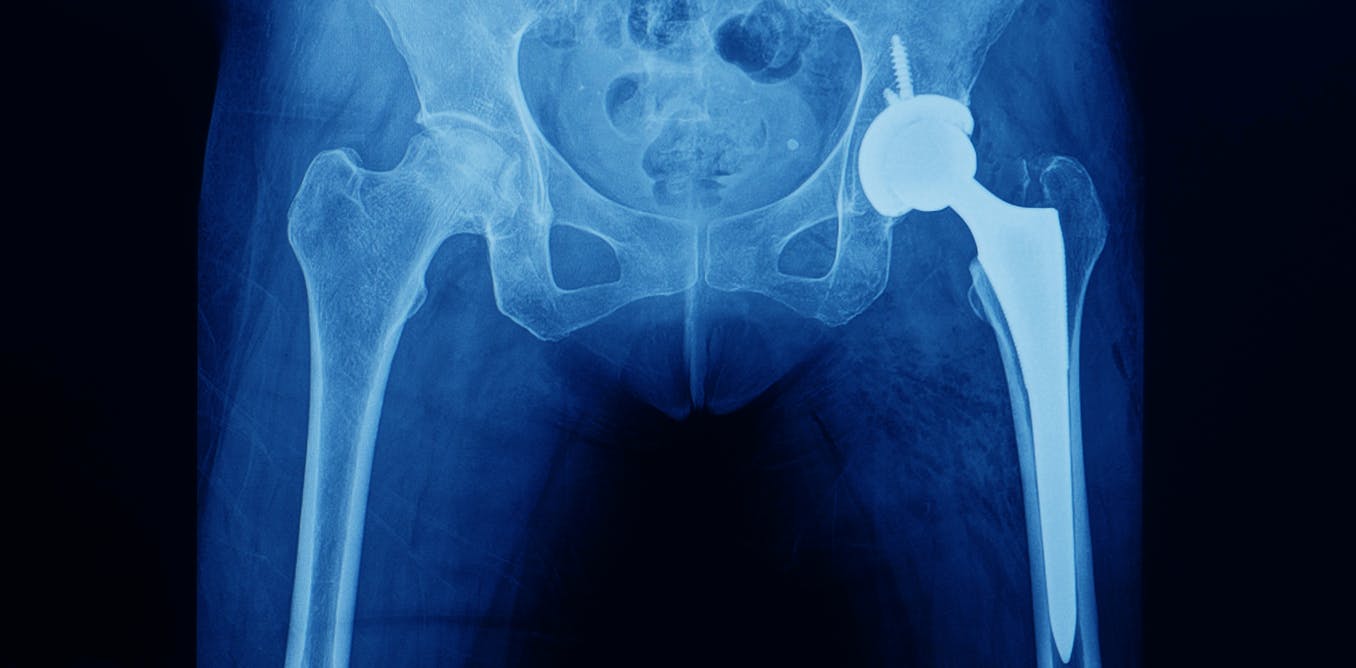
Around 117,000 people living in England and Wales had a hip replacement in 2024. Although hip replacements are often thought of as a surgery that mainly older people need, reports from previous years show that around 43% of these operations are done in people aged 50 to 69 years old.
There are many reasons someone in their 50s might need to have a hip replacement. Having the operation done when necessary – regardless of how young you may be – can help you get back to a pain free, active lifestyle.
Why would someone in their 50s need a hip replacement?
The main reason a person in their 50s would need to have a hip replacement is due to arthritis. Although this condition is more common as people get older, it can still happen in younger people. Take Liam Gallagher, for instance. The 53-year-old underwent hip surgery in 2023 due to arthritis.
Arthritis occurs when the cartilage surrounding a joint begins wearing down over time – leading to pain, stiffness and reduced mobility.
Usually, arthritis of the hip is caused by a problem with the shape of the hip joint. For some this is due to hip dysplasia – a problem with the hip that can be evident at birth, where the joint hasn’t developed properly.
Problems with the hip joint can also emerge as young children grow – a condition known as Perthes’ disease.
The hip joint can become misshapen in teenage years as well, developing a bump where the joint meets the thigh bone. This is called a cam lesion and is a very common cause of early arthritis in men.
The other type of hip damage that can occur in younger people is joint inflammation caused by inflammatory arthritis – though this is less common. Inflammatory arthritis occurs when the body mistakenly attacks the hip joint, leading to symptoms such as pain, stiffness and weakness in the joint.
Although most people with inflammatory arthritis will be prescribed medication to treat it, sometimes symptoms can worsen. In such instances, a hip replacement may be performed to help reduce symptoms.
Are more young people having hip replacements?
Hip arthritis isn’t becoming more common in younger people. However, as hip replacements continue to improve and patient demand changes, surgeons are offering it to patients at a younger age.
The surgery is safe and reliable, so we can treat younger patients with greater confidence of long-term success.
Recent improvements in materials and surgical techniques also means a modern hip replacement can last for at least 20 to 30 years in patients – meaning many years of pain relief and mobility.
Is it better to have a hip replacement when you’re younger?
The right time to have surgery depends less on your age and more on your general health – considering the amount of pain and disability your hip is causing. You need to carefully weigh the benefits and risks of surgery against the problems arthritis causes for your life.
Younger patients don’t necessarily have a faster recovery or achieve better outcomes than older patients. It depends, in part, on why they needed surgery.
Younger patients can also have different expectations of what they’ll be able to do with their hip replacement. For example, some may want to get back to high levels of physical activity that just might not be possible. Although a hip replacement can improve mobility and reduce pain, it can’t give you back the joints you had when you were a teen.

Photoroyalty/ Shutterstock
It’s true as well that joint replacements don’t tend to last as long in younger patients compared to older patients. This is partly because young people are generally more active – and also because they simply have longer to live and more time to wear out the implant.
Does the surgery differ in younger patients?
In principle, hip replacement surgery is the same operation no matter your age. But there are some slight variations.
In patients aged 70 and older, the prosthesis components are usually glued to fix them to the bone, commonly called a cemented hip. The moving parts are typically made of metal and plastic.
But in younger people, the surgeon may use implants that rely on bone growing onto the surface to fix the replacement joint in place – commonly called a cementless (or uncemented) hip. The moving part of the joint will also be separate to the part that fixes onto the bone. This means they can easily be changed if they become very worn over the years without having to change the whole joint replacement.
In younger people, the moving parts may also be made of different materials – such as ceramic, as it’s more hard-wearing than metal.
How have hip replacements changed over the years?
The biggest advance in joint replacement materials came about with the development of very hard-wearing plastics and ceramics about 15 to 20 years ago.
These have transformed the life expectancy of a joint replacement which means that the majority of modern replacements now last decades. This is quite a different expectation to hip replacement surgery done in the 1980s or 1990s, which only lasted around ten years.
Could new therapies reduce the need for hip replacements someday?
New surgical techniques and therapies are being explored to see whether they may improve hip replacement outcomes.
For instance, a clinical trial is currently underway to understand whether robotic-assisted surgery leads to better hip replacement outcomes compared to conventional surgery techniques.
The use of 3D printing also appears to be promising. This technology allows for complicated implant shapes to be made. This would be beneficial in rare instances where a standard prosthesis wouldn’t fit properly.
Stem cell therapy may hold promise too. This therapy could reduce or eliminate the need for joint replacement entirely by treating arthritis itself. However, we don’t yet have clear clinical evidence showing this treatment works. It will still be years before researchers know if it’s a safe and reliable therapy for arthritis.
Hip replacement surgery is very safe and effective and current implants should last several decades. While new technologies and treatments are emerging, the bar is set very high to achieve better outcomes than conventional hip replacement surgery.

Mark Wilkinson receives funding from Arthritis UK, Medical Research Council, UKRI, and the Health Quality Improvement Partnership.