The healthcare system funding surge, weak outcomes, and required urgent accountability
Strikes, deteriorating facilities, and rising patient costs
Nigeria’s health system is strained by recurring strikes and poor facility conditions, with patients reporting high fees despite under‑equipped, unhygienic clinics and overstretched emergency services. Health unions cite unpaid salaries, stalled allowances, and decaying infrastructure, as wealthier Nigerians increasingly turn to private care or medical travel Vanguard News.
Sources: Vanguard roundup of 2025 budgets and sector conditions Vanguard News.
World Bank financing approved in 2025
In October 2025, the World Bank approved two major projects: $250 million for the Health Security Program in Western and Central Africa, Nigeria – Phase II (HeSP Nigeria), and $500 million for the Building Resilient Digital Infrastructure for Growth (BRIDGE) project, aimed at broadband expansion with indirect health benefits. See the World Bank press release and overview for details: World Bank press release World Bank Group; news summaries in Guardian Nigeria The Guardian Nigeria News and BusinessDay BusinessDay News.
Additional detail: BRIDGE disbursement is set in six tranches between 2026–2031, tied to performance milestones, per Guardian Nigeria’s disbursement report and TechCabal’s analysis The Guardian Nigeria News TechCabal.
Other World Bank projects and timelines in 2025
Beyond HeSP Nigeria and BRIDGE, documents and coverage indicate an expected $2.2 billion across six projects in 2025, including: $500 million Community Action for Resilience and Economic Stimulus (CARES), $552 million HOPE for Quality Basic Education for All, $800 million Accelerating Nutrition Results in Nigeria 2.0, $300 million Solutions for Internally Displaced and Host Communities, $300 million Health Security Program, and $500 million BRIDGE. See Vanguard and BusinessDay Vanguard News BusinessDay News.
IMF engagement and macro support
The IMF’s 2025 Article IV Consultation documents macroeconomic support and reform guidance; healthcare‑specific disbursement details should be verified through official IMF portals. See the IMF’s Article IV materials: IMF country report and a summary press item IMF imf-fmi.africa-newsroom.com.
WHO and partner health support
Recent targeted health support includes a $500,000 cholera response package from Japan and WHO—commodities, equipment, surveillance tools, and training delivered via NCDC—documented in Punch and WHO reporting dashboards for Nigeria’s 2024–2025 program cycle The Punch WHO. Broader reform dialogue noted endorsements of Nigeria’s sector‑wide approach (SWAp) by the World Bank and WHO during the Annual Meetings; see Nairametrics Nairametrics.
The following is a structured table showing these recent funds…
| Funding Source | Project / Allocation | Amount | Date Approved | Purpose / Notes |
|---|---|---|---|---|
| World Bank | Health Security Program (HeSP Nigeria) – Phase II | $250 million | Oct 2025 | Strengthen health security systems in Western & Central Africa (Nigeria focus) |
| World Bank | Building Resilient Digital Infrastructure for Growth (BRIDGE) | $500 million | Oct 2025 | Expand broadband/digital infrastructure; indirect health benefits |
| World Bank | Six‑project pipeline (CARES, HOPE Education, Nutrition 2.0, IDP Solutions, Health Security, BRIDGE) | $2.2 billion (total) | 2025 | Multi‑sector support including health, education, nutrition, and infrastructure |
| IMF | Macro‑financial assistance (Article IV Consultation, 2025) | Amount varies | 2025 | Broader fiscal support; healthcare‑specific disbursements available on IMF site |
| WHO / Japan | Cholera response package | $500,000 | 2025 | Commodities, surveillance tools, training, delivered via NCDC |
| Federal Government of Nigeria | 2025 Health Budget Allocation | ₦2.48 trillion (~5.18% of ₦47.9 trillion budget) | Dec 2024 (for 2025 fiscal year) | ₦402bn for infrastructure; ₦282.65bn for BHCPF; below Abuja Declaration 15% target |
Federal health budget allocation in 2025
Nigeria’s 2025 federal budget allocates approximately ₦2.48 trillion to health—about 5.18% of the ₦47.9 trillion budget—including ₦402 billion for infrastructure and ₦282.65 billion for the Basic Health Care Provision Fund (BHCPF). See detailed breakdowns and analyses: Science Nigeria, ICIR Nigeria, and sector coverage of federal and state allocations in Vanguard sciencenigeria.com The ICIR Vanguard News.
Further budget context: dRPC and NISER briefs provide allocation and implementation insights: dRPC budget analysis PDF and NISER brief PDF dRPC niser.gov.ng.
Why isn’t funding translating into better care?
Despite annual inflows—from domestic allocations to multilateral loans—patients and frontline workers report persistent gaps: delayed salaries, supply shortages, and failing infrastructure. Analysts and officials have acknowledged chronic underinvestment, governance weaknesses, and fragmented accountability; the Health Minister has argued for shifting from aid dependence toward domestic investment and measurable delivery gains Vanguard News The Guardian Nigeria Premium Times.
Commentary and sector snapshots: Guardian Nigeria and [Premium Times coverage and dialogue reports](https://www.premiumtimesng.com/health/health-news/839121-minister-highlights-challenges-progress-solutions-in-nigerias-health-sector.html; https://www.premiumtimesng.com/health/health-news/839143-nigerian-govt-recommits-to-innovation-improved-funding-to-ensure-better-health-service-delivery.html) The Guardian Nigeria Premium Times Premium Times.
Accountability and next steps
Given the scale of financing, stakeholders are calling for transparent, public dashboards linking allocations to outcomes, strict procurement oversight, and performance‑tied disbursements—in line with BRIDGE’s milestone‑based release schedule—to ensure funds reach facilities and the workforce. The core question persists: with multi‑billion‑naira budgets and fresh international financing, why are clinics still unsafe, equipment outdated, and emergency services inconsistent The Guardian Nigeria News TechCabal sciencenigeria.com The ICIR?
Key references
- World Bank press release on BRIDGE and HeSP Nigeria: https://www.worldbank.org/en/news/press-release/2025/10/07/world-bank-approves-new-financing-to-enhance-nigeria-digital-infrastructure-and-health-security World Bank Group
- BRIDGE disbursement conditions and schedule: TechCabal and Guardian Nigeria TechCabal The Guardian Nigeria News
- World Bank 2025 pipeline ($2.2bn across six projects): Vanguard, BusinessDay Vanguard News BusinessDay News
- IMF Article IV (2025): https://www.imf.org/…/nigeria-2025-article-iv-consultation-press-release-staff-report-and-statement-by-the-568220 IMF
- WHO/Japan cholera support: Punch; WHO Nigeria results portal The Punch WHO
- Federal health allocation (2025) and breakdowns: Science Nigeria; ICIR; Vanguard; dRPC; NISER sciencenigeria.com The ICIR Vanguard News dRPC niser.gov.ng
- Policy context and ministerial remarks: Guardian Nigeria; Premium Times The Guardian Nigeria Premium Times Premium Times
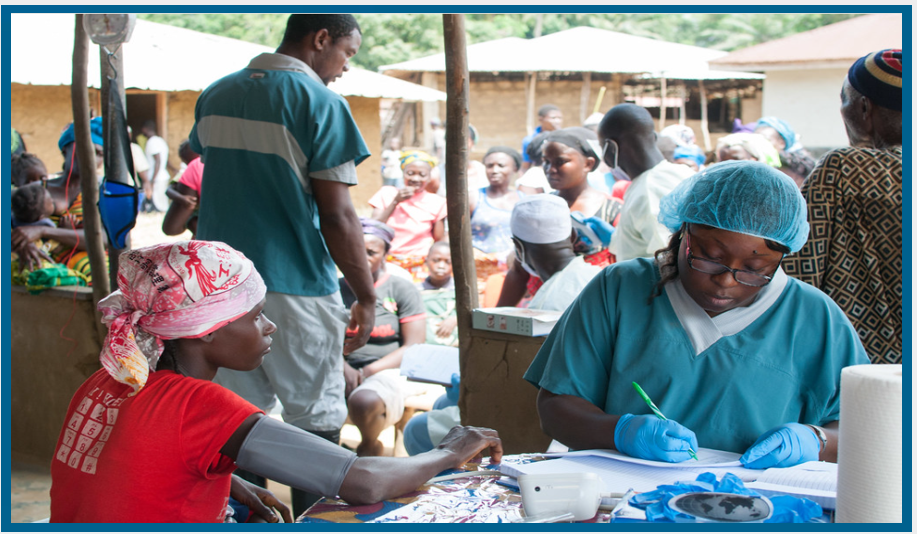
Image: IOM Mobile Clinic Picture on Flickr by UNMEER