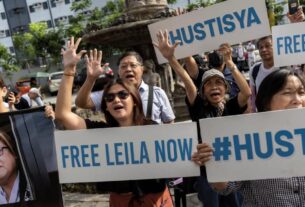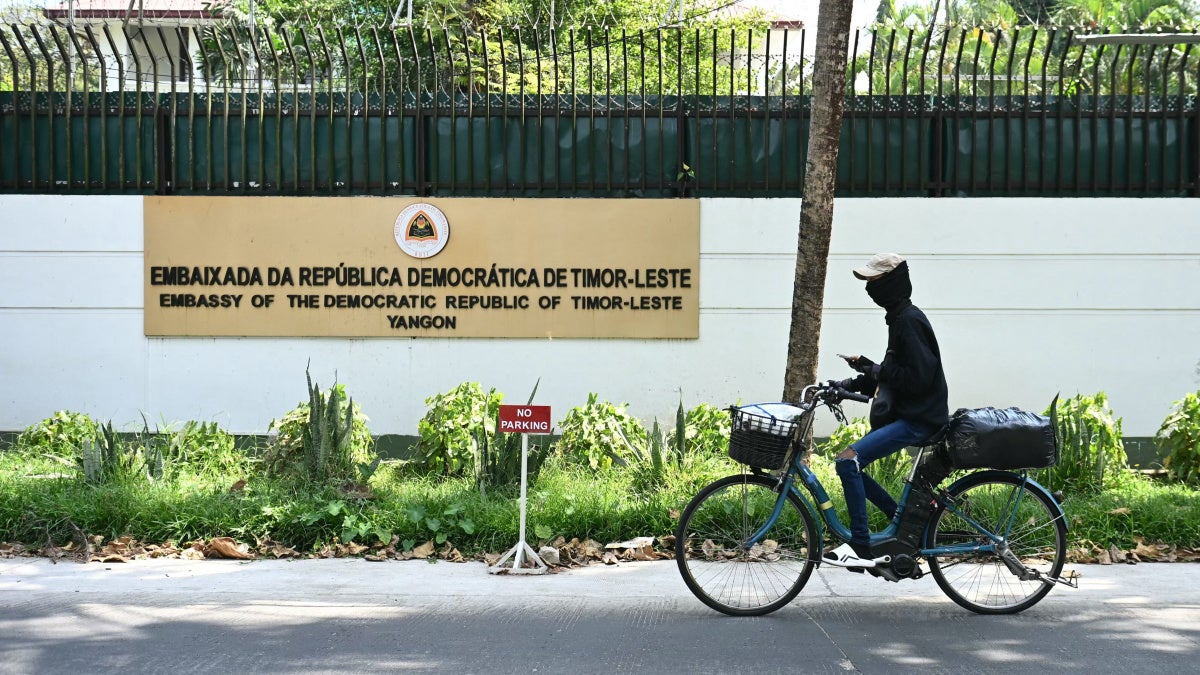
On February 13, Myanmar’s military junta ordered the head of Timor-Leste’s embassy in Yangon to leave the country within seven days. The expulsion comes after Timorese authorities opened legal proceedings against Myanmar junta officials earlier this month for alleged war crimes and crimes against humanity.
The case, filed by the Chin Human Rights Organisation in January, accuses 10 members of Myanmar’s junta, including commander in chief, Senior Gen. Min Aung Hlaing, of killings, rape, indiscriminate attacks, and other grave crimes. The case was brought under the principle of universal jurisdiction, which allows states to investigate and prosecute those responsible for grave international crimes regardless of where they were committed or the nationality of the victims and suspects.
Last October, Timor-Leste joined the Association of Southeast Asian Nations (ASEAN), a regional bloc that includes Myanmar, as its first new member in over 25 years. President Jose Ramos-Horta made clear before joining ASEAN that his government supports the people of Myanmar’s struggle to end military abuses. Given its own history, Timor-Leste has also long supported international justice including by joining the International Criminal Court (ICC) in 2002.
The United Nations, Human Rights Watch, and others have documented the Myanmar junta’s escalating war crimes and crimes against humanity since the 2021 military coup. The military’s atrocities have been fueled by decades of impunityand insufficient global efforts to end its violations and hold perpetrators to account.
The Timor-Leste case sends a powerful message of regional solidarity for victims of Myanmar military atrocities. Justice efforts underway at the International Court of Justice (ICJ) and the ICC are vital, but they are limited to crimes committed before the coup. Universal jurisdiction is one of the few avenues to hold the military accountable for post-coup atrocities as well.
ASEAN’s response to the crisis remains feeble. While the junta has violated the ASEAN five-point consensus it committed to in 2021 and the binding ASEAN Charter, which enshrines the principles of democracy, rule of law, and human rights, the bloc has been divided between governments trying to enforce the ASEAN obligations and those unwilling to do so.
ASEAN countries have rarely, if ever, sought to promote accountability by prosecuting officials from other states in the region. ASEAN should support Timor-Leste’s willingness to hold those responsible for military atrocities in Myanmar to account.