The UK has added chickenpox to the routine childhood vaccination schedule for the first time, using a combined MMRV jab that also protects against measles, mumps and rubella. Here’s what parents need to know.
What is the new chickenpox vaccine?
The first thing to say is that the MMRV vaccine is not actually new. It’s been safely used in other countries (including the US, Australia and Germany) for decades, and has been available privately in the UK for some years. This year, MMRV is being introduced into the UK childhood vaccination schedule and will be available free of charge through the NHS.
The MMRV vaccine protects against four different viruses. For decades in the UK, the MMR vaccines have been used to safely protect children against a trio of particularly horrible infections: measles, mumps and rubella. The MMRV vaccine has one extra component, which protects children against the varicella zoster virus (VZV).
VZV might sound unfamiliar, but it causes some very familiar diseases. If you have ever had chickenpox, that was the point at which you caught VZV. Chickenpox is a short illness, but VZV is incurable – the virus will remain hiding in your nervous system for the rest of your life. In about one-third of people, it will eventually reactivate, causing a large, painful patch of infected skin known as shingles.
Recent research has shown that VZV reactivations also increase the risk of dementia in older adults.
Is the vaccine safe?
The MMRV vaccine has been used safely for decades. Like all vaccines, it was only approved for use because any risks from getting the vaccine are much less than the risks from having an infection.
How will the vaccine be given?
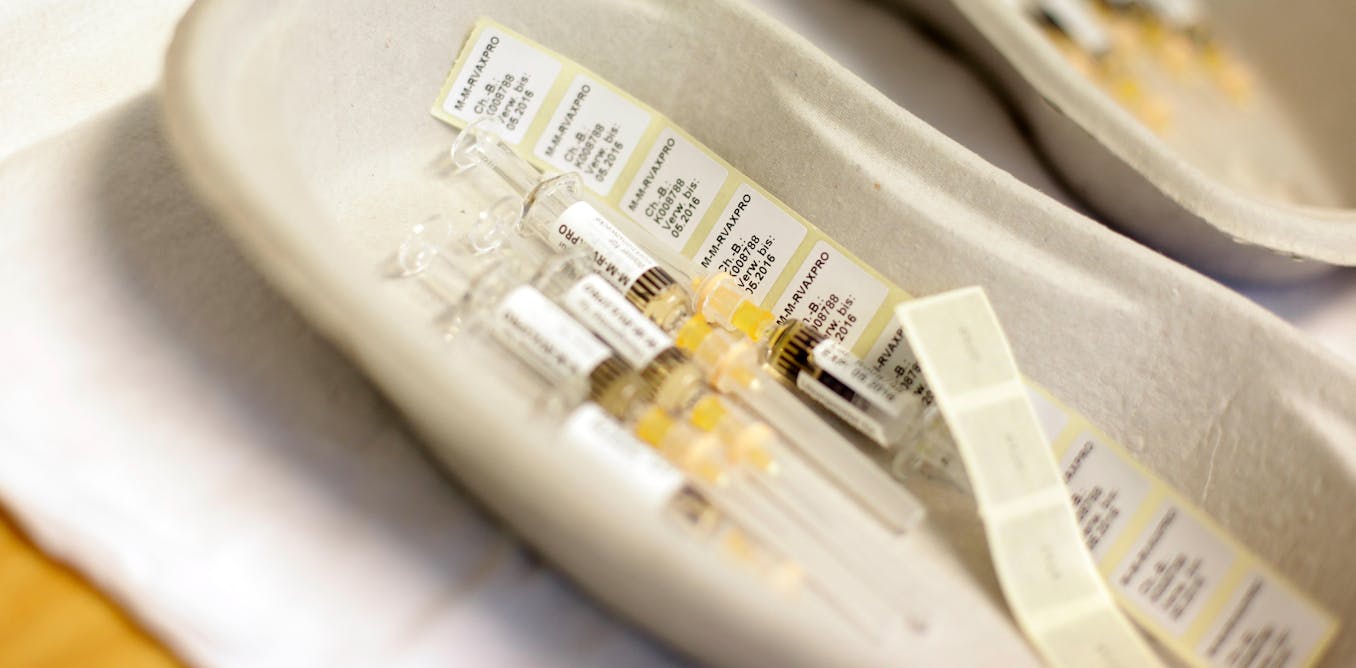
The MMRV vaccine is given as an injection in the upper arm or thigh. Typically, two doses are required for full protection. The NHS provides details of the vaccination.
When will children receive it?
In the future, children will be offered the vaccine alongside other childhood vaccines at 12 and 18 months. If your child was born before January 1, 2026 different timings may apply.
What if my child has already had chickenpox?
Children over six years are already likely to have caught chickenpox. You can’t normally catch VZV twice, so they will not normally be offered the new vaccine. If your child is over six but hasn’t had chickenpox, you may wish to consider getting the vaccine privately.
Why is the NHS introducing a chickenpox vaccine now?
The UK waited longer than many countries to introduce chickenpox vaccination, partly because of debates about the cost, and partly because it was unclear how long-lasting the protection would be.
Data from the US, where the vaccine has been used since the mid-1990s, now shows that the vaccine does provide robust, long-lasting protection.
There were also arguments about shingles. If you are infected with VZV, your immunity against the virus is boosted each time you encounter someone with chickenpox, and this can help unvaccinated people prevent VZV reactivations. The fact that there is now a shingles vaccine means that this is less of a problem than it used to be.
Is chickenpox really a serious illness?
Most cases of chickenpox are uncomfortable but resolve without severe illness, though some scarring is common. In rare cases, though, chickenpox can progress to cause very severe disease involving the lungs or brain, which can cause lifelong effects or even be fatal.
Even if chickenpox itself proves to be merely unpleasant – which in itself is worth protecting against – the fact that VZV is incurable and can cause serious diseases such as shingles and dementia in later life makes the chickenpox vaccine worth taking.
If you already had chickenpox – and if you are an adult who didn’t have the chickenpox vaccine, you probably did – there are other vaccines that can prevent your VZV reactivating, an event that would cause shingles and could increase your risk of dementia.
These shingles vaccines are freely available through the NHS if you are over 65, or if you have a weakened immune system.
Dragana Gordic/Shutterstock.com
Will the vaccine stop chickenpox completely?
Chickenpox is highly contagious and, at the moment, global elimination seems a long way off. However, with widespread use of the MMRV vaccine, the UK could join the group of countries where chickenpox – and the diseases that follow it – change from being nearly universal to rare events.

Ed Hutchinson receives grant funding from UKRI and the Wellcome Trust. He is the Chair of the Microbiology Society's Virus Division, a Board Member of the European Scientific Working Group on Influenza, an unpaid scientific advisor to Pinpoint Medical, and has sat on an advisory board for Seqirus.