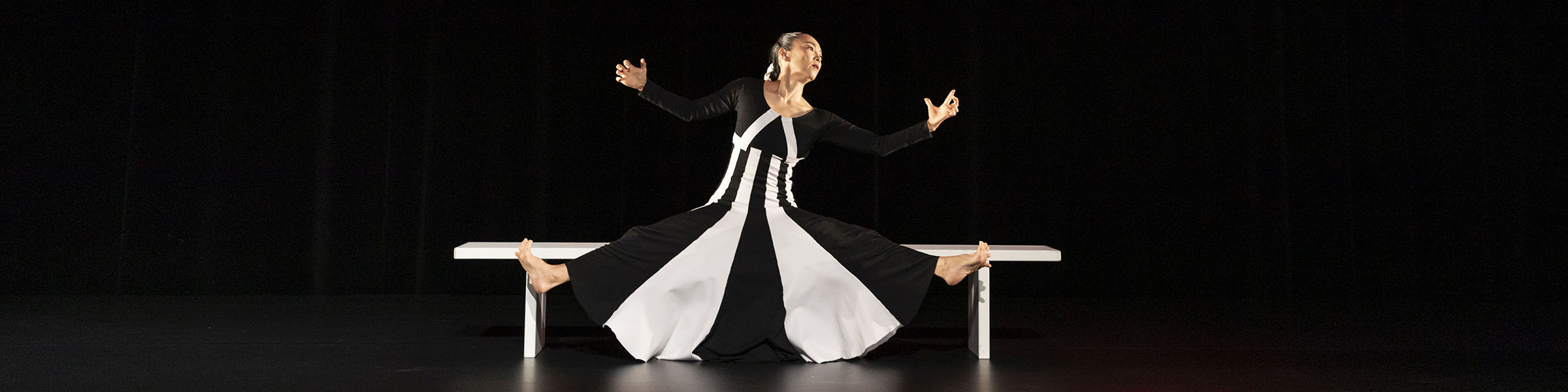
When a dancer leaves the stage for the last time, their art often vanishes with them. Unlike books, paintings or music, contemporary dance has no universal score or lasting archive. Much of Europe’s modern dance legacy survives only in living bodies.
Now, an EU-funded research initiative called DanceMap is seeking to preserve that heritage before it disappears altogether.
“For most countries, heritage still means buildings, manuscripts and artefacts,” said Madeline Ritter, director of Bureau Ritter, a non-profit cultural organisation based in Berlin that is the lead partner in DanceMap.
“Dance, as an intangible art form, has almost no place in national heritage budgets – and that’s a huge problem.”
When heritage stops at the museum door
That lack of recognition has real consequences. Across Europe, most public heritage funding is absorbed by monuments, libraries and museums. Dance, which exists only in the moment of its performance, is rarely included.
“
Dance, as an intangible art form, has almost no place in national heritage budgets – and that’s a huge problem.
In Germany, Ritter noted, national cultural heritage funding predominantly goes to physical institutions while dance receives very little.
Yet contemporary dance has existed for more than a century. It has shaped European culture, aesthetics and identity, but it leaves almost no official trace. The DanceMap team aims to correct that blind spot.
Rather than create a single central archive, researchers are building a digital mapping platform, grouping every place where dance heritage already exists – scattered across institutional archives, private collections, personal hard drives and, most crucially, in dancers’ bodies.
Making the invisible visible
At the heart of the project is a deceptively simple question: how do you archive dance, especially contemporary dance, which is not bound by strict forms?
“This isn’t about treating dance like a museum object,” said Lisa Marie Bowler, DanceMap’s project director. Trained both as a dancer and a researcher, she bridges the artistic and academic worlds.
“It’s about recognising that contemporary dance does have a history, even if it often pretends it doesn’t.”
Modern dance prides itself on constant reinvention. But that culture of innovation has come at a cost. Many works simply vanish when a choreographer dies or dancers retire. Without reliable records, young artists can unknowingly repeat past styles, believing they are inventing something new.
DanceMap’s solution begins with mapping what already exists. Through Europe-wide surveys, the project is identifying dance archives, private collections and individual knowledge holders.
“That embodied memory is just as valuable as any physical document,” Bowler said. “If someone learned a piece directly from a choreographer who is no longer alive, that knowledge lives in their body.”
The notion of knowledge living through movement also shapes DanceMap’s oral history research.
Living memory in motion
The idea of dancers as “living archives” runs through many strands of the project. It is also central to the work of Tessa Hall, a dancer and researcher who is leading DanceMap’s oral history work at STUK, House for Dance, Image and Sound in Leuven, Belgium.
One of Hall’s most striking cases comes from a contemporary repertory piece named ‘Out of Context – for Pina’, choreographed by Alain Platel. First created in 2009, it is still performed today by the same group of dancers.
Rather than pass the work on to younger casts, the dancers made a pact to continue performing it together for as long as their bodies allow. The dance survives not because it was perfectly archived, but because the dancers themselves chose to become its guardians.
Hall is conducting in-depth interviews with dancers from major contemporary companies, but not only at a table with a recorder. One of her methods is to invite dancers from Rosas, a contemporary dance company based in Brussels, Belgium, to speak while moving – activating memory through motion rather than words alone.
“When dancers recall a piece, they often remember it through stories, images and sensations, not just technical steps,” Hall said. “Oral history works naturally with dance because it’s about human transmission, not objects.”
Her interviews will feed into institutional archives, but will also serve researchers, students and the wider public through a podcast. The goal is to preserve choreography, but also to capture the lived experience of how dance is created, learned and transformed over time.
The cost of forgetting
For Ty Boomershine, the loss of dance heritage is not just cultural, it affects how the art itself evolves. As artistic director of Berlin’s Dance On Ensemble, which works exclusively with dancers over 40, Boomershine has seen what happens when knowledge disappears too early.
Boomershine has witnessed entire dance legacies vanish simply because no formal record existed. “Unlike classical ballet, contemporary dance often vanishes with the choreographer,” he said.
“If the dancers who created the work retire and there’s no notation, no archive, no institutional memory, the piece is gone.”
In his own teaching experience, he has watched young dancers believe they have invented radical new styles, only to discover later that the same movement language was pioneered decades earlier by choreographers they had never encountered.
“
Cinema, music, painting, they all build on history. Dance keeps restarting from zero because so much of its past isn’t visible.
“No one makes a Cubist painting and thinks they invented it,” he said. “Other art forms evolve because they can refer to their past. Cinema, music, painting, they all build on history. Dance keeps restarting from zero because so much of its past isn’t visible.”
Ageism only aggravates the problem. Many dancers are expected – sometimes contractually – to stop performing around the age of 40. When they leave the stage, vast amounts of artistic knowledge often leave with them.
“Those dancers are archives,” Boomershine said. “They’ve spent decades shaping works with choreographers. When they disappear, a whole lineage can vanish too.”
For Boomershine, the link between ageism and the loss of legacy is painfully direct. Many dancers leave the stage in their early 40s not because they want to, but because contracts and unspoken rules push them out.
A European vision for dance heritage
Ultimately, DanceMap is about more than preservation: it is about recognition. Raising dance to the same cultural status as architecture, literature or music requires visibility in policy, funding, education and public memory.
“Being part of Horizon Europe already changes how dance is seen,” Ritter said, referring to the EU’s flagship initiative for funding research and innovation. “It signals that dance is not a niche interest, but a serious part of Europe’s cultural identity.”
For the first time, the fragile, fluid history of European contemporary dance is being deliberately traced – and with it, a living record of movement, collaboration and memory.
Each mapped archive or recorded story becomes a small act of preservation in motion. For an art form that exists only in the instant of its performance, remembering is its most enduring choreography.
Research in this article was funded by the EU’s Horizon Programme. The views of the interviewees don’t necessarily reflect those of the European Commission. If you liked this article, please consider sharing it on social media.