MOUNTAIN VIEW, CA — On Tuesday, January 13, 2026, Google DeepMind fundamentally shifted the landscape of AI-generated media with a major update to Veo 3.1. The latest iteration of Google’s flagship video model moves beyond experimental clips into the realm of professional production, introducing state-of-the-art 4K upscaling and a revolutionary “Ingredients to Video” workflow that allows brands to mix specific product assets into high-fidelity marketing content.
The update focuses on three core pillars: professional resolution, native mobile-first formatting, and unprecedented identity consistency for objects and characters.
The Leap to 4K: Broadcast-Ready Fidelity
For years, the “720p ceiling” has limited AI video to social media novelties. Veo 3.1 shatters this barrier by integrating an advanced Super-Resolution module.
- Intelligence Over Pixels: Rather than simply stretching the frame, the model reconstructs fine details—such as fabric weave, skin pores, and intricate product textures—to deliver sharp, 4K (3840×2160) outputs.
- Refined 1080p: For standard workflows, the 1080p output has been overhauled to provide a “cleaner” signal, specifically optimized for professional non-linear editors (NLEs) like Premiere Pro or Final Cut.
“Ingredients to Video”: Seamless Product Integration
The standout feature for the advertising sector is the enhanced Ingredients to Video capability. This tool allows creators to upload up to three reference images—the “ingredients”—to serve as the visual anchor for a generation.
- Product Mixing: Marketers can now upload a high-resolution photo of a product (e.g., a luxury watch or a beverage bottle) and “mix” it into a video. Veo 3.1 ensures the product remains physically consistent, maintaining its branding and geometry even as it interacts with realistic lighting and environments.
- Identity Persistence: By using a “Character Ingredient,” the model prevents the common “AI flicker” where faces or outfits morph between shots. This allows for the creation of multi-scene narratives featuring the same consistent digital actor or brand mascot.
| Feature | Capability | Best Use Case |
| 4K Upscaling | High-fidelity texture reconstruction. | Large-screen ads and cinematic b-roll. |
| Ingredients Mix | 1-3 reference images for consistency. | Product-focused social ads and branding. |
| Native 9:16 | 0-Loss vertical composition. | YouTube Shorts, TikTok, and Reels. |
The 2026 AI Video Landscape: Veo 3.1 vs. Sora 2 and Kling 2.6
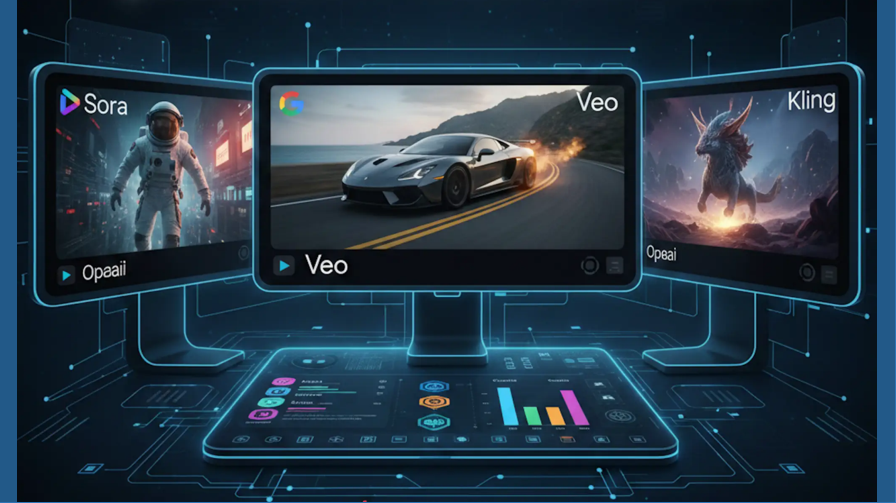
The release of Veo 3.1 places Google in direct competition with the industry’s other two titans: OpenAI’s Sora 2 and Kuaishou’s Kling 2.6. While Veo 3.1 is increasingly hailed as the “Director’s Choice” for its unmatched cinematic control and native 4K upscaling, Sora 2 remains the “Realism King,” favored by filmmakers for its organic motion physics and 25-second continuous shots that mimic high-end stock footage. Meanwhile, Kling 2.6 has carved out a niche as the “Action Specialist,” excelling in high-speed motion—such as complex sports maneuvers or fast-paced chases—where other models often suffer from visual “melting” or artifacts. For professionals, the choice often comes down to the specific needs of the project: Veo 3.1 for brand-consistent marketing with its “Ingredients” tool, Sora 2 for narrative-driven storytelling, and Kling for rapid-turnaround social content and physics-defying action sequences
Native Vertical: Built for the Mobile Era
In a strategic move to dominate short-form content, Veo 3.1 now supports Native Vertical (9:16) generation. Unlike other models that merely crop a landscape shot—often losing the subject or “headroom”—Veo 3.1 composes the scene with a vertical frame in mind from the outset. This ensures that action, subject placement, and camera movement are perfectly balanced for full-screen smartphone viewing.
Safety and Access
Google continues to prioritize transparency through the use of SynthID. Every frame generated by Veo 3.1 contains an imperceptible digital watermark, allowing platforms and users to verify the content’s AI origins.
The update is currently rolling out across the Google ecosystem, with 4K options and advanced “Ingredients” controls available via the Gemini API, Vertex AI, and Google Vids for enterprise users, while casual creators can access the mobile-optimized tools within the Gemini app and YouTube Shorts.
Picture of Comparison of Sora, Veo, and Kling: Ultimate Video Generation by MrPaloma.com