Shortlisted for the 2025 Southwood Prize
About the research
Overview
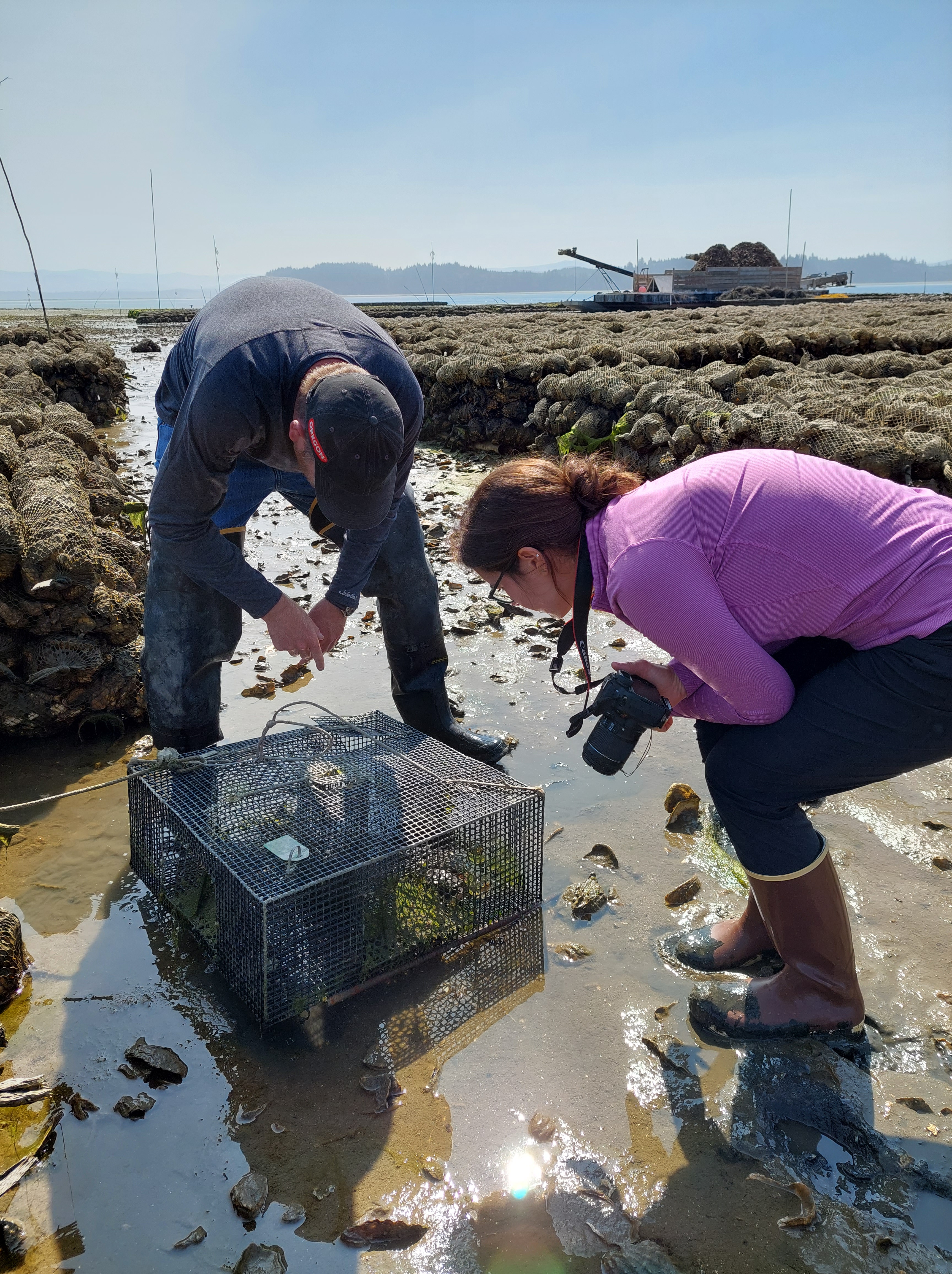
When should an environmental manager stop resisting change and accept a new ecological trajectory? This question will become a hallmark of natural resource management under global climate change, particularly for a marine invasive species like the European green crab. While this crab species can drive profound ecological change, it can quickly recolonize after removal, leaving many decision-makers wondering if control is futile.
Knowing when to transition from “resisting” to “accepting” the invasion trajectory can be challenging, as rates of population growth, removal, and colonization are often unknown. In our paper, we use mathematical concepts from decision theory to inform this decision made under uncertainty. This quantitative framework can provide critical decision support for managers of ecosystems on paths toward potential transformation.
Surprises and challenges
Communicating our results to decision makers, co-managers, and stakeholders was the most challenging aspect of this research, as the model was too abstract to inform the granular, day-to-day decisions being made. I gained an appreciation for the value of ecological models as objects to initiate discussion and build consensus around how a problem should be framed and understood.
Next steps and broader implications
Most existing optimization methods used in decision-making under uncertainty require relatively simple representations of a managed ecological system. Simplifying complexity can mean that important biological or management processes are missed and that results are not actionable. Next steps in this field will involve more advanced computational methods that will allow us to better support real-world decisions.
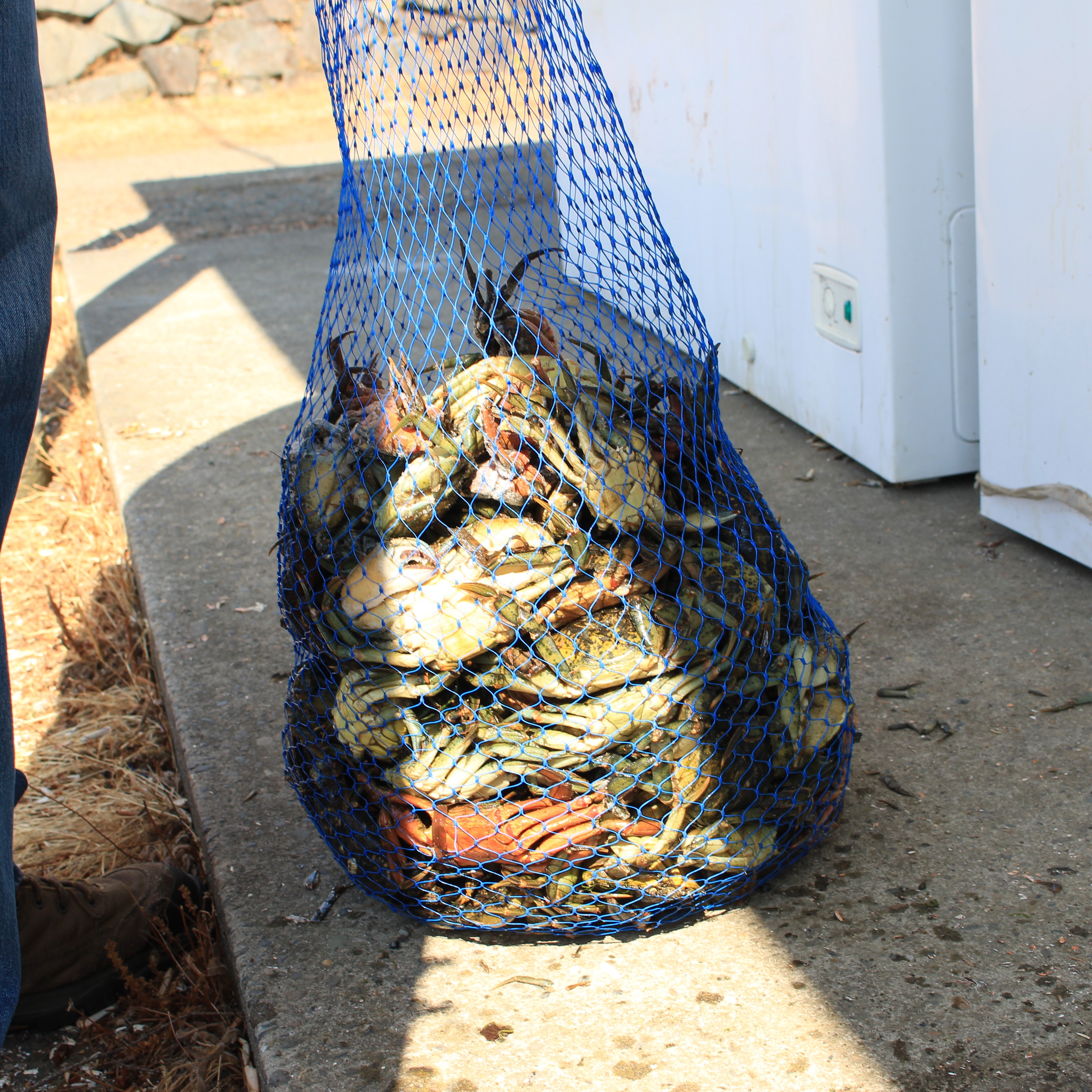
For invasive species that can disperse across long distances and recolonize rapidly after removal, the focus of conservation policy should shift away from understanding how to resist change to understanding when to stop resisting change. Navigating this decision problem involves trade-offs among competing objectives, highlighting the need for structured approaches to incorporate the values of decision makers.
About the author
Current position
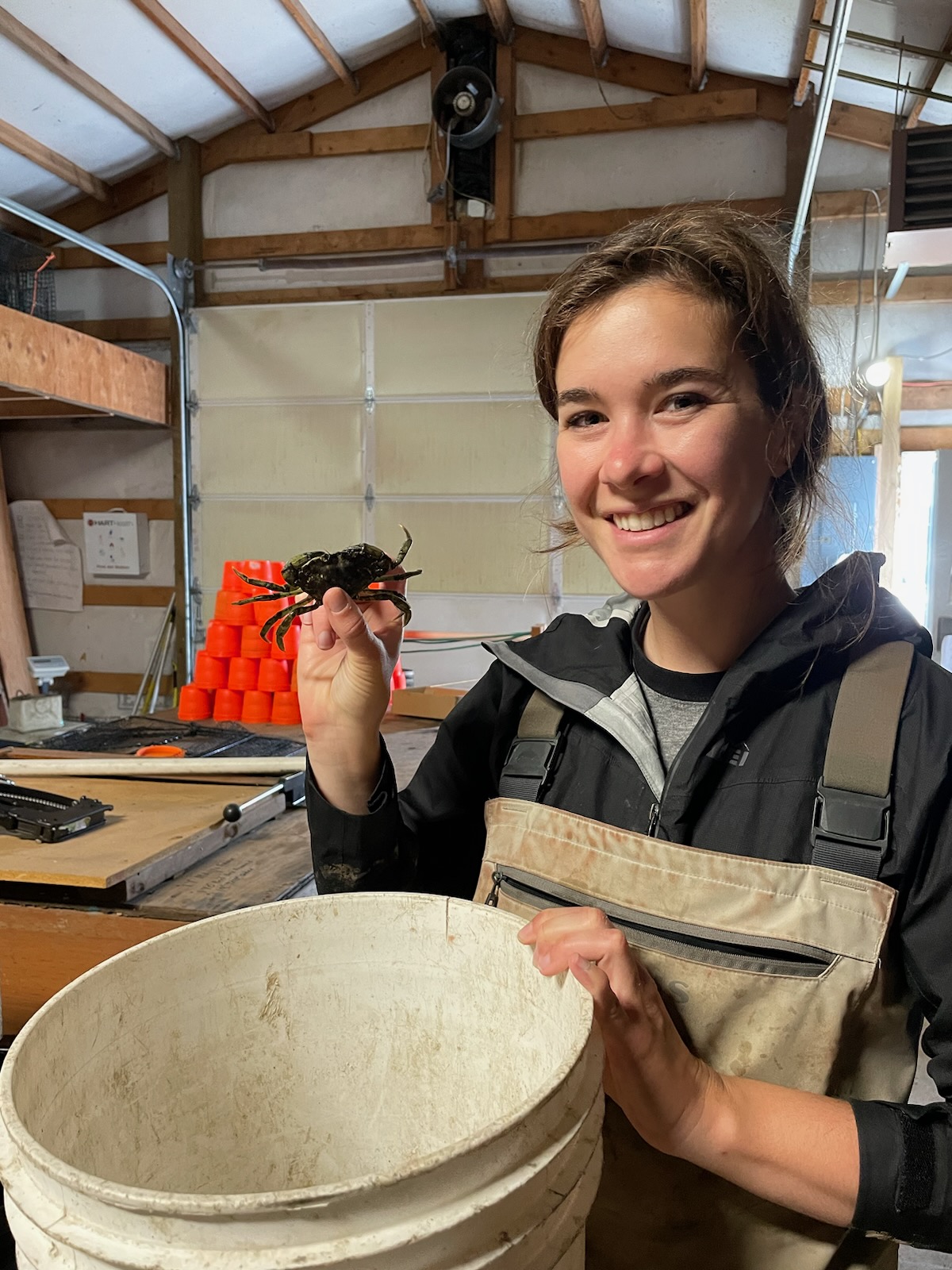
I am currently a PhD candidate in the Environmental Science, Policy, and Management department at the University of California, Berkeley. I am also a U.S. Department of Energy computational science graduate research fellow (DOE CSGF).
Getting involved in ecology
I grew up closely connected to the Appalachian Mountains in the eastern U.S., a region where the landscape significantly drives the culture and livelihood of those of us who call it home. It was not until my last year of college, however, that I had my first true taste of ecology: I had the opportunity to work in Cape Cod and study the microorganisms that live on the skin of whales! Here I fell in love with research as an expression of creativity and curiosity. Since then, I have dabbled in quite a few things, from living on oceanographic research vessels studying deep-sea corals to being the caretaker of thousands of crickets used to understand the evolution of flight. Along the way, I have picked up a master’s degree in marine policy and many quantitative skills, which has led me to where I am today studying decision analysis and statistical ecology.
Current research focus
Our research group has developed a more complex model of size-structured green crab removal and population dynamics that is closely tied to the type of observational data managers typically see. We are using this model to test out deep learning methods that can be used to optimize removal actions with this more realistic representation of the system. This means we can account for imperfect observations of crab abundance, large amounts of stochasticity, and an unimaginably large set of possible actions to take – all of which are realities of managing green crab.
Advice for fellow ecologists
Cultivate and embrace an interdisciplinary perspective. Studying and managing the natural world is as much about humans as it is about other-than-humans.
Read the full article ‘The transition from resistance to acceptance: Managing a marine invasive species in a changing world‘ in Journal of Applied Ecology.
Find the other early career researchers and their articles that have been shortlisted for the 2025 Southwood Prize here!