With the abduction of Venezuela’s president Nicolás Maduro, the United States under Donald Trump is returning to a power-based logic of influence in Latin America—one that many in the region believed had long been overcome. In this interview, political scientist Ulrich Brand analyzes why Latin America is once again becoming a geopolitical priority in the new US security strategy: it is about raw materials, supply chains, investment flows—and securing the global dominance of the US dollar.
Kontrast: Mr. Brand, the United States abducted Nicolás Maduro and intervened militarily. How extraordinary is this step—and does it signal a long-term strategic shift in US policy toward Latin America?
Ulrich Brand: It seems that a new strategy is emerging in US foreign policy. In the National Security Strategy—more or less since December 2025—it is said: Latin America is becoming the backyard again, meaning a direct sphere of political influence. From a Latin American perspective, this is a shock. A shock that a US administration is once again acting so openly and aggressively.
For a few decades, Latin America did not play such a major political role. Economically, it was always important—if we think of raw materials, of industry, especially in Mexico, the final assembly in maquiladoras or other sectors.
This is a new quality because it is the first such openly executed step in about 35 years—since the arrest of Manuel Noriega. Back then, the US intervened in Panama in order to arrest him and put him on trial. After Maduro’s abduction, there is also a certain sense of relief that there was no second military strike, no further escalation, and no civil war.
I think the US is currently keeping all options open and is pursuing foreign policy on many fronts—Greenland being one example. The National Security Strategy makes it clear again that Latin America has political priority. But we have to see this within a broader geopolitical constellation.
First, the US sees itself in a Cold War against China. Second, what we call “geo-economization” is about stabilizing access to raw materials. It is not only oil—Venezuela holds many other minerals. And it is also an attempt to stabilize supply chains. That includes more direct control over infrastructures and supply routes.
It’s about raw materials, investment flows, and the global dominance of the US dollar
Kontrast: Does that mean the US will once again rely more strongly on direct interventions in order to enforce this strategy?
Ulrich Brand: The US has a whole potpourri of instruments. They will not intervene militarily unless they feel they have to—it is far too costly. For example, I don’t think they will go into Colombia. Elections are on May 31, and it is conceivable that a US-friendly president will come to power. Many governments in Latin America are already right-wing: Chile soon perhaps with Kast, Argentina with Milei, Noboa in Ecuador. And the US would not dare intervene militarily in Brazil.
So they will rather try to ensure that right-wing governments win elections—and support that. But they are expanding their repertoire. There is now this big signal: We can come and remove a president. That would have been unthinkable six months ago.
Classic-style interventions will probably not become the rule—but rather attempts to bring about regime change, with whatever means. The National Security Strategy states: This is our space, and we want to shape it.
Kontrast: The Monroe Doctrine is often read as the justification for the US claim to influence in Latin America. How did this self-understanding historically emerge?
Ulrich Brand: I have a perspective on the Monroe Doctrine that differs from the common narrative. People quickly say that in December 1823, under President Monroe, the US proclaimed its claim over Latin America. I would see it differently.
The US became independent in 1776. The Latin American states became independent in the 1810s—Brazil in 1822. The US government at the time argued: these new states should remain sovereign. That was more an insistence on non-interference. The US wanted to support this independence and was itself still relatively weak and not a global power.
In the 1820s, what later became known as Pax Britannica began to take shape with Great Britain—a strong global economic and political dominance of Britain. I would therefore understand the Monroe Doctrine more as a defensive starting point.
This gradually changed in the mid-19th century with the rise of the US. And the Monroe Doctrine became a more interventionist doctrine especially after World War II. At that time, the US was the strongest world power. In the context of the Cold War, what had been formulated in 1823 as a protective measure against intervention was turned into an interventionist doctrine.
That’s why references to the Monroe Doctrine are often too simplistic and historically forgetful.
US interventions against left-wing movements began in the 1950s
Kontrast: The coup against Jacobo Árbenz in Guatemala in 1954 is often seen as a turning point, and later Cuba in 1959. What changed in this phase of US policy toward Latin America?
Ulrich Brand: In the 1950s and 1960s, there were strong left-wing movements in Latin America. Cuba was important, but it was much broader than that.
The coup against Jacobo Árbenz—who had been a progressive, left-nationalist president since 1951—was directed against two central initiatives of his government: land reform and strengthening trade unions. Árbenz said: if international companies operate here, then there must also be strong labor rights. That did not suit the United Fruit Company (today Chiquita). The CIA destabilized the government from the beginning, and that became the mode of operation.
We should not forget: this mode had already been applied a year earlier against Mosaddegh in Iran in 1953. That was the hard Cold War era—anti-communism in the US, McCarthyism. In Latin America, Guatemala was an early starting point.
But it wasn’t only an international constellation—it was always also about internal constellations. Atilio Borón, a political scientist in Buenos Aires, emphasized that there were intense organizing processes within the countries. And this was the US response. Finally, from today’s perspective, the world-historical significance of the Cuban Revolution can hardly be overstated—even if it split the Left into a reform-oriented and a revolutionary wing.
Kontrast: In that period, patterns for covert interventions also emerged outside Latin America—for example in Indonesia in 1965, later discussed as the “Jakarta Method.” Was that a model for Latin America?
Ulrich Brand: It probably was a grim model. I only came across the term “Jakarta Method” through Vincent Bevins in 2020. In Indonesia, there were horrific massacres in 1965/66. It is estimated that up to one million people—above all communists—were murdered.
Brutality later existed in Latin America too—in Argentina and Chile, in Operation Condor. But I wouldn’t say that such a Jakarta Method was applied one-to-one. The US always went as far as it believed it had to. They look at the concrete constellation: what are the interests?
In Argentina, the direct economic interests of the US in the 1976 coup were much smaller than in Guatemala or later in Chile; there, it was more clearly about American corporate interests.
Kontrast: What long-term political and social consequences did these interventions have in Latin America?
Ulrich Brand: It is clear: they weakened the Left—the political and social Left. There were attacks, persecution, desaparecidos (the disappeared) in Argentina, in Chile, in many countries.
And it accompanied the triumph of neoliberalism. John Williamson called it the “Washington Consensus” in a famous 1989 essay: the consensus of the World Bank, the IMF, and Washington—deregulation, privatization, weakening trade unions, and opening economies to global markets.
Chile became the laboratory in 1973 with Pinochet and the Chicago Boys. In Argentina in 1976, you can see how, with the crushing of left-wing movements, neoliberal policies took hold. This led, among other things, to deindustrialization. Protected markets were opened. Think of Argentina: its automotive production collapsed under the pressure of open markets and low tariffs. Overall, Latin America became trapped in dependency—extracting and exporting raw materials.
The rise of progressive governments in Latin America from the 1990s onward
Kontrast: Why did left-wing governments gain momentum after the 1990s?
Ulrich Brand: Of course it differs from country to country. But generally speaking: after re-democratization, there were initially harsh neoliberal policies—also under democratically elected presidents—especially where military dictatorships had previously ruled.
At the same time, society could reorganize. In the 1990s, left-wing spaces formed again, trade unions became stronger, and so on. That was one prerequisite for Lula’s election in 2002. He had run three times before, since 1989, and lost. The condition for this was a liberal democracy that made such a political development possible.
In Venezuela, there was no military dictatorship in the same sense, but there was the Caracazo in 1989, an uprising. That also contributed to the formation of strong popular movements in the 1990s.
Lula came as an elected president of a mass movement, supported by unions, social movements, and a well-organized party. Hugo Chávez (president from 1999 to 2013) came much more from the military, but he also enjoyed broad support—including from popular movements.
And a fourth factor in this left-wing reorganization was the end of the Cold War: the US could no longer so easily operate with the argument of “anti-communism.”
Kontrast: What was the decisive difference between the more moderate course in Brazil and the more radical one in Venezuela?
Ulrich Brand: There are many reasons. But the decisive point is this: in Venezuela, the Chávez government very quickly gained control over the key resource of wealth—oil—after major conflicts. Venezuela is an oil-rent state. That made redistribution policies possible; power relations could be changed more rapidly.
In Brazil, the PT government faced an incredibly strong agrarian bourgeoisie and religious forces. The political economy simply did not allow for such a radical break.
And there are two similarities that should not be underestimated: the progressive projects—radical and social-democratic—benefited enormously from the fact that demand and prices for raw materials exploded from 2003 onward, closely linked to China’s take-off. And both models continued to rely on extractivism. When commodity rents sharply declined after 2013/14, the room for redistribution shrank.

Democratization, participation, and self-management in Venezuela
Kontrast: After the failed coup attempt against Chávez and the oil strike, people often spoke of political “radicalization.” How do you interpret this development?
Ulrich Brand: I would not call it radicalization. Radicalization would have meant advancing the original program of democratization and participation further—the so-called missions: major health, social, housing, and literacy programs, along with self-organization in the barrios.
I would rather call it an authoritarian turn, which of course is connected to the coup attempt. But Edgardo Lander, a Venezuelan sociologist, pointed out early on that within Chavismo there were always bottom-up tendencies, but also a Leninist current: that we, from the state and from above, change society. That current gradually prevailed.
In general, in any political analysis, internal relations play a major role. We should always look at internal power constellations and room for maneuver. Then the world market enters the picture, then external political forces like the US government.
Bolivarian Missions under Chávez
The Misión Robinson sought to improve adult literacy on a large scale. Misión Barrio Adentro established free medical care in low-income neighborhoods, supported by Cuban doctors. Misión Mercal sold basic food products to the population at heavily subsidized prices.
The missions were largely financed through Venezuela’s booming oil revenues. The state oil company PDVSA directly funded many projects, while Cuba contributed personnel—hundreds of Cuban doctors, for example, worked in newly established neighborhood clinics.
According to government figures, the missions delivered significant results, including a sharp decline in illiteracy—from more than 6% to around 1% within just a few years. However, independent bodies such as UNESCO did not confirm these numbers. Critics also pointed to inefficient parallel structures and the political instrumentalization of some of the Misiones.
Kontrast: After Hugo Chávez’s death in 2013, crisis, repression, and isolation intensified in Venezuela. Why was Maduro never able to build legitimacy similar to Chávez’s?
Ulrich Brand: There was a depletion of charisma. Chavismo depended strongly on the figure of Hugo Chávez. Then Nicolás Maduro comes in—weak and not very charismatic. At the same time, commodity prices drop, and after 2013 that is certainly linked to the falling oil price.
My hypothesis is: the military, which had always been strong, saw its opportunity to make an offer to the government: we will support you—if you give us more in return. And the massive expansion of corruption under Maduro, especially within the military, intensified: access to foreign currency, to raw materials, the ability to run certain deals.
Maduro’s deal was: the military—and with it authoritarianism—keeps me in power. And then came political delegitimization. There were attempts at a recall referendum. It was delayed; elections were no longer recognized.
There is an interesting hypothesis by Hans-Jürgen Burchardt, professor at the University of Kassel and a Venezuela specialist: perhaps Maduro was also sacrificed because he recently tried to weaken the military and expand the police apparatus and other security agencies. We still have to substantiate this in the coming weeks, but it’s an interesting hypothesis.
Communal Councils: Participation and Self-Government under Chávez
Working groups develop proposals, which the community then votes on through grassroots democratic decision-making. A distinctive feature in Venezuela: the financing of approved projects comes directly from national-level state bodies, bypassing municipal administrations. As a result, a significant share of public funds flows directly into initiatives co-determined by residents—by 2010, more than 20,000 communal councils had been established nationwide, and in their first year alone they received around 1 billion US dollars in budget funds directly.
This system of communal councils was seen as a key pillar of the participatory democracy “from below” that Chávez sought to build, and it strengthened self-government in many municipalities across Venezuela.
Under Nicolás Maduro, self-government turned into an instrument dependent on loyalty, with less participation and less transformative ambition.

Kontrast: After Maduro’s abduction and overthrow, the question arises: was US intervention the only way to remove him from power?
Ulrich Brand: That is a very difficult question. I think we will only be able to answer it in half a year. One question is whether anti-Maduro forces within Chavismo and within the military would have been strong enough to overthrow Maduro. I believe that a takeover by the opposition would have led to more violence. The risk of civil war would have been high, because about one third of the population is still at least chavista—not necessarily pro-Maduro.
But please don’t misunderstand: this must not be read as a justification of the US government’s violation of international law.
Kontrast: How is the intervention perceived in Latin America, especially by progressive governments?
Ulrich Brand: Progressive governments oppose this intervention—and not because they support Maduro. Petro and Sheinbaum criticized Maduro constantly, and rightly so. But the US government cannot act like this.
The population overall is strongly opposed to the intervention. At the same time, there is also relief—especially among Venezuelans in exile—that something is finally happening, and that there might be a prospect of returning to their country.
Europe’s silence on the intervention in Venezuela was a mistake
Kontrast: And Europe? Many governments remained silent for a long time.
Ulrich Brand: I consider it a mistake that the EU or EU states did not speak out critically against the intervention. Politically, it was a missed opportunity. It showed a lapdog policy toward the US.
Kontrast: What does this intervention mean for the international order, also with a view to China and Russia?
Ulrich Brand: The US is showing that it wants a power-based international order—not a rule-based one anymore. I think everyone understands that now. With last December’s National Security Strategy, it is clear that spheres of influence are being defined.
Kontrast: Many interpret this as a return to great-power thinking. Is that perspective enough?
Ulrich Brand: We should not make the mistake of looking only at the interests and political actions of great-power governments. We still have a capitalist world market dominated by powerful corporations.
There are conflicts over stabilizing supply chains, access to markets and raw materials, and control over infrastructures. That is more complicated than a chess game.
“Capitalism at the limit” – eco-imperial tensions are reaching the Global North
Kontrast: You say we should not focus only on great-power politics. In your book, you speak of “eco-imperial tensions.” What do you mean by that?
Ulrich Brand: The 2024 book is titled Capitalism at the Limit. We do not argue that capitalism will collapse soon. Rather, it will become more authoritarian and more conflict-ridden—especially because the climate crisis has now reached the Global North and increasingly causes instability and enormous costs; because access to raw materials is becoming more contested; because there is structural overproduction and corresponding problems of demand.
These are just a few keywords—we develop the argument further in the book. Take Pakistan 2022/23: one third of the country was under water. Who pays for the repairs? The eco-imperial tensions that come with this will become a structural feature of international politics.
Kontrast: And what does that mean concretely for Latin America?
Ulrich Brand: These societies are deeply anchored in raw-material extractivism—even Brazil and Mexico with their relevant industries. It is a whole societal model. Class structures, state revenues, and ideas of progress are tied to it. The sentence “Venezuela is blessed by God with oil” runs deep.
And we need to look more closely: the imperial attacks by the US on Latin America must be criticized. And it must be criticized that this has to do with the interest in raw materials.
But within Latin American societies, a perspective also has to be strengthened which says: extractivism is not automatically good for society as a whole—it produces enormous inequality, exploitation, and environmental destruction. These often brutal and violent conditions, in turn, are connected to global imperial dynamics.
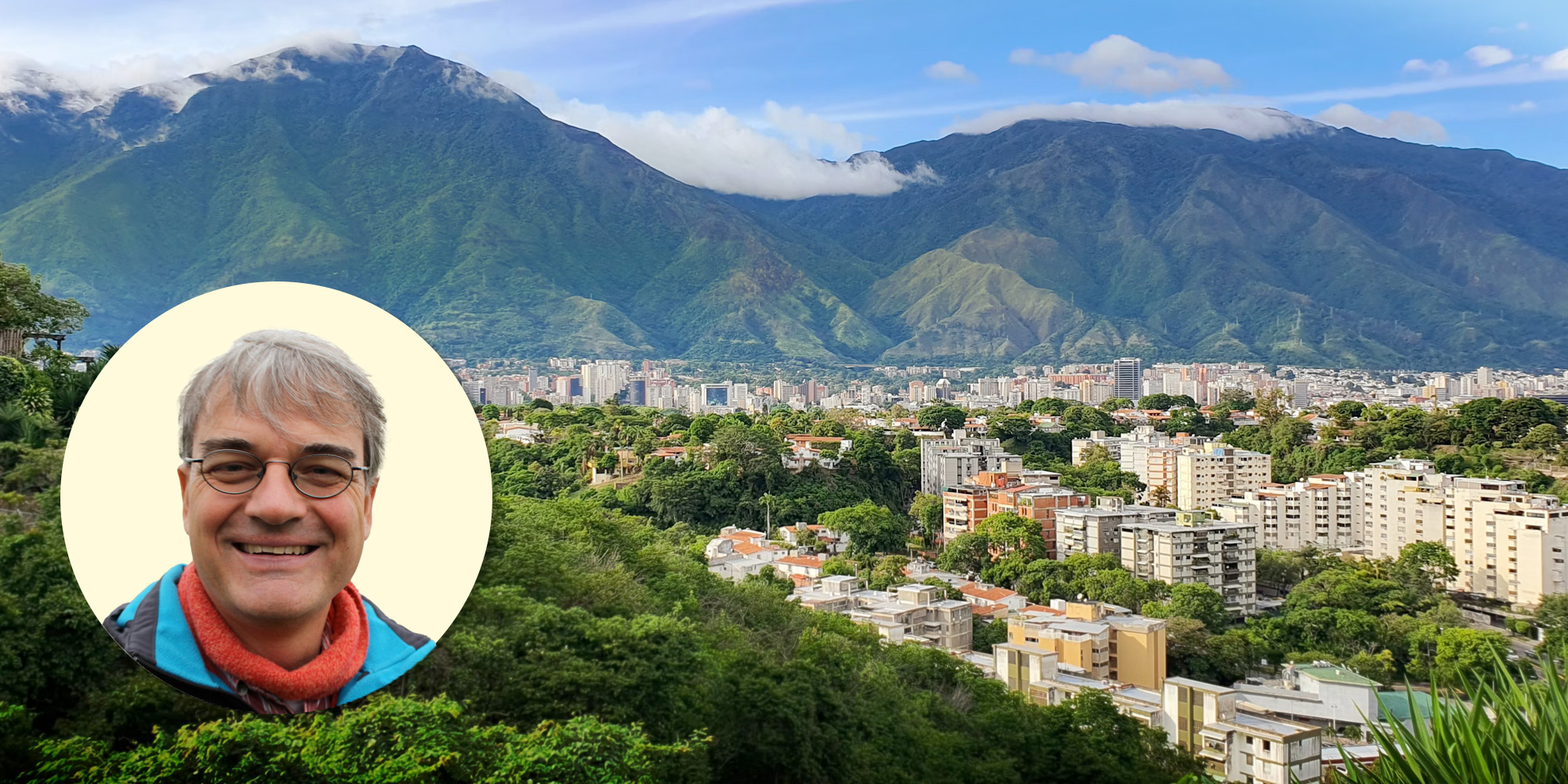
Ulrich Brand
Together with Markus Wissen, he has co-authored the book Capitalism at the Limit. Eco-imperial tensions, contested crisis politics and solidaristic perspectives, among others.
The rights to the content remain with the original publisher.
Post Views: 163