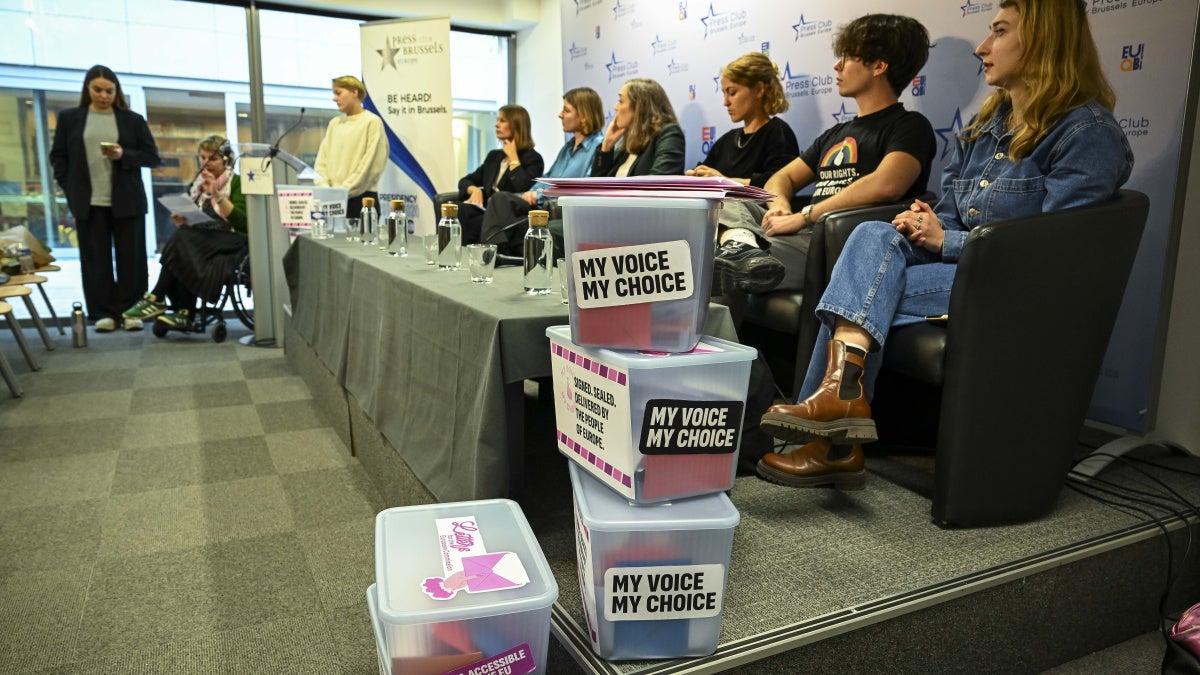
On Thursday, the European Union Commission announced that the European Social Fund can be used by member states to fund safe abortions and improve access to abortion. This is in response to the European Citizens’ Initiative—My Voice, My Choice—which requested that “the EU does what is in its power to ensure safe and accessible abortion for all.”
The My Voice, My Choice campaign garnered over 1 million signatures from EU citizens and was also supported by civil society organizations from all 27 member states. They argued that abortions were neither accessible nor affordable for many across the EU, especially marginalized women, and that this put women at risk of physical harm, undue stress, and financial strain.
While the European Commission has not committed to introducing new legislation to reinforce this step, Hadja Lahbib, commissioner for equality, stated that Thursday’s decision means “support for women who need to travel; support for women in their own country; support for women in remote areas; support for women without financial means.” And that, in practice, “it means women will have better access to safe abortion care. Any vulnerable woman. Anywhere in Europe.”
In the EU, only two countries—Poland and Malta—maintain highly restrictive abortion laws, permitting the procedure only in exceptional circumstances. Malta amended its legislation in 2023, easing what had previously been a total ban, while Poland further tightened access following a 2020 constitutional tribunal ruling. Although most other EU member states allow abortion on broader grounds, many permit broad conscientious objection by medical practitioners, which can significantly limit availability and delay care. International human rights bodies have repeatedly found that barriers to accessing abortion can violate rights to health, privacy, humane treatment, and nondiscrimination. But now women in countries with abortion bans or limited access could seek help abroad.
This is a significant and long-overdue victory for women across the EU. It signals a renewed commitment to protecting reproductive rights and expanding access to safe abortion care. However, because health policy rests at the national level, now the responsibility lies with member states to ensure these funds translate into meaningful, tangible improvements on the ground. Governments across the EU should seize Thursday’s decision as an opportunity to strengthen access to abortion and uphold women’s rights.