Taoiseach Micheál Martin has published a new cross‑government report outlining how Budget 2026 will target child poverty through permanent, long‑term supports for vulnerable families. The analysis, prepared by the Child Poverty and Well‑being Programme Office, details the first phase of the Government’s strategy to reduce consistent child poverty to 3% or less by 2030.
Budget 2026 marks a shift away from temporary cost‑of‑living measures toward sustained, targeted payments. A €320 million social‑welfare package includes the largest increase to date in the Child Support Payment, higher income thresholds for the Working Family Payment, and an extension of Fuel Allowance to eligible working families.
Government figures show that rising prices and wages have widened the gap between low‑income households and average earnings. Since 2020, the weekly Child Support Payment has risen 95% for children aged 12 and over and 61% for younger children, outpacing wage growth and other welfare increases.
Additional Budget 2026 measures include:
- €5.14 million for the Equal Start early‑years programme
- €16.5 million (€48m full‑year cost) for a new DEIS Strategy and DEIS Plus scheme
- €7.3 million for Youth Justice supports
- €3.2 million to expand the Family Resource Centre network to 136 centres
- Expanded income thresholds for the National Childcare Scheme
The report also highlights increased investment in the children’s services workforce amid rising demand and recruitment challenges.
Announcing the publication, the Taoiseach said the Budget “prioritised children and families who need our support the most,” describing the measures as the first step in a multi‑year plan to significantly reduce child poverty and improve access to essential services.
Minister for Social Protection Dara Calleary said the €320 million welfare package will “make a real difference” through targeted supports such as higher Child Support Payments, expanded Working Family Payment thresholds, extended Fuel Allowance eligibility and the continued rollout of hot school meals.
Education ministers Norma Foley and Hildegarde Naughton welcomed the cross‑government approach, highlighting expanded early‑years supports, new Family Resource Centres and major investment in DEIS schools aimed at tackling educational disadvantage.
The full report, Breaking the Cycle: New Measures in Budget 2026 to Address Child Poverty and Promote Well‑being, is available at gov.ie/childpoverty.
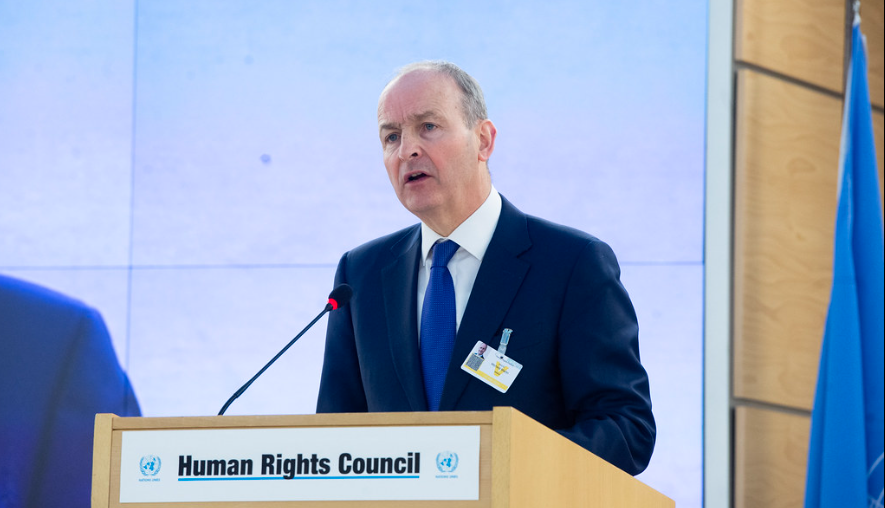
Micheal-Martin-flickr-Picture-by-The-UN-Geneva.