Amidst a deepening humanitarian winter in the Middle East, Ireland has significantly increased its financial commitment to the Palestinian people. During a high-profile visit to the Rafah crossing on Tuesday, January 13, 2026, Minister for Foreign Affairs Helen McEntee announced a €42 million assistance package, marking a substantial rise from the previous year’s budget. The move reaffirms Dublin’s role as a primary advocate for international aid agencies currently facing unprecedented operational pressure.
Geopolitics & Diplomacy: Sustaining the UNRWA Lifeline
Minister McEntee’s presence at the border between Egypt and Gaza highlights a strategic diplomatic push to preserve the regional aid architecture. Central to this announcement is €20 million in core funding dedicated to UNRWA, an agency Ireland describes as “central to any effort” to address Palestinian needs.
The visit serves as a sharp diplomatic signal following recent international friction over aid access. Minister McEntee, who is traveling to Jordan next for consultations with regional leaders, reiterated Ireland’s condemnation of legislative efforts to disrupt water and electricity services to aid facilities. By anchoring this aid in the UN system, Ireland is positioning itself against the tide of “outside pressure” aimed at dismantling the agency’s mandate in Gaza and the West Bank.
Business & Finance: A Strategic Increase in Humanitarian Capital
The 2026 funding represents a clear upward trajectory in Ireland’s foreign expenditure. Totaling €42 million, the package is a noteworthy jump from the €36 million provided in 2025. This allocation brings Ireland’s total humanitarian investment in the region to €144 million since early 2023.
- UNRWA Core Support: Half of the total package is ring-fenced for basic services, including health and education.
- Emergency Medical Response: An immediate €2 million has been diverted to the Egyptian and Palestinian Red Crescent Societies to bolster frontline medical care.
- Flexible Allocation: The remaining funds are held in reserve to allow Dublin to pivot toward emerging crises throughout the year, ensuring the aid remains responsive to a volatile ground reality.
Security & Human Rights: Addressing the West Bank and Gaza Instability
While high-level diplomacy continues in Cairo, the situation on the ground remains what Minister McEntee described as “incredibly stark.” Despite a standing ceasefire, the security environment is characterized by persistent threats to civilian life and infrastructure.
In the West Bank, the Irish delegation highlighted a critical spike in military incursions and settler violence. House demolitions and movement restrictions are creating what officials call “unacceptable risks” to daily survival. Meanwhile, in Gaza, the threat has shifted from active combat to environmental and systemic collapse. Hundreds of thousands remain in makeshift shelters, where overcrowding and a lack of clean water have pushed the risk of disease to a breaking point.
The human rights focus of this visit emphasizes the “silent killers” of the conflict: malnutrition and exposure. With children dying from a lack of basic nutrients and buildings at constant risk of collapse, Ireland’s increased funding is intended to provide more than just calories—it is a bid to stabilize a society on the edge of total humanitarian failure.
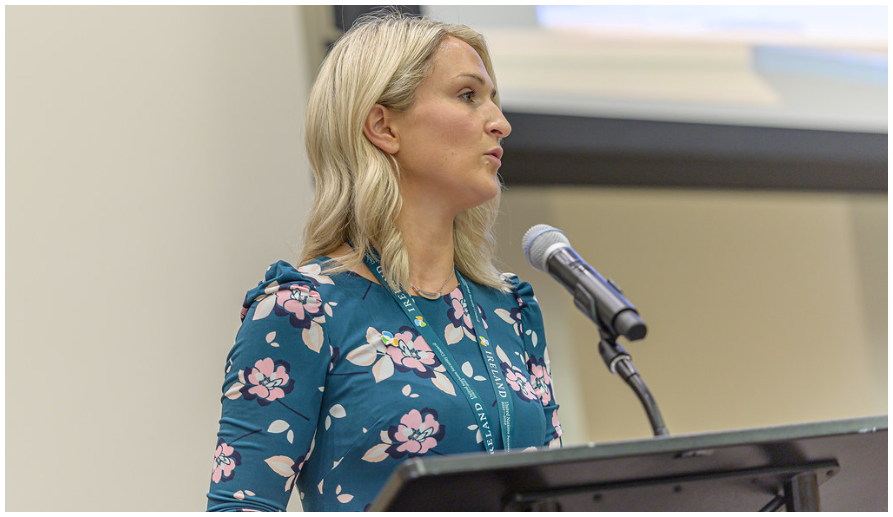
Minister-for-Foreign-Affairs-Helen-McEntee-Picture-from-Wikimedia-by-The-Official-CTBTO-Photostream-CC-BY-2.0