On Saturday, January 10, 2026, Iran remains locked in a near-total communications blackout as authorities enter the third day of a sophisticated nationwide internet and telephone shutdown. The blackout, which began the evening of January 8, has severed the global connection for 85 million people, shielding a lethal crackdown on the largest anti-government protests since 2022.
Monitoring organizations, including NetBlocks, confirm that national connectivity has plummeted to approximately 1% of normal levels. Unlike previous disruptions, experts describe this shutdown as “chillingly precise,” allowing state propaganda to flow while disabling the tools used by citizens to document human rights violations.
The Crackdown in Darkness
The communications vacuum has raised urgent alarms among human rights observers, who fear the blackout is providing cover for a “state massacre.” Credible reports suggest that security forces have been ordered to carry out a “decisive” suppression of the demonstrations that erupted on December 28, 2025, over a sharp currency collapse and soaring inflation.
- Rising Death Toll: While a verified count is obstructed by the blackout, Amnesty International and the Center for Human Rights in Iran (CHRI) report that at least 65 people have been killed, including at least 14 security personnel. Some medical sources in Tehran claim fatalities in the capital alone could exceed 200.
- Hospital Raids: Security forces have reportedly raided medical facilities in cities like Ilam and Malekshahi to seize injured protesters and remove bodies, complicating efforts to track the scale of the violence.
- Legal Threats: On Saturday, Iran’s Attorney General warned that participants in the protests would be charged as an “Enemy of God” (Moharebeh), a crime that carries the death penalty under the Islamic Republic’s penal code.
Geopolitics: A High-Stakes Domestic Insurgency
The 2026 protests have taken on a different character than previous movements, with protesters increasingly calling for the total transition of the government. The momentum has been galvanized by the exiled Crown Prince Reza Pahlavi, who on Saturday urged Iranians to “seize and hold” city centers rather than merely demonstrating.
| Key Actor | Stance / Action |
| Iranian Regime | Labeled protesters “terrorists”; deployed IRGC Ground Forces to Kurdish regions. |
| Reza Pahlavi | Calling for nationwide general strikes and the seizing of municipal buildings. |
| U.S. Administration | President Trump has renewed warnings of intervention if peaceful protesters are met with force. |
| UN Fact-Finding Mission | Urged an immediate end to the violence and the restoration of digital rights. |
Security & Tech: “The Worst Shutdown in History”
Digital rights experts, including those at Psiphon and the Georgia Institute of Technology, have labeled this the most severe disconnection ever recorded in Iran. The sophistication of the 2026 blackout suggests a “whitelisting” approach where only government-approved IPs remain active.
- Jamming of Satellite Links: Even Starlink satellite uploads, which served as a lifeline during the “Woman, Life, Freedom” movement, are reportedly being jammed in several metropolitan neighborhoods.
- Internal Isolation: Domestic mobile antennas and landlines have been deactivated in protest hubs, preventing families from checking on the safety of loved ones and stopping the coordination of emergency medical aid.
The Judiciary’s Ultimatum: State Escalates Detention and Death Penalty Threats
As the digital blackout deepens, Iranian authorities have moved from containment to a systematic campaign of judicial intimidation. On Saturday, January 10, 2026, the nation’s Prosecutor General formally classified the ongoing unrest as “armed sedition,” warning that detainees found to have damaged public property or confronted security forces will face charges of “Moharebeh”—a capital offense punishable by execution. This legal pivot coincides with reports of over 2,300 arbitrary arrests documented by groups like HRANA and Iran Human Rights. Human rights monitors warn that these sweeps, which include targeted raids on hospitals and universities, are part of a broader state strategy to identify and “neutralize” dissent leaders before international eyes can return to the situation.
Human Rights: The Call for Intervention
The United Nations Human Rights Council has called for an independent investigation into the use of live ammunition. Human rights organizations argue that internet access is an indispensable right during times of civil unrest, and that “blanket shutdowns” are inherently disproportionate under international law.
“People die in the dark,” stated Ali Tehrani of Psiphon. “The shutdown isn’t just a censorship tool; it’s a tactical component of lethal force designed to ensure state crimes occur without witnesses.”
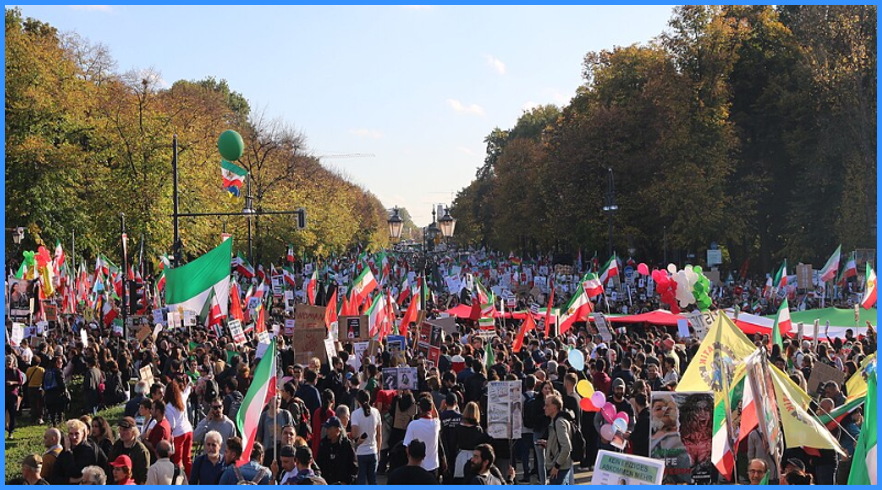
Iran Anti-Government Protests Picture by PersianDutchNetwork