(Beirut) – Iranian authorities have unleashed a deadly crackdown on protesters across the country since December 28, 2025, marked by security forces’ unlawful use of force and firearms and mass arbitrary arrests, Amnesty International and Human Rights Watch said today.
The organizations’ findings reveal how security forces—including the Islamic Revolutionary Guard Corps (IRGC) and Iran’s police force, known by its Persian acronym FARAJA—have unlawfully used rifles, shotguns loaded with metal pellets, water cannons, tear gas, and beatings to disperse, intimidate, and punish largely peaceful protesters.
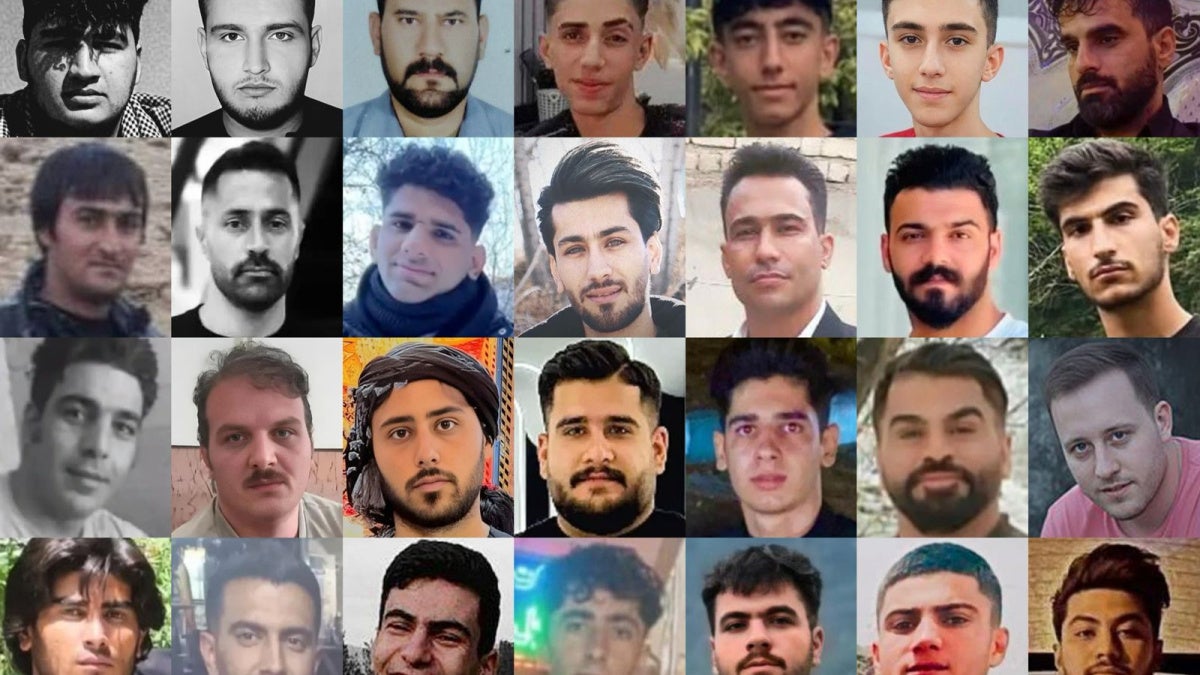
The crackdown has resulted in the killing of at least 28 protesters and bystanders, including children, in 13 cities across 8 provinces between December 31, 2025, and January 3, 2026, based on credible information gathered by Amnesty International and Human Rights Watch.
“People in Iran daring to express their anger at decades of repression and demand fundamental change are once again being met with a deadly pattern of security forces unlawfully firing at, chasing, arresting, and beating protesters in scenes reminiscent of the Woman Life Freedom uprising of 2022. Iran’s top security body, the Supreme National Security Council, must immediately issue orders for security forces to stop the unlawful use of force and firearms,” said Diana Eltahawy, Amnesty International’s Deputy Director for the Middle East and North Africa. “
Protests erupted on December 28, 2025, following a sharp currency collapse and amid soaring inflation, chronic state mismanagement of essential services including access to water, and worsening living conditions. Starting with shop closures and strikes in Tehran’s Grand Bazaar, protests quickly spread nationwide, evolving into street demonstrations calling for the downfall of the Islamic Republic system and demanding human rights, dignity, and freedom. The authorities responded with violent dispersals and mass arrests, with hundreds already arbitrarily detained and at risk of torture and other ill-treatment.
“The frequency and persistence with which the Iranian security forces have unlawfully used force, including lethal force, against protesters, combined with systematic impunity for members of the security forces who commit grave violations, indicate that the use of such weapons to crush protests remains entrenched as state policy,” said Michael Page, deputy Middle East and North Africa director at Human Rights Watch.
Human Rights Watch and Amnesty International spoke to 26 people, including protesters, eyewitnesses, human rights defenders, journalists, and a medical professional, reviewed official statements, and analyzed dozens of verified videos published online or shared with the organizations. An independent pathologist consulted by Amnesty International reviewed images of protesters injured or killed.
Senior state officials have demonized protesters as “rioters” and vowed a “firm” crackdown.
On January 3, 2026, when security forces killed at least 11 protesters, Supreme Leader Ali Khamenei said “rioters should be put in their place.” On the same day, the IRGC’s provincial corps of Lorestan province declared that the period of “tolerance” was over, pledging to target “rioters, organizers and leaders of anti-security movements … without leniency.”
On January 5, 2026, the Head of the Judiciary also ordered prosecutors to show “no leniency” to protesters and to expedite their trials.
United Nations member states and regional bodies, such as the European Union, should issue unequivocal public condemnations and undertake urgent diplomatic action to pressure the Iranian authorities to stop the bloodshed, Amnesty International and Human Rights Watch said.
Given the prevailing climate of systemic impunity that has enabled Iranian authorities to repeatedly commit crimes under international law documented by Amnesty International and Human Rights Watch, including murder, torture, rape, and enforced disappearances to eliminate and punish dissent, the organizations call on other countries’ prosecution authorities to initiate criminal investigations under the principle of universal jurisdiction, with a view to issuing arrest warrants for those suspected of responsibility.
Unlawful Use of Force and Killings
The 28 victims were all shot by security forces, including with metal pellets fired from shotguns. Consistent with well-documented patterns of state denial and silencing, authorities have denied responsibility for the killings. Officials forced some victims’ families to appear on state media to call the deaths accidents or to blame other protesters, threatening the families with reprisal and secret burials of their loved ones if they did not comply.
Amnesty International and Human Rights Watch found that protesters have been largely peaceful. While the organizations have reviewed some footage and reports indicating that some protesters have engaged in acts of violence, in all the incidents of shootings investigated by the organizations, there was no imminent threat to life or serious injury justifying the use of firearms.
According to evidence gathered by Amnesty International and Human Rights Watch, the provinces of Lorestan and Ilam, home to the Kurdish and Luri ethnic minorities, saw the deadliest repression, with at least eight killed in Lorestan and five killed in Ilam. Other provinces where killings took place between December 31, 2025, and January 3, 2026, include Chaharmahal and Bakhtiari, Fars, and Kermanshah, each with at least four deaths, as well as Isfahan, Hamedan, and Qom, each with one death.
A protester in Azna, Lorestan province, told Amnesty International that on the evening of January 1, security forces opened fire on peaceful protesters near the county governor’s office in Azadegan Square. She shared a video, which the organizations verified, showing an IRGC agent firing at protesters. After the crowd dispersed, some protesters regrouped outside a nearby police station, where security forces opened fire again.
Verified videos published online on January 1 show protesters outside the station chanting. The sounds of gunshots can be heard in at least one verified video.
Information reviewed indicates that at least six protesters were killed in Azna, including Vahab Mousavi, Mostafa Falahi, Shayan Asadollahi, Ahmadreza Amani, and Reza Moradi Abdolvand. The authorities continue to withhold the body of Taha Safari, 16, who was initially reported as missing. An informed source told Amnesty International that on January 3, Safari’s family members went to a police station to inquire about his whereabouts and an official there showed them pictures of several deceased individuals; the family identified Safari among them. The image of his body showed visible severe head injuries.
A protester in Malekshahi, Ilam province, told Amnesty International that on the afternoon of January 3, hundreds of peaceful protesters marched from Shohada Square toward an IRGC Basij base:
IRGC agents opened fire from inside the base, shooting … without regard for who they shot … Three to four people were killed instantly, and many others were injured. The protesters were completely unarmed.
Two verified videos from Malekshahi taken in the afternoon show protesters outside the Basij base fleeing amid the sound of gunshots. Another video posted online shows six agents inside the base, with at least one firing a weapon toward protesters. Three victims with visible injuries, motionless, are seen in two videos.
Informed sources said that three protesters—Reza Azimzadeh, Latif Karimi, and Mehdi Emamipour—were killed instantly. Two others, Fares (Mohsen) Agha Mohammadi and Mohammad Reza Karami, died later from their injuries.
In Jafarabad area in Kermanshah, Kermanshah province, Reza Ghanbary and two brothers, Rasoul and Reza Kadivarian, were fatally shot on January 3. A human rights defender said that plainclothes agents, who arrived in three white vehicles, fired metal pellets at the brothers who were among a group of protesters trying to block a road.
In Chaharmahal and Bakhtiari province, security forces killed Ahmad Jalil and Sajad Valamanesh during protests in Lordegan on January 1 and Soroush Soleimani in Hafshejan on January 3, according to information received from a human rights defender. Amnesty International and Human Rights Watch reviewed images of their bodies, showing classic spray patterns of metal pellet wounds on their torsos.
Protesters Gravely Injured
The organizations documented large-scale harm from the widespread use of metal pellets fired from shotguns, including head and eye injuries, as well as injuries caused by beatings and gunfire from rifles.
A protester from Dehdasht, Kohgiluyeh and Boyer-Ahmad province, said that security forces shot him during protests on January 3. Fearing arrest, he avoided hospital care despite risk of losing his leg. An independent pathologist consulted by Amnesty International who reviewed a photograph of the protester’s injury noted that it could have been caused by a single shotgun pellet wound.
On January 6, a photographer from Ilam city posted a video on social media showing his bloodied face covered with wounds from metal pellets. Showing a metal pellet to the camera, he said that security forces are using hunting ammunition against protesters: “Killing a human is a game to them. They think we are prey and they are hunters.”
A woman in Isfahan city told Amnesty International that an agent pushed her on the ground and stomped on her back as she was fleeing from security forces who were violently dispersing protests. She shared images showing her bloodied face with multiple abrasions.
“The more I struggled, the harder he pressed down,” she said. “I couldn’t move. I cried out but he told me to shut up.”
The organizations found that the presence of security forces at hospitals has deterred many injured protesters from seeking medical care, increasing the risk of death. According to a human rights defender, Mohsen Armak died in Hafshejan, Chaharmahal and Bakhtiari province, when he was taken to a livestock farm instead of a hospital after being wounded with a metal pellet on January 3.
On January 4, the Special Forces of FARAJA and IRGC attacked Imam Khomeini Hospital in Ilam, where injured protesters were being treated. According to a human rights defender and verified video footage, agents fired shotguns loaded with metal pellets and tear gas into the hospital grounds, smashed glass doors, and beat patients, their relatives, and medical workers.
Mass Arbitrary Arrests
Security forces have arbitrarily arrested hundreds of protesters, including children as young as 14, during protest dispersals and nightly raids on homes. Some were taken from hospitals.
The authorities subjected many to enforced disappearance and incommunicado detention, placing them at risk of torture and other ill-treatment.
The authorities have already broadcast coerced “confessions” of detainees. On January 5, Tasnim News, affiliated with the IRGC, aired “confessions” of an 18-year-old woman and 16-year-old girl, accusing them of “leading riots.”
The Iranian authorities should immediately and unconditionally release anyone detained solely for peacefully taking part in or expressing support for demonstrations. All detainees should be protected from torture and other ill-treatment and immediately granted access to their families, lawyers, and any medical care they need.