The conflict in the Middle East is adding further strain and instability to Afghanistan with commodity prices already rising in the “already fragile economy”, according to Georgette Gagnon, Officer-in-Charge of the UN mission in the country (UNAMA), whose mandate is up renewal later this month in the Security Council.
Meanwhile, the trade route through Iran is now “increasingly uncertain due to the ongoing conflict” and adds further pressures as the border with Pakistan is closed, she said in her briefing to the 15-member Council.
In this context, Ms. Gagnon stressed that the country’s alienation from the international community is preventing it from addressing issues such as economic self-sufficiency, security cooperation, counter-terrorism commitments, human rights concerns and the ongoing humanitarian crisis.
“If these issues are not dealt with, Afghanistan could again become a driver of regional and global instability in the form of out-migration, terrorism, narcotics and more.”
Border-clashes with Pakistan
The unresolved issue between Afghanistan and Pakistan has led to an active conflict on the border between the two countries, which has included airstrikes in Afghan cities.
Warning of the “punishing human and economic costs”, she called for an immediate cessation to hostilities to ensure the free flow of humanitarian assistance, adding that “the de facto authorities also have a way to go to convince the world they are serious about meeting their counter-terrorism commitments.”
Deepening humanitarian crisis
Afghanistan has absorbed five and a half million Afghans returning from neighbouring countries since September 2023, with declining international assistance and without evident social breakdown.
“The humanitarian crisis is worsened by significant funding cuts, growing needs, including due to large-scale return of refugees, and policies of the de facto authorities that prioritise ideological rigidity over the wellbeing of the Afghan people,” she said.
Meanwhile, years of economic deterioration and recurrent climate shocks have left families with less ability to cope and are driving new outmigration and secondary displacement, with these challenges being further compounded by the current restrictions on women and girls.
Indeed, the absence of women from the workforce has had “the effect of depleting the country’s substantial human capital over the medium and long term”, Ms. Gagnon said.
Aid shortfalls
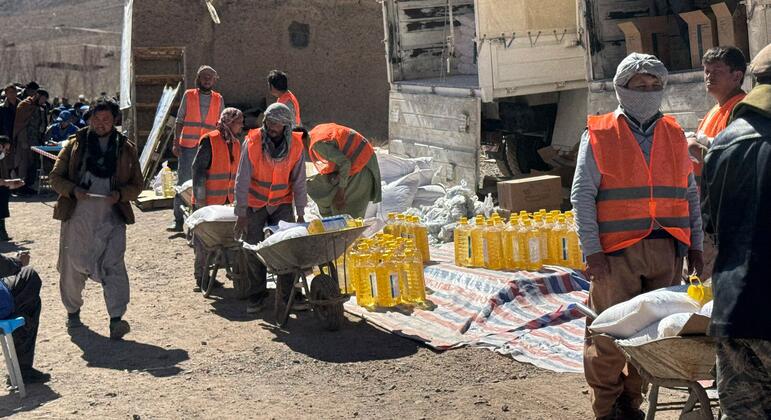
In 2026, humanitarian partners plan to reach 17.5 million Afghans through a humanitarian appeal of $1.71 billion. This places Afghanistan second globally in terms of people targeted and sixth globally on total funding requirements, but this appeal is only 10 per cent funded at present.
The United Nations ability to deliver assistance and reach Afghan women is impeded by a now-six-month ban on UN female national personnel.
“We again urge the de facto authorities to lift these restrictions and allow United Nations’ female national staff to return to their offices,” Ms. Gagnon stressed.
However, the international community has shared concerns over decisions of the de facto authorities that undermines their declared efforts to achieve economic self-sufficiency.
Council members raise grave concerns
Many Council members raised concerns about the status of women in Afghanistan and their rights as well as about humanitarian assistance in the face of reality on the ground.
The “intransigence” of the Taliban, which came to power in 2021, in ignoring the need of the Afghan people means that the international community “must carefully evaluate the utility of international assistance and engagement in Afghanistan”, the United States ambassador, whose country holds the rotating Council presidency for March, said in his national capacity.
Afghanistan’s ambassador, who does not represent the de facto authorities, told the Security Council that “after five years, the status quo in Afghanistan is neither acceptable nor sustainable.”
“This reality will not bring peace, stability or prosperity,” he said.
Aid ‘must never be politicised’
Iran’s ambassador said that “humanitarian assistance must never be politicised”.
He urged donors to provide increased predicable and flexible funding to the sustained lifesaving humanitarian operations.
In concluding her remarks, Ms. Gagnon reminded the Council of their commitment to an Afghanistan “at peace with itself and its neighbours, reintegrated into the international system and meeting its international obligations for the benefit of the Afghan people”.
Watch the full meeting on UN Web TV here: