SHANGHAI — The global sulphur market has entered a “structural bull run,” with Chinese spot prices surging past $600 per metric tonne this week—nearly tripling the year-over-year average. This price explosion, fueled by a severe global supply deficit and a shift in refinery feedstocks, has unexpectedly transformed sulphur from a low-value byproduct into a primary driver of refinery profitability across East Asia.
The Rise of “Sour” Economics
The price rally is being driven by a strategic pivot among Chinese independent and state-owned refineries. To capitalize on high sulphur valuations, importers have significantly increased their intake of “sour” crude oil—grades with high sulphur content, such as those delivered via Canada’s recently expanded Trans Mountain Pipeline (TMX).
- Refinery Margins: The surge in sulphur value has boosted average refinery margins by an estimated 10%. In an era of fluctuating fuel demand, the recovery and sale of elemental sulphur have moved from a waste-management cost to a significant revenue stream.
- The TMX Factor: Since the TMX expansion reached full operational capacity, China has become the primary destination for Canadian heavy crude. These grades are naturally sulphur-rich, allowing Chinese “teapot” refineries in Shandong to maximize their output of the yellow mineral.
Supply Constraints and New Energy Demand
The market imbalance is compounded by a “perfect storm” of geopolitical and industrial factors:
- Supply Deficit: Global production remains constrained due to ongoing disruptions in Russian refining capacity and maintenance cycles in the Middle East. Analysts estimate a global supply-demand gap of approximately 5 million tonnes for 2026.
- New Energy “Dual Engine”: Traditional demand from the fertilizer sector is now being outpaced by the “New Energy” transition. Sulphur is a critical component in the production of Lithium Iron Phosphate (LFP) batteries and the hydrometallurgical processing of nickel in Indonesia—both of which have seen exponential growth this year.
Market Outlook
As of March 27, benchmark pricing tracked by SunSirs shows a month-on-month increase of over 23%, with the market testing historical highs in the RMB 4,800–5,500 range. With inventories at Chinese ports continuing to dwindle and demand for battery-grade chemicals showing no signs of cooling, industry experts forecast that prices will remain elevated through the second half of 2026.
This “repricing” of sulphur marks a fundamental shift in the petrochemical industry, as the mineral’s role transitions from an agricultural staple to a strategic asset for the global energy transition.
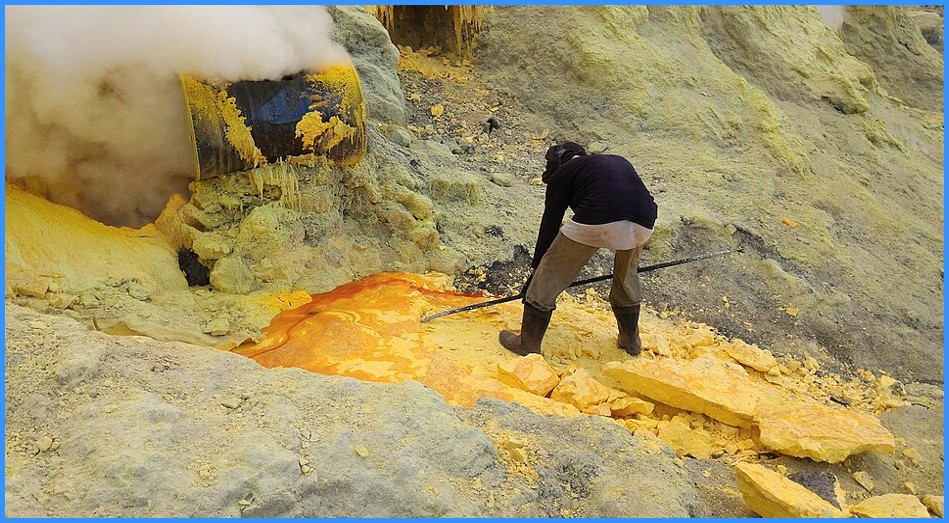
Sulphur Mining at Kawah Ijen, Picture by Aditya Suseno