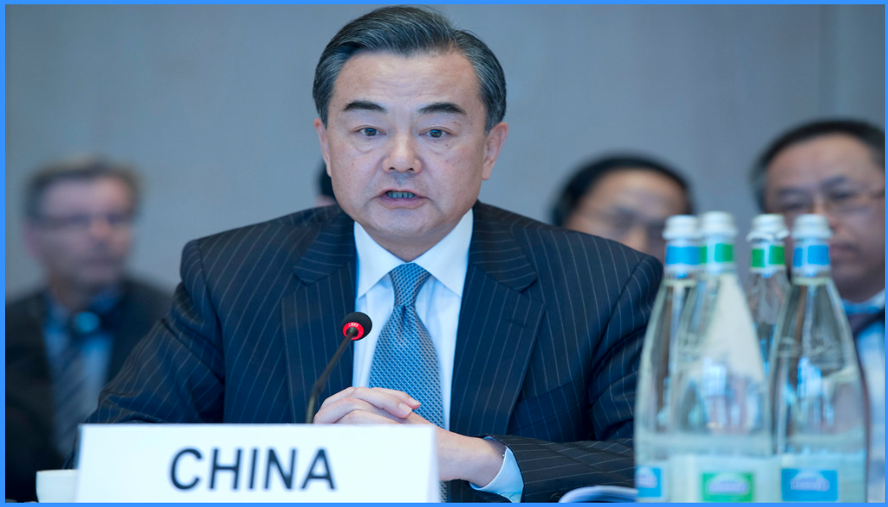
In a sharp escalation of diplomatic rhetoric, Chinese Foreign Minister Wang Yi has declared that Beijing will not accept any nation acting as the “world’s judge.”1 The statement, issued on Sunday, January 4, 2026, follows the dramatic U.S. military operation that resulted in the capture of Venezuelan President Nicolás Maduro and his wife, Cilia Flores.
The move has sent shockwaves through the international community, leaving allies and adversaries alike debating the intersection of national sovereignty and international law.2
China’s Stance: Sovereignty Over Unilateralism
Speaking during a meeting with his Pakistani counterpart in Beijing, Wang Yi framed the U.S. action as a “hegemonic act” that undermines the fundamental principles of the UN Charter.3
- Rejection of Hegemony: “We have never believed that any country can act as the world’s police, nor do we accept that any nation can claim to be the world’s judge,” Wang stated, emphasizing that the sovereignty of all nations must be protected under international law.4
- Shock and Condemnation: Beijing issued two separate formal statements expressing “shock” at the use of force and demanding the immediate release of the Venezuelan leader.5
- Strategic Blow: Analysts suggest the capture is a significant setback for China’s “all-weather strategic partnership” with Caracas, which had been reaffirmed by a high-level Chinese envoy just hours before the U.S. strike.6
The Global Response: A Divided World
The international community has responded with a complex mix of condemnation for the U.S. method and long-standing disapproval of the Maduro administration’s legitimacy.7
| Country/Entity | Official Position | Key Statement |
| Russia | Aggressive Condemnation | Described the raid as an “act of armed aggression” against a sovereign state. |
| United Nations | “Deeply Alarmed” | Secretary-General Guterres warned of a “dangerous precedent” in international relations. |
| European Union | Torn Ambivalence | Acknowledged the “end of the dictatorship” while calling for strict adherence to international law. |
| Turkey | Opposition to Force | Reiterated that the use of force to enact regime change is unacceptable. |
| Venezuela (Interim) | Local Celebration | Large crowds in Caracas and Miami celebrated the ouster, citing years of repression. |
The “Legitimacy” Paradox
The crisis highlights a stark divide in global politics. While the U.S. justifies the operation based on a 2020 narco-trafficking indictment, critics argue that “self-defense” and “drug interdiction” do not provide a legal basis for invading a sovereign nation and abducting its head of state.8
- The U.S. Defense: Secretary of State Marco Rubio maintains that Maduro was an “illegitimate leader” of a “narco-terrorist organization,” arguing the raid was a law enforcement action.9
- The Legal Challenge: International lawyers have compared the event to the 1989 capture of Manuel Noriega, though many warn that the total absence of Congressional or UN approval makes this case a much more volatile legal anomaly.10
What Lies Ahead?
With Maduro currently held in a New York detention center awaiting his first court appearance, the focus has shifted to the power vacuum in Caracas. Venezuela’s Vice President Delcy Rodríguez has assumed office as acting president, but with U.S. forces still present in the region and Beijing demanding a return to the status quo, the threat of a wider geopolitical confrontation remains at an all-time high even as several leaders called for de-escalation and caution going forward.
Chinese Foreign Minister Wang Yi, Flickr Picture by UN Geneva