GENEVA/TEHRAN — As the smoke clears from the opening salvos of Operation Epic Fury, the international community is engaged in a sobering post-mortem of the diplomatic failures that led to the death of Iran’s Supreme Leader, Ayatollah Ali Khamenei, and the subsequent regional destabilization. While the immediate trigger was the joint U.S.-Israeli strike on February 28, 2026, analysts point to a multi-layered “conundrum” of missed opportunities, verbal provocations, and a catastrophic breakdown in nuclear transparency that made this collision almost inevitable.
A Legacy of Verbal Warfare
The path to open conflict was paved with months of escalating rhetoric. Prior to the strikes, both Washington and Tehran engaged in a “verbal barrage” that narrowed the room for traditional diplomacy.
- Nuclear Impasse: For over a year, world bodies and the U.S. issued increasingly urgent calls for Iran to allow “adequate access” for IAEA inspectors to verify its nuclear capacity. The failure of the February 2026 Geneva talks—where the U.S. demanded a total dismantlement of facilities like Fordow and Natanz—served as the final diplomatic hurdle that neither side could clear.
- The Ultimatum: President Trump’s administration framed the strikes as a “counterproliferation necessity,” arguing that Iran’s refusal to renounce its nuclear ambitions and its continued development of long-range missiles posed an “intolerable threat.” Tehran, conversely, viewed these demands as a violation of sovereignty, responding with challenges to U.S. regional hegemony that eventually reached a breaking point.
Assessing the Cost of Retaliation
The execution of the conflict has drawn criticism for its heavy humanitarian toll and strategic “mismanagement” on both sides.
- Precision and Civilian Loss: While described as a “clinical” operation, the initial U.S.-Israeli strikes resulted in significant collateral damage, including the widely reported death of over 100 children at a primary school in Minab. Critics argue that the lack of precision in such high-stakes “regime change” operations has alienated potential allies and fueled regional rage.
- Retaliatory Missteps: Iran’s subsequent response—targeting U.S. bases in countries like the UAE, Bahrain, and Kuwait—has been described by some analysts as “fraught with mistakes.” By striking neighbors who host U.S. bases simply by geographic necessity, Tehran has turned potential regional mediators and allies into direct adversaries, isolating itself further from the “Axis of Resistance.” “Furthermore, Tehran’s move to block the Strait of Hormuz represents a significant escalation that transcends a bilateral dispute, threatening the economic stability of a host of neutral nations. This strategy not only risks global energy paralysis but further isolates Iran’s interim leadership, inviting the international community to view the new administration through the lens of a ‘pariah state’ at a moment when diplomatic legitimacy is most needed.”
The Road to a “War of Words”
Despite the current direct confrontation, a growing consensus of global leaders argues that there is still a window to “allow peace to reign.” The transition from an interim leadership in Tehran to a permanent one offers a fleeting opportunity to reset the narrative.
- Dialogue Over Destruction: United Nations Secretary-General António Guterres has emphasized that the alternative to a negotiated settlement is an “all-out war” that no nation can afford.
- Ironing Out Differences: Experts suggest that a lasting resolution must involve a compromise on the nuclear program that includes “token enrichment” under strict, permanent verification, alongside a regional security framework that addresses the presence of foreign military bases.
The shift from armed attacks back to a “war of words” is no longer just a diplomatic preference—it is a humanitarian imperative. As the events of the last several days have proven, the Middle East “conundrum” cannot be solved by decapitation strikes alone, but rather through the grueling, necessary work of ironing out differences at the negotiating table.
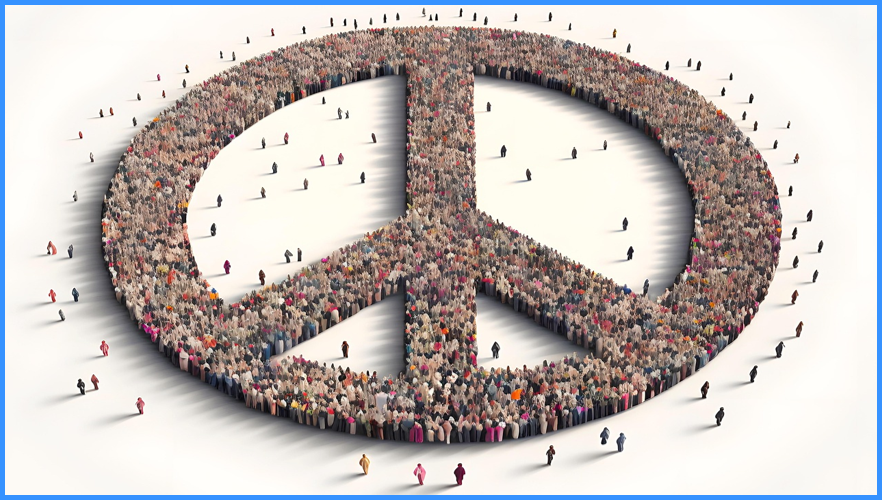
Peace Image by peacemedia_for_future from Pixabay