From living buildings to multitasking home robots, here’s how science is reimagining 2026

World


As science continues to push boundaries, the coming years could surprise us with self‑healing cities, robots that care and smarter defences against future pandemics. Here are five outlooks from some of Europe’s leading researchers.

Bio‑architecture – a return to nature

Imagine a city where buildings are alive – structures that absorb pollution as people walk by and adapt through growth. Architect Phil Ayres believes this vision is within reach.

He explains how recent advances in biohybrid architecture, from fungus‑based materials to climbing plants, are opening possibilities for sustainable design and reshaping our urban environments.

According to Ayres, a professor at the Royal Danish Academy in Copenhagen, our cities have largely been designed to serve a single species: humans. His work in biohybrid architecture points toward a future where other living organisms play an active role in the built environment, helping reconnect people with the natural world.

He has explored how organisms such as fungi (in the Fungateria and FUNGAR projects) and climbing plants (the flora robotica project) might function as architectural materials.

“Traditional construction materials are usually mined, transported and processed at high temperatures before becoming durable building components,” he explains. “We’re investigating how living complexes could be leveraged as part of a building’s fabric.”

While fungal materials are not yet strong enough to replace concrete or steel, Ayres notes that buildings rely on many materials beyond these two.

If we begin to grow parts of our buildings – much like we grow trees – we could gain environmental benefits such as carbon sequestration and enhanced biodiversity. This approach could also extend beyond buildings to other forms of urban infrastructure.

Anyone walking through a modern city can see how small patches of greenery are overshadowed by vast expanses of concrete and steel.

Biohybrid architecture could also draw on forestry and agricultural waste, as well as by‑products from food and industrial processes, supporting a more circular economy. Living materials might even provide additional functions, such as filtering air or water, or repairing themselves when damaged.

As new materials emerge, we may need to rethink supply chains, construction methods and even the aesthetic possibilities of living, growing structures – ultimately creating spaces that reconnect us with the outdoors.

Ayres acknowledges that the construction industry is cautious and slow to change; we have built in much the same way for a century. But research into living materials is advancing quickly.

Though these materials cannot yet serve as primary structural elements, future versions may offer the strength and durability needed to support entire buildings.

Read: From mushrooms to new architecture: the rise of living, self‑healing buildings

Quantum computing edges closer

Quantum computing is moving steadily from the laboratory into everyday life. Italian electronics engineer Giulia Acconcia explains how European researchers are shifting from theory to practice – with major implications for data security and battery innovation.

More companies in Europe are engaging with quantum technologies, a sign that quantum computers are edging closer to real‑world use, says Professor Giulia Acconcia of the Polytechnic University of Milan. She believes powerful quantum machines will soon tackle problems that today’s supercomputers cannot.

“In the past decade we’ve seen real progress, but developments have accelerated in the last five years,” she says. “Quantum computers are poised to leave research labs and start influencing people’s lives.”

In the EU‑funded QLASS project, her team is building a quantum computer using photons – tiny packets of light that travel faster than electrons and can encode more information.

“This lets us increase the amount of information transmitted inside the glass waveguides of a quantum computer,” she explains. A photonic chip, she adds, looks like a miniature network of glass roads that photons race along.

One of the researchers’ key goals is to use quantum computing to optimise battery design – a complex challenge involving many variables. Better optimisation could shorten electric vehicle charging times and enable cars to travel farther on smaller batteries.

Future users won’t need to operate quantum computers directly. Much like storing photos in the cloud, people will access quantum machines remotely and request complex calculations.

“These problems are so demanding that classical computers simply can’t solve them within a reasonable time,” Acconcia says.

Read: Cracking the quantum code: light and glass are set to transform computing

Hormone‑disrupting chemicals lurk everywhere

Chemicals found in everyday products can quietly disrupt our bodies over time. Dutch toxicologist Majorie van Duursen, who studies risks to women’s health, explains how better regulation – and smarter personal choices – could mitigate long‑term harm.

Many chemicals can interfere with hormones and cause lasting health effects, warns van Duursen of the Vrije Universiteit Amsterdam. Her research in the EU‑funded FREIA initiative examined endocrine‑disrupting chemicals and their links to breast cancer, infertility, pregnancy complications, early menopause and endometriosis.

“We are gaining more insight into early life exposure to these chemicals. It’s not always that ‘the dose makes the poison’, because it can matter more when you’re exposed, even to very low doses. Hormones shape your body’s blueprint and changing them can have long‑lasting effects.”

Ongoing research is revealing the full extent of the problem, with studies showing that hormone disruption by chemicals leads to long‑term health issues, including conditions not recognised before, such as heart disease.

While it is impossible to avoid all chemicals, van Duursen stresses that individuals can still reduce their exposure. “Don’t buy cheap plastic toys online; they may come from countries with weaker regulations. Choose toys approved in the EU,” she advises. “Don’t put plastic cookware in the microwave. And look for personal care products with fewer additives – we should ask which chemicals are truly needed.”

More than 16 000 chemicals have been identified in plastics alone, highlighting the trade‑off between convenience and health. “We don’t want to ban all chemicals – many are genuinely useful,” she says.

“But we lack crucial information about a large number of them, even in Europe. Current tests don’t capture all health effects, so we need stronger regulation and safer material design from the start, instead of discovering problems only when it’s too late.”

Read: Silent danger: researchers tackle chemicals that threaten health and fertility

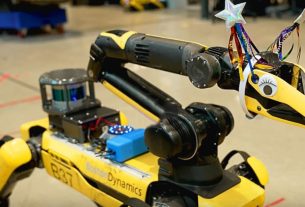
Home bots step closer to reality

Picture a robot that helps an elderly person prepare meals, lifts heavy objects, or safely dismantles old gadgets. Slovenian robotics scientist Aleš Ude believes these scenarios may be closer than we think – but key challenges remain, such as equipping robots with the right levels of empathy and common sense.

General‑purpose robots that assist at home or in hospitals may be possible within a decade, says Dr Ude of the Jožef Stefan Institute in Slovenia, thanks largely to rapid advances in AI.

In the ReconCycle initiative, Ude explored how robots could take apart a wide range of electronic devices for recycling.

“Almost nobody except the rich has 24‑hour domestic help. Many people would pay considerably for such a robot,” he says. Some pilot projects already use robots to support elderly patients in hospitals.

To operate in these environments, Ude notes, robots will likely need a humanoid form: hospitals are built around human anatomy, and legs allow access to places wheeled robots cannot reach. They must also be extremely reliable, safe and robust enough to survive inevitable mishaps.

Traditional pre‑programming, which works for industrial robots, is unsuitable for the messy, unpredictable home environment. What robots lack is common sense – the ability to respond appropriately to unexpected events and avoid dangerous errors. Generative AI and neural networks, inspired by the human brain, are helping robots better navigate such uncertainty.

Ude’s team is also researching human–robot collaboration. Communication has improved dramatically with large language models, but domestic or hospital robots will need to anticipate a person’s intentions through their neural networks.

And if they are to care for sick or elderly people, a degree of empathy will be essential – something that remains an open challenge.

Robotic vacuum cleaners may be common today, but a useful domestic humanoid robot will need to handle many different tasks. What these robots will be capable of in 10 years is uncertain, Ude says. But once the technology matures, widespread adoption in homes and hospitals is likely to follow quickly.

Read: AI‑powered robots help tackle Europe’s growing e‑waste problem

The next pandemic: expect the unexpected

What’s next after COVID‑19? Dutch virologist Marion Koopmans argues that vigilance, data and citizen science should drive Europe’s fight against future outbreaks – and explains why pandemics are seldom predictable.

Another pandemic is inevitable, says Professor Koopmans of the Erasmus Medical Centre in Rotterdam. We don’t know when it will happen, where it will start or what form it will take – but we can still prepare.

Pandemics begin in uncertainty: in the earliest days, it is often unclear who becomes infected, how a pathogen spreads and how fast it moves. But good data, AI and contributions from ordinary citizens can help scientists and clinicians act earlier and more effectively.

When COVID‑19 hit, Koopmans was leading the Versatile Infectious Diseases Observatory (VEO), a project to design a future‑proof surveillance system for emerging diseases.

“COVID‑19 was a high‑impact pandemic, although it could have been worse. The start was messy because responding to a new disease is like building a ship while sailing it,” she says. “It takes time to get answers from studies, but rapid action is crucial. As outbreaks are accelerating globally, we need to stay alert and strengthen early warning systems.”

Recent developments show why. “We’ve just seen an mpox outbreak emerge in a forested mining region of the Democratic Republic of Congo. Outbreaks can start anywhere, and it’s unrealistic to expect clinicians to test for every possible pathogen. We need to get better at spotting anything unusual that warrants immediate investigation – especially in areas where risk is rising.”

Those risks increase where humans come into contact with animals, creating opportunities for spillover. VEO explored such scenarios by combining different types of data, for example, where migratory bird routes overlap with areas of dense poultry farming.

One major lesson from recent years, she says, is to expect the unexpected: the 2009 swine flu pandemic, for instance, emerged not in Asia, as widely assumed, but in South America.

“Our studies have highlighted several possible pathways for emergence, ranging from bird flu and West Nile virus to diseases linked to melting permafrost, and infections that could spread rapidly through major cities.”

Looking ahead, Koopmans hopes to see a global, integrated data repository drawing on scientific studies, public health surveillance and large‑scale environmental monitoring. Citizens too can play a role by reporting unusual findings, such as dead birds or new mosquito sightings.

“We’re also exploring how AI might flag potential signals from these sources, and how broad genetic detection tools could uncover new viruses in wildlife or livestock that may pose future risks.”

Read: Smarter science: staying one step ahead of the next pandemic



Source link

As science continues to push boundaries, the coming years could surprise us with self‑healing cities, robots that care and smarter defences against future pandemics. Here are five outlooks from some of Europe’s leading researchers.

Bio‑architecture – a return to nature

Imagine a city where buildings are alive – structures that absorb pollution as people walk by and adapt through growth. Architect Phil Ayres believes this vision is within reach.

He explains how recent advances in biohybrid architecture, from fungus‑based materials to climbing plants, are opening possibilities for sustainable design and reshaping our urban environments.

According to Ayres, a professor at the Royal Danish Academy in Copenhagen, our cities have largely been designed to serve a single species: humans. His work in biohybrid architecture points toward a future where other living organisms play an active role in the built environment, helping reconnect people with the natural world.

He has explored how organisms such as fungi (in the Fungateria and FUNGAR projects) and climbing plants (the flora robotica project) might function as architectural materials.

“Traditional construction materials are usually mined, transported and processed at high temperatures before becoming durable building components,” he explains. “We’re investigating how living complexes could be leveraged as part of a building’s fabric.”

While fungal materials are not yet strong enough to replace concrete or steel, Ayres notes that buildings rely on many materials beyond these two.

If we begin to grow parts of our buildings – much like we grow trees – we could gain environmental benefits such as carbon sequestration and enhanced biodiversity. This approach could also extend beyond buildings to other forms of urban infrastructure.

Anyone walking through a modern city can see how small patches of greenery are overshadowed by vast expanses of concrete and steel.

Biohybrid architecture could also draw on forestry and agricultural waste, as well as by‑products from food and industrial processes, supporting a more circular economy. Living materials might even provide additional functions, such as filtering air or water, or repairing themselves when damaged.

As new materials emerge, we may need to rethink supply chains, construction methods and even the aesthetic possibilities of living, growing structures – ultimately creating spaces that reconnect us with the outdoors.

Ayres acknowledges that the construction industry is cautious and slow to change; we have built in much the same way for a century. But research into living materials is advancing quickly.

Though these materials cannot yet serve as primary structural elements, future versions may offer the strength and durability needed to support entire buildings.

Read: From mushrooms to new architecture: the rise of living, self‑healing buildings

Quantum computing edges closer

Quantum computing is moving steadily from the laboratory into everyday life. Italian electronics engineer Giulia Acconcia explains how European researchers are shifting from theory to practice – with major implications for data security and battery innovation.

More companies in Europe are engaging with quantum technologies, a sign that quantum computers are edging closer to real‑world use, says Professor Giulia Acconcia of the Polytechnic University of Milan. She believes powerful quantum machines will soon tackle problems that today’s supercomputers cannot.

“In the past decade we’ve seen real progress, but developments have accelerated in the last five years,” she says. “Quantum computers are poised to leave research labs and start influencing people’s lives.”

In the EU‑funded QLASS project, her team is building a quantum computer using photons – tiny packets of light that travel faster than electrons and can encode more information.

“This lets us increase the amount of information transmitted inside the glass waveguides of a quantum computer,” she explains. A photonic chip, she adds, looks like a miniature network of glass roads that photons race along.

One of the researchers’ key goals is to use quantum computing to optimise battery design – a complex challenge involving many variables. Better optimisation could shorten electric vehicle charging times and enable cars to travel farther on smaller batteries.

Future users won’t need to operate quantum computers directly. Much like storing photos in the cloud, people will access quantum machines remotely and request complex calculations.

“These problems are so demanding that classical computers simply can’t solve them within a reasonable time,” Acconcia says.

Read: Cracking the quantum code: light and glass are set to transform computing

Hormone‑disrupting chemicals lurk everywhere

Chemicals found in everyday products can quietly disrupt our bodies over time. Dutch toxicologist Majorie van Duursen, who studies risks to women’s health, explains how better regulation – and smarter personal choices – could mitigate long‑term harm.

Many chemicals can interfere with hormones and cause lasting health effects, warns van Duursen of the Vrije Universiteit Amsterdam. Her research in the EU‑funded FREIA initiative examined endocrine‑disrupting chemicals and their links to breast cancer, infertility, pregnancy complications, early menopause and endometriosis.

“We are gaining more insight into early life exposure to these chemicals. It’s not always that ‘the dose makes the poison’, because it can matter more when you’re exposed, even to very low doses. Hormones shape your body’s blueprint and changing them can have long‑lasting effects.”

Ongoing research is revealing the full extent of the problem, with studies showing that hormone disruption by chemicals leads to long‑term health issues, including conditions not recognised before, such as heart disease.

While it is impossible to avoid all chemicals, van Duursen stresses that individuals can still reduce their exposure. “Don’t buy cheap plastic toys online; they may come from countries with weaker regulations. Choose toys approved in the EU,” she advises. “Don’t put plastic cookware in the microwave. And look for personal care products with fewer additives – we should ask which chemicals are truly needed.”

More than 16 000 chemicals have been identified in plastics alone, highlighting the trade‑off between convenience and health. “We don’t want to ban all chemicals – many are genuinely useful,” she says.

“But we lack crucial information about a large number of them, even in Europe. Current tests don’t capture all health effects, so we need stronger regulation and safer material design from the start, instead of discovering problems only when it’s too late.”

Read: Silent danger: researchers tackle chemicals that threaten health and fertility

Home bots step closer to reality

Picture a robot that helps an elderly person prepare meals, lifts heavy objects, or safely dismantles old gadgets. Slovenian robotics scientist Aleš Ude believes these scenarios may be closer than we think – but key challenges remain, such as equipping robots with the right levels of empathy and common sense.

General‑purpose robots that assist at home or in hospitals may be possible within a decade, says Dr Ude of the Jožef Stefan Institute in Slovenia, thanks largely to rapid advances in AI.

In the ReconCycle initiative, Ude explored how robots could take apart a wide range of electronic devices for recycling.

“Almost nobody except the rich has 24‑hour domestic help. Many people would pay considerably for such a robot,” he says. Some pilot projects already use robots to support elderly patients in hospitals.

To operate in these environments, Ude notes, robots will likely need a humanoid form: hospitals are built around human anatomy, and legs allow access to places wheeled robots cannot reach. They must also be extremely reliable, safe and robust enough to survive inevitable mishaps.

Traditional pre‑programming, which works for industrial robots, is unsuitable for the messy, unpredictable home environment. What robots lack is common sense – the ability to respond appropriately to unexpected events and avoid dangerous errors. Generative AI and neural networks, inspired by the human brain, are helping robots better navigate such uncertainty.

Ude’s team is also researching human–robot collaboration. Communication has improved dramatically with large language models, but domestic or hospital robots will need to anticipate a person’s intentions through their neural networks.

And if they are to care for sick or elderly people, a degree of empathy will be essential – something that remains an open challenge.

Robotic vacuum cleaners may be common today, but a useful domestic humanoid robot will need to handle many different tasks. What these robots will be capable of in 10 years is uncertain, Ude says. But once the technology matures, widespread adoption in homes and hospitals is likely to follow quickly.

Read: AI‑powered robots help tackle Europe’s growing e‑waste problem

The next pandemic: expect the unexpected

What’s next after COVID‑19? Dutch virologist Marion Koopmans argues that vigilance, data and citizen science should drive Europe’s fight against future outbreaks – and explains why pandemics are seldom predictable.

Another pandemic is inevitable, says Professor Koopmans of the Erasmus Medical Centre in Rotterdam. We don’t know when it will happen, where it will start or what form it will take – but we can still prepare.

Pandemics begin in uncertainty: in the earliest days, it is often unclear who becomes infected, how a pathogen spreads and how fast it moves. But good data, AI and contributions from ordinary citizens can help scientists and clinicians act earlier and more effectively.

When COVID‑19 hit, Koopmans was leading the Versatile Infectious Diseases Observatory (VEO), a project to design a future‑proof surveillance system for emerging diseases.

“COVID‑19 was a high‑impact pandemic, although it could have been worse. The start was messy because responding to a new disease is like building a ship while sailing it,” she says. “It takes time to get answers from studies, but rapid action is crucial. As outbreaks are accelerating globally, we need to stay alert and strengthen early warning systems.”

Recent developments show why. “We’ve just seen an mpox outbreak emerge in a forested mining region of the Democratic Republic of Congo. Outbreaks can start anywhere, and it’s unrealistic to expect clinicians to test for every possible pathogen. We need to get better at spotting anything unusual that warrants immediate investigation – especially in areas where risk is rising.”

Those risks increase where humans come into contact with animals, creating opportunities for spillover. VEO explored such scenarios by combining different types of data, for example, where migratory bird routes overlap with areas of dense poultry farming.

One major lesson from recent years, she says, is to expect the unexpected: the 2009 swine flu pandemic, for instance, emerged not in Asia, as widely assumed, but in South America.

“Our studies have highlighted several possible pathways for emergence, ranging from bird flu and West Nile virus to diseases linked to melting permafrost, and infections that could spread rapidly through major cities.”

Looking ahead, Koopmans hopes to see a global, integrated data repository drawing on scientific studies, public health surveillance and large‑scale environmental monitoring. Citizens too can play a role by reporting unusual findings, such as dead birds or new mosquito sightings.

“We’re also exploring how AI might flag potential signals from these sources, and how broad genetic detection tools could uncover new viruses in wildlife or livestock that may pose future risks.”

Read: Smarter science: staying one step ahead of the next pandemic

This article was originally published on https://projects.research-and-innovation.ec.europa.eu/en/horizon-magazine/living-buildings-multitasking-home-robots-heres-how-science-reimagining-2026. It is shared here under a Creative Commons license.

Leave a Reply

Your email address will not be published. Required fields are marked *