Your fitness tracker might be telling you that you need 10,000 steps, 30 minutes of cardio or even an hour at the gym every day. But what if you could improve your health in just a few minutes a day? A growing body of research suggests you can.
“Exercise snacks” are brief bursts of vigorous exercise, typically lasting one minute or less, scattered throughout your day. Think climbing a few flights of stairs, doing some squats during a work break or a quick burst of jumping jacks before lunch.
Unlike traditional workouts, these “snacks” aren’t done back-to-back – they’re spread across your waking hours, separated by one to four hours of your regular activities such as working, commuting or watching TV.
The concept differs from high-intensity interval training (Hiit), where you might do multiple intense bursts intense activity within a single 20-minute workout. Exercise snacks are more like grazing throughout the day rather than sitting down for a full meal.
A recent meta-analysis published in the British Journal of Sports Medicine found that in previously sedentary adults, exercise snacks significantly improved cardiorespiratory fitness, a measure of how well your heart and lungs work during physical activity.
The review concluded that these bite-sized workouts delivered meaningful health benefits, with an impressive 83% of participants sticking to their routines for up to three months.
Why exercise snacking works
Around a third of adults worldwide don’t get enough physical activity. When asked why, the answers are almost always the same: no time and no motivation. Exercise snacks tackle both barriers head on.
In a 2019 study, sedentary young adults were asked to vigorously climb a three-flight stairwell three times per day – with one to four hours of recovery between bouts. Each session also included a brief warm-up of jumping jacks, squats and lunges.
After six weeks, the stair climbers showed significant improvements in cardiorespiratory fitness compared to a control group – a key marker linked to longevity and reduced cardiovascular disease risk.
What’s particularly striking about exercise snacks is their efficiency. While current guidelines recommend 150 minutes of moderate-intensity physical activity or 75 minutes of vigorous activity per week, exercise snacks can deliver measurable benefits in far less time – sometimes just a few minutes daily.
A 2024 randomised controlled trial compared stair-climbing exercise snacks to 40 minutes of moderate-intensity cycling three times weekly. Remarkably, the exercise snacks group – doing three, 30-second, all-out stair climbs per session – improved their fitness by 7%, while the cycling group showed no significant change.

PR Image Factory/ Shutterstock
The potential benefits extend beyond fitness. A large-scale study of over 25,000 adults who didn’t exercise found that those who accumulated just three to four minutes of vigorous activity daily through activities such as fast walking or climbing stairs, had a 40% lower risk of dying from any cause. They also had a nearly 50% lower risk of dying from cardiovascular disease compared to those who did none.
There’s evidence exercise snacks have blood sugar benefits, too. Research has shown that brief, intense exercise snacks performed before meals can reduce post-meal blood sugar spikes in people with insulin resistance (a precursor to type 2 diabetes) – potentially good news for anyone concerned about their metabolic health.
The best exercise snacks
The beauty of exercise snacks is their flexibility. You don’t need special equipment, a gym membership or to even change your clothes. Here are some practical ways to incorporate them into your day:
Stair climbing is perhaps the most researched exercise snack. If you work in an office building or live in a block of flats, you’ve got free exercise equipment at your disposal.
Try climbing vigorously – fast enough that you’re breathing hard by the top – for 20-60 seconds, two to three times throughout your day. Earlier research found that women who progressively increased their stair climbing to five ascents daily saw a 17% improvement in fitness after just eight weeks.
Walking bursts count too, provided they’re vigorous. Try doing a brisk one-minute walk around the office or a quick lap of your garden a few times a day. But in order to see benefits, you’ve got to make sure the pace is quick enough that holding a conversation becomes difficult.
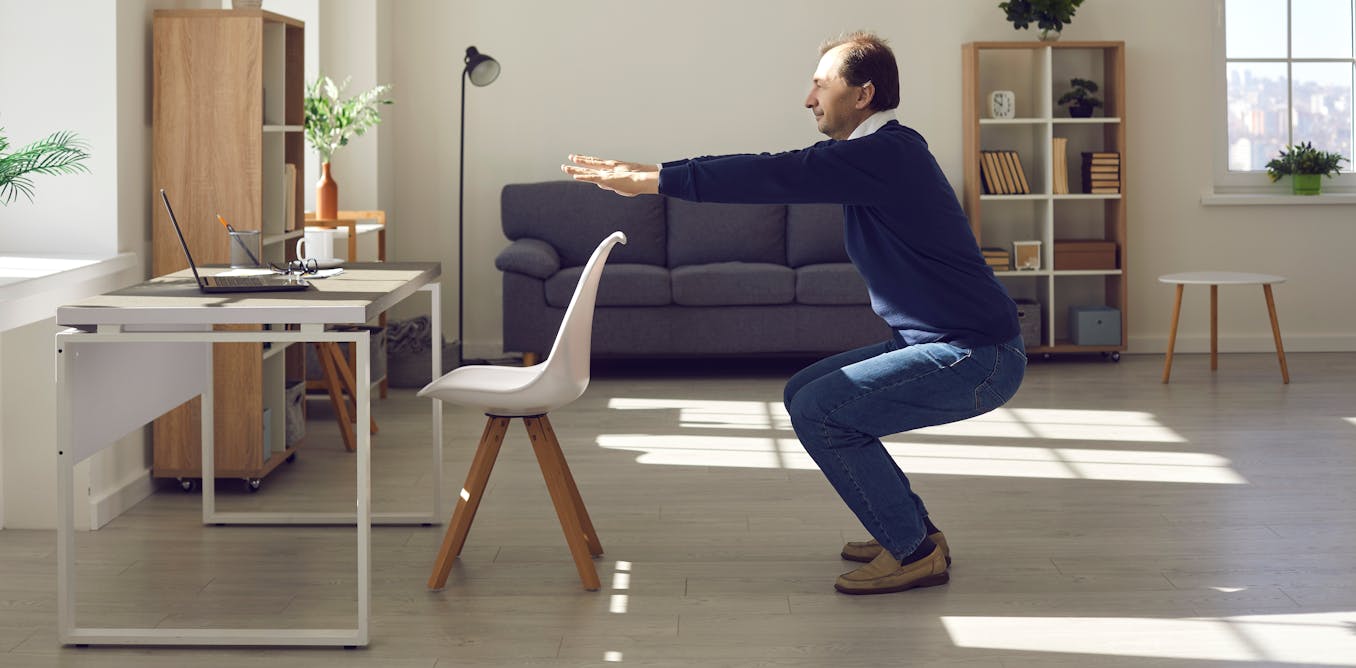
Bodyweight exercises such as squats, lunges or wall push-ups can be done almost anywhere. Try a set of ten squats every time you make a cup of tea or some wall push-ups before lunch. The key is intensity – you should feel your heart rate rise and be slightly out of breath.
Consistency matters more than perfection when it comes to exercise snacks. The research shows that even very brief sessions – as short as 20 seconds – can contribute to fitness improvements so long as they’re repeated regularly.
The trick is building these snacks into existing habits. Climb stairs before your morning coffee. Do squats during TV adverts. Take a brisk walk after finishing a work call.
Exercise snacks won’t replace the full range of benefits you’d get from a comprehensive fitness programme. But for the millions of us who struggle to find time for traditional workouts, they offer a practical entry point – one backed by increasingly robust science.
The biggest gains in health happen when someone goes from doing nothing to doing something. So next time you’re waiting for the kettle to boil or have a few minutes between meetings, consider having an exercise snack. Your heart will thank you.

Jack McNamara does not work for, consult, own shares in or receive funding from any company or organisation that would benefit from this article, and has disclosed no relevant affiliations beyond their academic appointment.