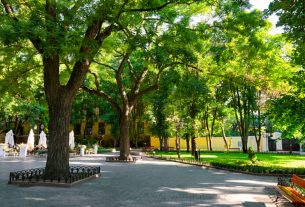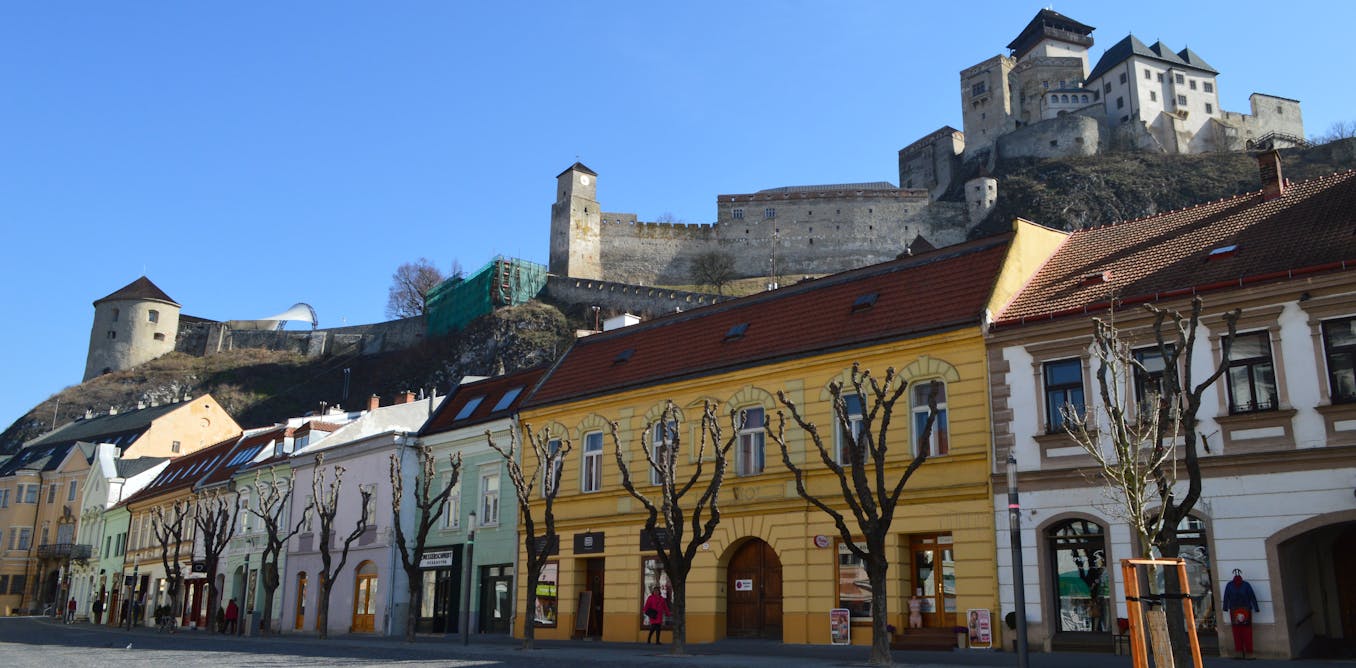
This year the cities of Trenčín in Slovakia and Oulu in Finland took the helm as Europe’s cultural beacon cities. As the Old Continent redefines its role on the global geopolitical stage, the European Capitals of Culture (ECoC) programme is at a turning point. The European Commission recently launched a public forum initiative to collectively rethink the future of the programme after 2033. ECoC’s role as a tool for cultural diplomacy is now more important than ever.
Created in 1985 against a backdrop of thawing Cold war tensions and the political construction of the European Union project, the European Capital of Culture initiative was initially designed to celebrate the continent’s cultural diversity. Since then, it has become a laboratory for contemporary policies, but also a barometer of the hopes, contradictions and challenges of Europe itself.
Historical context is key to understanding the launch of the European Capitals of Culture: the end of the Cold War, in a divided Europe where the Iron Curtain was beginning to crumble and the European Economic Community (EEC) was gradually expanding. The programme came about, incidentally, thanks to a chance conversation at an airport between two prominent politicians: Jack Lang, who was France’s Minister for Culture Culture at the time, and Melina Mercouri, an activist actress who was then Greece’s Secretary of State for Culture.
Both had an ambitious vision: to use culture as a vehicle for unity, even though it seemed an overlooked aspect of European policy, as Monica Sassatelli, a sociologist at the University of Bologna, points out in her study on the role of culture in the historiography of European politics. The first cities which were chosen – Athens, Florence, Amsterdam, then Paris translates an aspiration for awarding the future European Union symbolic legitimacy. These historical capitals, as beacons of artistic and intellectual heritage, embody Europe’s arts, creativity and traditions, which transcend political and economic division.
Culture as a tool for urban generation
Next up was Glasgow (Scotland, UK). A declining industrial city marked by deindustrialisation and endemic unemployment, Glasgow City Council developed a strategy to revitalise the city centre in the late 1980s, aiming to mark a symbolic turning point and pave the way for its title as European Capital of Culture in 1990.
The promotional campaign “Glasgow’s Miles Better” pioneered the mix of former warehouses and culture, with the aim of revamping certain key cultural institutions (Scottish Opera, Ballet and Orchestra, BBC Symphony Orchestra, Citizen Theatre) and creating a new exhibition centre capable of hosting local and international artists and events. The Scottish city’s Arts Director Robert Palmer, future author of the first report on the initiative in 2004, considered the 1990 event as the starting point for a participatory process of redefining local culture “from the bottom up”, which could include artistic excellence as well as historical, rural and industrial traditions, and reconnect with a well-established tradition of popular culture and leisure activities.
Alongside major concerts by Luciano Pavarotti and Frank Sinatra, a whole series of associations and small local collectives took to the stage. In Glasgow, the year 1990 redefined the boundaries of the word “culture”, ultimately embracing the city’s industrial history and allowing its population to identify with it.
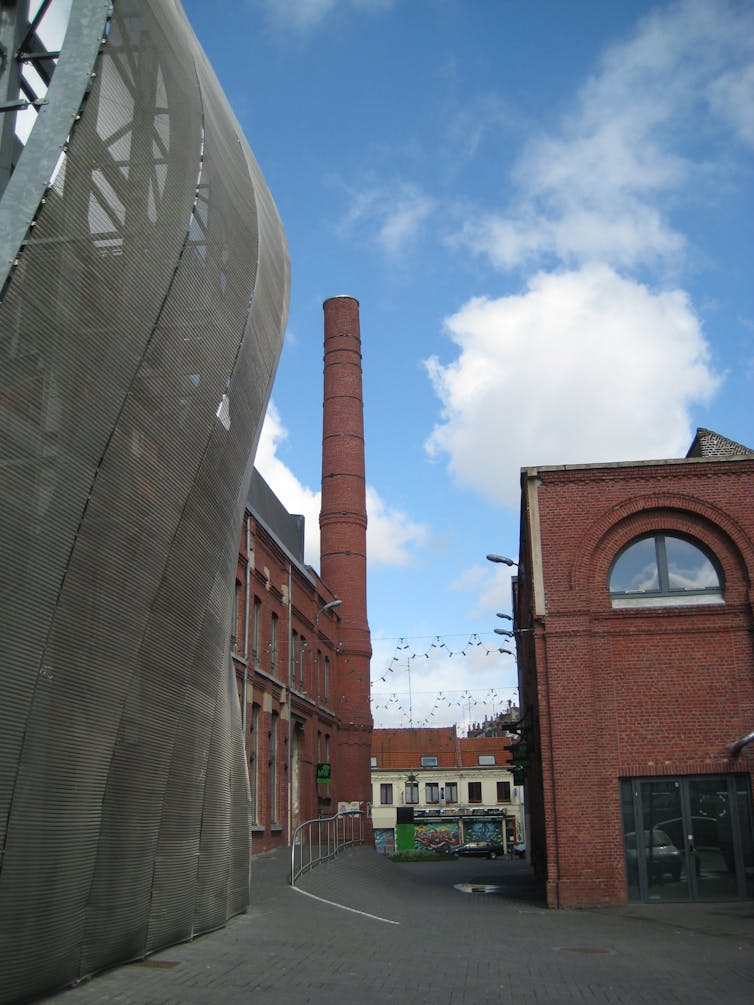
According to sociologist Beatriz Garcia, this regenerative effect on images and local identities is the strongest and most lasting legacy of the ECoC, beyond its economic and material impacts. This pioneering case, alongside other contemporary examples such as Bilbao and Barcelona in Spain, serves as a model. In other European cities, industrial premises are being transformed into theatres, museums or festival venues: the “Creative City” attracts millions of visitors and stimulates the local economy. When Lille in Northern France was elected “ECoC 2004”, it unveiled a dozen “maisons folies” across greater Lille and Belgium. These “crucibles of artistic and cultural innovation”, local initiatives cropped up, for the most part, on abandoned sites or former industrial wasteland.
Wikimedia, Karlsupart, CC BY
In 2008, Liverpool (England, UK) used the programme to regenerate its waterfront and attract investment. At the turn of the century, the ECoC initiative was no longer limited to promoting cities that were already shining a light on international cultural scene, but became a real tool for urban transformation, used by places that were struggling to economically or socially reinvent and reposition themselves.
This change marks an evolution in urban policy, where culture is increasingly seen as a lever for economic development, on a par with infrastructure and policies designed to attract visitors. European Capitals of Culture are becoming an instrument of this policy, capable of attracting public and private funding, creating jobs in the cultural and tourism sectors, and improving the image of cities that are often stigmatised.
ECoC: an experimental space for testing contemporary transitions
However, this approach has its critics. The first reflective studies conducted in the early 2010s highlight how they can also exacerbate social and spatial inequalities if they are not accompanied by inclusive public policies. In Marseille in the South of France, in 2013, the issue became public with the organisation of an unofficial programme on the sidelines – i.e. parallel and alternative fringe events denouncing the side effects and undesirable consequences of the official programme. While Marseille’s stint as an ECoC was still an expression of the regeneration logic at work in previous years, it also marked the moment when social inclusion emerged as a central issue for these mega-events.
The Europe-wide cultural initiative has always been open to criticism, partly thanks to the very mechanics of the project, which often sees people who played a key role in previous editions of the programme returning to the selection panels for electing new European Capitals of Culture. Their participation, which had been questioned during Marseille-Provence 2013, has thus become an essential part of successive editions – in Matera-Basilicata (Italy) 2019, and citizen involvement will be one of the project’s key themes.
At the end of the 2010s, European Capitals of Culture also became a platform for the major challenges of the 21st century and a space for experimenting with ecological, social and digital transitions. Rijeka, Croatia, European Capital of Culture in 2020, illustrates the evolution. The city, marked by its industrial past and significant migration flows, focuses its programme on issues of migration and minorities, echoing the humanitarian crises affecting Europe. The cultural projects that have been set up: exhibitions, artist residencies, public debates brought together under the slogan ‘Port of Diversity’ – aim to promote intercultural dialogue and question the multiple identities of contemporary Europe. Similarly in the French town Bourges, in the running for 2028, is building its bid around ecological transition. The “Bourges, territory of the future” project is taking on the challenge of carbon neutrality for the event, using the ECoC as a springboard for climate action at the local level.
2033 and beyond: ECoC facing geopolitical and environmental challenges
While the European Capitals of Culture scheme is currently scheduled to run until 2033, the future of the title is under debate. The European Commission has launched a public consultation to imagine tomorrow’s ECoCs, in a context marked by geopolitical and environmental crises. The 2025 European Capitals of Culture, Chemnitz (Germany) and Nova Gorica/Gorizia (Slovenia), have developed a white paper on the future of the cultural initiative, based on observations from 64 past and future European Capitals of Culture. Forty recommendations are proposed to influence the programme reform process in the post-2034 cycle.
Among its key themes, the white paper emphasises the desire to strengthen the European dimension. This could be achieved by introducing a fundamental selection criterion based on European identity, emphasising European values in programming, developing a unified branding strategy and strengthening cross-border cooperation.
The selection and monitoring process, deemed too bureaucratic, is also being called into question, with the main recommendation being to favour encouraging rather than punitive monitoring. The legacy of the event is also up for debate: cities should be held accountable for delivering on the promises made in their bids, and national governments should be more involved in supporting cities during and after their capital year. The dissemination of good practices, peer review and mentoring between former and future ECoCs, which already exist informally, should be recognised and institutionalised, in particular through the possible creation of a central platform supported by the European institutions.
The challenge now is reconciling its symbolic and strategic role, ensuring that future editions do not merely celebrate, but aim to bolster democratic participation and transnational solidarity in an increasingly fragmented geopolitical landscape.
A weekly e-mail in English featuring expertise from scholars and researchers. It provides an introduction to the diversity of research coming out of the continent and considers some of the key issues facing European countries. Get the newsletter!

Maria Elena Buslacchi ne travaille pas, ne conseille pas, ne possède pas de parts, ne reçoit pas de fonds d'une organisation qui pourrait tirer profit de cet article, et n'a déclaré aucune autre affiliation que son organisme de recherche.