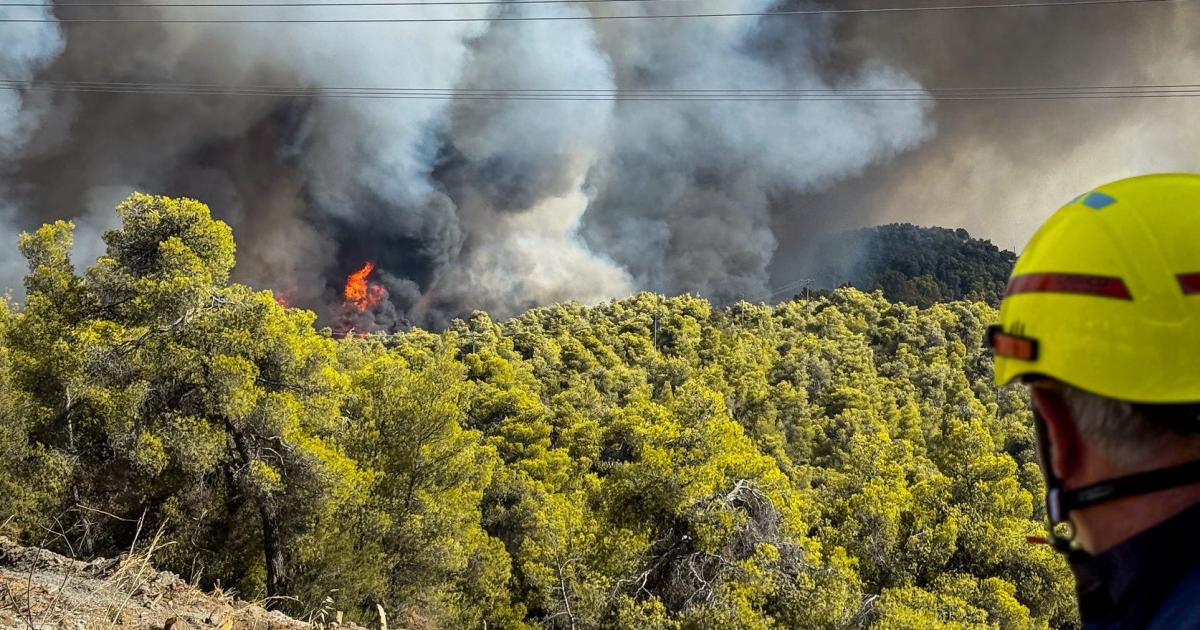
The 2024 forest fires report from the Commission’s Joint Research Centre confirms a longer and more intense fire season.
Major fires have increased every year since 2017, and the 2024 data confirm the upward trend. The 2024 fire season ended with a total burnt area of 383,317 hectares. While this is lower than the 500,000 hectares burnt in 2023 due in part to intermittent rainfall across the Mediterranean during spring and summer, it is still above the 17-year average of 354,185 hectares.
In 2024, 8,343 fires were reported in total.
This is more than four times the 17-year average. Bulgaria, Greece, Italy, Portugal and Spain were among the worst-affected EU countries, with a combined burnt area of 334,940 hectares. Among the non-EU countries participating in the EU Civil Protection Mechanism (UCPM), Albania, Bosnia and Herzegovina, North Macedonia, Türkiye and Ukraine suffered the heaviest losses. Ukraine accounted for half of the total burnt area within UCPM countries, with most wildfires seen across the combat frontlines.
European Forest Fire Information Service (EFFIS) data suggest that Europe’s wildfire reality is changing. The data gathered so far for the 2025 fire season further confirm this growing trend: 2025 will be the worst year since EFFIS records began in 2006.
The high frequency and intensity of wildfires during prolonged fire seasons pose new challenges to firefighting services across Europe and globally. In response these challenges, the EU has recently strengthened its collective readiness by doubling the rescEU aerial fleet and pooling resources from 27 Member States and 10 UCPM participating countries, reinforced by a further 4 aircraft, 26 ground forest fire fighting teams and one firefighting assessment team from the European Civil Protection Pool, as well as spontaneous offers from Member States.
While strong firefighting capabilities are essential, proactive measures such as developing integrated wildfire risk management, promoting nature-based solutions, and landscape management to reduce the vulnerability to wildfire will be crucial to face this growing challenge.
More insights can be found in the report published online.