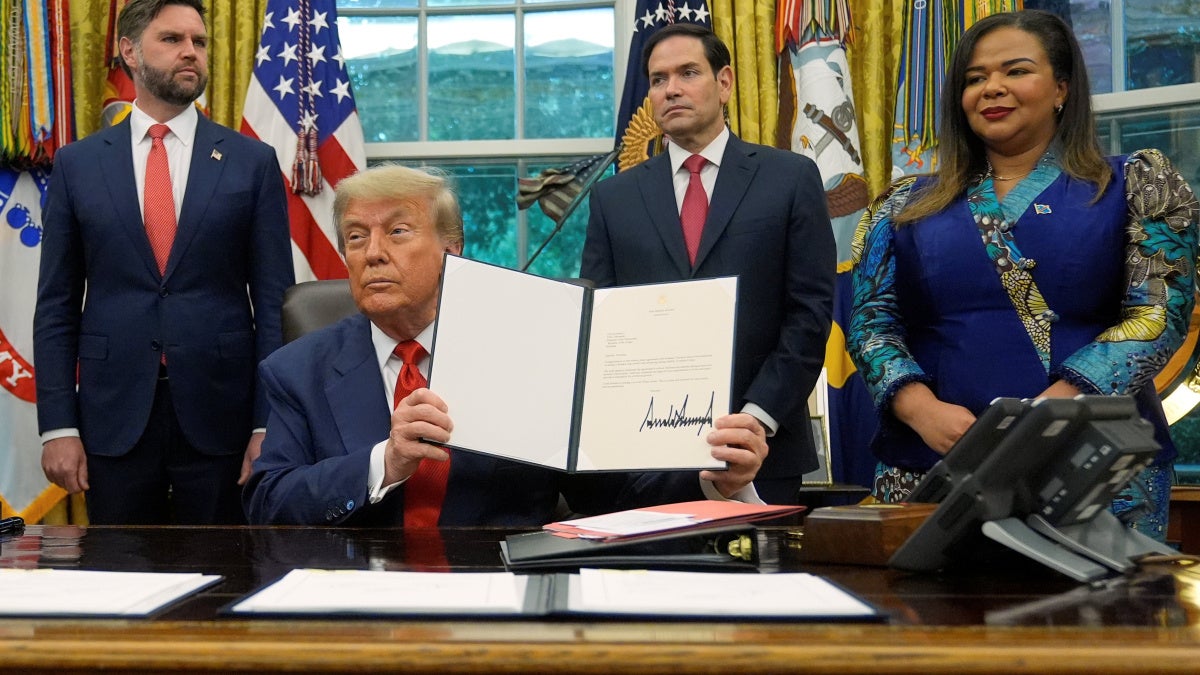
The Washington Accords, signed in December 2025 between the Democratic Republic of Congo and Rwanda under US mediation, promised an end to the devastating armed conflict in eastern Congo through troop withdrawals, ceasefires, and economic cooperation on critical minerals.
Months later, the deal has delivered little more than paper promises, with fighting continuing and civilians bearing the brunt. Support for abusive armed groups continues as does impunity for grave crimes. Congolese President Félix Tshisekedi’s February 4 visit to Washington, DC for a Critical Minerals Ministerial meeting offers US officials an opportunity to push for more meaningful implementation of the accords.
The agreement has stalled amid mutual accusations of violations. The M23 armed group, backed by Rwanda, maintains control over vast areas of mineral-rich territories. M23 fighters left the town of Uvira in January, but no meaningful withdrawal of Rwandan forces has occurred beyond that, and attacks on civilians in North and South Kivu provinces persist.
The parallel Doha talks with the M23, which have just resumed, have progressed slowly. According to United Nations experts, the M23 continues to expand its control over mines producing gold, tin, coltan, and other minerals in North and South Kivu and to smuggle resources to Rwanda for export. On January 28, a landslide at the Rubaya coltan mine, controlled by the M23 since 2024, killed more than 200 people, including women and children, after heavy rains triggered the collapse of artisanal mine shafts. Many victims were buried alive.
US officials and regional partners meeting with President Tshisekedi should reinforce the need to protect civilians, provide independent monitoring of troop withdrawals, and ensure accountability for serious crimes by all warring parties, including Wazalendo militias allied to the Congolese government and the M23.
Without pressing Congo and Rwanda to confront impunity through prosecutions for unlawful killings, forced displacement, and recruitment, there is little prospect for the Washington Accords to succeed where others have failed.
The US government’s attention to the conflict in eastern Congo provides a measure of hope in the region, but an end to conflict-related abuses remains distant. The US should sustain engagement to demand civilian safeguards and justice. Signatures alone do not end suffering, action does.