- Conflict-related sexual violence in eastern Democratic Republic of Congo has escalated, while support to survivors has significantly dropped.
- The Rwanda-backed M23 and other armed groups and military forces are using sexual violence as a weapon of war, while survivors experience a climate of impunity that protects those responsible and a healthcare system that has been deprived of the means to support them.
- The Congolese military should take all necessary measures to enforce discipline to prevent sexual violence. The government should increase support for investigating and prosecuting sexual violence. International partners should bolster their support for accountability efforts.
(Kinshasa, January 12, 2025) – Conflict-related sexual violence in eastern Democratic Republic of Congo has escalated while support to survivors has significantly dropped, Human Rights Watch and the Congolese women’s rights organization SOFEPADI said today.
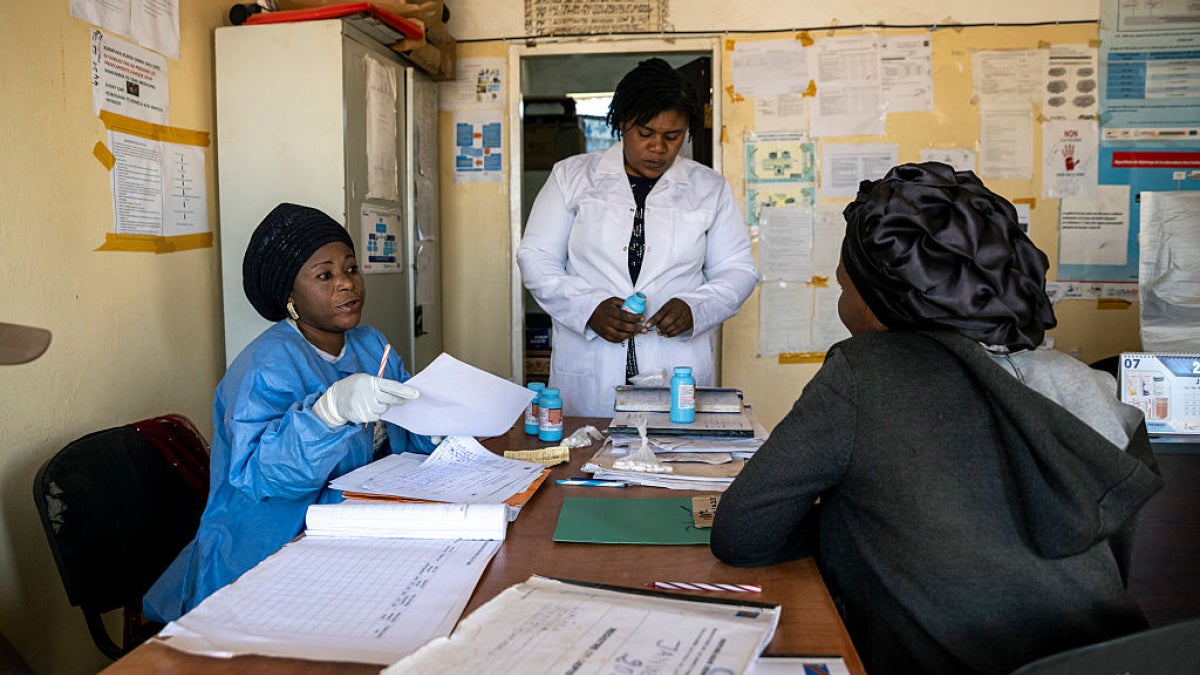
Human Rights Watch has documented sexual violence by members of at least five non-state armed groups and the Congolese army in eastern Congo. Expanded fighting in Ituri, North Kivu, and South Kivu provinces as well as funding cuts and limited access to health services, have made it increasingly difficult for women and girls who survive sexual violence to get the holistic support they need. Many clinics offering health care and other support have been forced to close.
“Armed groups and military forces are using sexual violence as a weapon of war across eastern Congo,” said Ida Sawyer, crisis and conflict director at Human Rights Watch. “Survivors of these horrific crimes experience a climate of impunity that protects those responsible and a healthcare system that has been deprived of the means to support them.”
In November 2025, Human Rights Watch, in cooperation with the Beni and Buni offices of the Solidarité Féminine pour la Paix et le Développement Integral (SOFEPADI), interviewed 23 survivors of sexual violence in northeastern Congo. Researchers also interviewed four Congolese survivors in Uganda who had fled eastern Congo. Human Rights Watch also met with Congolese provincial health and justice officials and staff of domestic and international organizations that provide support to survivors. Human Rights Watch wrote to the United States State Department, the Congolese government spokesperson, and the leadership of the M23 armed group with its findings, but has not received any responses.
The United Nations Population Fund (UNFPA) reported over 80,000 cases of rape in eastern Congo between January and September 2025, a 32 percent increase from the same period in 2024. At the same time, the United States government’s sudden and chaotic cuts to international aid in early 2025 abruptly halted emergency health care and other support for thousands of sexual violence survivors. Many contracted HIV or became pregnant as clinics and hospitals across eastern Congo were without stocks of post-exposure prophylactic (PEP) kits, which US-funded projects previously largely supplied. These kits must be administered within 72 hours of exposure to prevent HIV and pregnancy.
Sexual violence by military personnel and members of armed groups has occurred in a range of circumstances: attacks targeting particular ethnic groups during assaults on towns and villages; hostage taking and abductions for sexual slavery; and rape on farms and other workplaces or while women and girls are in transit.
Four Congolese soldiers raped and beat a 17-year-old girl who was walking to work in the fields near her village in Ituri province. Badly hurt, she managed to return home, and her family took her that day to the local health center, but they had no PEP kits. She worked for two months to save enough money to travel over 40 kilometers to a clinic in Bunia, the provincial capital. Medical tests revealed that she was pregnant and HIV positive.
In neighboring North Kivu province, M23 armed group fighters raped a 42-year-old woman. She reached a hospital within 72 hours, but the hospital had no kits. The Rwanda-backed M23, which controls the area, continued to threaten her, and she fled to neighboring Uganda a month later with her seven children. She was diagnosed with HIV and has been living in a refugee camp, where she struggles to obtain appropriate medical care, including antiretrovirals, and to provide for her seven children.
Rape and other sexual violence during armed conflicts violates international humanitarian law, also referred to as the laws of war, and are war crimes. The Geneva Conventions and customary international law prohibit rape, sexual slavery, sexual torture and mutilation, and other forms of sexual assault.
Sexual violence also violates international human rights law that Congo has ratified. Under the Convention on the Elimination of All Forms of Discrimination against Women, gender and sexual based violence are prohibited. The Protocol to the African Charter on Human and Peoples’ Rights on the Rights of Women in Africa (Maputo Protocol) requires states to enforce laws prohibiting sexual violence, punish perpetrators, and implement programs for survivors’ rehabilitation. Under the International Covenant on Economic, Social and Cultural Rights, survivors of sexual violence have a right to quality health care, which includes access to emergency contraception and abortion care.
The M23’s control over much of North and South Kivu has significantly hampered the delivery of humanitarian aid, with the major airports in both provincial capitals closed since early 2025 and other restrictions on access and movement.
Despite issuing waivers for HIV prevention programs that included providing PEP kits, the US government abruptly ended funding for them in eastern Congo. The US government should urgently resume this funding. The Congolese government, European Union, United Kingdom, and World Bank, among others, should also immediately scale up their support. Donors should increase support to organizations providing holistic care to survivors of sexual violence, including psychological, socioeconomic, and vocational support, as well as reintegration programs for those taken hostage by armed groups.
Obtaining justice and accountability for sexual violence survivors may prove impossible in M23-controlled areas, where the Congolese courts are not functioning. Rwanda, the occupying power in these areas, also has international legal obligations to ensure accountability, including through local courts.
The Congolese military should take all necessary measures to enforce discipline within the armed forces and allied militias to prevent sexual violence. The government should increase support for investigation and prosecution of sexual violence, including for specialized police units to prevent sexual violence and to increase the number of judges and other court officials necessary for the timely prosecution of cases.
The government should also enforce the 2022 law abolishing legal fees for sexual violence cases and ensure that survivors receive appropriate legal aid. Legal assistance should be a key part of holistic support, including through government-run Integrated Centers for Multisectoral Services established in 2023. The government-funded reparations agency known as FONAREV should ensure that adequate financial assistance promptly reaches survivors of sexual violence and other serious crimes.
The US and EU should adopt targeted sanctions against officials and commanders implicated in recently reported abuses. International partners should bolster their support for domestic accountability efforts in Congo, including through the newly established coordination framework between the UN and the Congolese government, and strengthen their backing for the International Criminal Court (ICC) and its ongoing investigation in Congo.
“The Congolese government should continue its efforts to end sexual violence and fully implement its transitional justice program, in collaboration with the United Nations, to ensure that victims have access to justice,” said Sandrine Lusamba, national coordinator at SOFEPADI. “Regional cooperation on justice is also important, to make it possible to credibly investigate allegations, establish the responsibility of all parties, and genuinely prosecute those responsible, while providing survivors with the support they desperately need.”
For their privacy and security, the names of sexual violence survivors are pseudonyms.
Accounts from Survivors
In North Kivu, the M23 armed group and the Islamic State-funded Allied Democratic Forces (ADF) have abused women and girls over extended periods in their camps.
In February, after the M23 took control of Goma, North Kivu’s provincial capital, four M23 fighters forced their way into 22-year-old Patience’s house, where she lived with her infant son. The fighters demanded to know if her husband was there, struck her son with a gun, tied her to her bed, and then two fighters raped her.
They then forced her out of the house, leaving her son behind, and took her to a nearby camp. She spent three days in the camp, during which time multiple fighters raped her and three other women who had been taken there. She managed to escape across the border to Uganda, where her husband and son met her. When she arrived at a health center in Uganda, she found she was pregnant and had contracted a sexually transmitted infection.
M23 fighters abducted Justine from her home in Goma in March 2025. Six armed men broke into her house during an apparent forced recruitment operation and demanded to see her husband. After Justine told them that her husband was not home, they beat her and her 20-year-old son and then forced her to walk to their camp near the city. There, two men took her to a secluded area, beat her and raped her.
Unable to walk, she lay there until the next day, when nearby residents heard her cries and took her to a hospital. Justine arrived at the hospital within 72 hours, but the hospital had no PEP kits. She later fled to Uganda, where tests revealed she had contracted HIV.
Solange, who joined the M23 as a fighter, said that rape was a “habit” of M23 commanders, one of whom raped her repeatedly in an M23 camp. She could not complain or refuse for fear of being killed. She said she knew of at least 15 other women who fled the M23 due to abuse there.
The ADF, active in North Kivu and Ituri provinces, has frequently abducted people from villages and fields, indoctrinating them into their version of Islam. The men and boys are trained to be fighters, while women and girls are forced to “marry” fighters and are used as sex slaves.
When Liliane was between the ages of 14 and 18, from 2020 to 2024, she was held captive and sexually abused by the ADF. ADF fighters attacked her village in North Kivu. They killed her brother-in-law in front of her, then abducted her and her sister-in-law. The fighters abducted a total of five women and three girls from the village, forcing them to carry the bodies of those the fighters had killed. Liliane remained with the ADF for four years, during which time they forced her to marry a 19-year-old fighter.
“One day he said he would kill me because he wanted to have a child with me and I wasn’t getting pregnant,” Liliane said. He later cut her in the chest with a knife, saying he was punishing her for not becoming pregnant. Liliane managed to escape in May 2024. When Human Rights Watch met with her over a year later, she had serious health problems, including a wound on her leg that had not yet healed and pain throughout her body.
After three years in captivity, Esther and her young child also managed to escape the ADF in 2024, during clashes between the armed group and the Ugandan military. The child’s father was an ADF fighter whom Esther was forced to marry during her captivity.
“My child plays with some of the other children in the neighborhood,” she said. “Some of them call him an ‘ADF baby,’ which causes me a lot of pain. I fear that when he grows up, he will ask me where his father is. I worry how he will deal with that.” There are currently no programs in eastern Congo to help those who escape the ADF to reintegrate into their communities.
In Ituri province, sexual violence has been a common feature of intercommunal violence. The armed group Coopérative pour le Développement du Congo (CODECO) has been responsible for numerous massacres of civilians and incidents of sexual violence. The fighters regularly attack villages and camps for internally displaced people predominantly inhabited by members of the Hema ethnic group.
Beatrice, 32, said the fighters ambushed her and 11 other civilians in a field near her village in Fataki, Djugu territory in June. The fighters killed the six men in the group and beat the women with sticks and the flat side of their machetes and then raped them all. Beatrice said, “The fighters beat us, saying, ‘You Hema think you are too clever. Now you will see.’ After raping us, they stole everything we had and then fled.” Beatrice was six months pregnant when she was attacked. Her baby was born healthy but in addition to the horror of the attack, she contracted an unidentified sexually transmitted infection.
Agathe, 20, said that about 10 armed men attacked her village in Ituri in April. She is Hema and believes her village was targeted on ethnic grounds: “Two CODECO fighters took me and told me to choose between being killed and being raped. I didn’t have a choice.” She spent three days walking to Bunia to get health care. Lack of money for transport and constant insecurity on the roads makes it extremely difficult for many survivors to get health care. She arrived too late to use a PEP kit and learned she was pregnant.
Constant insecurity dramatically increases vulnerability for women and girls, who make up the vast majority of reported cases of sexual violence in eastern Congo. Fleeing fighting and violence, women and girls are often forced to live and work in unfamiliar areas. Many survivors interviewed had been internally displaced.
Esperance was displaced by fighting in North Kivu’s Masisi territory in 2024. Along with her seven children, she fled to an area near a base of the UN peacekeeping force in eastern Congo, MONUSCO. In December 2024, despite the proximity of the base, she and two other women were forced to flee into the bush when fighting neared. There, they encountered a group of seven fighters for the Wazalendo, an abusive militia associated with the Congolese military. One woman managed to escape, but the fighters raped Esperance and killed the other woman with her.
Women and girls who are attacked while working in farms and fields are often afraid to return to work. Women living in camps for internally displaced people who may have to leave the camp and cross front lines to find food and work are at a heightened risk of sexual violence.
The Congolese military, who are supposed to protect women from sexual violence, are among those most responsible for it. Eight survivors interviewed said that they were most likely raped by Congolese military personnel. While it is often unclear which armed group or force were responsible for the assaults, in these cases survivors were able to identify the attackers by their uniforms or said that they spoke the Lingala language, the lingua franca of the army and of western Congo.
In January, the ADF attacked Thérèse’s village in North Kivu at around 5 a.m. She fled to the bush with her family, but her 70-year-old father stayed behind to secure their house. The ADF killed him and eight other people that day. Thérèse returned to the village the next day and found his body with cuts from a machete on his arms, and a bullet wound in his head. After burying her father, Thérèse went to Beni. Her mother died not long after, and the responsibility to look after her family fell to her. In May, two men in military clothes speaking Lingala raped her while she was harvesting cocoa. “Since the incident I haven’t gone back to the field,” she said. “I’m scared now. Life has become so difficult.”
The 17-year-old girl who was severely beaten and raped by four soldiers and left for dead, said: “They said if I didn’t agree to have sex with them, they would kill me. Some grabbed my arms. They beat me, they had sticks. They beat me with those and with their hands.”
She said she lay for five hours in the bush before gathering the strength to walk home. Her relatives brought her to the local health center, but it had no PEP kits. Afterward, once she traveled to Bunia, she was treated at the SOFEPADI clinic. She said, “When we were in the [internally displaced person] camp in Bunia, I heard about the ‘safe space’ run by SOFEPADI, which has helped me until today. When I came to the safe space, I explained my situation, and they brought me to the hospital. I had [HIV], and they discovered I was also pregnant. I learned how to make clothes, which gives me a bit of money to help my daughter and my family.”
Sylvie, a 27-year-old sexual violence survivor in Ituri, became pregnant after three unidentified men raped her while she was walking to work in the fields near her village with three other women. “They came out of nowhere,” she said. “The other women fled, but I fell. They told me, ‘You will be our wife for some time.’” She finally escaped and returned home, where her grandmother took her straight to the health center in the village. The center had no PEP kits, and two months later, she learned she was pregnant.
Medical Care
The United States Agency for International Development (USAID) had funded IMA World Health to supply PEP kits to 80 percent of the health centers across South Kivu, North Kivu, and Ituri provinces. IMA World Health had ordered 116,000 kits in early 2025, but then the funding was withdrawn so these kits never made it to health centers in eastern Congo.
Health centers run by Médecins Sans Frontières (Doctors Without Borders, MSF) have a separate supply, and UNFPA fills gaps when possible. The Congolese government’s reparations agency, FONAREV, also spent US$1.5 million for PEP kits in 2025. Even before the Trump administration cut USAID in February, the supply did not match the extensive need.
From March to September there was a near total lack of PEP kits across eastern Congo. According to UNFPA, in May 2025 only 7 of 34 health zones in North Kivu had a minimal supply. By September, only 895 complete kits were available for the entire province, where hundreds of cases occur each week. According to national and international organizations working in Ituri and South Kivu provinces, the situation in other provinces is similar.
In September, IMA World Health received about 30,000 kits with funding from the World Bank. This funding ran out in December and there is no clarity over how much funding will be available in 2026 and no indication that the need will lessen.
Beyond the immediate shortage of PEP kits, there are many problems in the distribution chain to get the kits where they are so desperately needed, exacerbated by ongoing fighting. This is particularly true in areas occupied by the M23, as airports and banks are no longer functioning. USAID funding cuts exacerbate the problem, as humanitarian organizations have been forced to cut programs and lay off staff who would have managed the delivery of the PEP kits to the health centers.
There are also major gaps in testing and treatment for HIV. In 2025 in Ituri province, for example, health centers only had two of the three medications necessary for pediatric HIV treatment. Testing is rare across eastern Congo. While Congolese law mandates free initial treatment and testing for sexual violence, this is not always the case. Longer term HIV treatment is unaffordable for most. There are also significant costs for treating other injuries or medical conditions that survivors may have suffered during rape or captivity, such as beatings, bullet wounds, or machete cuts.
Since the adoption of the Maputo Protocol in 2018, abortion in Congo is legal in certain circumstances, including rape. However, significant barriers remain for women and girls seeking access to legal, safe abortion, as few primary healthcare centers have the capacity to conduct them, unsafe procedures are prevalent, and stigma surrounding abortion continues.
Psychosocial and Socioeconomic Support
Survivors should have access to immediate and longer-term mental health support for trauma and to help them navigate the tragic widespread stigma associated with sexual violence. Many also need help to obtain food, health care, and other basic necessities. Despite a new directive that prohibits excluding pregnant girls from school, girls and young women may also need support to return to school. Most women in eastern Congo rely on farming to provide for themselves and their families. Almost all survivors interviewed had not returned to their farms due to well-founded fears of being targeted again, or because of ongoing fighting.
Local organizations have trained psychologists in eastern Congo who are able to provide psychological support to survivors, and some have vocational training programs to help survivors learn skills to provide for themselves and their families, especially when they are no longer able to go to their farms. But those in more remote or insecure areas or who have been displaced multiple times often do not have access to this support. Funding is also limited and often de-prioritized, despite the long-term, positive impact.
The ongoing insecurity and attacks by armed groups have forced some organizations to stop their programming in certain areas. On November 7, fighters most likely from the armed group known as the Convention pour la Libération Populaire (CRP) burned and looted several structures on the edge of the Kigonze displaced person camp in Bunia, including a center that provided psychological support run by SOFEPADI.
Lack of Reintegration Programs for ADF Returnees
Survivors who return home after being held hostage for years by the ADF have no specialized programs offering psychosocial support, rehabilitation or livelihood training. Some are treated as criminals and held for months in poor conditions at Congolese military intelligence prisons before being allowed to return home. One survivor who managed to escape the ADF after three years of captivity said that her father was required to pay $1,000 for her release after she had spent four months in detention.
When survivors do return to their communities, at times pregnant or with children born to ADF fighters, they face considerable stigma and harassment.
Access to Justice
Despite some progress, including legal reforms, the increased use of mobile courts and a number of relatively high-profile convictions, access to justice in eastern Congo remains elusive for most sexual violence survivors. None of those interviewed had filed an official complaint. Many believed they had no chance of a successful prosecution because they would not be able to recognize their attackers. Others said that they did not know how to seek justice, or they did not have faith in the justice system. Military justice officials in North Kivu and Ituri said that sexual violence was a priority for them but highlighted the problem of identifying suspects and said that the lack of funding and ongoing insecurity made on-site investigations difficult. In North Kivu and Ituri a dedicated team in the military prosecutor’s office deals with cases of sexual violence.
Even for cases brought before competent courts, there are problems. Cases are heard in French, which many survivors do not speak, under a military justice system that has been criticized for infringing on human rights. The expense involved puts justice out of reach for many. To bring a case, in addition to lawyers’ fees, complainants need to pay to obtain medical reports, forensic evidence and copies of judicial files. Administrative costs could amount to up to $1,000 per case. Protecting victims and witnesses also remains a significant problem, particularly in the current volatile environment.
It is critical for the Congolese government and international partners to strengthen their support for domestic accountability efforts. The government should also consider creating an internationalized justice mechanism that could complement the work of the ICC and domestic, mostly military, courts. This mechanism—which could take the form of specialized mixed chambers or a special mixed court—could enhance the capacity of the national judicial system to investigate and prosecute serious international crimes, including sexual violence, fairly and effectively.
Reparations
The Congolese government has started FONAREV, a well-funded project with a significant budget, to provide reparations to survivors of sexual violence and other serious crimes, as well as emergency support for those who have recently survived sexual violence. Its deputy director general, Emmanuella Zandi, said that they have provided payments to over 1,000 victims in Ituri, the Kasais, and Bas Congo provinces who were owed reparations in judicial sentences.
However, the program—whose funding is supposed to include 11 percent of Congo’s total mining revenue—has been subject to allegations of corruption. FONAREV responded to these allegations in October, issuing a press release in which it said it would recruit an external firm to independently audit its accounts.