LONDON/DUBAI — Global energy markets have been pushed to a precarious edge as the world’s leading maritime insurers prepare to terminate war-risk coverage for the Strait of Hormuz. Effective midnight on Thursday, March 5, 2026, a coalition of major providers—including Gard, Skuld, NorthStandard, the London P&I Club, and the American Club—will officially exclude the Persian Gulf and its adjacent waters from standard policies.
The move, triggered by a “materially heightened” risk profile following the start of Operation Epic Fury, effectively creates a de facto blockade of a waterway responsible for 20% of global oil and liquefied natural gas (LNG) transit.
A Systemic Signal to Shippers
The withdrawal of coverage follows a weekend of violence that saw at least three tankers damaged and one seafarer killed by missile strikes. The International Group of P&I Clubs, which insures 90% of the world’s ocean-going tonnage, issued the 72-hour cancellation notices on March 1, citing the inability to guarantee safety amidst a direct state-on-state conflict between the U.S., Israel, and Iran.
- Anchorages Overwhelmed: Shipping data on Wednesday showed more than 200 vessels, including massive Very Large Crude Carriers (VLCCs), idling outside the chokepoint.
- The Insurance Gap: Without war-risk cover—which protects against terrorism, seizure, and missile strikes—most commercial operators are legally and financially unable to proceed.
- The “Buy-Back” Premium: While some insurers like Skuld are exploring “buy-back” options to reinstate cover on a per-voyage basis, brokers report that rates have already spiked by 50% to 100%, adding hundreds of thousands of dollars to the cost of a single transit.
“Set Ablaze”: The Threat from Tehran
The insurance exodus coincides with increasingly bellicose rhetoric from the Iranian Revolutionary Guard Corps (IRGC). Senior officials in Tehran have warned that any vessel attempting to traverse the 21-mile-wide strait will be “set ablaze” in retaliation for the death of Supreme Leader Ayatollah Ali Khamenei.
“The market is facing what is essentially a de facto close of the Strait of Hormuz,” noted Munro Anderson, a specialist at Vessel Protect. “This is based primarily on the perception of threat. When the insurers leave, the traffic stops.”
Economic Aftershocks
The paralysis of the Gulf’s shipping lanes has already sent shockwaves through the global economy. Brent crude jumped to $83.58 per barrel on Tuesday, while European gas prices surged over 35% following the halt of production at Qatari LNG facilities.
For nations like India, China, and Japan, which rely heavily on Middle Eastern crude, the insurance cutoff represents a critical energy security threat. As major carriers like Maersk and Hapag-Lloyd reroute vessels around Africa’s Cape of Good Hope, the added time and fuel costs are expected to manifest as sharp inflationary spikes at the pump within weeks.
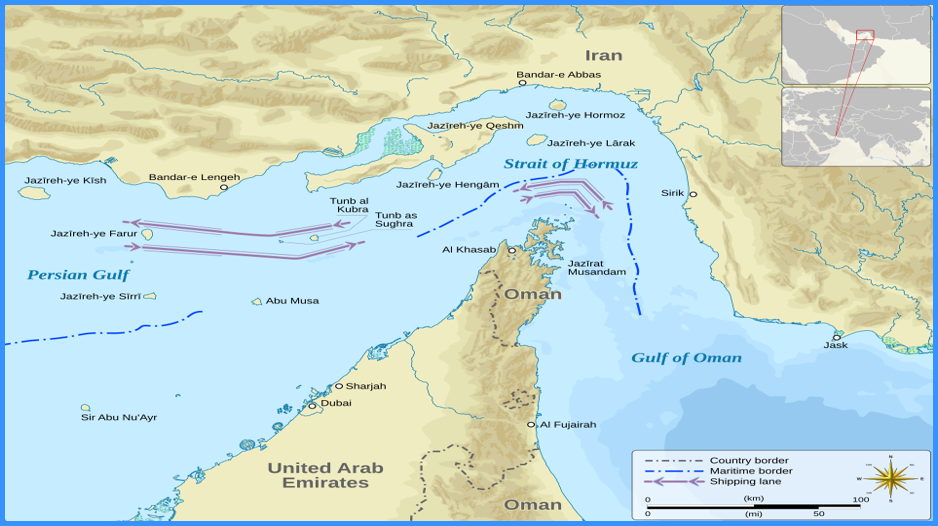
Strait-of-Hormuz-Wikimedia-Picture-by-Goran_tek-en