BEIRUT/JERUSALEM — A fragile year-long ceasefire between Israel and Hezbollah has decisively shattered after a series of massive Israeli reprisal strikes across Lebanon left at least 31 people dead and 149 wounded on Monday, March 2, 2026. The escalation, centered in Beirut’s southern Dahiyeh district and southern border towns, marks the deadliest day in Lebanon since the November 2024 truce.
The Israeli Air Force (IAF) launched the offensive in response to a pre-dawn barrage of precision missiles and drones fired by Hezbollah. The militant group described its attack as “initial revenge” for the killing of Iranian Supreme Leader Ayatollah Ali Khamenei in a joint U.S.-Israeli operation 48 hours earlier.
A Rapid Descent into Conflict
The “shadow war” of minor ceasefire violations has been replaced by a full-scale kinetic exchange. According to the Lebanese Ministry of Public Health, the strikes targeted densely populated areas, triggering a mass displacement of civilians toward the north.
- Beirut Under Fire: 20 of the confirmed deaths occurred in Beirut’s southern suburbs, where Israeli missiles struck high-rise apartment buildings and alleged Hezbollah command centers.
- The Hezbollah Salvo: Hezbollah launched rockets at a missile defense site south of Haifa, marking its first direct attack on Israel since 2024. Israeli officials stated that while the “Iron Dome” intercepted most threats, the “Hezbollah decision to join the campaign” would be met with an uncompromising response.
- Broken Promises: The 2024 U.S.-brokered ceasefire required the withdrawal of Israeli forces and the disarmament of Hezbollah south of the Litani River. Both sides now trade accusations of “total betrayal,” as Israeli troops remain stationed at five strategic border points.
UN Calls for Restraint
As the regional death toll climbs, United Nations Secretary-General António Guterres has issued an urgent plea for “maximum restraint,” warning that the Middle East is currently standing on the precipice of a total, uncontrollable conflagration. In an emergency session of the Security Council, Guterres emphasized that neither the region nor the world can afford another full-scale war, urging all parties to immediately cease hostilities and return to diplomatic channels.
However, the UN’s call for de-escalation faces a deepening vacuum of trust. Lebanon’s Prime Minister Nawaf Salam has called the Hezbollah attack “irresponsible and suspicious,” while simultaneously condemning the Israeli strikes as a violation of sovereignty.
With “Operation Epic Fury” entering a new, more dangerous phase, the international community fears that the collapse of the Lebanese front will pull the region into a protracted, multi-national ground war.
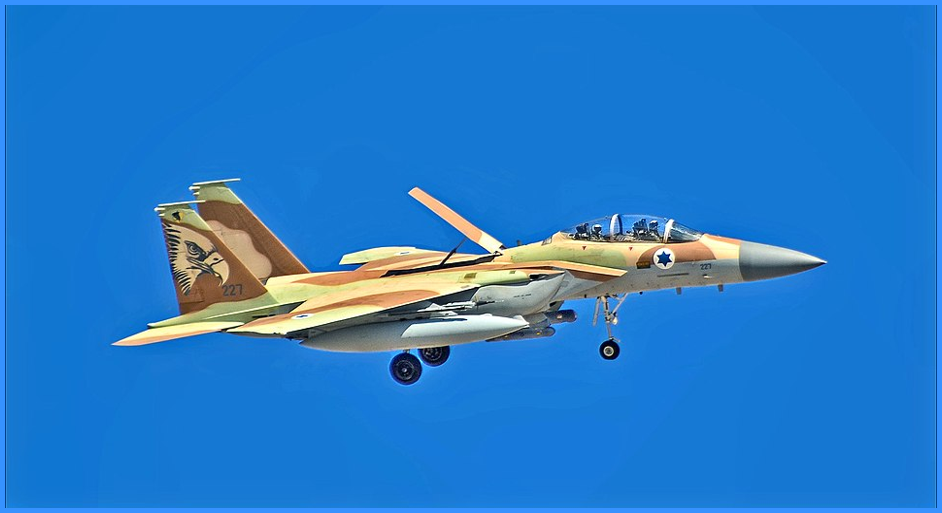
Israeli Air Force F-15i “Ra’am” 227 Picture by Tomás Del Coro