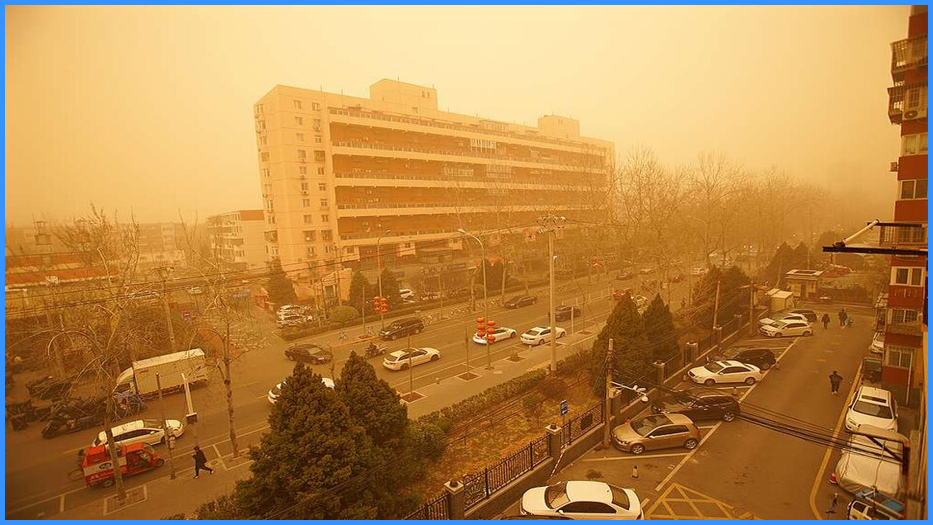
BEIJING — A massive plume of dust and grit swept into the Chinese capital on Saturday afternoon, as powerful sandstorms and gale-force winds disrupted the final days of the Lunar New Year celebrations. The China Meteorological Administration has activated a Level-IV emergency response, warning that air quality in the municipality will deteriorate to “severe” levels as the holiday winds down.
By 2 p.m. Saturday, the city’s average PM10 concentration had already climbed to 175 micrograms per cubic meter. However, meteorologists warn the worst is yet to come, with peak concentrations expected to surge past 500 micrograms per cubic meter by late Saturday evening.
Holiday Disruption: Scenic Spots Shuttered
The timing of the weather system has cast a shadow over the tail end of China’s nine-day Spring Festival holiday. In response to a yellow warning for strong winds and a blue warning for sandstorms, municipal authorities have taken swift action to ensure public safety:
- Closures: Numerous outdoor scenic spots across Beijing have been temporarily closed to visitors.
- Cancellations: Traditional Chinese New Year outdoor festivities, originally scheduled from Saturday afternoon through Sunday morning, have been suspended.
- Maritime Impact: The regional instability extends beyond the capital; passenger ferries operating the vital provincial route between Liaoning and Shandong were halted at 12:50 p.m. Saturday, with services not expected to resume until Sunday.
A Regional Crisis: The Level-IV Response
The sandstorm is part of a broader weather system moving across Northern China. Federal authorities activated the Level-IV emergency response on Friday, predicting a weekend-long “dust corridor” affecting multiple provinces.
The high-velocity winds, while expected to clear some of the stagnant smog often seen in winter, have instead brought in heavy particulate matter from the Gobi Desert. Under China’s four-tier warning system, the yellow and blue alerts signify a significant threat to transit and public health, particularly for those with respiratory vulnerabilities.
Looking Ahead: A Monday Reprieve
For the millions of travelers preparing for the “Spring Festival Travel Rush” (Chunyun) back to work, the weather forecast offers a glimmer of hope. Winds are projected to weaken significantly by Monday, February 23, the final day of the national holiday.
Until then, health officials are advising residents to stay indoors and keep windows sealed. For those who must venture outside, the use of N95 masks and protective eyewear is highly recommended to combat the abrasive sand and high pollution levels.
Beijing Air Quality Outlook (Feb 21-23)
| Date | PM10 Forecast (Avg) | Warning Level | Status |
| Sat (Feb 21) | 175 – 500+ µg/m³ | Yellow/Blue | Severe Pollution |
| Sun (Feb 22) | 200 – 350 µg/m³ | Blue | Lingering Dust |
| Mon (Feb 23) | < 100 µg/m³ | Clear | Normal / Wind Weakening |
Beijing Sandstorm Picture on Wikimedia by Greenpeace