China’s sharp denunciation of the United States’ military strike on Venezuela is emerging as more than a diplomatic objection—it is a calculated signal about Beijing’s own posture on the use of force. While Beijing has repeatedly criticized Washington’s “hegemonic acts” following the capture of Venezuelan President Nicolás Maduro, the deeper message lies in what China is telegraphing about its own strategic boundaries.
Chinese officials have framed the U.S. operation as a violation of sovereignty and international law, warning that such actions destabilize entire regions, including Latin America and the Caribbean. President Xi Jinping reinforced this position days later, urging major powers to respect the development paths of other nations—a remark widely interpreted as a veiled rebuke of Washington’s interventionism: South China Morning Post.
But beyond the rhetoric, China’s stance serves a dual purpose. By condemning the U.S. strike in such unequivocal terms, Beijing is also positioning itself as a responsible global actor—one that rejects unilateral military action and, crucially, signals that it does not intend to pursue similar operations abroad. This messaging is particularly significant given ongoing international scrutiny of China’s global ambitions.
Beijing’s response underscores a strategic contrast: while it seeks to expand influence through economic partnerships and diplomatic engagement, it is distancing itself from the kind of forceful regime‑targeted interventions that have drawn global criticism toward the U.S. The strong language—“deeply shocked,” “strongly condemns,” and “firmly opposes”—is not only aimed at Washington but also at reassuring the international community that China views sovereignty as a red line, not a negotiable tool of power projection.
In effect, China’s reaction functions as both a diplomatic rebuke and a deterrent narrative. By publicly rejecting the legitimacy of the U.S. strike, Beijing is reinforcing its own commitment to non‑intervention—an important signal at a time when global tensions and geopolitical rivalries are intensifying.
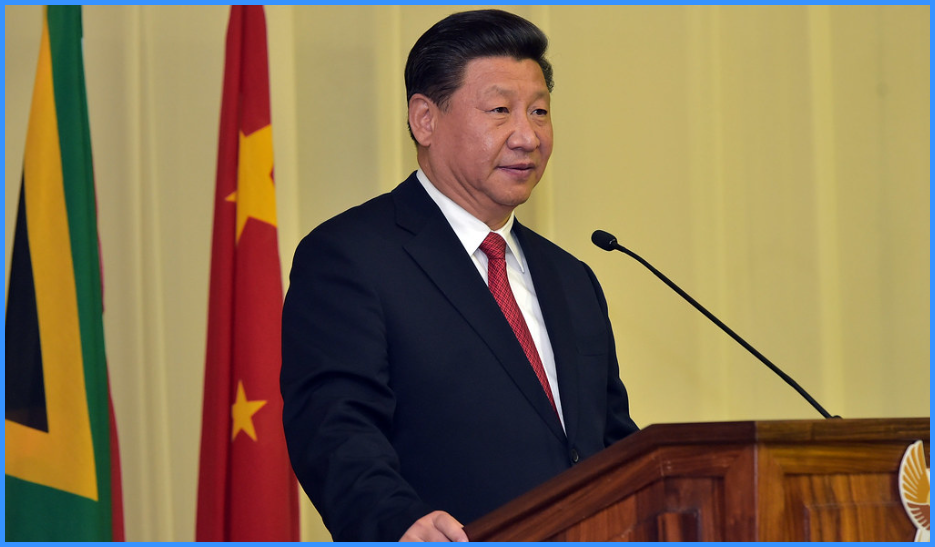
President of China, Xi Jinping Flickr Picture by GovernmentZA