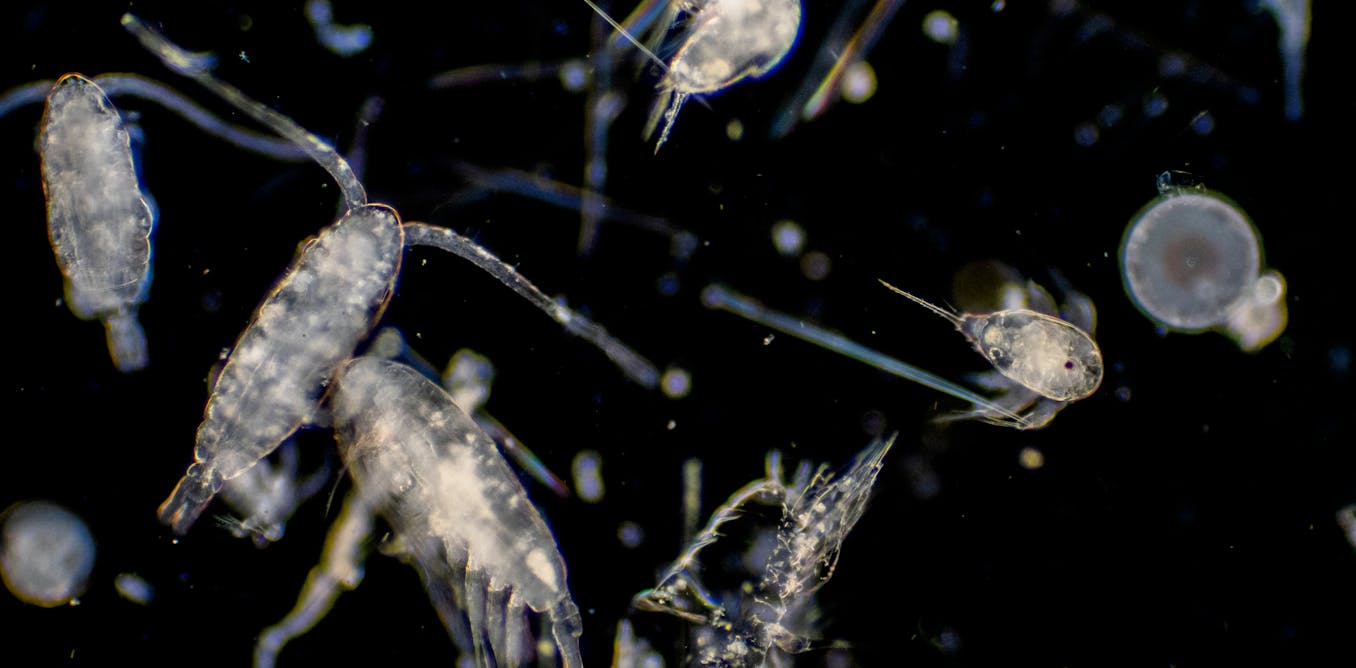
Small but mighty, plankton are some of the most powerful creatures on Earth

If you go to the beach and dip a bucket in the sea, you might at first think it contains lifeless water. But examine that water under a microscope and you will see your bucket contains a universe of microscopic life, in the form of beautiful and fascinating plankton. Plankton are mostly microscopic algae and […]

Continue Reading

Early decisions made for REF 2028 – UKRI

The next REF will conclude in 2028 and will assess research and impact between 2021 and 2027. The exercise drives research excellence across the UK, provides accountability for public investment in research, and informs the allocation of around £2 billion of block-grant research funding each year. The UK funding bodies are seeking to change the […]

Continue Reading

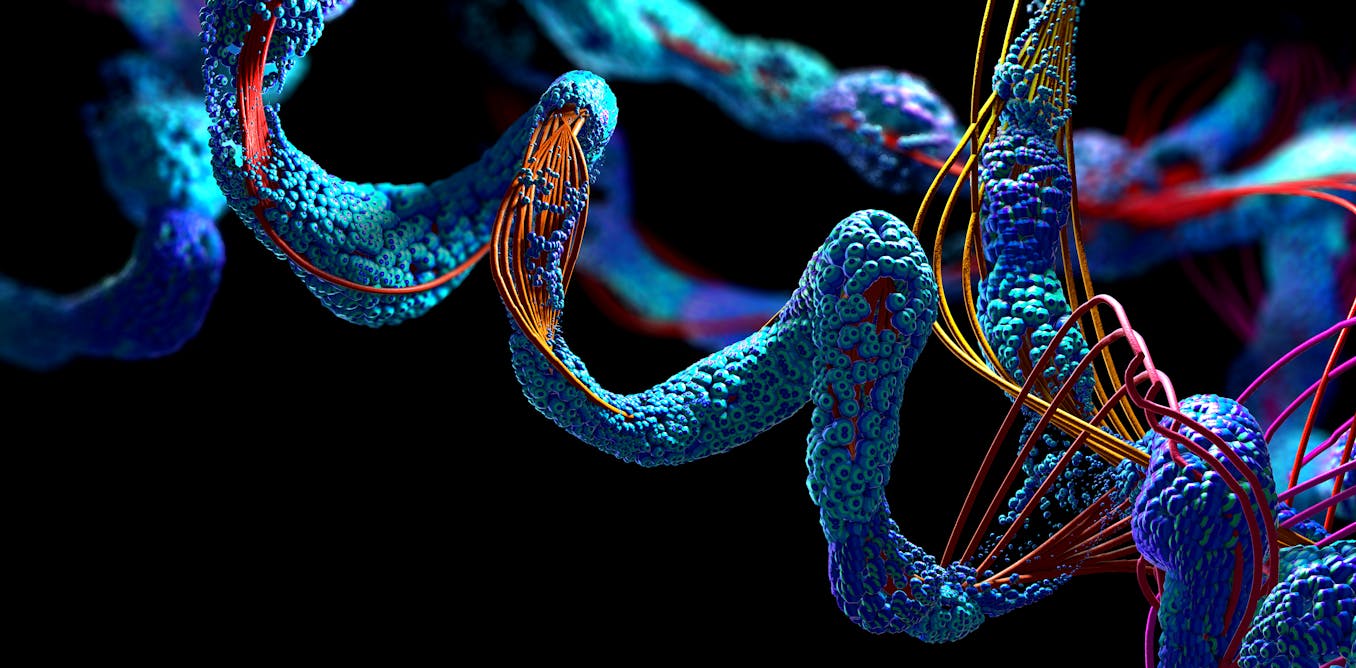
AI system can predict the structures of life’s molecules with stunning accuracy – helping to solve one of biology’s biggest problems

AlphaFold 3, unveiled to the world on May 9, is the latest version of an algorithm designed to predict the structures of proteins – vital molecules used by all life – from the “instruction code” in their building blocks. Predicting protein structures and the way they interact with other molecules has been one of the […]

Continue Reading

Secat Amphibious Transport Vehicle | WordlessTech

The groundbreaking Secat amphibious transport vehicle is tailor-made for tricky maritime missions in challenging areas. With the Navy and Marines handling various tasks worldwide, Textron Systems’ Secat steps in with rapid cargo and troop transport, both on water and land. It’s all about speed, flexibility, and toughness. In dicey environments, the Secat’s design outshines regular […]

Continue Reading

Cement is a big carbon emitter and quality is costly: a civil engineer explains

Every year the world uses 4 billion tonnes of cement to make the concrete that goes into buildings and other infrastructure. It leaves a huge carbon footprint, and comes with other costs too. Civil engineering professor Elsabe Kearsley, who researches cement and concrete, tells us more about this basic ingredient of modern life and explains […]

Continue Reading

UK universities enter next-gen international physics experiment – UKRI

The Matter-wave Atomic Gradiometer Interferometric Sensor (MAGIS-100) experiment is led by, and currently under construction at the US Department of Energy’s Fermi National Accelerator Laboratory (Fermilab). In a new agreement, the UK has agreed to provide vital expertise and support to help the experiment probe the mysteries of quantum physics, dark matter and more. Ingenious […]

Continue Reading

Why evolution often favours small animals and other organisms

Small really does seem to be beautiful in evolutionary terms. The largest dinosaurs, pterosaurs and mammals may look impressive but these giants are vastly outnumbered by microscopic bacteria and single-celled algae and fungi. Small organisms are also ancient and incredibly resilient. The first evidence of single-cell organisms dates from around 3.8 billion years ago, soon […]

Continue Reading

New research facilities to be created, thanks to flagship scheme – UKRI

The universities of Strathclyde, Birmingham and King’s College London will create four leading research facilities with the help of a £52 million investment from the UK Research Partnership Investment Fund (UKRPIF). The new facilities will build on the universities’ track record of excellent research capability. UKRPIF is a flagship scheme managed by UK Research and […]

Continue Reading

Is dark matter’s main rival theory dead? There’s bad news from the Cassini spacecraft and other recent tests

One of the biggest mysteries in astrophysics today is that the forces in galaxies do not seem to add up. Galaxies rotate much faster than predicted by applying Newton’s law of gravity to their visible matter, despite those laws working well everywhere in the Solar System. To prevent galaxies from flying apart, some additional gravity […]

Continue Reading