Private Credit Funds Triple to $1.6 Trillion Amid Structural Shift in Lending

📈 Summary The global private credit market has expanded dramatically over the past ten years, reaching $1.6 trillion in assets under management (AUM) in 2025, according to data from Preqin and Fitch Ratings Fitch Ratings. Once a niche segment of alternative finance, private credit has evolved into a mainstream asset class, rivaling traditional bank lending […]

Continue Reading

EIB Group Commits €9.2 Billion to Housing, Energy, and Healthcare Innovation

💶 Summary On October 23, 2025, the Boards of Directors of the European Investment Bank (EIB) and the European Investment Fund (EIF) approved a sweeping €9.2 billion investment package aimed at strengthening Europe’s infrastructure and social resilience. The funding targets affordable housing, energy security, and child healthcare, while deepening engagement with civil society and global […]

Continue Reading

Unlocking Invisible Barriers to Women’s Inclusion in East Africa | Blog

Making the financial sector truly work for both women and men will require a systemic shift. This starts with better understanding the underlying norms driving the behavior of all actors, and then designing interventions that can make change happen. Invisible gender-norm-based barriers prevent the financial system from meeting women’s needs at scale. Recent market system gender […]

Continue Reading

Relying heavily on contractors can cut attendance by 27% for museums, theaters and other arts nonprofits – new research

Many nonprofits face growing pressure from their donors and other funders to do more with less as their costs rise and their budgets don’t keep up. One way these organizations are responding is by trying to save money on their staffing by hiring contractors, consultants and temporary staff instead of full-time employees. But those flexible […]

Continue Reading

Climate Risk Assessment: Three Questions FSPs Should Ask

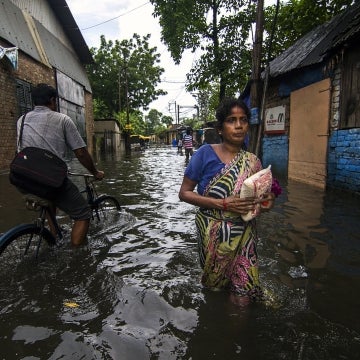
As climate events become more frequent and intense, inclusive FSPs are increasingly being asked to conduct Physical Climate Risk Assessments by regulators, investors, and other stakeholders. Physical Climate Risk Assessments (PCRA) quantify how climate-related hazards (like floods, cyclones, or droughts) are likely to impact a financial institution’s portfolio and operations.   Physical Climate Risk Assessments […]

Continue Reading

Physical Climate Risk Assessments: Understanding the Latest Resources

Physical Climate Risk Assessments (PCRA) are an essential tool for financial service providers (FSPs) to quantify and prepare for an increasing range of climate-related threats.   Our previous blog outlined three core questions that an FSP should ask before embarking on a PCRA to ensure that it is strategically useful, rather than just a tick-box […]

Continue Reading

Navigating mental illness in the workplace can be tricky, but employees are entitled to accommodations

Mental health challenges can affect anyone, regardless of background or circumstance, and they are becoming more common across the United States. In 2022, a national survey found that about 60 million American adults – approximately 23% of the U.S. adult population – were living with a mental illness, defined as a diagnosable mental, emotional or […]

Continue Reading

What National Strategies Tell Us About Responsible Finance

Financial sector authorities started to develop National Financial Inclusion Strategies (NFIS) in the early 2000s. Today, they remain a key policy tool to expand financial inclusion through collaboration between public and private stakeholders.   But NFIS are not only about broadening access—they also provide a window into how countries are approaching responsible finance. By looking […]

Continue Reading

1 in 3 US nonprofits that serve communities lost government funding in early 2025

About one-third of U.S. nonprofit service providers experienced a disruption in their government funding in the first half of 2025. That’s what we found when we teamed up with Urban Institute researchers to collect nationally representative survey data from 2,737 nonprofits across the country. These organizations run food pantries, deliver job training and offer mental […]

Continue Reading

Why Merchants Still Choose Cash in Sub-Saharan Africa

This is the second blog in CGAP’s Digital Merchant Payments series. Read the first blog for context on the urgent need to accelerate digital merchant payments. Despite mobile money’s remarkable success in Sub-Saharan Africa—with approximately 856 million registered mobile money accounts processing over 912 billion USD annually —digital merchant payments (DMP) remain stubbornly limited. Cash […]

Continue Reading