Today the Center for Social Value Creation (CSVC) at the University of Maryland’s Robert H. Smith School of Business published an extensive report on the most effective strategies for driving environmental and social value creation (ESVC). The report sets out a new framework for understanding how companies, across nine industries, can generate meaningful, measurable improvement in environmental and social performance across industries.
CSVC identified six concrete ways, or “levers,” that companies can use to drive ESVC outcomes: product research, development and innovation, sustainable production, supply chain management, coalitions, financial and in-kind support, talent management. CSVC also identified which levers are most effective for each of the nine industries under review. The report set out three types of institutional change that enables effective use of ESVC levers: operational structure, financing, and measurement/reporting.
More than ever before, consumers demand values-based commitments to sustainability and social good from brands across every industry. CSVC’s research found that 80% of ESVC commitments are driven by increased consumer demand. These commitments appear in formal announcements and press coverage under many names: CSR, ESG, sustainability, and more. CVSC has developed the term “environmental and social value creation,” or ESVC, to encompass the wide range of actions and initiatives that seek to benefit the bottom line and the broader world.
“CSVC is excited to offer this groundbreaking survey of how corporations are responding to the upsurge of consumer demand for ESVC initiatives,” said Nima Farshchi, Director of CSVC. He added, “While the report is comprehensive, it marks a beginning not a conclusion. We hope to convene an ongoing conversation about how businesses can simultaneously drive financial growth and social and environmental value. In fact, the bottom line and ESVC efforts reinforce one another.”
In order to come closer to a working definition of ESVC in North America, CSVC and Sattva Consulting undertook a research study between January and July 2022. The team examined ESVC initiatives of companies across nine industries: Consumer Goods and Retail, Energy, Healthcare, Technology, Financial Service, Automobile, Hospitality, Telecom, and Entertainment. The study’s findings were substantiated by interviews with senior sustainability/ESG executives of 13 companies and 15 industry experts, and an in-depth review of over 150 academic and corporate reports.
“The need for ESVC initiatives is clear across industries,” says Kristin Fallon, Head of Global Brand GE Healthcare and CSVC Board Member. “However, every company faces their own challenges and has their own unique interests. So it’s important to deploy the ESVC strategies that best fit your business. We have a chance to move collectively into a new phase of social value creation. But companies need to know what’s possible, and what steps they can take.”
To download these new materials and learn more about CSVC, visit their website here.
Source: Robert H. Smith School’s Center for Social Value Creation
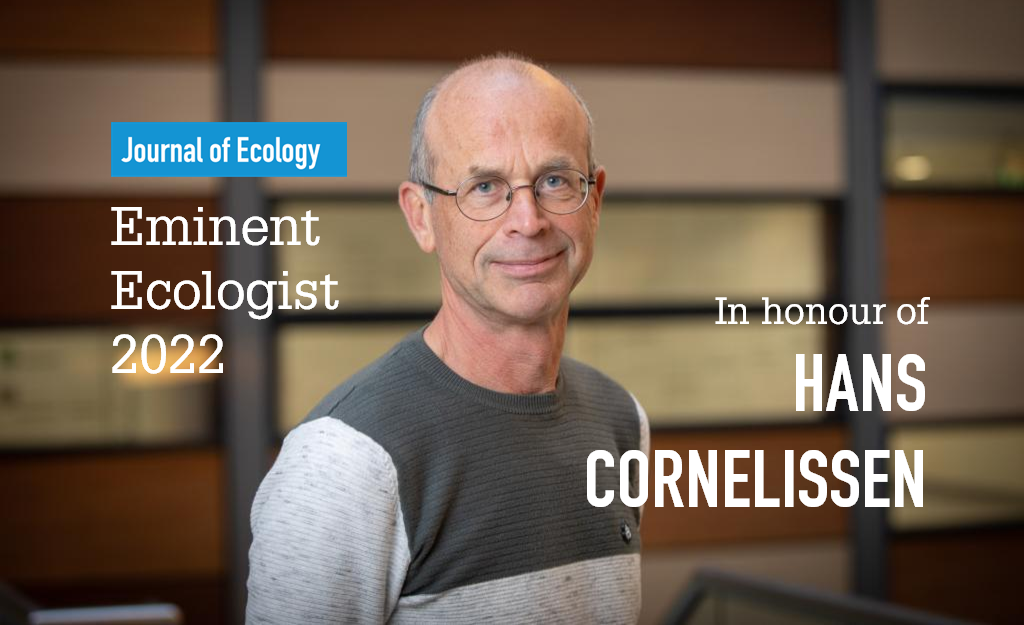
The Journal of Ecology Editors are delighted to announce that Hans Cornelissen is our Eminent Ecologist award winner for 2022!
In recognition of his work, we asked Hans to put together a virtual issue of some of his favourite contributions to the journal. Hans has also written this blog series, and was interviewed by Richard Bardgett about his motivations and career to date, how he sees the field of functional traits developing in the future, and what advice he’d give to ECRs interested in plant ecology.Han’s full blog series can be found here: Part 1👇 | Part 2 |Part 3
When I got the message that I had been elected by Journal of Ecology to be Eminent Ecologist 2022, my first response, after staring at the screen in disbelief and re-reading the message, was to look at the list of previous laureates… and to feel humble in the company of seven ecologists I greatly admire. I then did a web search of my papers to verify that Journal of Ecology really has been my favorite journal by a wide margin for two and a half decades. But not only a favorite as a frequent author; I have also been a happy reader and associate editor of the journal for many years. Talking of associate editorship; I may just as well use this opportunity to apologize to quite a few other authors of Journal of Ecology manuscripts who have had to wait for my feedback for longer than hoped for. All too often good intentions get pushed aside by other commitments in research and, especially, teaching; time management has never been my forte. I also use this blog intro to say a big thank you to all the colleagues and friends who have provided a lot of hard work, insight, companionship and support over the years, directly or indirectly contributing to my (co-)authorships in this journal and to the fact that I am now in the happy position to write this blog. It’s a cliché, but all my scientific output has been the result of teamwork one way or the other. So, if you are one of my many coauthors or collaborators related to Journal of Ecology publications: “Thank you!” Having said this; three of my many dear colleagues at Vrije Universiteit over the past two decades have been so central to many of my Journal of Ecology contributions, and other papers, that I must thank them by name: Rien Aerts, Richard van Logtestijn and Matty Berg. Finally, before moving on to the science, I’d like to mention here that, over many years, I have greatly enjoyed the professionalism, generosity (with time and encouragement) and friendliness of the people running Journal of Ecology, be it as an editor, administrator or policy person anywhere in the workflow. Together with the great team of associate editors and reviewers, you have enabled Journal of Ecology to grow from strength to strength steadily, to reach the high impact and visibility that it enjoys today.
When sifting through my Journal of Ecology papers, I had a hard time selecting which ones I would like most to get new exposure via the virtual issue. Many more than those included are precious to me, but hey, tough choices are part of life. I decided to go mostly for those where my own contribution was particularly large and which together represent and link four of my main research themes, all of which are somehow linked to ecological aspects of variation in functional traits among species: (1) Comparative ecology of living plants; (2) Comparative ecology of plant and tissue afterlife effects on carbon and nutrient cycling; (3) Trait evolution and carbon and nutrient cycling; (4) Cryptogam ecology.
(1) COMPARATIVE ECOLOGY OF LIVING PLANTS
This research line started, in a way, during my PhD with Professor Marinus Werger at Utrecht University in the Netherlands. This work took me to China from 1989 to 1991. In the subtropical broad-leaved evergreen forest belt of SW China I did nursery experiments on the growth performance of different tree species in different light environments, trying to mimic the light conditions typical for different forest succession stages after gap formation. This was China when it was only at the very start of its incredible subsequent development in science and technology, so working conditions were physically tough. I had to find my way to the local street market to buy bamboo sticks for constructing frames and mosquito netting to tie over the frames to create different light regimes (photo 1a) below which I grew my little trees (photo 1b). With the generous help of colleagues and field assistants, under the kind wings of nationally renowned Professor Zhong Zhangcheng (photo 1c) at SW China University near Chongqing, I managed to germinate and grow a range of tree species from the various succession stages and measured their growth, leaf and root traits and biomass allocation in response to different light environments. In spite of practical and language constraints, and some disasters, I managed to complete my PhD thesis and published four papers from it, albeit not in journals of the impact that most readers of this blog would aim for nowadays. Journal of Ecology was still a dream, well beyond my level… However, this whole PhD period did set me up as a resourceful researcher not easily beaten by adversity. And it did leave me with a passion for China and its people that was permanent and would again become a big factor later on in my career.
Photo 1: PhD work in SW China (1989-1991). (a) Forest climax species Castanopsis fargesii growing under frames with (b) different light regimes below mosquito netting. (c) Posing with advisor Prof. Zhangcheng Zhong in the broad-leaf evergreen forest on Jinyun Mountain.
Photo 2: Pilar Castro-Díez looking after the seedlings in the ISP where woody species were screened for relative growth rate and associated traits.
Following on from my PhD study, back in 1993, one of the defining moments for me as a scientist was the move to the NERC Unit of Comparative Plant Ecology (UCPE) at Sheffield University, UK, initially as a postdoc. Its director, the late Philip Grime (who now fittingly has a section in this journal named after him!), but certainly also Ken Thompson, John Hodgson, Roderick Hunt and (regular visitor) Sandra Diaz, were my new colleagues and also my heroes; they were among the real pioneers of trait-based comparative ecology before it became globally hot in the current millennium. My main task was to run an “Integrated Screening Programme” (ISP) for woody species, parallel to the then already well established ISP focusing on herbaceous species (Grime et al. 1997). Central to this work was to screen dozens and dozens of temperate trees and shrubs in the Sheffield region, and dozens more from Spain (with Pilar Castro Diez and Jean-Philippe Puyravaud), for inherent relative growth rate (RGR) and the traits underpinning RGR, as these traits were already known to be critical assets and predictors for the ecological strategies of plant species. In practice, this work entailed trying to first germinate seeds, many of which had complex dormancies to be broken first. For instance, seeds from berry species that normally travel through a bird’s gut to lose their dormancy often had to be washed thoroughly first, then put into rich compost thus going through two lengthy cycles of warm and cold treatment. Once germinated, we grew seedlings for three weeks from unfolding of the first true leaf in standard greenhouse conditions with plenty water and nutrients (see photo 2). We showed that, across taxonomically wide-ranging species, shrubs generally grew faster than trees and deciduous species faster than evergreens; and that these differences were underpinned by variation in specific leaf area (leaf area per mass), proportional allocation of biomass to leaves at the whole-plant level (Cornelissen et al. 1996a, virtual issue) and (somewhat) by stem tissue density (Castro-Diez et al 1998).
With Bruno Cerabolini, a great contributor to comparative plant ecology, I then went on to measure leaf traits of adult plants of broadly the same shrub and tree species, which showed broadly corresponding patterns to those of the seedlings (Cornelissen et al. 2003). This dataset, and a somewhat similar one collected from the subarctic tundra area in N Sweden, turned out not only to be useful for our own regional studies, but also for global ones. The publication of the “leaf economic spectrum” (LES, Wright et al. 2004) seemed to be a catalyst that made plant trait study hot all over the world, perhaps partly because people realized that comparative plant ecological studies could be published in the very top journals. And this turned out to be the case with multiple papers extending the LES or placing it into a different environmental context (e.g. Diaz et al. 2016; Björkman et al. 2018; Bruelheide et al 2018; Joswig et al. 2021), undoubtedly greatly helped by massive efforts to assemble trait data for building global databases (Kattge et al. 2020) and to standardize methodology for trait measurement (Pérez-Harguindeguy et al. 2013). Where the plants on planet Earth were once classified by taxonomy, growth form or functional type, they were now organized along continuous trait-based strategy axes of variation; and rightly so.
It had to happen sooner or later, but I was happy that we, and this journal, presented the “plant economics spectrum” (PES), supported by convincing empirical evidence from a regional flora in N Sweden (Freschet et al. 2010, virtual issue). We showed that a wide range of functional traits related to the carbon and nutrient economy of plants (e.g. dry matter content, lignin and nutrient concentrations, pH), were coordinated among different plant organs, i.e. among leaves, roots and (fine) stems. This paper helped to rank species according to their whole-plant ecological strategy in terms of fast tissue turnover supporting rapid growth versus slow tissue turnover promoting resource conservation (Reich 1994). I had the honour of being the day-to-day PhD supervisor of Grégoire Freschet, who is one of many young scientists (see also below and next blogs) who deserve much credit for me getting this award. There is no greater reward for a supervisor than when PhD students or postdocs equal or exceed their “master” in academic quality; especially when they subsequently pursue a successful career in academia.
The PES is also part of a development from a very dominant focus on leaf traits to a stronger focus on the traits of belowground parts. It is nice to see new papers coming out about the different strategy axes that root traits follow worldwide, with a special axis attributed to the outsourcing of root functions to mutualists such as mycorrhizal fungi (Bergmann et al. 2020). This new focus has led to some amazing discoveries, such as specialised snow roots in the Cauacasus Mountains (Onipchenko et al. 2009).
(2) COMPARATIVE ECOLOGY OF PLANT AND TISSUE AFTERLIFE EFFECTS ON CARBON AND NUTRIENT CYCLING
Litterbed expriments: the “common garden”
Photo 3: The first multi-species “common garden” experiment for linking plant functional traits to litter decomposition rates, in Sheffield. (a) Litterbags with green 0.5 mm mesh open to earthworms and white 0.3 mm mesh only providing access to very small decomposers. (b) Litterbed in which litterbags of 125 species have been buried below the leaf mould surface.
If I had to choose one paper that I am the most proud of, it would have to be the one in which I linked the decomposition rates (“decomposability”) of leaf litter of different species to their functional traits – even though “trait” was not really in my vocabulary back then (Cornelissen 1996, virtual issue). While collecting seeds for my RGR studies in autumn 1993, roaming the beautiful countryside in the Peak District near Sheffield, I got intrigued by the pretty autumn leaf colours. At UCPE we’d been discussing about litter decomposition, a topic I knew virtually nothing about. I started to wonder whether the autumn colours had anything to do with the (pre-death) functioning of leaves – yes, they do! While collecting pretty leaf litter, gradually the idea took hold to compare many plant species for their litter decomposition rates and somehow relate these to functional aspects of the species. And once you start to pick up leaf litter it’s pretty much impossible to stop; greed got the better of me – and still does when let loose in the field in autumn. I must say that Ken Thompson and John Hodgson were super helpful to collect litter of a substantial number of herbaceous species for me. The tally came to 125 species by the end of autumn. By then I still had no clear idea how to go about the next step other than pre-weighing litter samples and putting them in litterbags (with mesh to allow decomposers in)…. until I noticed a huge pile of leaf mould at Tapton Garden in Sheffield. This leaf mould contained a great diversity of common plant species swept up in the local park; and presumably a broad decomposer community living inside it. The penny suddenly dropped: why not bury all 125 litter species (as litterbag samples) in this leaf mould, so that they would all have similar environmental conditions for decay? In hindsight the idea seems ridiculously simple, but this Sheffield-based study became the first of many multispecies “litterbed” studies worldwide (e.g. Cornwell et al. 2008) that would help to link decomposability to functional groups or traits of plants. Because the litterbags were hidden below the leaf mould surface (see photos 3), they were invisible to the naked eye. On an “open day” at Tapton Garden I had been asked to be one of the scientists to show their experiment to the broader public, which was a bit of a challenge given the invisibility of what was happening to my precious litter samples. So when I got interviewed live by Sheffield Radio, I jokingly said that the earthworms, who were doing some of the decomposition, were so active that you could actually hear them. I made some very loud chomping noises in the microphone to back up this statement. A relative, who’d been listening, told me afterwards how fascinating it was that earthworms could be so noisy 😊. Anyway, what came out of this study (after reweighing the litter samples for % mass loss) were things like: “deciduous species generally decompose faster than evergreens”; “shrub litter decomposes faster than tree litter”; “among deciduous woody species, green litter (e.g. chlorophyll wasters like alder – Alnusglutinosa and ash – Fraxinus excelsior) decomposes faster than brown litter (showing their nasty tannins, e.g. beech – Fagus sylvatica, sweet chestnut – Castanea sativa)”; and “species with large SLA decompose faster than species with small SLA” (although the latter not after phylogenetic correction; see the previous eminent ecologist blogs by Mark Westoby and Michelle Leishman). These things are useful to know when you want to predict whether ecosystem-level decomposition rates will accelerate or slow down with changing plant species (trait) composition; or if you want to use remote sensing to link autumn leaf colours of deciduous trees and shrubs to decomposition rates. However, it is important to take into account, as commonly known, that the decomposition rates of given litter types also greatly depend on the soil environment that they are in, both in terms of abiotic and abiotic drivers. There has been an extensive literature by now on the “home-field” advantage (e.g. Ayres et al. 2006, with involvement of Richard Bardgett; talking of heroes in ecology), which essentially means that litter of certain species does relatively better (than “expected” when compared with other species’ litters) in litter layers dominated by their own litter. The theory is that this local litter layer has promoted a decomposer community that is adapted to consuming litter of a particular quality. We extended this theory to include the whole range of positive to negative effects of the overall litter layer quality on the relative ranking of species’ litter types, showing that the decomposition of a litter particle of a given species is relatively promoted (or inhibited) if the similarity (or dissimilarity) with the overall litter matrix is greater: the substrate matrix hypothesis (SMI, Freschet et al. 2012a in this journal). On the other hand, we showed in this journal that relatively rare litter of species deviating in quality from the general community litter matrix in subtropical forests may change the overall litter decomposition compared to the expected rates based on the abundance-weighted individual rates of the component species (Guo et al. 2020 in this journal); possibly because of non-additive litter mixture effects (Guo et al. 2018).
Photo 4: Experimental work underpinning the Plant Economic Spectrum of litter decomposability. (a) Grégoire Freschet collecting coarse woody litter in Abisko in subarctic N Sweden. (b) coarse wood litter samples of mountain birch.
Of course, plants are more than leaves and a lot of the litter in and on the soil is derived from roots and stems. So, to understand the role of vegetation composition in the turnover of dead plant material, we need to compare the litter decomposabilities of the different plant organs across tree species. This is exactly what we tried to do, again with Grégoire as the driving force (photos 4). We showed that the PES for living plant organs can be extended to a PES for decomposability in a subarctic flora (Freschet et al. 2012), while fine root and leaf decomposability across species tends to be coordinated also across various ecosystems worldwide (Freschet et al. 2013, virtual issue). This means that the whole-plant species ranking from slow to fast tissue turnover of living plants (see above) can be extended to the tissue turnover of their dead parts. Again, these findings are important for our understanding of how plant species composition in ecosystems affects their rates of carbon and nutrient cycling.
Wood decomposition: tree cemeteries
It should be said that our evidence for the PES of decomposability is based on evidence from very wide-ranging species, from small herbs to trees, and not taking into account the big trunks of trees. In fact, studies that have focussed on trees only found weaker or poorer coordination of the decomposability between plant organs across species, especially when focussing on coarse dead wood and leaves (Pietsch et al. 2014; Zuo et al. 2018). Which brings me to one of my pet topics in this millennium: deadwood decomposition. This interest started in 2005 during a workshop in Sydney, organised by Mark Westoby (see above), one of my other heroes in comparative plant ecology. Mark had brought together a few dozen plant trait people and global vegetation-climate modellers to see how continuous plant trait variation could help to improve current models or build new models to better predict the consequences of climate and vegetation change worldwide; and how to standardize and assemble trait datasets for this. I presented some of my work on leaf litter decomposability, which (I think…) drew some interest because of its link to nutrient (and somewhat also carbon) cycling globally. But it also led to discussions in the corridors with the climate modellers, who told me that for global carbon dynamics and climate the turnover (or not) of coarse deadwood is of much greater importance than that of leaves. And that they had so far focussed on deadwood quantity without much regard for its quality. This gradually set us thinking about the importance of interspecific variation in wood traits as drivers of coarse wood decomposition. It led to Will Cornwell, Christian Wirth and I organising two follow-up workshops on deadwood decomposition in Sydney, and one in New Zealand, also as part of Mark’s highly productive ARC Network of Vegetation Function. In those workshops we brought together current knowledge and data on relationships between wood traits and decomposition rates worldwide (Cornwell et al. 2009; Weedon et al. 2009; Pietsch et al. 2014). These papers made the point that variation in wood traits in given regions or ecosystems are very important for deadwood decomposition rates, probably as important as macroclimate or local environmental variation. They also made it clear that multi-species empirical data specifically collected with trait-decomposition relationships in mind were sadly missing in the literature. This is how the idea was born for a tree cemetery experiment, akin to the forensic “body bag experiment” you see in movies. After gradually assembling a growing team of enthusiasts from Wageningen University, Utrecht University and “my” Vrije Universiteit Amsterdam, and after much discussion about theory and the huge logistic hurdles to overcome, we decided to simply get the diaries out and book two weeks of field days in the winter of 2012, i.e. to act rather than talk even more. Deadlines really focus the mind when research designs and protocols need to be devised… To me, the whole process of setting up and running “Loglife” (Cornelissen et al. 2012), in my own temperate lowland country, has been one of the most heart-warming and exciting research experiences ever (and still is now). This experiment, including its extensions in 2013 and 2015, has involved well over 1 km length of 25 cm diameter logs (of 1 m length each) of a total of 25 tree species of wide-ranging phylogeny and functional types, all decomposing in two contrasting sites (photos 5). One vivid memory from the ambitious setting up fieldwork is that my arms failed one night after carrying log after log all day and I had to be spoon-fed my dinner like a baby. It is amazing how much can be done with a huge amount of enthusiasm, team spirit and complementary expertise. And I am proud to say that 10 years and many papers later, with the experiment still running successfully now, we have only ever talked about the science, practicalities and manuscripts around Loglife, having hardly ever talked about money. All groups have always volunteered some funds, tools and precious time if and when needed and the collaboration has been even more harmonious and pleasant than I could have hoped for. Bottom up enthusiasm, that’s what science needs. Amongst many interesting findings from Loglife on decomposition rates and (invertebrate and microbial) diversity (literally Log Life!), I here like to highlight our recent paper on how the (resource-rich, decomposable) inner bark and (protective, decay-recalcitrant) outer bark play very different roles in deadwood decomposition (Lin et al. 2022). This work complements other recent papers about how important bark traits in general are for decomposition rates of both bark itself and the wood inside it (Dossa et al. 2018 in this journal; Tuo et al. 2021; Chang et al. 2018); and for invertebrate communities (Zuo et al. 2016; Andringa et al. 2019).
Photos 5: Loglife tree cemetery. (a) Richard van Logtestijn, Juan Zuo and Jurgen van Hal during the setting up in the poor Schovenhorst site in 2012. (b) Fieldwork in the rich Flevoland site. (c) Teamwork during a log harvest campaign.
Photos 6: Deadwood decomposition experiment in Xishuangbanna Botanical Garden, S China. (a) Guofang Liu collecting dead bamboo stems. (b) Positioning deadwood (and leaf) litter samples in the litterbed.
As I mentioned earlier, since my PhD time I have been very fond of China and, since 2006, have enjoyed ever increasing intensity and geographical breadth of collaboration with Chinese colleagues, without exception supported by wonderful hospitality when out there. I really like the way in which especially young Chinese scholars are so super dedicated and eager to learn and improve. My main job with my numerous own Chinese PhD students and postdocs in Amsterdam over the years, besides discussion about research ideas, designs and manuscripts, has always been to emphasize the importance of taking a break in the weekends and relaxing more to stay healthy. In this blog (see also chapter 3) I will only highlight a few China collaborations directly related to some of the Journal of Ecology papers based on them. With regard to deadwood decomposition, Guofang Liu (one of several bright young collaborators at the Institute of Botany, Beijing) and co-workers (advised by long-term research friends Ming Dong, Zhenying Huang, Kunfang Cao and Will Cornwell) carried out a large deadwood experiment comparing deadwood decomposability of (monocot) bamboos with that of (dicot) broadleaf trees in the beautiful tropical botanical garden of Xishuangbanna, in the deep south of China (photos 6). I have come to really appreciate the great additional benefit of botanical gardens (besides the obvious ones they are meant for) of serving as a “common garden” where all species grow in a similar climate and mostly also in rather similar soil; and generally the plants have labels with the correct species name. This is ideal for comparative studies on traits and carbon cycling including decomposition (which I will revisit in the next blog). It was easy for us to get permission for this work, as our massive sampling operation basically meant we were “cleaning up” the garden by removing its dead wood (of all our target species). Our team collected deadwood samples of various standard diameters, measured some of their key traits and incubated all samples, in litterbags, in a mixed forest leaf mould layer, i.e. a common garden litterbed again (see above). Our litter turned out to be also accessible to termites. The big story from this work (Liu et al. 2015, virtual issue) was not simply that, as hypothesized, bamboo wood decomposed generally more slowly than dicot wood because of its very tough dry matter. Excitingly, we found that the overall negative relationships between initial dry matter content or wood density and decomposition rates, across many bamboo and dicot species, were explained for about half by microbial respiration without termite interference, and for the other half by the preferences of termites for softer wood. This positive feedback, whereby termites amplify the relationship between wood quality and microbial decomposition rate, is very important to carbon cycling in warm-climate forests, given the great abundance of termites there. I may come back to this work in a subsequent blog, hereby announcing a cliff hanger about “celebrating disasters”.
Photos 7: Funlog tree cemetery experiment in SE China. (a) Subtropical broad-leaf evergreen monsoon forest that hosts Funlog. (b) With Enrong Yan and Chao Guo in Funlog.
A few years later Enrong Yan, at East China Normal University in Shanghai, kindly invited me to help design an experiment building on Loglife, but with very different context (subtropical monsoon forest, termites). I am so grateful to this day that I got involved. FUNLOG (where “fun” stands for functional ecology as well as fun) is an enormous tree cemetery experiment involving deadwood of 43 subtropical species in two sites and a gold mine for testing hypotheses about, for instance, dynamic relationships among species’ wood (and bark) traits, invertebrates and decomposition rates (photos 7). I have to mention Chao Guo in particular here; her work on these dynamic relationships (e.g. Guo et al. 2021, virtual issue) is of great originality and quality. I am very lucky to count her, and subsequently other prodigies of Enrong (Tuo et al. 2021 on the bark economics spectrum, termites and wood decomposition; Ci et al. 2022 in this journal on foliar nutrient homeostasis in trees ) among the young scholars I guide with him. My next blog will feature various other key young Chinese scientists and their supervisors at other institutes…
I’d like to share a piece of good (old) news to round off this wood trait – decomposition section. If you are not in a position to cut a kilometer of tree trunks into logs, and to carry them around and follow their fate in a tree cemetery for a decade or more, you might consider the short-cut method published here (Freschet et al. 2012c, virtual issue). What started as an embryonic idea and basic scribble on the back of an envelope was turned into a promising model and methodology by a couple of bright young people. It involves collecting dead wood pieces of given diameter of multiple decay stages of a range of tree species, incubating them in a “common garden” (see above) for one or two years and then putting all the mass (or density) loss vectors of the wood samples of each species on a time axis following an initial basic linear model of mass remaining over time; and then replotting them on this graph multiple times following sigmoid, exponential or linear models until the data fit with the model shows its lowest variance. This way we can compare different species for their long-term (decadal-scale) mass loss curves and, for instance, time until 50 % mass loss, by doing only shorter-term experiments. This method for comparing decomposition rates of different tree species can be used in other common garden studies but is now also being used in natural forest settings. A research suggestion for young scientists: let us not forget about shrubs; they are also important for carbon cycling worldwide but poorly represented in the trait and decomposition literature!
Litter and ecosystem services
Photo 8: Brainstorm picnic in the rainforest near Rio de Janeiro, with André Dias and (photographer) Matty Berg. Note the binoculars and bird guide for extra inspiration.
Finally a few words about how species’ traits and litter fates and (turnover) rates matter to you and me in daily life, now and in the future. In other words, what ecosystem services does dead plant material of different species provide to people? The field linking biodiversity (including trait diversity) to ecosystem functions and services is superhot (Van der Plas et al. 2018; IPBES 2019) but has so far focussed strongly on the life rather than the afterlife of organisms or their parts. I had been toying with various ideas about the broader ecological role of leaf size and shape for a few years starting from their key importance for the flammability and fire behaviour of surface litter layers (Cornwell et al. 2015; Grootemaat et al. 2017). Then, based on a most pleasant picnic-and-beer brainstorm that André Dias, Matty Berg and I had in the rainforest outside Rio de Janeiro (photo 8), we wrote about how litter matters to people in various ways, and how these various services that litter provides depend on the traits related to the leaf or plant economics spectrum (see chapter 1 above) and the “size and shape spectrum” (SSS, Dias et al. 2017, virtual issue; see also Cornelissen et al. 2017). I can highly recommend observing nature’s beauty in situ for inspiration while talking about ecological concepts! It certainly works for me. Since that time I have focused more and more on the importance of traits related to the SSS in relation to ecosystem services, which has led to off-shoots into invertebrate diversity with long-term research friends Saori Fujii and Matty (Fujii et al. 2020) and into woody organs with, again, Chao and Enrong (Guo et al. 2022).
Wrapping up (for now)
It’s so nice to have been able for once, in a blog like this, to write about science without worrying continuously about word limits and maximum efficiency of information transfer. Still, while writing all this, so many interesting memories and research highlights come to the surface, that already now I find myself in serious danger of being too long-winded. So I’d better press the pause button and keep the promised other two topics on (3) TRAIT EVOLUTION AND CARBON AND NUTRIENT CYCLING and (4) CRYPTOGAM ECOLOGY for blog part 2 and part 3. So please watch this space! And thanks, Journal of Ecology, for giving me the great opportunity and enjoyment to revisit so many precious research experiences.
Hans was interviewed by Executive Editor Richard Bardgett, about his motivations and career to date, how he sees the field of functional traits developing in the future, and what advice he’d give to ECRs interested in plant ecology:
REFERENCES
Andringa, J.I, Zuo, J., Berg, M.P., Klein, R., van ‘t Veer, J. et al. (2019) Combining tree species and decay stages to increase invertebrate diversity in dead wood. Forest Ecology and Management, 441, 80-88.
Ayres, E., Dromph, K.M. & Bardgett, R.D. (2006) Do plant species encourage soil biota that specialise in the rapid decomposition of their litter? Soil Biology and Biochemistry, 38, 183–186.
Bergmann, J., Weigelt, A., van der Plas, F., Laughlin, D.C., Kuyper, T.W. et al. (2020) The fungal collaboration gradient dominates the root economics space in plants. Science Advances, 6, eaba3756.
Bjorkman, A.D., Myers-Smith, I., Elmendorf, S.C., Normand, S. Rüger, N. et al. (2018). Change in plant functional traits across a warming tundra biome. Nature, 562, 57+.
Bruelheide, H., Dengler, J., Purschke, O. et al. (2018) Global trait–environment relationships of plant communities. Nature Ecology and Evolution, 2, 1906-1917.
Castro-Díez, P., J.P. Puyravaud, J.P., Cornelissen, J.H.C. & P. Villar-Salvador, P. (1998) Stem anatomy and relative growth rate in seedlings of a wide range of woody plant species and types. Oecologia,116, 57-66.
Chang, C.H., van Logtestijn, R.S.P., Goudzwaard, L., van Hal, J., Zuo, J. et al. (2020) Methodology matters for comparing coarse wood and bark decay rates across tree species. Methods in Ecology and Evolution, 11, 828-838.
Ci, H., Guo, C., Tuo, B., Zheng, L.T, Xu, M.S. et al. (2022). Tree species with conservative foliar nitrogen but strong phosphorus homeostasis are regionally abundant in subtropical forests. Journal of Ecology, 110, 1497-1507.
Cornelissen, J.H.C., Cerabolini, B., Castro-Díez, P., Villar-Salvador, P., Montserrat-Martí, G. et al. (2003) Functional traits of woody plants: correspondence of species rankings between field adults and laboratory-grown seedlings? Journal of Vegetation Science, 14, 311-322.
Cornelissen, J., Sass-Klaassen, U., Poorter, L., van Geffen, K., van Logtestijn, R., van Hal, J. et al. (2012). Controls on coarse wood decay in temperate tree species: birth of the LOGLIFE experiment. Ambio, 41, 231–245.
Cornwell, W.K., Cornelissen, J.H.C., Amatangelo, K., Dorrepaal, E., Eviner, V.T., Godoy, O. et al. (2008) Plant species traits are the predominant control on litter decomposition rates within biomes worldwide. Ecology Letters, 11, 1065–1071.
Cornwell, W.K, Cornelissen, J.H.C., Allison, S., Bauhus, J., Eggleton, P. et al. (2009). Plant traits and wood fates across the globe – rotted, burned, or consumed? Global Change Biology,15, 2431-2449.
Cornwell, W.K., Elvira, A., van Kempen, L., van Logtestijn, R.S.P., Aptroot, A. & Cornelissen, J.H.C. (2015) Flammability across the gymnosperm phylogeny: the importance of litter particle size. New Phytologist,206, 672-681.
Cornelissen, J.H.C., Grootemaat, S., Verheijen, L.M., Cornwell, W.K., van Bodegom, P.M. et al (2017) Tansley Review: Are litter decomposition and fire linked through plant species traits?New Phytologist, 216, 653-669.
Diaz, S., Kattge, J., Cornelissen, J.H.C. et al. (2016) The global spectrum of plant form and function. Nature, 529, 167-U73.
Dossa, G., Schaefer, D., Zhang, J.L., Tao, J.P., Cao, K.F. et al. (2018) The cover uncovered: bark control over wood decomposition. Journal of Ecology,106, 2147-2160.
Freschet, G.T., Aerts, R. & Cornelissen, J.H.C. (2012) Multiple mechanisms for trait effects on litter decomposition: moving beyond home-field advantage with a new hypothesis. Journal of Ecology, 100, 619-630.
Freschet, G.T., Aerts, R. & Cornelissen, J.H.C. (2012b) A plant economics spectrum of litter decomposability. Functional Ecology, 26, 56–65.
Fujii, S., Berg, M.P. & Cornelissen, J.H.C. (2020). Living litter: dynamic trait spectra predict fauna composition. Trends in Ecology and Evolution, 35, 886-896.
Grime, J.P., Thompson, K., Hunt, R. Hodgson, J.G., Cornelissen, J.H.C. et al. (1997) Integrated screening validates primary axes of specialisation in plants. Oikos,79, 259-281.
Grootemaat, S., Wright, I.J., van Bodegom, P.M. & Cornelissen, J.H.C. (2017) Scaling up flammability from individual leaves to fuel beds. Oikos, 126, 1428-1438.
Guo, C, Cornelissen, J.H.C., Zhang, Q.Q. & Yan, E.R. (2019) Functional evenness of N-to-P ratios of evergreen-deciduous mixtures predicts positive non-additive effect on leaf litter decomposition. Plant and Soil, 436, 299-309.
Guo, C, Cornelissen, J.H.C., Tuo, B., Ci, H. & Yan E.R. (2020) Non-negligible contribution of subordinates in community-level litter decomposition: deciduous trees in an evergreen world. Journal of Ecology108, 1713-1724.
Guo, C., Yan, E.R. & Cornelissen, J.H.C. (2022). Size matters for linking traits to ecosystem functionality. Trends in Ecology and Evolution. doi: 10.1016/j.tree.2022.06.003.
IPBES (2019) Global assessment report on biodiversity and ecosystem services of the Intergovernmental Science – Policy Platform on Biodiversity and Ecosystem Services, IPBES.
Joswig, J.S., Wirth, C., Reu, B., Kattge, J., Wright, I.J. et al. (2022). Climatic and soil factors explain the two-dimensional spectrum of global plant trait variation. Nature Ecology and Evolution6, 36+
Kattge, J. et al. (2020). Try plant trait database – Enhanced coverage and open access. Global Change Biology,26, 119-188.
Lin, L., Song, Y-B, Li, Y., Goudzwaard, L., van Logtestijn, R. S. P., et al. (2022). Considering inner and outer bark as distinctive tissues helps to disentangle the effects of bark traits on decomposition. Journal of Ecology, 110, 2359– 2373.
Onipchenko, V.G, Makarov, M.I., van Logtestijn, R.S.P., Ivanov, V.B., Akhmetzanova, A.A. et al. (2009) New nitrogen uptake strategy: specialized snow roots. Ecology Letters,12, 758-764.
Pérez-Harguindeguy N., Díaz, S., Garnier, E., Lavorel, S., Poorter, H. et al. (2013) New handbook for standardised measurement of plant functional traits worldwide. Australian Journal of Botany,61, 167-234.
Pietsch, K.A., Ogle, K., Cornelissen, J.H.C., Cornwell, W,K., Bönisch, G. et al. (2014) Global relationship of wood and leaf litter decomposability: the role of functional traits within and across plant organs. Global Ecology and Biogeography,23, 1046-1057.
Reich, P.B. (2014) he world-wide ‘fast-slow’ plant economics spectrum: a traits manifesto. Journal of Ecology, 102, 275-301.
Tuo, B., Yan, E.R., Guo, C., Ci, H., Berg, M.P & J.H.C. Cornelissen, J.H.C. (2021). The bark economics spectrum and positive termite feedback drive bark and xylem decomposition. Ecology,102, e03480.
Van der Plas, F., Ratcliffe, S., Ruiz-Benito, P., Scherer-Lorenzen, M., Verheyen, K. et al. (2018) Continental mapping of forest ecosystem functions reveals a high but unrealized potential for forest multifunctionality. Ecology Letters,21, 31-42.
Weedon, J.T., Cornwell, W.K., Cornelissen, J.H.C., Zanne, A.E., Wirth, C.& Coomes, D.A. (2009) Global meta-analysis of wood decomposition rates: a role for trait variation among tree species? Ecology Letters,12, 45-56.
Wright, I.J., Reich, P.B., Westoby, M., Ackerly, D.D., Baruch, Z. (2004) The worldwide leaf economics spectrum. Nature,428, 821-827.
Zuo, J., Berg, M.P., Klein, R., Nusselder, J., Neurink, G. et al. (2016). Faunal community consequence of interspecific bark trait dissimilarity in early-stage decomposing logs. Functional Ecology,30, 1957-1966.
For Black History Month, the British Ecological Society (BES) journals are celebrating the work of Black ecologists from around the world and sharing their stories. The theme for UK Black History Month this year is Time for Change: Action Not Words. Perpetra Akite—a lecturer at Makerere University, Dept of Zoology, Entomology & Fisheries Science, Uganda—shares her story below.
The COVID-19 Lockdown in Uganda
The first confirmed case of COVID-19 was reported in Uganda on 22nd March 2020, but it was the 31st March 2020 that will forever remain in the hearts of Ugandans, as this was the day when the first COVID-19 lockdown was announced. No one was prepared—more so the education sector. Everyone was grappling with the uncertainty of the next steps. But if there is one thing that COVID-19 taught us as Ugandans, it was the fact that we will always go back to our roots. Once the timeline for the lockdown was announced, many people opted to return to their village areas if they could. Following this, the reality of what was long forgotten struck many people. A question that was being asked was: how long would this lockdown last? It was indeed unknown and what started as a trial two weeks lasted almost two full years. Many people were far away from familiar things: friends; schools; their environment; etc. The only thing that had the potential to connect us was social media; however, social media was unreliable for those in the rural setting due to lack of data, as was stable access to power or solar energy systems (not many had invested in these at all).
With COVID-19 taking hold in the country, many people did not know what else they could do to keep their sanity. As a field ecologist, everything was bleak. We had no access to field sites, collections at the university, or our textbooks. But a few weeks into the lockdown, social media started to host some rudiments of our ecological settings. People started sharing photographs of the areas they were in, and, once in a while, included some photographs of either an insect or unexpected animal visitors. This made me realise that the majority of us are born potential ecologists, but over time several things seem to compete for our time. Our education system unfortunately does not afford us the luxury of developing our ecological interests together with other professional interests. This means that we often lack the encouragement to pursue some of these interests that are often regarded as a waste of time and badly paid (financially), especially in a society where quick returns are necessary for your work. Children are often discouraged from pursuing mainstream ecology, especially in pre-university courses by parents/relatives and friends. Yet, for those who had the chance to bond with nature earlier in life, there is always that special sense of belonging and appreciation—as was the case once the pandemic struck. Such persons found lockdown to be a once-in-a lifetime opportunity to enjoy nature.
When faced with such a dilemma, everyone is willing to participate in a wide range of ecological activities. Thus, ecological work becomes a community-centric activity where people are openly willing to partake in citizen-science activities and outreach programmes. These activities would generate awareness and, in some cases, provide valuable scientific data that can be used as baseline for long-term research.
What opportunities did we miss?
Since Uganda rolled out a new competent-based curricula for lower secondary schools, environmental education is now incorporated into these curricula. Biology teachers are now responsible for ensuring that the students’ population at large understands the ecological processes on which our lives depend. By showing students how they can participate in resolutions to environmental problems, teachers can make issues discussed in the classroom tangible and applicable. The result is more environmentally aware citizens whose knowledge will benefit society beyond their formal schooling. Unfortunately, the outbreak of COVID-19 happened before all this was in effect in most schools. As such, we missed a number of opportunities, including a chance to collect big data, a chance to have an overview of biodiversity across the country using minimal funding, and a chance to mentor the next generation of ecologists—especially the citizen scientists. Children learn by example and being with their parents was an opportunity to instil some practical skills that would be helpful in influencing tomorrow’s world. It would have also provided much needed materials for discussion at school under the new competent-based curricula where children are encouraged to know more about practical skills rather than theoretical aspects of learning. There’s no doubt that lately many people seek encounters with nature; however, our work-centred lifestyles do not provide for these opportunities. As such, the pandemic provided a great opportunity and silver lining for many to enjoy the environment around us away from our office desks.
Too little, too late?
During the extended lockdowns, did we miss an opportunity for school projects where young minds could have participated in good science? Given that children are curious, they need to be given a chance to observe things away from the classroom. For example, insects that are found everywhere are great models for teaching general scientific and biological principles. They provide an opportunity for young people to engage in real science and practice the process of scientific discovery. For many who chose ecology as a profession, childhood encounters with nature can often be traced to the origin of a life-long curiosity about nature and a passion for learning. This is synonymous with my own story of my journey into ecological studies. The greatest joy in appreciating nature starts at a very young age, just like great scientists such as Darwin and Mendel, whose early-year encounters with nature influenced their decision to carve a path towards becoming great ecologists/biologists. The simple experience of being outdoors and observing the beauty of nature inspires our senses and exposes us to something bigger than ourselves.
How I ecologically navigated the COVID-19 lockdown
Image 1: Bipalium sp found in Mutungo at the outskirt of Kampala City
When the lockdown started, I was not able to return to my rural village in northern Uganda, but I was lucky to stay outside the capital city, Kampala. As we know, biodiversity is not only found on the far side of the world, it’s also found in our backyards. With the usual field surveys in limbo, I devised a plan to interact with nature. Right away, I dug out my compound and planted several legumes in the gardens, besides the already established avocado and mango trees. Soon my garden burst in to life, from the visitation of several insects, to birds and even small mammals. These are things I would not see on my usual (yet limited) days spent at home. The icing on the cake was a recording of a flatworm right in my backyard, which I have never seen alive, save for slides. All I could say was, wow! Our university students would now have the opportunity to see a live specimen rather than the usual slides. Thankfully, these worms survive for long periods of time provided there is a wet surface. I am glad that the students had a chance to see an animal that is protected by mucus and moves largely by ciliary gliding. This led me to contact Prof. Mary Wicksten from Texas A & M University (TAMU), who indicated the worm was one of the hammer-heads, genus Bipalium (see image 1). This sighting set me on the path of reading a lot about flatworms, something I had barely done in my ecological journey so far.
Image 2: A caterpillar of a lappet moth munching away on my avocado tree
Back to my garden. The lockdown gave me the opportunity to not only produce my own food, but also to record several kinds of urban pollinators that exist in my overly built-up neighbourhood—so many bees (both social and solitary), beetles, flies, birds, and others insects! I was able to collect extensive data on insect-plant interactions for which a paper is now in creation. Now, post-COVID-19, I am a proud urban farmer with a number of vegetables flourishing in my small urban space. In Uganda, like many tourist destinations, many local people experience their natural heritage only through visiting the protected parks/areas that often have scenic landscapes, big game, or historical artifacts. They are happy to travel several kilometers in search of charismatic species like lions, however, their immediate surroundings are quite often ignored and no one rolls out their cameras to capture what is right on their doorstep. In Kampala, and possibly other urban cities and towns, there is plenty of wildlife that one can easily enjoy at the comfort of their front doors. Wherever we live, wild creatures, plants, and ecosystems are integral to our well-being, health, nutrition, and way of life. The strong and ancient connections between humans and other living species mean that we cannot really separate ourselves from the ecosystems within which we evolved. Although humans have come to dominate many of earth’s ecosystems, we still rely on these connections, making ecology and ecological interactions a matter of survival. My backyard garden has become my favourite living laboratory where I am able to practice ecology outside the classroom and invite school children in the neighbourhood to learn about nature and why we should preserve it.
Image 3: Different Xylocopa spp visiting the flowering Crotalaria ochroleuca
Image 4: Flourishing Garden of Crotalaria ochroleuca (on the left) and the groundnuts at harvest time (middle and right).
Moving ecology to online platforms.
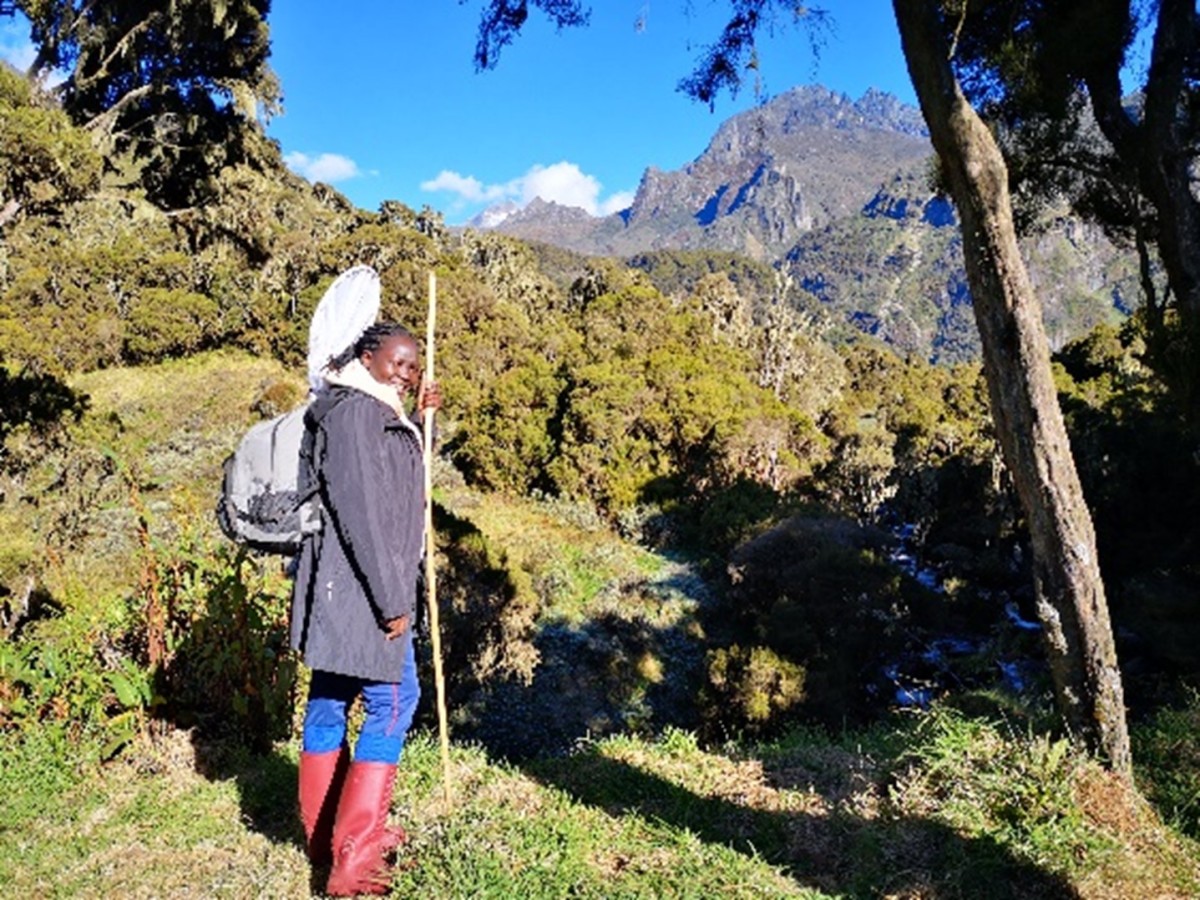
Image 5: Trecking up the Rwenzori Mountain (Top) to sample Lepidoptera and sampling moths at night in the cold mountain (Bottom)
Over the lockdown period, I had the opportunity to be part of number of virtual ecological meetings and discussions. I was invited to the virtual symposium for the Entomological Association of North America. This symposium gave me the opportunity to interact with other ecologists and discuss how best we could continue with our ecological interests during the pandemic where movement and physical interactions were now, for all intents and purposes, non-existent. I was happy to share on the topic “Citizen Science in Uganda: why the slow pace of recruiting disciples?” This opportunity came from my last blog that was published back in 2020 by the BES. After this symposium, I connected with other ecologists from North America who were interested in carrying out work in tropical Africa—especially on dung beetles and butterflies. I also got a chance to be part of a discussion led by Prof. Helen Roy (president of the Royal Entomological Society & CEH) under the theme: Women in Entomology. This gave me an opportunity to interact with several established female entomologists from across the globe working on different taxa, and we shared how different individuals were coping with the effects of the pandemic. The workshop was broadcasted live on YouTube and additional results were compiled into a short publication in Antenna (Antenna 2020: 44 (3:102-105). The most consistent of these webinars was the weekly Biodiversity talks hosted by the African virtual museum under the Biodiversity and Development Institute citizen science department. Prof Les Underhill and his team were great in keeping us engaged in ecological and conservation discussions throughout the lockdown.
With the outbreak of COVID-19, the world faced an unprecedented crisis as we witnessed a human tragedy of historical proportions. COVID-19 knew no borders, spared no country or continent, and struck indiscriminately. COVID-19 was not only a health emergency. It was also an environmental/ecological issue stemming from human interference in nature—including deforestation, encroachment on animal habitats, and destruction of biodiversity. As a country that thrives on tourism, the outbreak of COVID-19 simply cut off a major source of revenue for Uganda. However, one great opportunity for me was the chance to move tourism online. Given that working in ecology means that I have had the opportunity to visit as many places as I possibly can, I resorted to showcasing a number of sites to my national and international networks in the form of photographs and short videos. The extensive feedback gave me a new lease of life on how to approach my own ecological work—to capture data that speaks to a wide array of people, and not only ecologists.
Ecology in post COVID-19 Uganda and the global community.
While the Ugandan Government has taken commendable steps to contain the virus, the post-crisis reconstruction phase should not focus only on health, economic, and social issues. It must also focus on increased efforts to protect the environment. The transition to a green economy, therefore, will require a paradigm shift in the management of natural resources. This calls for major investments in sectors that support ecology and have high green-growth multiplier effects like agriculture, energy, transport, and urban green cities—in doing so, the transformative aspect of urbanization can be harnessed. As we prepare to rebuild the economy, we must not lose sight of environmental signals and what they mean for our future and wellbeing. Urgent action is required to protect and conserve biodiversity, as a key response to the global health and environmental crises, in order to ensure the long-term survival and well-being of our country, and the world! The lesson from COVID-19 is that early action can enable transformational change to accelerate the transition to a greener economy; the health of people and the planet are one and the same, and both can thrive in equal measure. Although many of the threats to biodiversity and protected areas have been exacerbated following the COVID-19 pandemic, we have also seen greater appreciation of nature and the importance of understanding how ecology works. Together, as communities, we can develop more resilient ecological systems for the benefit of nature and people. I believe that this period is just the beginning of long-term collaborations between the north-south partners that can enhance our ecological knowledge through networking, and those of the future generations of ecologists.
Enjoyed the blogpost and want to reach out to Perpetra? Contact her via Twitter or email!
Just like us humans, plants also have friends and enemies. ‘Friendship’ is invaluable in harsh environments. For instance, seedlings would quickly die out in hot, dry conditions without neighboring adult trees helping alleviate water stress – coined ‘nurse plant effect’, this is a classic example of positive plant-plant interactions. On the other hand, more often we see ‘hostility’ in nature, in the sense that competition for resources is ubiquitous between coexisting plants. Bin Chen has been doing experiments on plant roots for years, and has made many interesting findings: when paired plants sense the presence of each other, an ‘armor race’ is often triggered – they both over-invest in root growth in order to scramble as much soil nutrients as possible from their opponents, even though this will undermine their overall fitness. Now, positive and negative plant-plant interactions have become a core interest for Bin. Around these interactions there have been a myriad of fascinating stories. They are key to understanding community assembly, ecosystem functioning, evolutionary processes, and many other fundamental questions.
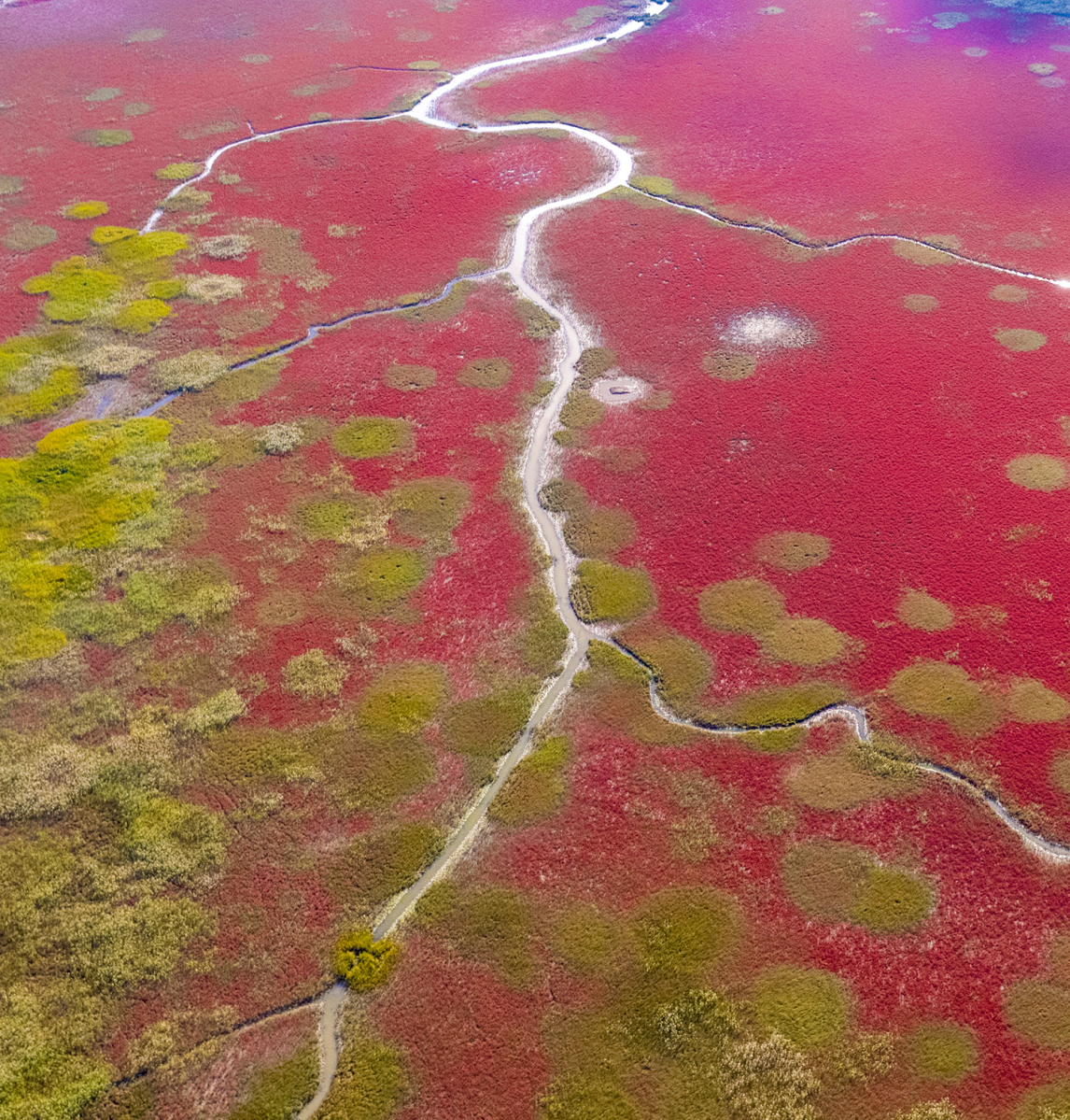
While one can use sophisticated experiments to study plant-plant interactions under well-controlled conditions, it is difficult to say how often and how strong these interactions are in natural ecosystems, especially at large spatial scales. For instance, would it be possible to tell if co-existing plants are mostly friendly or hostile to one another, just from a glimpse of the landscape, like in the cover image?
Equipped with state-of-the-art remote sensing technologies and theoretical models, ecologists can now make use of spatial information to effectively infer positive and negative interactions between plants across a wide range of scales. In the review article related to the cover image, Bin and colleagues provide a synthesis of the progress and prospects of inferring plant-plant interactions using remote sensing tools at individual, community, and landscape scales.
Among the most interesting studies are how ecologists search for interaction signals from landscape vegetation patterns. In some special cases, the emergence of particular vegetation patterns could immediately inform not only the existence, but also the operating scales of facilitation and competition between plants. The most studied example may be ‘Turing patterns’ (named after Alan Turing, the founder of computer science) characterized by spatially periodic patterns resembling spots, gaps, stripes, or labyrinths. Theory suggests that these patterns are attributed to short-range facilitation in coupling with long-range competition between plants (and other organisms), known as ‘scale-dependent feedback’.
Left: labyrinth-like pattern of Triodia basedowii (Spinifex grass) near Newman in the Pilbara region of Western Australia. Right: stripe-like vegetation pattern in Ladakh, India. Credit: Hezi Yizhaq.
This mechanism of spatial self-organization is supported by much field evidence. Quan-Xing Liu has conducted transplanted experiments on Dutch and Chinese coastal mudflats subject to strong wave impacts. He found that saltmarsh plants (such as cordgrass Spartina anglica or sedge Scirpus mariqueter) survived better when transplanted into existing vegetation patches (a small-scale positive interaction), but were wiped out by waves more easily when transplanted on the fringe of the patches (a larger-scale negative interaction). Inspired by the coastal work, Quan-Xing is delving into more diverse spatial patterns across a wide range of systems. Some even go beyond the Earth. Using photos taken by the Curiosity Rover, he is now studying the patterned ground on Mars to infer interactions between stones and sands.
‘Fairy circles’ are another class of striking vegetation patterns. The spontaneous ring-like vegetation patterns found in Namibian and Australian deserts have invoked much curiosity. Some have been attributed to termite herbivory, or competition for soil water. Fairy circles have also been found in coastal saltmarshes. Quan-Xing, with an international team, used drone images, nitrogen addition experiments, and mathematical models to demonstrate that intraspecific competition for nutrients may play a central role in the formation of these kinds of patterns. The cover image shows similar cordgrass circles along the Yellow Sea coast, embedded in the iconic ‘Red Beach’ ecosystem. Chi Xu and colleagues take a different look at vegetation patterns at scales larger than the circles – they used time-series remote sensing data and models to study how the long-distance interactions between different plant species drive the long-term landscape dynamics of this system.
Drone photos of ring-like Spartina alterniflora vegetation pattern in the coastal saltmarsh in Shanghai, China. Credit: Quan-Xing Liu.
Many ecologists, like Quan-Xing and Chi, enjoy deciphering plant-plant interactions from vegetation patterns. Their skillset is boosted by advancements of technologies including remote sensing and big data. More interesting discoveries are ahead.
We are delighted to announce that we have integrated the language editing software, Writefull, into the online submission system of Journal of Ecology.
Writefull is an automatic proofing and editing AI tool trained on published articles from STEM subject areas. It screens text for correctness of grammar, spelling, vocabulary and punctuation, as well more subtle language issues such as style, word order, and phrasing. Submitting authors will be able to use this service free of charge at the initial point of submission via our submission site, or manuscripts can be recommended for screening by Writefull when a final decision is sent out.
The expectation for authors to publish in English can be a significant barrier for researchers whose native language is not English. It can also lead to significantly longer times in peer review if Editors also have to return papers to authors where the language isn’t of the required standard.
By integrating Writefull into our submission system, we will be able to offer greater language and writing support for those that need it and, by offering it earlier in the review process, provide training opportunities and greater confidence for author groups without a fluent English-speaker.
We are constantly looking at ways to improve the experiences of our authors, reviewers, Associate Editors and Senior Editors – we hope that this change will benefit these audiences whilst at the same time contribute to our ongoing work to support a more diverse community of ecologists.
The Journal of Ecology Editors are delighted to honour Hans Cornelissen as our Eminent Ecologist award winner for 2022!In recognition of his work, we asked Hans to put together a virtual issue of some of his favourite contributions to the journal. Hans has also written this blog series related to the virtual issue, linking the main research themes throughout his career, and including highlights and anecdotes from his student years to his current life as a professor of ecology. Han’s full blog series can be found here: Part 1 | Part 2 |Part 3👇
CRYPTOGAMS A journey back in time…
Finally, after much blogging about vascular plants, their traits and associated ecosystem processes, we are getting to the small and beautiful: bryophytes and lichens! Although there must have been thousands of ecological studies on cryptogams by now, they still undoubtedly represent only a tiny fraction of all plant ecology studies. I was lucky to be introduced to them already by some infectiously passionate lecturers (Rob Gradstein, Fred Daniëls) when I was still a master student. They even made me choose cryptogam themes for my thesis projects in spite of my strong passion for birds. It started with fieldwork in the Belgian Ardennes, where Gea Karssemeijer and I did a phytosociological study on the succession of cryptogam communities on decaying spruce tree stumps. I remember we used a sharp metal pin that we dropped from a certain height and recorded the penetration depth as a measure of decay stage. It worked really well to understand the succession of cryptogam communities as a consequence of wood decay. After some extra effort the thesis became my first international publication (Cornelissen & Karssemeijer 1987), but I am hesitant to share it with you as our academic and English writing was still rather – let’s say – underdeveloped.
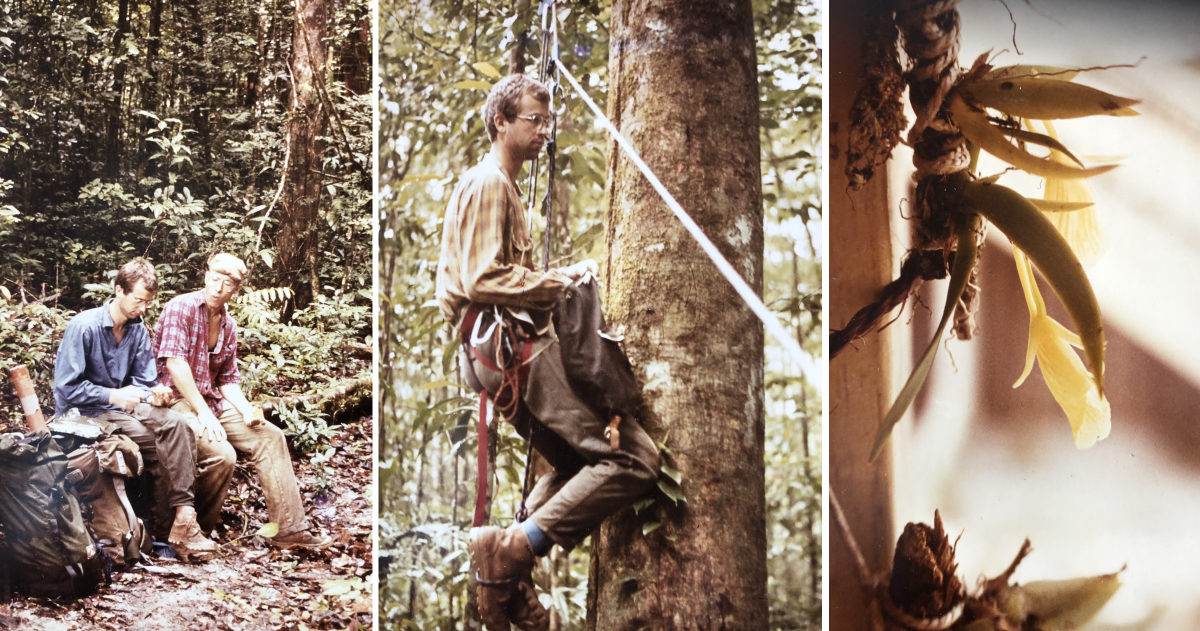
Then, out of the blue one day, Hans ter Steege (total stranger then, long-term friend now) phoned me to ask whether I wanted to join him on an MSc project about the vertical distribution of rainforest epiphytes in Guyana, South America. He was interested in tropical orchids and bromeliads and he had heard that I was interested in mosses, liverworts and lichens. The plan was to climb big trees together and map the epiphytic vegetation, where Hans 1 would identify the vascular plants and Hans 2 the cryptogams. I had never considered tropical epiphytes before and never been on an airplane, but my attitude towards exciting adventures was, already then: say yes first, think about the problems afterwards. I could write three blogs just about this project, but will control myself. It was a great adventure and we did things I (and my university) would now never allow my own students to do. We used bow and arrow and speleo gear to climb up to 35 meters high into trees to map the epiphytic plant communities in the different vertical zones (Photos 1). We collected specimens for identification and deposition in the Utrecht University herbarium later and took measurements of relative light exposure, bark texture and other variables in the different height zones of the host trees. To reach the highest, narrow branches and twigs we sawed out a large branch at the base and lowered it down to the forest floor. I had gradually overcome my vertigo while practicing climbing techniques, but falling out of the first tree we sampled for real didn’t help with that. After a week with my foot up, I limped (in some pain) through the rainforest for months in order for us to complete our target set of trees. Back in The Netherlands it turned out that a piece of bone the size of a dice was still floating round in my foot and the surgeon took it out. Life experience doesn’t always come easily. Much time and sweat went into plant identification upon return – there were few keys available for some of the plant and lichen groups, so we often had to find actual specimens in the herbarium for comparison. But the reward was great, as we published two papers from this study that turned out to be picked up by other epiphyte enthusiasts; one of which was on the cryptogam communities (Cornelissen and ter Steege 1989). Thinking about it now, this study was perhaps my first encounter with plant traits and plant functional types, as we classified our mosses, liverworts and lichens according to growth form. There were some amazing ones amongst them, for instance leafy bryophytes like the liverwort Symbiezidiumtransversale, which grew horizontally on the bark of vertical trunks. Their stems had leaves on both sides, with the leaves pointing up being small and closely attached to the bark and the leaves on the opposite side being twice the size and stretching out horizontally. What great adaptation to intercept precious water along a vertical surface!
Photos 1: Epiphyte study in Guyana. (a) Hans & Hans going to a forest site with a backpack full of climbing gear. (b) Climbing technique to access epiphytes in a tree. (c) sampling a tree trunk for epiphytes. (d) Epiphytic orchid sampled from the outmost twigs in the tree canopy.
From equator to pole; cryptogams and climate warming
My activities on mosses, liverworts and lichens went into a prolonged state of dormancy through my PhD work in China and my postdoc years at UCPE in Sheffield, UK (see blogs 1 and 2). But when UCPE ceased to exist, I was lucky to move to a postdoc position in the Sheffield Centre for Arctic Ecology of Terry Callaghan (and John Lee, Malcolm Press) at Sheffield University. This move turned out to become a dream come true. As a student I had hiked in the arctic tundra of northern Sweden and seen Abisko Research Station in the distance. My friend and I had discussed how wonderful it would be to work as a biologist in a beautiful place like that, surrounded by snow-topped mountains, tundra and lakes. And now by some amazing turn of luck I found myself going to Abisko and Svalbard to study the responses of arctic vegetation to climate warming. This work was part of a larger EU project (BASIS) on climate impact scenarios of the Barents Region. The project had an important socio-economic dimension and so it was logical to put particular focus on lichens as the staple food for reindeer; and the Saami people in northern Scandia strongly depend on reindeer for their livelihood. So I decided to study how arctic lichens could respond to climate warming. The hypothesis was that indirect responses might be important, i.e. that in more vegetated tundra at lower latitude and altitude, warming-induced growth and expansion of vascular plants, especially shrubs, would reduce the growth of lichens via shading. In climatically very harsh regions, i.e. in the High Arctic (e.g. Svalbard) or high up in the mountains in the Subarctic, any expansion of vascular plants would still not be enough to outcompete the lichens. Since two years of postdoc position would not be enough to collect enough data in the field myself, I collected data from the literature or via contacting researchers directly for their datasets. By then, several studies had reported biomass or cover by vascular plants and lichens in field experiments with treatments mimicking climate warming (see below for an example) or warming-induced faster nutrient mineralization and availability. I also collected literature data from natural gradients where biomass or cover of vascular plants and lichens had both been recorded. The patterns turned out to be really consistent and to support the hypothesis: that lichens struggle where vascular plants become more abundant, for instance because of climate warming (Cornelissen et al. 2001, virtual issue). When, subsequently, more data became available from experimental field warming studies, this finding (warming-induced “shrubification” at the expense of lichens) was confirmed more robustly across the cold parts of the globe (Elmendorf et al. 2012; Lang et al. 2012).
Photos 2: Peat bog warming experiment in Abisko, North Sweden. (a) Overview of the experiment with open-top chambers. (b) Measuring snow depth in the plots in winter.
Photo 3: Simone Lang measuring the abundance of bryophytes and lichens in Norwegian tundra using a “point-intercept frame”.
When I moved to my current place, at Vrije Universiteit Amsterdam, back in 2000, I continued both the arctic research line and pursued my interest in traits as well as in cryptogams. And these three came together there. With (then) PhD students Ellen Dorrepaal, Simone Lang, Frida Keuper and Eva Krab, and postdocs Nadia Soudzilovskaia, Tanya Elumeeva and Pascale Michel, we worked both on the climate responses and functional trait ecology of cryptogams; and the linkages between them. Rien Aerts, Ellen Dorrepaal, Richard van Logtestijn and I, in collaboration with Abisko Research Station, set up a field warming experiment in a Sphagnum peat bog in Abisko, N Sweden. This work was not only to look at Sphagnum responses to climate warming but also to contribute to knowledge of climate responses to Sphagnum, because much of the world’s organic carbon is currently (still…) locked up in Sphagnum peatlands worldwide. But how to keep this carbon locked up in the face of melting permafrost and other threats? Using the then already established “open top chambers” (OTC), we went for a factorial design that would disentangle the separate and combined warming effects on ecosystem functions and biodiversity in winter, spring and summer (Photos 2). Because our site was exposed and windy, the OTCs (which were moved on and off between seasons depending on the treatment) not only raised the air temperature in spring and summer, but also “warmed” the soil in winter by trapping the snow that blew in over the OTC sides, thereby insulating the soil from the cold winter air. I have always loved working in this experiment, both because of the science and the fantastic scenery, with views over the big glacial lake Torneträsk and mountains all around and Red-throated Divers calling loudly on their frequent foraging flights to connect mountains and lake. We found that the dominant peatmoss, Sphagnum fuscum, did what ecosystem engineers are supposed to do: orchestrate the entire ecosystem. We measured it growing faster and producing more new biomass in response to experimental warming. Thereby it “bogged down” the vascular plants, which had a hard time climbing up towards the light again (Dorrepaal et al. 2006; Keuper et al. 2011). At the same time, Sphagnum provided suitable habitat to a community of several tiny special liverworts (Lang et al. 2009a in this journal). This special role of Sphagnum peatmosses in driving both vascular and cryptogam communities also came out strongly when Simone Lang studied them not only in warming experiments but also across large natural climatic gradients in northern Sweden and Norway; (Lang et al. 2009a; see Photo 3).
Cryptogam traits and ecosystem functions
Photo 4: Nadia Soudzilovskaia’s experiment testing for the potential of different bryophyte species to acidify their direct environment.
Parallel to this global change work we started to measure bryophytes and lichens for functional traits that we thought might underpin their important roles in biogeochemical cycling (Cornelissen et al. 2007). These studies often involved collecting monospecific turfs of wide-ranging species, measuring some of their morphological or chemical traits and subjecting them to experimental tests. These test quantified, for instance, species differences and species interactions with regard to their water economy and thereby in ecosystem water retention capacity (Elumeeva et al. 2011; Michel et al. 2012 in this journal); their capacity (or not…) to acidify their environment via their organic acids (Soudzilovskaia et al. 2010; see Photo 4); to modulate the germination of vascular plants (Soudzilovskaia et al. 2011); to insulate soil temperatures and thereby freeze-thaw cycles (Soudzilovskaia et al. 2013); and to host nitrogen fixing cyanobacteria, thereby helping to bring new nitrogen into rather infertile tundra (Gavazov et al. 2010). All of these examples relate to the important roles of cryptogam species composition in the functioning of arctic ecosystems.
Photo 5: Stef Bokhorst measuring lichens at Lagoon island near Rothera station, Antarctic Peninsula.
Currently we (with Stef Bokhorst, Pete Convey, Seringe Huisman, Emma Ciric, Ingeborg Klarenberg) are extending this research line to the Antarctic, where we study, for instance, the role of different lichen species in rock weathering (by exuding organic acids) and the role of different moss and lichen species and their traits in carbon capture via photosynthesis (Photo 5) and in their host function to invertebrate communities (e.g. mites, springtails and tardigrades). Among all those polar studies, the one I want to highlight as having been the most fun is the experiment in which we literally “turned peatlands upside down”. With (then) PhD student Eva Krab we studied the vertical stratification of different springtail (Collembola) species in arctic peat bogs and especially to find out whether they basically had a favourite depth along the gradient of temperature and moisture from the surface to deeper layers, whether they went for a certain Sphagnum quality (“traits”) from fresh on top to partly decomposed deeper down; or both (Krab et al. 2010; photos 6). It was a wild idea that started as a joke: “let’s turn peat cores upside down”. That’s exactly what we did: drilling out deep peat cores and putting half back as they were and the other half upside down in the hole they came from. We also some disturbance controls without any action. What started as a joke revealed some amazing patterns also relating to the traits of the springtails. We identified “movers” as species that were sensitive to the abiotic gradient from top to bottom and had to move back to where they came from. Pigmented species with eyes, adapted to life close to the light at the surface, moved back up while white, blind species moved back down when confronted with conditions close to the surface. Other species qualified as “stayers”; they were happy where they ended up in the upside-down core as long as they still had the same quality of peat to live in and feed on. I have found out that this fun experimental design has since also been adopted in ecological experiments in other parts of Europe. Having fun is an important ingredient of doing novel science. 😊
Photo 6: Turning peatlands upside down. (a) Eva Krab sampling a peat core for the upside down treatment. (b) peat core placed in a net to place it back in a core hole. The net facilitates pulling it out safe and sound later. (c) peat core placed back upside-down in its net (d) Peat cores in the tullgren apparatus for extracting springtails.
Like for vascular plants, we have been intrigued not only by cryptogam functions during their lifetime, but also in their afterlife. As announced in the previous blog, (then) PhD student Simone Lang studied one of the key processes during the transition from green leaves to litter: nutrient resorption into other plant parts by way of recycling these precious resources. We asked the question how efficient different evolutionary groups on the Tree of Life were at resorbing their nitrogen and phosphorus. Answering this question took us to the subarctic tundra of North Sweden, where we collected both fresh tissues and litter of wide-ranging species of vascular plant, bryophyte and lichen. It was a particular challenge to collect senesced tissues of bryophytes and lichens, as it was often hard to distinguish between living and dead tissues. What wasn’t known in the literature was that bryophytes and lichens do actually resorb nutrients during senescence, even though they lack vascular tissues to aid them with that. Mosses and lichens had low, liverworts intermediate and, as expected, vascular plants intermediate to high resorption efficiency (Lang et al. 2014). But this was only a first shot at cryptogam nutrient resorption; much work needs to be done in other biomes to test for the robustness of the evolutionary patterns found. And the same can be said about comparing the decomposability of different cryptogams. Here we adopted the “common garden” litter-bed approach (see first blog) but with adjustments for hosting cryptogam litter in a relevant environment. As for the resorption work, one of the main challenges was to find or “create” actual litter, as mosses and lichens are good at many things but not good at dying a natural death. Anyway, we found enormous variation between evolutionary groups, for instance liverworts and mosses being generally slow to decompose compared to vascular plant litter with Sphagnum species always coming out as the slowest of all (Lang et al. 2009b, virtual issue; Dorrepaal et al. 2005 in this journal). But there were also huge differences in decomposition rate among species within mosses, within liverworts and within lichens (Lang et al. 2009b, virtual issue). As for vascular plants, such findings have important implications for the formation and maintenance of large-scale carbon stocks as dependent on vegetation composition. Much work to be done on this not only in tundra but also in other biomes in the world.
I’d like to finish this blog by saying that cryptogams, being the little ones, have not been seen as inferior to vascular plants everywhere in the world. I have very fond memories of the fantastic “moss gardens” around old temples in Japan (Photo 7). Fortunately, these fantastic and important creatures do sometimes get the love and attention they so much deserve.
Photo 7: Moss garden in an old temple complex in Kyoto, Japan.
Hans was interviewed by Executive Editor Richard Bardgett, about his motivations and career to date, how he sees the field of functional traits developing in the future, and what advice he’d give to ECRs interested in plant ecology:
References
Cornelissen, J.H.C. & Karssemeijer, G.J. (1987). Bryophyte vegetation on spruce stumps in the Hautes-Fagnes, Belgium, with special reference to wood decay. Phytocoenologia, 15, 485-504.
Cornelissen, J.H.C. & ter Steege, H. (1989) Distribution and ecology of epiphytic bryophytes and lichens in dry evergreen forest of Guyana. Journal of Tropical Ecology, 5, 131-150.
Cornelissen, J.H.C., Lang, S.I., Soudzilovskaia, N.A. & During, H.J. (2007) Comparative cryptogam ecology: a review of bryophyte and lichen traits that drive biogeochemistry. Annals of Botany, 99, 987-1001.
Dorrepaal, E., Cornelissen, J.H.C., Aerts, Wallén, B. & van Logtestijn, R.S.P. (2005) Are growth forms consistent predictors of leaf litter quality and decomposability across peatlands along a latitudinal gradient? Journal of Ecology, 93, 817-828.
Dorrepaal, E., Cornelissen, J.H.C., Aerts, R. & van Logtestijn, R.S.P. (2006) Sphagnum modifies climate change impacts on sub-arctic vascular bog plants. Functional Ecology, 20, 31-41.
Elmendorf, S.C., Henry, G.H.R., Hollister, R.D., Björk, R.G., Bjorkman, A.J. et al. (2012) Global assessment of experimental climate warming on tundra vegetation: Heterogeneity over space and time. Ecology Letters, 15, 164-175.
Elumeeva E.G., Soudzilovskaia, N.A., During, H.J. & Cornelissen, J.H.C. (2011) The importance of shoot adaptation versus aggregation for the water balance of subarctic bryophytes. Journal of Vegetation Science, 122, 152-164.
Gavazov, K.S., Soudzilovskaia, N.A., van Logtestijn, R.S.P., Braster, M. & Cornelissen, J.H.C. (2010) Isotopic analysis of cyanobacterial nitrogen fixation associated with subarctic lichen and bryophyte species. Plant and Soil, 3331-2, 507-517.
Keuper F., Dorrepaal, E., van Bodegom, P.M., Aerts, R., van Logtestijn, R.S.P., Callaghan, T.V. & Cornelissen, J.H.C. (2011) A Race for Space? How Sphagnum fuscum stabilizes vegetation composition during long-term climate manipulations. Global Change Biology, 17, 2162-2171.
Krab, E.J., H. Oorsprong, M.P. Berg & J.H.C. Cornelissen 2010. Turning northern peatlands upside-down: disentangling microclimate and substrate quality effects on vertical distribution of Collembola. Functional Ecology24: 1362–1369.
Lang S.I., Cornelissen, J.H.C., Hölzer, A., ter Braak, C.J.F., Ahrens, M. et al. (2009) Determinants of cryptogam composition and diversity in Sphagnum-dominated peatlands: the importance of temporal, spatial and functional scales. Journal of Ecology, 97, 299-310.
Lang S.I., Cornelissen J.H.C., Shaver G.R., Ahrens M., Callaghan, T.V. et al. (2012) Arctic warming on two continents has consistent negative effects on lichen diversity and mixed effects on bryophyte diversity. Global Change Biology, 18, 1096–1107.
Lang, S.I., Aerts, R., van Logtestijn, R.S.P., Schweikert, W., Klahn, T. et al. (2014)Mapping nutrient resorption efficiencies of subarctic cryptogams and seed plants onto the Tree of Life. Ecology and Evolution,4, 2217-2227.
Michel, P., Lee, W.G., During, H.J. & Cornelissen, J.H.C. (2012) Species traits and their non-additive interactions control the water economy of bryophyte cushions. Journal of Ecology, 100, 222-231.
Soudzilovskaia, N.A., van Bodegom, P.M. & Cornelissen, J.H.C. 2013.Dominant bryophyte control over high-latitude soil temperature fluctuations predicted by heat transfer traits, field moisture regime and laws of thermal insulation. Functional Ecology, 27, 1442-1454.
Soudzilovskaia, N.A., Braae, B., Douma, J., Grau, O., Milbau, A. et al. (2011) How do bryophytes govern generative recruitment of vascular plants? New Phytologist, 190, 1019-1031.
Soudzilovskaia N.A., Cornelissen, J.H.C., During, H.J., van Logtestijn, R.S.P., Lang, S.I. & R. Aerts (2010) Similar cation exchange capacities among bryophytespecies refute a presumed mechanism of peatland acidification. Ecology, 91, 2716-2726.
Plants do some strange things. We are surrounded by plants in our day-to-day lives, but take for granted how different from us they are. We are unitary and find it more difficult or even impossible to live when some of our parts are lost; plants are typically modular and, in many cases, can fragment into new individuals. We are sexual; plants are often sexual, often not, and often both sexual and clonal. We can reproduce at any time once past a given age; plants have reproductive seasons each year. We can move in search of better conditions and resources; plants are sedentary, and “move” when they disperse seeds and other propagules, or simply adjust to the environment via facultative sprouting and growth. These differences make plants both interesting and difficult to study, the latter particularly so because we cannot “think” like a plant. Such issues have plagued the evolutionary and population ecological study of plants in particular, and probably contributed to John Harper’s thinking when he stated, “There are few plants that are at all suitable for studying a process of continuous population growth, not only because most plants have life cycles and therefore discrete jumps of population size, but because the fixed rooted habit of most plants prevents them from moving about in search of the limited resources and escaping from their neighbours” (Harper 1977).
One of the more interesting hypotheses developed to understand plant evolution is the genetic mosaic hypothesis (Gill et al. 1995). This hypothesis states that the ability of plants to grow meristematically and form new modules provides them also with the ability to pick up novel genetic differences in different parts of their bodies, which may then propagate as those parts grow and colonize further space. These differences may allow them to weather the environment better over time and space, as natural selection plays out across the genetic novelty in different parts of the plant. This idea has a great deal of explanatory potential in plant evolution, although low documented somatic mutation rates in some plants have made some scientists wonder how important genetic mosaics really are.
An extension of this intriguing idea is the epigenetic mosaic hypothesis. This hypothesis states that meristems pick up epigenetic differences, such as different DNA methylation patterns, that they pass down to daughter modules. These methylation patterns may then propagate as those daughters grow and colonize new space, affecting the phenotype of the plant more broadly. This idea is interesting not just because of the accumulating interest in epigenetics and DNA regulation as mechanisms of phenotypic diversification, but also because of empirical evidence that epigenetic mechanisms are responsible for some heritable responses to the environment. For instance, some of the epigenetic responses that some plants make in response to drought are passed down at least two generations, making offspring and grand-offspring more likely to survive drought episodes (Herman et al. 2012). In humans, proclivity to type 2 diabetes and some other diseases is at least influenced by the dietary conditions that a person’s parents and grandparents experienced (Kaati et al. 2002), also suggesting possible transgenerational epigenetic effects.
Wild lavender (Lavandula latifolia) (taken from Herrera, C. et al. (2022). Ecological significance of intraplant variation: Epigenetic mosaicism in Lavandula latifolia plants predicts extant and transgenerational variability of fecundity-related traits. Journal of Ecology).
Herrera et al. addressed this hypothesis, particularly asking whether their study plant, a species of lavender called Lavandula latifolia, exhibited an epigenetic mosaic in fitness-related traits. The study design was rigorous, involving the sampling of five modules from each of 15 wild plants. These modules were grown to seed, which were collected from these modules and planted in the greenhouse. All of these resulting offspring were characterized in terms of a variety of fitness-related phenotypic traits, and methylation state in different parts of the genome. In the end, methylation state explained reasonable components of the variance in traits such as inflorescence length, log total seed number, seed germinate rate, and fungal disease frequency.
The influence of inherited DNA methylation patterns on fitness-related traits is what is most important here. Transgenerational epigenetic effects on phenotypes are not necessarily new to the literature. But, to those of us who study how plants adapt to their environments, the ultimate question is to what extent epigenetic influences affect the outcomes of natural selection. Are these effects strong? Are they common? By dealing with strongly fitness-related traits, the authors show convincingly that these impacts at least need to be considered, and studied in other organisms and populations, as well.
Looking ahead, this study sets the stage for further interesting questions in plant evolutionary ecology. Some of these questions appear to be “passed down” from studies on the genetic mosaic hypothesis. For example, to what extent do long-lived plants utilize such inherited methylation patterns, and other transgenerational epigenetic mechanisms, to weather the environment in the very long-term? As someone who has travelled to see some of the oldest trees in the world, such as the bristlecone pines and giant sequoias of the California desert, I wonder to what extent these phenomenal plants rely on this approach to survive for the thousands of years that they do.
References:
Gill, D.E., Chao, L., Perkins, S.L. & Wolf, J.B. (1995). Genetic mosaicism in plants and clonal animals. Annual Review of Ecology and Systematics, 26, 423–444.
Harper, J.L. (1977). Population biology of plants. Academic Press, New York, New York, USA.
Herman, J.J., Sultan, S.E., Horgan-Kobelski, T. & Riggs, C. (2012). Adaptive transgenerational plasticity in an annual plant: grandparental and parental drought stress enhance performance of seedlings in dry soil. Integrative and Comparative Biology, 52, 77–88.
Herrera, C.M., Medrano, M., Bazaga, P. & Alonso, C. (In press). Ecological significance of intraplant variation: epigenetic mosaicism in Lavandula latifolia plants predicts extant and transgenerational variability of fecundity-related traits. Journal of Ecology, n/a.
Kaati, G., Bygren, L.O. & Edvinsson, S. (2002). Cardiovascular and diabetes mortality determined by nutrition during parents’ and grandparents’ slow growth period. European Journal of Human Genetics, 10, 682–688.
In science, the simplest questions are commonly hard to answer. In the field of plant population biology, the amount of genetic variation that a single population can harbour is one of these questions. The main reason is that a plant population, despite being composed of sessile individuals, must be regarded as a dynamic entity, changing across space and over time. In the last few years, we have learned that temporal changes in genetic diversity, and even in quantitative variation in traits, can be fast in annual plant populations. Hence, any attempt to quantify the amount of genetic variation in a plant population will represent a snapshot of a particular moment in the history of that population. Another important problem has to do with the number of individuals sampled to estimate genetic variation in a given location and at a particular time.
To this end, we commonly sample aboveground individuals, which always represent a small fraction of the total population, as most individuals occur as seeds buried in the soil seed bank. Thus, it is clear that a single sampling effort will always provide biased estimates on the extent of the genetic variation within a population. Despite the efforts of population genetics theory to infer demographic and evolutionary patterns from sampling designs covering a tiny fraction of the total genetic variation, we still miss the big picture about the amount of genetic variation contained in a plant population that, although it may seem otherwise, is in continuous motion.
Clump of fruiting A. thaliana individuals at the Moral de Calatrava population (Spain). Photo credit: Xavier Picó (April 19, 2022).
To address this knotty question, we repeatedly sampled a natural population of the annual plant Arabidopsis thaliana in central Spain, across an area of 7.4 ha over 10 years, to capture a more complete fraction of the genetic variation (quantitative and molecular) within the population. Our repeated sampling encompassed very different years, which determined the number and distribution of individuals in the population, thus reducing the inherent bias of single sampling designs. This enabled us to obtain a broader, more realistic view of the enormous amount of genetic variation that a natural A. thaliana population, which we know that remained undisturbed for long time, can harbour. In particular, we detected new genotypes at every sampling year, regardless of the year and vegetation type, suggesting that we might still be far from understanding how spatial and temporal environmental heterogeneity affects the genetic composition of the population over time.
On top of the seemingly endless genetic variation within this A. thaliana population, we found that genetic relatedness among individuals represents the best predictor of variation in life-cycle traits, once again regardless of the year and vegetation type. This is an important take-home message for plant ecologists because purely genetic attributes, and not biological or ecological ones, emerged as the most important drivers of phenotypic variation, whose identification is a major goal in plant ecology. Overall, our study highlights the importance of genetic approaches in ecological studies whilst stressing the fact that, I am sad to say, we keep ignoring how much genetic variation exists in a plant population. Thus, there is no other option but to keep sampling and studying this and others natural A. thaliana populations.
F. Xavier Picó Estación Biológica de Doñana (EBD-CSIC), Spain