Category: Business

  • The Best Big Media Merger Is No Merger at All

    The Best Big Media Merger Is No Merger at All

    [ad_1]

    The state of streaming is… bad. It’s very bad. The first step in wanting to watch anything is a web search: “Where can I stream X?” Then you have to scroll past an AI summary with no answers, and then scroll past the sponsored links. After that, you find out that the thing you want to watch was made by a studio that doesn’t exist anymore or doesn’t have a streaming service. So, even though you subscribe to more streaming services than you could actually name, you will have to buy a digital copy to watch. A copy that, despite paying for it specifically, you do not actually own and might vanish in a few years. 

    Then, after you paid to see something multiple times in multiple ways (theater ticket, VHS tape, DVD, etc.), the mega-corporations behind this nightmare will try to get Congress to pass laws to ensure you keep paying them. In the end, this is easier than making a product that works. Or, as someone put it on social media, these companies have forgotten “that their entire existence relies on being slightly more convenient than piracy.” 

    It’s important to recognize this as we see more and more media mergers. These mergers are not about quality, they’re about control. 

    In the old days, studios made a TV show. If the show was a hit, they increased how much they charged companies to place ads during the show. And if the show was a hit for long enough, they sold syndication rights to another channel. Then people could discover the show again, and maybe come back to watch it air live. In that model, the goal was to spread access to a program as much as possible to increase viewership and the number of revenue streams.  

    Now, in the digital age, studios have picked up a Silicon Valley trait: putting all their eggs into the basket of “increasing the number of users.” To do that, they have to create scarcity. There has to be only one destination for the thing you’re looking for, and it has to be their own. And you shouldn’t be able to control the experience at all. They should.  

    They’ve also moved away from creating buzzy new exclusives to get you to pay them. That requires risk and also, you know, paying creative people to make them. Instead, they’re consolidating.  

    Media companies keep announcing mergers and acquisitions. They’ve been doing it for a long time, but it’s really ramped up in the last few years. And these mergers are bad for all the obvious reasons. There are the speech and censorship reasons that came to a head in, of all places, late night television. There are the labor issues. There are the concentration of power issues. There are the obvious problems that the fewer studios that exist the fewer chances good art gets to escape Hollywood and make it to our eyes and ears. But when it comes specifically to digital life there are these: consumer experience and ownership.  

    First, the more content that comes under a single corporation’s control, the more they expect you to come to them for it. And the more they want to charge. And because there is less competition, the less they need to work to make their streaming app usable. They then enforce their hegemony by using the draconian copyright restrictions they’ve lobbied for to cripple smaller competitors, critics, and fair use.  

    When everything is either Disney or NBCUniversal or Warner Brothers-Discovery-Paramount-CBS and everything is totally siloed, what need will they have to spend money improving any part of their product? Making things is hard, stopping others from proving how bad you are is easy, thanks to how broken copyright law is.  

    Furthermore, because every company is chasing increasing subscriber numbers instead of multiple revenue streams, they have an interest in preventing you from ever again “owning” a copy of a work. This was always sort of part of the business plan, but it was on a scale of a) once every couple of years,  b) at least it came, in theory, with some new features or enhanced quality and c) you actually owned the copy you paid for. Now they want you to pay them every month for access to same copy. And, hey, the price is going to keep going up the fewer options you have. Or you will see more ads. Or start seeing ads where there weren’t any before.  

    On the one hand, the increasing dependence on direct subscriber numbers does give users back some power. Jimmy Kimmel’s reinstatement by ABC was partly due to the fact that the company was about to announce a price hike for Disney+ and it couldn’t handle losing users due to the new price and due to popular outrage over Kimmel’s treatment.  

    On the other hand, well, there’s everything else. 

    The latest kerfuffle is over the sale of Warner Brothers-Discovery, a company that was already the subject of a sale and merger resulting in the hyphen. Netflix was competiing against another recently merged media megazord of Paramount Skydance.  

    Warner Brothers-Discovery accepted a bid from Netflix, enraging Paramount Skydance, which has now launched a hostile takeover 

    Now the optimum outcome is for neither of these takeovers to happen. There are already too few players in Hollywood. It does nothing for the health of the industry to allow either merger. A functioning antitrust regime would stop both the sale and the hostile takeover attempt, full stop. But Hollywood and the federal government are frequent collaborators, and the feds have little incentive to stop Hollywood’s behemoths from growing even further, as long as they continue to play their role pushing a specific view of American culture.    

    The promise of the digital era was in part convenience. You never again had to look at TV listings to find out when something would be airing. Virtually unlimited digital storage meant everything would be at your fingertips. But then the corporations went to work to make sure it never happened. And with each and every merger, that promise gets further and further away.  

    Note 12/10/2025: One line in this blog has been modified a few hours post-publication. The substance remains the same. 

    [ad_2]

    Source link

  • Age Verification Is Coming For the Internet. We Built You a Resource Hub to Fight Back.

    Age Verification Is Coming For the Internet. We Built You a Resource Hub to Fight Back.

    [ad_1]

    Age verification laws are proliferating fast across the United States and around the world, creating a dangerous and confusing tangle of rules about what we’re all allowed to see and do online. Though these mandates claim to protect children, in practice they create harmful censorship and surveillance regimes that put everyone—adults and young people alike—at risk.

    The term “age verification” is colloquially used to describe a wide range of age assurance technologies, from age verification systems that force you to upload government ID, to age estimation tools that scan your face, to systems that infer your age by making you share personal data. While different laws call for different methods, one thing remains constant: every method out there collects your sensitive, personal information and creates barriers to accessing the internet. We refer to all of these requirements as age verification, age assurance, or age-gating.

    If you’re feeling overwhelmed by this onslaught of laws and the invasive technologies behind them, you’re not alone. It’s a lot. But understanding how these mandates work and who they harm is critical to keeping yourself and your loved ones safe online. Age verification is lurking around every corner these days, so we must fight back to protect the internet that we know and love. 

    That’s why today, we’re launching EFF’s Age Verification Resource Hub (EFF.org/Age): a one-stop shop to understand what these laws actually do, what’s at stake, why EFF opposes all forms of age verification, how to protect yourself, and how to join the fight for a free, open, private, and yes—safe—internet. 

    Why Age Verification Mandates Are a Problem

    In the U.S., more than half of all states have now passed laws imposing age-verification requirements on online platforms. Congress is considering even more at the federal level, with a recent House hearing weighing nineteen distinct proposals relating to young people’s online safety—some sweeping, some contradictory, and each one more drastic and draconian than the last.

    We all want young people to be safe online. However, age verification is not the silver bullet that lawmakers want you to think it is.

    The rest of the world is moving in the same direction. We saw the UK’s Online Safety Act go into effect this summer, Australia’s new law barring access to social media for anyone under 16 goes live today, and a slew of other countries are currently considering similar restrictions.

    We all want young people to be safe online. However, age verification is not the silver bullet that lawmakers want you to think it is. In fact, age-gating mandates will do more harm than goodespecially for the young people they claim to protect. They undermine the fundamental speech rights of adults and young people alike; create new barriers to accessing vibrant, lawful, even life-saving content; and needlessly jeopardize all internet users’ privacy, anonymity, and security.

    If legislators want to meaningfully improve online safety, they should pass a strong, comprehensive federal privacy law instead of building new systems of surveillance, censorship, and exclusion.  

    What’s Inside the Resource Hub

    Our new hub is built to answer the questions we hear from users every day, such as:

    • How do age verification laws actually work?
    • What’s the difference between age verification, age estimation, age assurance, and all the other confusing technical terms I’m hearing?
    • What’s at stake for me, and who else is harmed by these systems?
    • How can I keep myself, my family, and my community safe as these laws continue to roll out?
    • What can I do to fight back?
    • And if not age verification, what else can we do to protect the online safety of our young people?

    Head over to EFF.org/Age to explore our explainers, user-friendly guides, technical breakdowns, and advocacy tools—all indexed in the sidebar for easy browsing. And today is just the start, so keep checking back over the next several weeks as we continue to build out the site with new resources and answers to more of your questions on all things age verification.

    Join Us: Reddit AMA & EFFecting Change Livestream Events

    To celebrate the launch of EFF.org/Age, and to hear directly from you how we can be most helpful in this fight, we’re hosting two exciting events:

    1. Reddit AMA on r/privacy

    Next week, our team of EFF activists, technologists, and lawyers will be hanging out over on Reddit’s r/privacy subreddit to directly answer your questions on all things age verification. We’re looking forward to connecting with you and hearing how we can help you navigate these changing tides, so come on over to r/privacy on Monday (12/15), Tuesday (12/16), and Wednesday (12/17), and ask us anything!

    2. EFFecting Change Livestream Panel: “The Human Cost of Online Age Verification

    Then, on January 15th at 12pm PT, we’re hosting a livestream panel featuring Cynthia Conti-Cook, Director of Research and Policy at the Collaborative Research Center for Resilience; Hana Memon, Software Developer at Gen Z for Change; EFF Director of Engineering Alexis Hancock; and EFF Associate Director of State Affairs Rindala Alajaji. We’ll break down how these laws work, who they exclude, and how these mandates threaten privacy and free expression for people of all ages. Join us by RSVPing at https://livestream.eff.org/.

    A Resource to Empower Users

    Age-verification mandates are reshaping the internet in ways that are invasive, dangerous, and deeply unnecessary. But users are not powerless! We can challenge these laws, protect our digital rights, and build a safer digital world for all internet users, no matter their ages. Our new resource hub is here to help—so explore, share, and join us in the fight for a better internet.

    [ad_2]

    Source link

  • Boeing Finalizes $4.7 Billion Acquisition of Spirit AeroSystems, Bringing Key 737 Max Supplier Back In‑House

    Boeing Finalizes $4.7 Billion Acquisition of Spirit AeroSystems, Bringing Key 737 Max Supplier Back In‑House


    Boeing has completed its $4.7 billion acquisition of Spirit AeroSystems, reabsorbing the major aerostructures supplier nearly two decades after it was spun off. The deal brings back under Boeing’s control the company responsible for building fuselages for the 737 Max, including the Alaska Airlines aircraft involved in a high‑profile door‑panel blowout in early 2024 ABC News U.S. News & World Report.

    The takeover, in development for more than a year, marks a pivotal restructuring of Boeing’s supply chain. Spirit AeroSystems — once the world’s largest independent producer of wings and fuselages — had become a vulnerable link in Boeing’s production system, facing quality‑control lapses and regulatory scrutiny following the Max 9 incident ABC News Assembly Magazine.

    Boeing CEO Kelly Ortberg called the acquisition a “pivotal moment” for the company, saying the priority now is to stabilise production and ensure consistent quality across commercial and defence programmes. The move brings all Boeing‑related Spirit operations back in‑house, while Spirit’s defence work — including components for the KC‑46 and B‑21 — will operate as a non‑integrated subsidiary under Boeing’s defence division Breaking Defense.

    The deal also includes parts of Spirit’s operations in Northern Ireland, while other units have been divested to Airbus, Malaysian partners and private buyers as part of the supplier’s dismantling process CNBC.

    Industry analysts say the acquisition is aimed at tightening oversight, reducing manufacturing defects and restoring confidence in Boeing’s production pipeline after years of turbulence. The company says the integration will help streamline operations and strengthen long‑term supply‑chain resilience.


    Boeing-Jeppesen-Building-Manor-Royal-Crawley-West-Sussex-England-Picture-on-Wikimedia-by-The-Voice-of-Hassocks

  • 10 (Not So) Hidden Dangers of Age Verification

    10 (Not So) Hidden Dangers of Age Verification

    [ad_1]

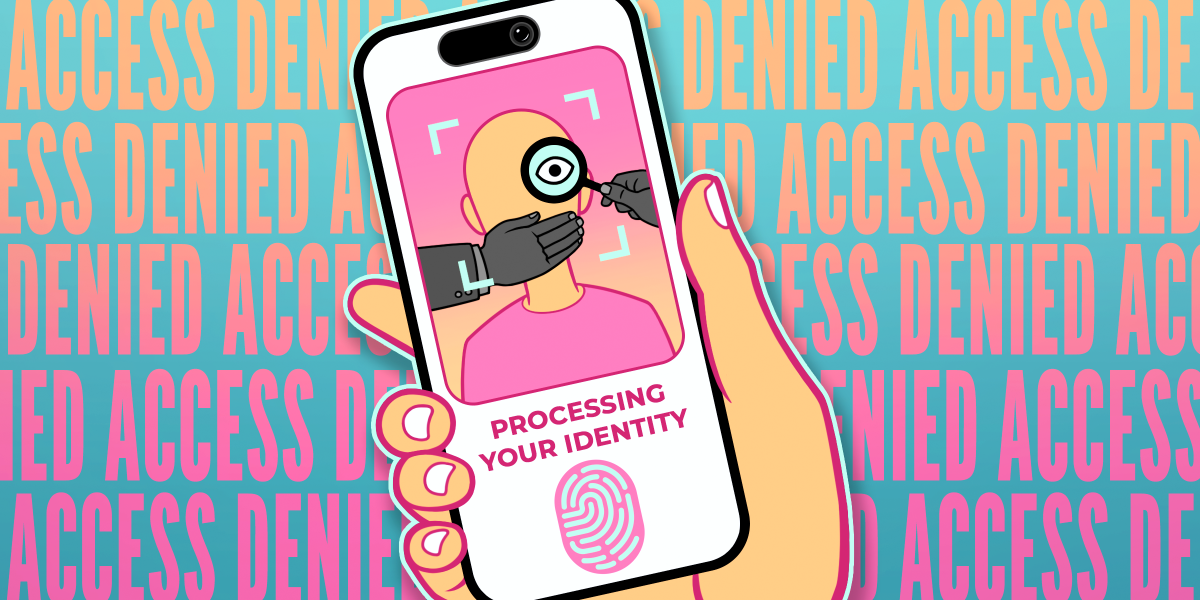
    It’s nearly the end of 2025, and half of the US and the UK now require you to upload your ID or scan your face to watch “sexual content.” A handful of states and Australia now have various requirements to verify your age before you can create a social media account.

    Age-verification laws may sound straightforward to some: protect young people online by making everyone prove their age. But in reality, these mandates force users into one of two flawed systems—mandatory ID checks or biometric scans—and both are deeply discriminatory. These proposals burden everyone’s right to speak and access information online, and structurally excludes the very people who rely on the internet most. In short, although these laws are often passed with the intention to protect children from harm, the reality is that these laws harm both adults and children. 

    Here’s who gets hurt, and how: 

       1.  Adults Without IDs Get Locked Out

    Document-based verification assumes everyone has the right ID, in the right name, at the right address. About 15 million adult U.S. citizens don’t have a driver’s license, and 2.6 million lack any government-issued photo ID at all. Another 34.5 million adults don’t have a driver’s license or state ID with their current name and address.

    Specifically:

    • 18% of Black adults don’t have a driver’s license at all.
    • Black and Hispanic Americans are disproportionately less likely to have current licenses.
    • Undocumented immigrants often cannot obtain state IDs or driver’s licenses.
    • People with disabilities are less likely to have current identification.
    • Lower-income Americans face greater barriers to maintaining valid IDs.

    Some laws allow platforms to ask for financial documents like credit cards or mortgage records instead. But they still overlook the fact that nearly 35% of U.S. adults also don’t own homes, and close to 20% of households don’t have credit cards. Immigrants, regardless of legal status, may also be unable to obtain credit cards or other financial documentation.

       2.  Communities of Color Face Higher Error Rates

    Platforms that rely on AI-based age-estimation systems often use a webcam selfie to guess users’ ages. But these algorithms don’t work equally well for everyone. Research has consistently shown that they are less accurate for people with Black, Asian, Indigenous, and Southeast Asian backgrounds; that they often misclassify those adults as being under 18; and sometimes take longer to process, creating unequal access to online spaces. This mirrors the well-documented racial bias in facial recognition technologies. The result is that technology’s inherent biases can block people from speaking online or accessing others’ speech.

       3.  People with Disabilities Face More Barriers

    Age-verification mandates most harshly affect people with disabilities. Facial recognition systems routinely fail to recognize faces with physical differences, affecting an estimated 100 million people worldwide who live with facial differences, and “liveness detection” can exclude folks with limited mobility. As these technologies become gatekeepers to online spaces, people with disabilities find themselves increasingly blocked from essential services and platforms with no specified appeals processes that account for disability.

    Document-based systems also don’t solve this problem—as mentioned earlier, people with disabilities are also less likely to possess current driver’s licenses, so document-based age-gating technologies are equally exclusionary.

       4.  Transgender and Non-Binary People Are Put At Risk

    Age-estimation technologies perform worse on transgender individuals and cannot classify non-binary genders at all. For the 43% of transgender Americans who lack identity documents that correctly reflect their name or gender, age verification creates an impossible choice: provide documents with dead names and incorrect gender markers, potentially outing themselves in the process, or lose access to online platforms entirely—a risk that no one should be forced to take just to use social media or access legal content.

       5.  Anonymity Becomes a Casualty

    Age-verification systems are, at their core, surveillance systems. By requiring identity verification to access basic online services, we risk creating an internet where anonymity is a thing of the past. For people who rely on anonymity for safety, this is a serious issue. Domestic abuse survivors need to stay anonymous to hide from abusers who could track them through their online activities. Journalists, activists, and whistleblowers regularly use anonymity to protect sources and organize without facing retaliation or government surveillance. And in countries under authoritarian rule, anonymity is often the only way to access banned resources or share information without being silenced. Age-verification systems that demand government IDs or biometric data would strip away these protections, leaving the most vulnerable exposed.

       6.  Young People Lose Access to Essential Information 

    Because state-imposed age-verification rules either block young people from social media or require them to get parental permission before logging on, they can deprive minors of access to important information about their health, sexuality, and gender. Many U.S. states mandate “abstinence only” sexual health education, making the internet a key resource for education and self-discovery. But age-verification laws can end up blocking young people from accessing that critical information. And this isn’t just about porn, it’s about sex education, mental health resources, and even important literature. Some states and countries may start going after content they deem “harmful to minors,” which could include anything from books on sexual health to art, history, and even award-winning novels. And let’s be clear: these laws often get used to target anything that challenges certain political or cultural narratives, from diverse educational materials to media that simply includes themes of sexuality or gender diversity. What begins as a “protection” for kids could easily turn into a full-on censorship movement, blocking content that’s actually vital for minors’ development, education, and well-being. 

    This is also especially harmful to homeschoolers, who rely on the internet for research, online courses, and exams. For many, the internet is central to their education and social lives. The internet is also crucial for homeschoolers’ mental health, as many already struggle with isolation. Age-verification laws would restrict access to resources that are essential for their education and well-being.

       7.  LGBTQ+ Youth Are Denied Vital Lifelines

    For many LGBTQ+ young people, especially those with unsupportive or abusive families, the internet can be a lifeline. For young people facing family rejection or violence due to their sexuality or gender identity, social media platforms often provide crucial access to support networks, mental health resources, and communities that affirm their identities. Age verification systems that require parental consent threaten to cut them from these crucial supports. 

    When parents must consent to or monitor their children’s social media accounts, LGBTQ+ youth who lack family support lose these vital connections. LGBTQ+ youth are also disproportionately likely to be unhoused and lack access to identification or parental consent, further marginalizing them. 

       8.  Youth in Foster Care Systems Are Completely Left Out

    Age verification bills that require parental consent fail to account for young people in foster care, particularly those in group homes without legal guardians who can provide consent, or with temporary foster parents who cannot prove guardianship. These systems effectively exclude some of the most vulnerable young people from accessing online platforms and resources they may desperately need.

       9.  All of Our Personal Data is Put at Risk

    An age-verification system also creates acute privacy risks for adults and young people. Requiring users to upload sensitive personal information (like government-issued IDs or biometric data) to verify their age creates serious privacy and security risks. Under these laws, users would not just momentarily display their ID like one does when accessing a liquor store, for example. Instead, they’d submit their ID to third-party companies, raising major concerns over who receives, stores, and controls that data. Once uploaded, this personal information could be exposed, mishandled, or even breached, as we’ve seen with past data hacks. Age-verification systems are no strangers to being compromised—companies like AU10TIX and platforms like Discord have faced high-profile data breaches, exposing users’ most sensitive information for months or even years. 

    The more places personal data passes through, the higher the chances of it being misused or stolen. Users are left with little control over their own privacy once they hand over these immutable details, making this approach to age verification a serious risk for identity theft, blackmail, and other privacy violations. Children are already a major target for identity theft, and these mandates perversely increase the risk that they will be harmed.

       10.  All of Our Free Speech Rights Are Trampled

    The internet is today’s public square—the main place where people come together to share ideas, organize, learn, and build community. Even the Supreme Court has recognized that social media platforms are among the most powerful tools ordinary people have to be heard.

    Age-verification systems inevitably block some adults from accessing lawful speech and allow some young people under 18 users to slip through anyway. Because the systems are both over-inclusive (blocking adults) and under-inclusive (failing to block people under 18), they restrict lawful speech in ways that violate the First Amendment. 

    The Bottom Line

    Age-verification mandates create barriers along lines of race, disability, gender identity, sexual orientation, immigration status, and socioeconomic class. While these requirements threaten everyone’s privacy and free-speech rights, they fall heaviest on communities already facing systemic obstacles.

    The internet is essential to how people speak, learn, and participate in public life. When access depends on flawed technology or hard-to-obtain documents, we don’t just inconvenience users, we deepen existing inequalities and silence the people who most need these platforms. As outlined, every available method—facial age estimation, document checks, financial records, or parental consent—systematically excludes or harms marginalized people. The real question isn’t whether these systems discriminate, but how extensively.

    [ad_2]

    Source link

  • IBM to Acquire Confluent in $11 Billion Deal as Demand for AI Infrastructure Surges

    IBM to Acquire Confluent in $11 Billion Deal as Demand for AI Infrastructure Surges


    IBM has announced plans to acquire Confluent, the California‑based data‑streaming specialist, in an all‑cash deal valued at $11 billion, marking one of the company’s most significant moves yet to strengthen its position in enterprise AI and cloud computing. IBM will pay $31 per share, representing a premium of roughly 34–50% over Confluent’s recent closing prices The Economic Times Yahoo Finance TechCrunch U.S. News Money.

    The acquisition is expected to close by mid‑2026, pending regulatory and shareholder approval Yahoo Finance CNBC.

    A Strategic Bet on Real‑Time Data for AI

    Confluent provides the real‑time data infrastructure that underpins modern AI systems, enabling companies to rapidly move, process and govern massive streams of information. This capability has become essential as enterprises deploy increasingly complex generative and agentic AI models, which rely on continuous, high‑volume data flows for training and inference Yahoo Finance TechCrunch.

    IBM CEO Arvind Krishna said the deal will allow businesses to “deploy generative and agentic AI better and faster” by integrating Confluent’s streaming technology with IBM’s existing AI, automation and data‑governance platforms Yahoo Finance CNA.

    Confluent CEO Jay Kreps said joining IBM would accelerate the company’s global reach and product roadmap, citing IBM’s scale and enterprise customer base as key advantages Yahoo Finance.

    IBM Expands Its AI and Cloud Portfolio

    The acquisition continues IBM’s aggressive expansion into high‑margin cloud and software services, following recent purchases aimed at strengthening its AI and automation capabilities. Analysts say the deal positions IBM to compete more directly with cloud giants such as Amazon, Google and Microsoft by offering an end‑to‑end data platform optimised for AI workloads The Economic Times CNA TechCrunch.

    IBM expects the acquisition to be accretive to EBITDA within the first full year after closing and to boost free cash flow in year two IBM Newsroom.

    A High‑Stakes Move in the AI Arms Race

    As companies race to modernise their digital infrastructure, real‑time data streaming has become one of the most valuable components of the AI ecosystem. Confluent’s technology — originally built around Apache Kafka — is already used by thousands of enterprises to support mission‑critical applications in finance, retail, telecoms and logistics.

    With this acquisition, IBM is betting that control of the data layer will be as strategically important as the AI models themselves.


    IBM-Silicon-Valley-Laboratory-on-flickr-by-Wolfgang-Jung

  • Bending Spoons Extends Aggressive Tech Acquisition Spree With $500 Million Eventbrite Deal

    Bending Spoons Extends Aggressive Tech Acquisition Spree With $500 Million Eventbrite Deal


    Italian technology conglomerate Bending Spoons has continued its rapid expansion in the global software sector, agreeing to acquire Eventbrite in an all‑cash deal valued at roughly $500 million TechCrunch Billboard. The San Francisco‑based ticketing and event‑management platform, once valued at $1.76 billion at its 2018 IPO, will be taken private after the transaction closes, expected in the first half of 2026 pending regulatory and shareholder approval Billboard.

    The acquisition marks another high‑profile move for Bending Spoons, which has built a reputation for buying well‑known but stagnating digital brands and attempting to revive them through cost‑cutting, product overhauls and long‑term operational control TechCrunch. Eventbrite joins a portfolio that already includes Evernote, Meetup, Vimeo, WeTransfer, komoot, and most notably AOL, which Bending Spoons agreed to purchase for $2.8 billion in October PitchBook.

    Founded in Milan, the company has risen from relative obscurity to become one of the most active acquirers in the tech sector, pursuing a strategy that differs from traditional private equity by holding companies indefinitely rather than flipping them for profit TechCrunch. Eventbrite shareholders will receive $4.50 per share, an 80%+ premium over the company’s recent trading average, reflecting investor confidence in the turnaround strategy Billboard Music Business Worldwide.

    Bending Spoons CEO Luca Ferrari said the company intends to build on Eventbrite’s long‑standing role in the “experience economy,” with plans to introduce new tools, AI‑driven features and expanded marketplace capabilities once the deal is finalized Silicon Republic.

    The acquisition underscores Bending Spoons’ ambition to assemble a global ecosystem of established but underperforming digital brands — and signals that its aggressive buying streak is far from over.


  • Aeroporti di Roma begins fourth edition of Call4Startups

    Aeroporti di Roma begins fourth edition of Call4Startups

    [ad_1]

    Aeroporti di Roma has kicked-off the fourth edition of the Call4Startups at the Innovation Hub of Fiumicino Airport, as part of the ‘Runway to the Future’ acceleration programme, with a focus on AI, robotics, automation, and more.

    Aeroporti di Roma (ADR) – a Corporate Partner of the FTE Digital, Innovation & Startup Hub – has kicked-off the fourth edition of the Call4Startups at the Innovation Hub of Rome Fiumicino Airport, as part of the ‘Runway to the Future’ acceleration programme. This year, over 400 applications were received from more than 350 startups, 75% of which came from abroad, further confirming the international appeal of the open innovation model developed by ADR.

    The selected startups will work for the next eight months at Fiumicino and Ciampino airports, where they will have the opportunity to develop and test their innovative solutions directly in the field, in a real operating environment. Guiding them through this journey will be the Innovation Cabin Crew, a multidisciplinary team of 25 ADR professionals who will act as mentors to support the integration of new technologies into airport processes, helping to improve operations and enhance the passenger experience.

    “The launch of the fourth edition of the ‘Runway to the Future’ programme confirms our commitment to accelerate the transformation of our airport into a true smart city,” said Emanuele Calà, Senior Vice President of Transformation & Technology, Aeroporti di Roma & Managing Director of ADR Ventures. “The selected startups will implement solutions ranging from automation to artificial intelligence, working closely with the Innovation Cabin Crew inside the Innovation Hub, strengthening Fiumicino’s role as a global trialling platform.”

    During an event on 3 December 2025, the selected startups presented cutting-edge technological solutions across various sectors, including artificial intelligence, automation, robotics, and active noise reduction. Highlights included: an autonomous robot for sanitising environments and surfaces, an intelligent system to digitalise inspections and maintenance, a machine for automated baggage handling, and a platform for real-time monitoring of construction progress. The event also served as a meaningful opportunity for collaboration, featuring initial working groups, networking moments, and one-on-one meetings between the startups and ADR’s partners.

    The Call4Startups is a key element of Aeroporti di Roma’s broader innovation strategy, which aims to co-develop new solutions, conduct direct experimentation, and foster cross-contamination of skills in order to accelerate the evolution of the airport system into an open, international model designed to improve operational efficiency, promote sustainability, and respond more effectively to passenger needs.

    You may also be interested in

    [ad_2]

    Source link

  • Paramount Skydance Launches Hostile $108.4 Billion Counter Bid for Warner Bros Discovery, Challenging Netflix Deal

    Paramount Skydance Launches Hostile $108.4 Billion Counter Bid for Warner Bros Discovery, Challenging Netflix Deal


    Paramount Skydance has launched a hostile $108.4 billion bid for Warner Bros Discovery (WBD), an aggressive counter‑move that disrupts Netflix’s recently announced $72 billion equity deal for key WBD assets. The surprise offer escalates what has already been one of the most consequential takeover battles in modern media, with the future of Hollywood’s most valuable studios now at stake.

    The all‑cash tender offer — valued at $30 per share — is aimed at acquiring the entire company, including its global networks division, HBO, Warner Bros Pictures, DC Studios and CNN. Paramount argues its proposal offers “superior value” and a faster, more certain regulatory path than Netflix’s mixed cash‑and‑equity structure CBC.ca RTÉ Ireland Yahoo Finance.

    Netflix had emerged as the apparent winner just days earlier, securing a deal for WBD’s film, TV and streaming assets valued at $82.7 billion including debt, with a $5.8 billion break‑up fee attached RTÉ Ireland. Paramount’s hostile bid now forces WBD shareholders to weigh a richer offer against the likelihood of intense antitrust scrutiny in the US and Europe.

    Paramount CEO David Ellison said the takeover would create a stronger, more competitive Hollywood ecosystem, arguing that the combined company would better serve “the creative community, consumers and the movie theater industry” Anadolu Agency.

    The move marks the latest twist in a months‑long bidding war involving Paramount, Netflix and Comcast, each seeking to consolidate content libraries and scale up against tech giants like Apple and Amazon. Analysts say the Paramount bid could prolong the sale process, with regulatory reviews expected to be complex and politically sensitive.

    For now, the future of Warner Bros Discovery — home to some of the world’s most valuable entertainment franchises — remains uncertain as shareholders assess competing visions for the company’s next chapter.


  • Netflix to Acquire Warner Bros. Discovery Studios in Landmark $82.7bn Deal

    Netflix to Acquire Warner Bros. Discovery Studios in Landmark $82.7bn Deal


    Los Angeles — 5 December 2025 — Netflix has confirmed a blockbuster $82.7 billion cash‑and‑stock agreement to acquire Warner Bros. Discovery’s film and television studios, including HBO, HBO Max and Warner Bros. Games — a move set to reshape the global entertainment landscape and consolidate some of Hollywood’s most valuable franchises under a single streaming giant Variety.

    The deal, one of the largest media mergers in history, will proceed once Warner Bros. completes the planned spinoff of its Discovery Global television networks division, expected in the third quarter of 2026. Netflix projects the transaction will close within 12 to 18 months CBS News.

    A Streaming Superpower With 400 Million Subscribers

    The acquisition unites Netflix’s global subscriber base with Warner Bros. Discovery’s extensive content ecosystem, creating a combined audience of more than 400 million across platforms. The deal hands Netflix control of major franchises including DC Comics, Game of Thrones, Harry Potter, Looney Tunes, and HBO’s entire prestige catalogue — from The Sopranos to Succession MacRumors.

    The agreement values Warner Bros. Discovery at $72 billion in equity, with each shareholder receiving $23.25 in cash and $4.50 in Netflix stock per share Pedestrian TV. Netflix expects $2–3 billion in annual cost savings by the third year following integration.

    Regulatory Scrutiny Looms

    Given its scale, the merger is expected to face intense antitrust scrutiny in both the United States and Europe, where regulators have increasingly focused on market concentration in digital media and streaming. Industry analysts say the deal could trigger a new wave of consolidation as competitors reassess their long‑term strategies Radio Times.

    A Defining Power Play in the Streaming Wars

    By absorbing Warner Bros.’ studios and HBO’s premium library, Netflix significantly reduces its reliance on external content suppliers and strengthens its position against rivals such as Disney, Amazon and Apple. The acquisition also preserves Warner Bros.’ theatrical distribution arm and maintains HBO Max as a standalone service in the near term About Netflix.

    Industry observers say the move represents the most aggressive strategic shift in Netflix’s history — one that could redefine the competitive dynamics of global streaming for years to come.


    Netflix Hq Picture by Abhishek Navlakha on pexels

  • UN and partners back new measures to help millions move from vulnerability to opportunity

    UN and partners back new measures to help millions move from vulnerability to opportunity

    [ad_1]

    Over three days, ministers, development partners and international agencies met to explore how LDCs can “graduate” successfully – meaning they have reached levels of income, education and resilience that lift them out of the UN’s most vulnerable grouping – and, crucially, stay out.

    The meeting focused on the Doha Programme of Action (DPOA), which aims to help 15 more countries reach graduation by 2031.

    Many LDCs remain highly exposed to climate shocks, conflict, debt pressures and trade disruptions. Without tailored support, experts warn that progress can quickly unravel.

    Speaking at the closing session, Rabab Fatima, UN High Representative for LDCs, said the gathering had shown “a strong collective will to ensure that graduation becomes a gateway to resilience, opportunity and sustainable prosperity.”

    “Let us leave Doha inspired and united,” she said, calling for deeper cooperation and “real incentives that help every country advance with the full support of the global community.”

    Learning from experience

    Countries preparing to graduate – including Bangladesh, Lao People’s Democratic Republic, and Nepal – shared lessons from their own transition plans, while States that have already graduated discussed how to manage the shift away from preferential trade benefits and other forms of targeted international assistance.

    A recurring theme was the importance of Smooth Transition Strategies, national plans that help governments adjust to the phase-out of LDC-specific support.

    Delegates stressed that these strategies must be realistic, nationally driven and fully embedded in long-term development planning.

    The meeting also highlighted the need to build productive capacity, especially through digital and green transitions, and to expand trade opportunities for economies facing volatile global conditions.

    New boost for support facility

    A central element of the discussions was the iGRAD Facility, a mechanism designed to help LDCs navigate the transition period. Qatar announced a $10 million pledge to strengthen the facility, drawing praise from participants.

    Fahad Hamad Al-Sulaiti, Director General of the Qatar Fund for Development, said his country was committed to turning the DPOA “into measurable progress for Least Developed Countries.”

    The meeting, he added, had shown “the power of collective action” and the importance of providing LDCs with “the tools, resources and partnerships they need to navigate the transition with confidence.”

    Next steps

    The conference concluded with the Doha Agreed Statement on Global Partnerships for Sustainable Graduation, which sets out principles for a stronger, incentive-based approach to supporting graduating countries.

    A full summary of recommendations will be published by OHRLLS and sent to the UN General Assembly ahead of key discussions in 2027, when the DPOA undergoes its midterm review.

    More information is available on the event website and on the dedicated page for the Doha Programme of Action.

    [ad_2]

    Source link