2025 HARPER PRIZE SHORTLIST: For the next two weeks, we are featuring the articles shortlisted for the 2025 Harper Prize. The Harper Prize is an annual award for the best early career research paper published in Journal of Ecology. Emily Wedel’s ‘Divergent resource-use strategies of encroaching shrubs: Can traits predict encroachment success in tallgrass prairie?‘ is one of those shortlisted for the award.
About the paper:
What is your shortlisted paper about, and what are you seeking to answer with your research?
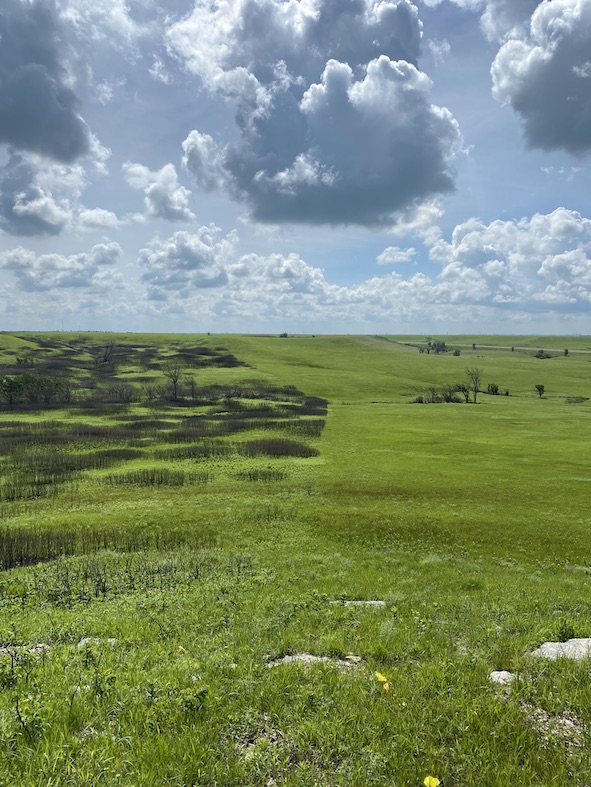
This paper addresses a foundational question in woody encroachment ecology – why do some woody species encroach while others do not? We assessed whether successful encroaching species had similar strategies that promote their success or unique traits that differentiate their growth strategies in a tallgrass prairie ecosystem. We found that encroaching species encompass a spectrum of growth forms and physiological strategies. Surprisingly, two of the most abundant species fell at opposite ends of this spectrum and had opposing strategies to cope with grass competition, drought, and fire. Our results suggest that shrub functional diversity allows many species to encroach within grasslands and may make it more difficult to find management regimes that suppress an entire community of woody species.
Were you surprised by anything when working on it? Did you have any challenges to overcome?
I was surprised to find that two species that look very similar had very different physiology (e.g., drought tolerance and photosynthetic capacity). I enjoy integrating physiological tools into community ecology, and this project was a fun example of how useful it can be to measure what is happening inside of a leaf. My biggest challenge was surviving the field days that were nearly 40 °C!
What is the next step in this field going to be?
There is still so much to learn about woody encroachment ecology. From a theoretical perspective, we don’t yet understand how large vegetation shifts, like woody encroachment, fit into community assembly theory or diversity-stability relationships. From a management perspective, we need to find ways to effectively suppress clonal encroaching shrubs. Once established, clonal shrubs are nearly impossible to kill with fire, and it will likely take a combination of targeted management regimes to decrease shrub abundance.
What are the broader impacts or implications of your research for policy or practice?
Our research shows that encroaching shrubs are functionally diverse. We suggest that a high diversity of encroaching shrubs within a grassland site may reinforce an undesirable encroached state because it is likely difficult to find management practices that effectively suppress all shrub species. However, recognizing this functional diversity will allow us to better predict whether species with certain strategies are more likely to encroach under varying environmental conditions.
About the author:
How did you get involved in ecology?
I credit my start in ecology to my childhood obsession with the movie FernGully: The Last Rainforest. As I grew older, I developed an appreciation for a threatened ecosystem closer to home – the prairies of Kansas in the central United States. In college, I helped manage a restored tallgrass prairie and learned that these visually simple ecosystems are deceptively complex. I also love the variety of this job. We get to travel, spend time outdoors, and mentor students. I am very grateful for my supportive mentors who taught me that grassland research can be a career.
What is your current position?
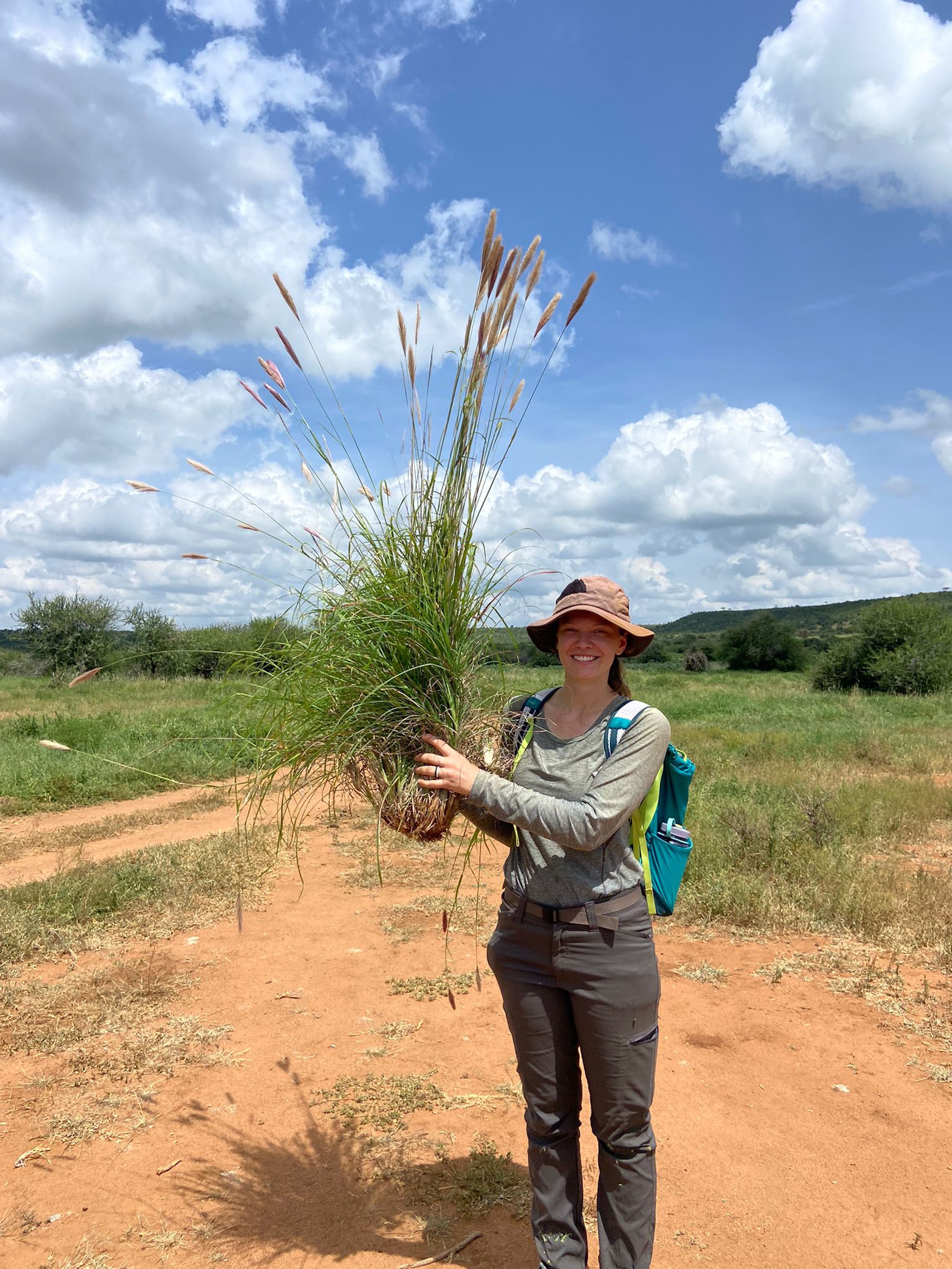
I am an NSF postdoctoral research fellow at the University of Notre Dame (South Bend, IN, USA). My postdoctoral research focuses on savanna tree responses to herbivory and drought.
Have you continued the research your paper is about?
I am not currently working on woody encroachment in tallgrass prairie, but I am continuing work on the drivers and consequences of woody cover in grasslands and savannas.
What one piece of advice would you give to someone in your field?
Spend time in your study system. Stepping back to casually observe nature is the best way to stay curious and can lead to your next research venture.
Check out @KonzaLTER for more information about Konza Prairie Long-Term Ecological Research.