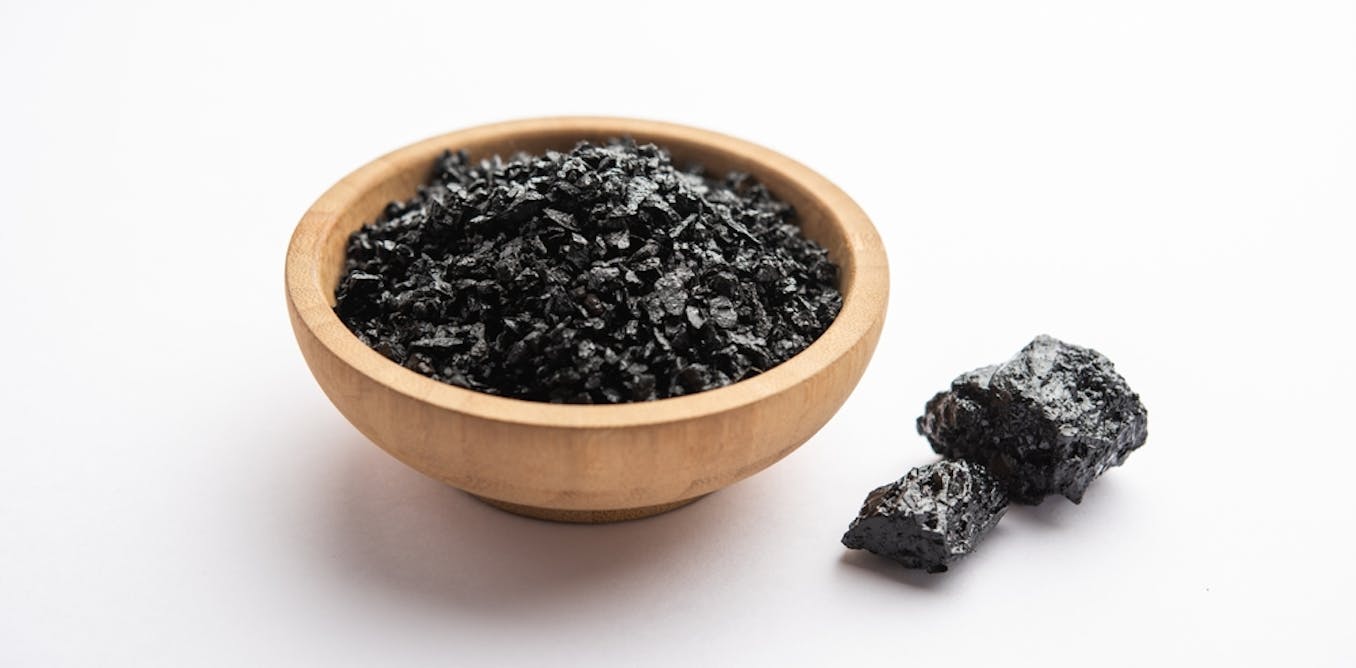
Shilajit is the latest supplement marketed online as a “natural testosterone booster”. Promoted by influencers, wellness brands and biohacking communities, this sticky black resin is advertised as a way to increase testosterone, improve energy and enhance male vitality.
Shilajit is a tar-like substance formed over centuries from decomposed plant material compressed within rock in high-altitude regions such as the Himalayas. It has a long history of use in traditional Ayurvedic medicine, where it has been described as a rejuvenator and as an anti-aging compound.
Chemically, it contains a mixture of fulvic acid and trace minerals. Its complex composition is part of its mystique and also part of the scientific challenge in studying it.
When it comes to testosterone specifically, the evidence for shilajit’s effect on testosterone levels in humans is limited to two small studies.
The most frequently cited study was published in 2016. In this trial of healthy men aged 45–55, half were given purified shilajit (250mg twice daily) and half were given a placebo for 90 days. Neither group knew which group they had been randomly assigned to. The shilajit group saw increases in both total and free testosterone – the form immediately available for the body to use – compared with the placebo group.
On the surface, this sounds encouraging. However, the study included just 38 participants treated with shilajit, was of a relatively short duration, and measured testosterone using methods that are not considered the most reliable.
Although testosterone levels were modestly higher at 90 days, measurements at 30 and 60 days fluctuated in both directions. And probably the most curious finding was that testosterone levels fell in the placebo group, possibly inflating any claimed direct effects of shilajit on hormone levels.
The study was also funded by the manufacturer of the shilajit preparation used. While that does not invalidate the findings, it does warrant caution and independent replication.
An earlier study in infertile men reported improvements in semen parameters and increases in testosterone after shilajit supplementation. But again, sample sizes were modest, with only 28 men taking part – and the population studied was specific to men attending a fertility clinic. These findings may not translate to otherwise healthy men.
Beyond these small trials, there is a lack of large, independent, long-term studies assessing whether shilajit meaningfully raises testosterone in a way that improves muscle mass, strength, metabolic health or quality of life.
It is also important to distinguish between “statistically significant” changes in hormone levels and “clinically significant” ones. Testosterone fluctuates naturally throughout the day and declines gradually with age. Small shifts within the normal physiological range are unlikely to transform body composition or vitality. In both the clinical studies, testosterone was always in this physiological reference range, despite the reported increases.
Another issue that receives less attention in promotional material is product quality and contamination. Because shilajit is harvested from natural rock formations and then processed, its composition can vary substantially. Several analyses of commercially available preparations have raised concerns about contamination with heavy metals such as lead, mercury and arsenic.
While reputable manufacturers may purify their products, the supplement market is not regulated to the same standard as prescription medicines. Consumers are often paying premium prices for products that may differ considerably in purity and potency.
What actually affects testosterone?
Against this backdrop, it is worth asking what actually influences testosterone levels in men.
Sleep is one of the most powerful regulators. Even short-term sleep restriction can reduce testosterone concentrations in healthy young men. Being overweight is linked to lower testosterone, partly because extra body fat can turn some testosterone into oestrogen.

Arsenii Palivoda/Shutterstock.com
Resistance training can temporarily increase testosterone and, more importantly, improve muscle mass and regulate blood sugar irrespective of hormone changes. Long-term stress and drinking too much alcohol can interfere with the system in your body, called the hypothalamic–pituitary–gonadal axis, that regulates testosterone production.
In other words, the foundations of hormonal health are behavioural and metabolic. No supplement has yet been shown to override the effects of poor sleep, inactivity, stress or obesity.
For men experiencing symptoms such as persistent fatigue, low libido, erectile dysfunction or reduced muscle strength, the appropriate first step is medical assessment. In clinical practice, testosterone deficiency is diagnosed only after consistent biochemical evidence on repeated morning blood tests, alongside symptoms.
Testosterone deficiency can be associated with underlying conditions including obesity, type 2 diabetes, chronic illness or pituitary disorders. Blood testing, performed correctly and interpreted in context, is essential before considering any intervention.
In men with confirmed hypogonadism (the medical term for low testosterone levels), doctors can safely prescribe testosterone treatment, and there’s good evidence it works in many cases. That is very different from taking supplements you buy online based on marketing claims.
The growing popularity of shilajit sits within a broader cultural moment. Testosterone has become a shorthand for masculinity, energy and success.
Social media algorithms amplify anxieties about “low T”, often without context about what constitutes a true deficiency. Ancient remedies packaged in minimalist jars offer an appealing narrative of being natural, traditional and potent. Add influencer endorsements and promises of optimisation, and the commercial potential is obvious.
The appeal of quick fixes is understandable, but hormonal health is rarely fixed by a resin scraped from a rock. Consumers should also weigh cost against benefit. High-quality shilajit supplements can be expensive, particularly when taken for months at a time. For many men, the same investment directed towards structured exercise programmes, dietary improvements or professional medical advice would probably yield far greater returns.
In the case of shilajit, as with many supplements that promise hormonal optimisation, the marketing has travelled much faster than the science. This does not mean shilajit is entirely without potential.
The preliminary trials justify further rigorous investigation. Larger, independently funded studies could help clarify whether it exerts meaningful endocrine or metabolic effects, and in which populations.
Until then, the current evidence supports curiosity rather than confidence. Hormonal health requires careful assessment. Attempts to manipulate it without proper diagnosis and clinical oversight are unlikely to deliver what the marketing promises.

Daniel Kelly does not work for, consult, own shares in or receive funding from any company or organisation that would benefit from this article, and has disclosed no relevant affiliations beyond their academic appointment.