As the dust settles over Caracas following the U.S. military’s extraction of Nicolás Maduro, the German government has adopted a posture of deliberate ambiguity. While the operation has drawn sharp condemnation from regional neighbors and legal scholars, Berlin’s response—characterized by Chancellor Friedrich Merz as “complex”—reflects a strategic effort to balance international law against the pragmatic realities of a second Trump administration.1
Since the raid on January 3, 2026, the German Federal Foreign Office has convened multiple crisis meetings, yet a formal condemnation of the U.S. use of force remains absent from its official communiqués.2
Strategic Ambiguity: The Chancellor’s Stance
Chancellor Friedrich Merz has largely steered clear of definitive legal judgments, focusing instead on the procedural and humanitarian aspects of the crisis.3
- Complexity as Shield: Merz has stated that the “legal assessment of the U.S. intervention is complex and requires careful consideration,” a phrase analysts interpret as a “wait-and-see” approach designed to avoid a direct diplomatic rift with Washington.4
- The Legitimacy Factor: Berlin has consistently maintained that Maduro’s 2024 re-election lacked democratic validity. By focusing on Maduro’s “authoritarian failures,” the government shifts the narrative away from the legality of the U.S. strikes and toward the “inevitability” of the regime’s end.
- The “Trump Factor”: With critical security interests—including the war in Ukraine and the future of NATO—at stake, German officials are reportedly hesitant to alienate a U.S. President who has signaled a willingness to use economic and military leverage against hesitant allies.
Coalition Fissures and Internal Debate
The cautious tone from the Chancellery has not been mirrored across all branches of the German government. A notable rift has emerged within the governing coalition, highlighting the tension between Realpolitik and Germany’s historical commitment to a rules-based order.5
| Official / Entity | Position | Key Quote / Action |
| Friedrich Merz (Chancellor) | Cautious / Deliberative | “Requires careful consideration.” |
| Lars Klingbeil (Vice Chancellor) | Critical | Labeled the strikes “very worrying” and a breach of legal standards. |
| Annalena Baerbock (Foreign Minister) | Multilateral Focus | Emphasized that “international law must be upheld” through the EU. |
| Federal Foreign Office | Crisis Management | Established a crisis team to monitor the safety of German nationals. |
The European Context: Strength in Numbers
Germany has sought safety in multilateralism, backing a joint statement by 26 EU Member States on January 5.6 This collective response allows Berlin to voice support for the “UN Charter and territorial integrity” without having to issue a unilateral rebuke that might trigger a personal backlash from President Trump.
The EU statement carefully threads the needle:
- Condemning Maduro: Reaffirming his lack of democratic legitimacy.
- Upholding Law: Calling for all actors to respect the “principles of international law.”7
- Demanding Restraint: Focusing on a “negotiated, democratic solution” rather than endorsing or condemning the specific military tactics used by the U.S.
The “Greenland” Shadow
Compounding Berlin’s hesitation is the broader geopolitical climate. Recent U.S. rhetoric regarding the potential annexation of Greenland has heightened anxieties across Europe.8 Analysts suggest that German officials fear a vocal condemnation of the Venezuela raid could embolden the White House to further bypass European interests in the Arctic or within NATO.
As Nicolás Maduro awaits trial in New York, Germany remains in a state of diplomatic suspension. For Berlin, the priority is clear: manage the fallout of a “new world order” where unilateral action is becoming the rule, all while ensuring Germany’s own security and economic interests remain shielded from the “wrath” of a volatile ally.
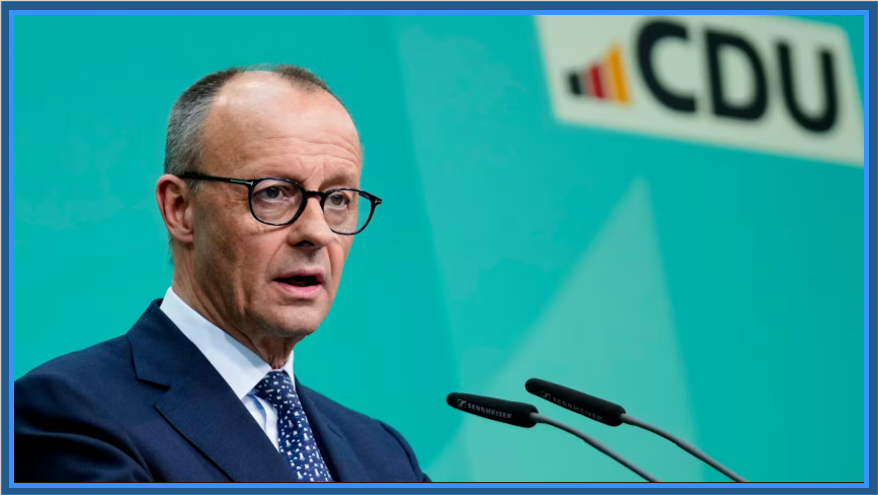
German Chancellor Friedrich Merz Picture by heute.at