For centuries, the heathlands of Tuscany in north-central Italy were used to graze livestock and to harvest heather for making brooms (the old witch-style ones) and other wares. These traditional land-use practices maintained perfect habitat for birds like the woodlark and tawny pipit – specialists of open and shrubby habitats.
But here, and throughout Europe, birds that depend on open habitats like heathlands and grasslands are declining due to the abandonment of traditional land management practices and agricultural intensification. Abandonment of these traditional practices allows trees to encroach into the heathland vegetation, making conditions unsuitable for open-habitat birds.
This sparked the GRANTHA project – a European Life initiative that aimed to reinstate a regime of disturbances that mimics traditional practices but uses modern technology. Mechanical cutting and prescribed burning were used to 1) ‘open’ the heathlands and restore habitat for important birds; 2) help regenerate the vegetation; and 3) create the conditions for local production of those old-style witch-brooms.
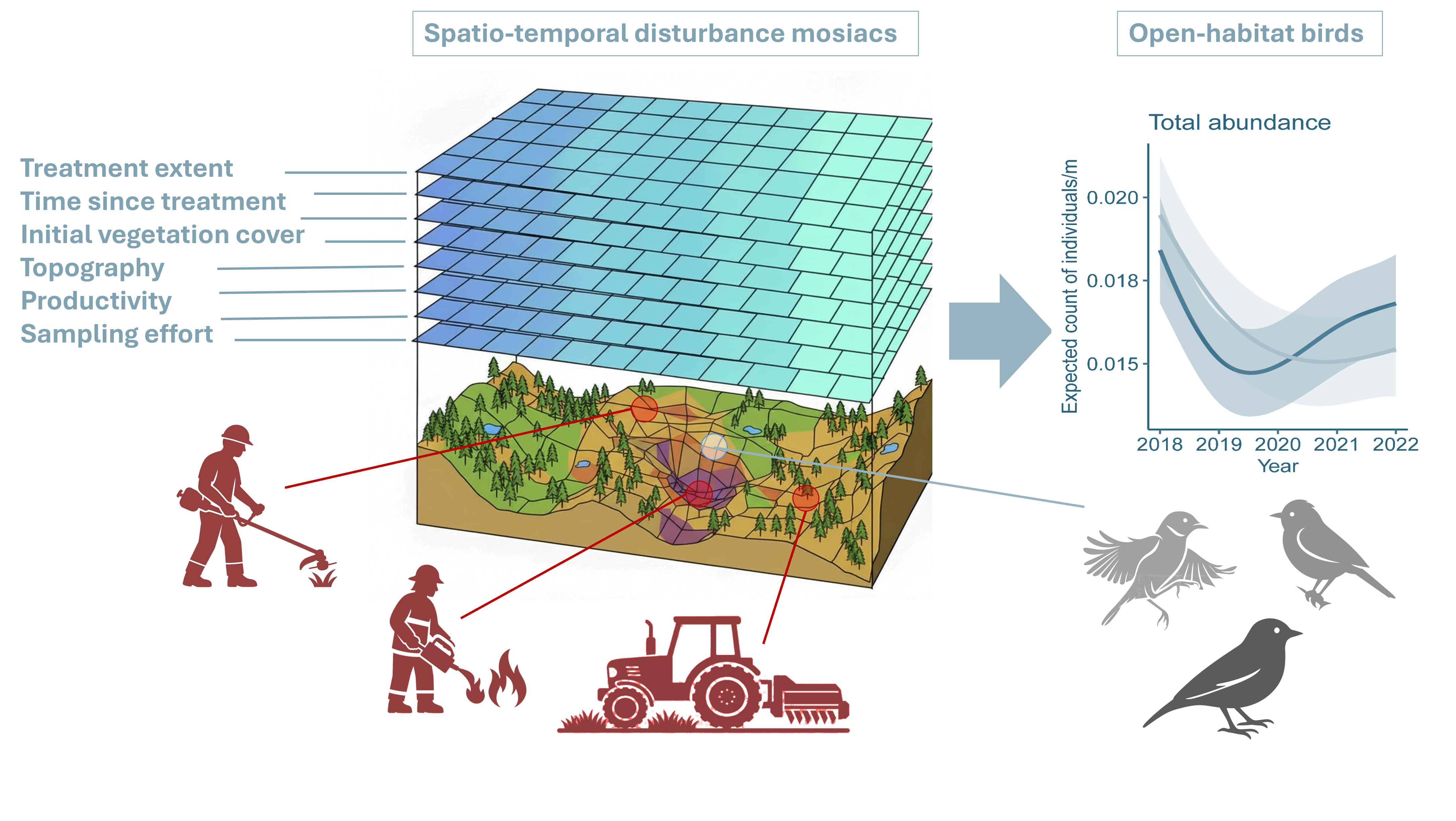
Our study documents the initial effects of mosaics (or patchworks) of cutting and burning treatments on the heathland structure and the populations of several key bird species. We found that bird populations in areas that were subjected to treatments either increased, remained more stable or, after an initial decline, recovered stronger compared to populations in similar untreated reference areas over the 5-year study period.
Our findings are a positive indication that cutting and burning patches in heathlands can help restore this declining ecosystem and conserve globally significant species while helping to rejuvenate traditional cultural practices.
This is a Plain Language Summary discussing a recently-published article in Journal of Applied Ecology. Find the full article here.