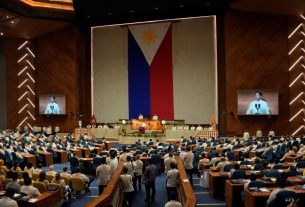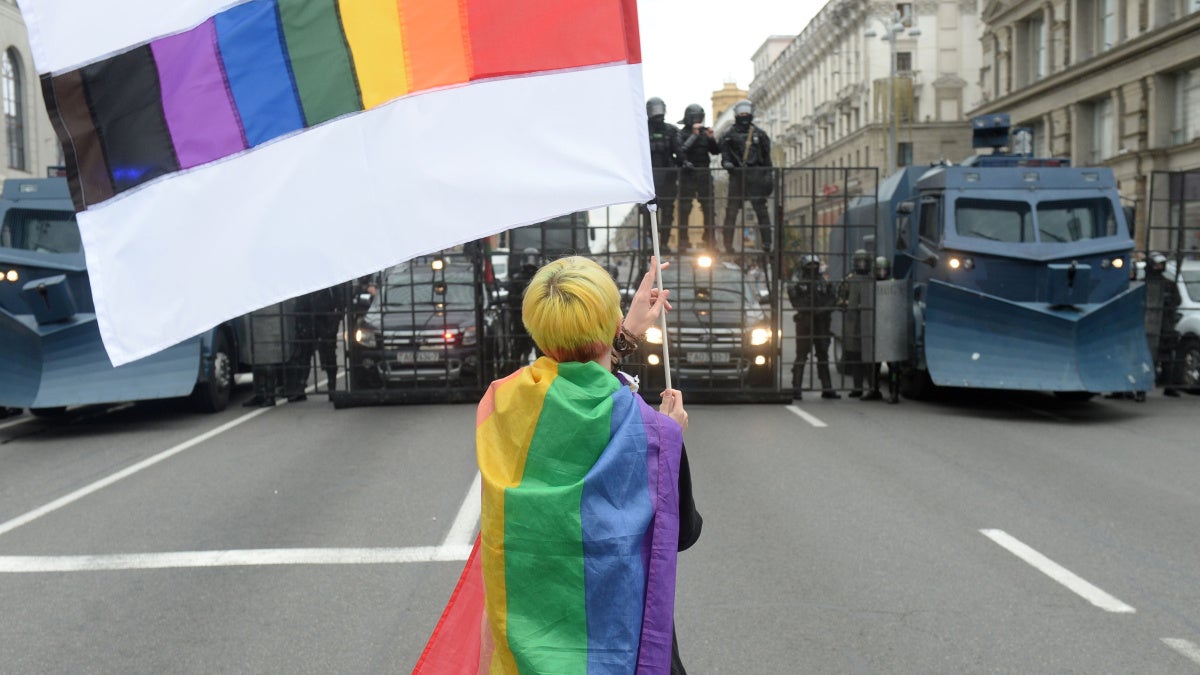
Belarus’s parliament adopted a new law on April 2 banning “propaganda” of same-sex relationships, of “gender reassignment,” and even of “childlessness.” This furthers the legal and political alignment between Belarus and Russia,which both seek to stigmatize minority groups, control public discourse, and suppress dissent.
“Propaganda” is vaguely defined in the law as the dissemination of “appealing” information “intended to influence citizens’ perceptions.” Violation of the ban is an administrative offense penalized by fines of up to 20 base units (currently about US$310) for individuals, and up to 150 (approximately $2,320) for legal entities. If the information is deemed accessible to minors, sanctions include higher fines, community service, and detention.
The new law creates a climate of fear in which the boundaries of lawful expression are deliberately unclear and perpetuates the escalating state crackdown on lesbian, gay, bisexual, and transgender (LGBT) rights.
The law targets not only LGBT people, but with the ban on promotion of “childlessness,” targets the personal autonomy and private life of all in Belarus. The law also bans propaganda about pedophilia, conflating serious criminal conduct with discussions of sexual orientation, gender identity, and personal life choices. By lumping all these categories together within the same regulatory framework, legislators are intentionally using pedophilia to stigmatize and criminalize LGBT people. These discriminatory conflations provide authorities with sweeping discretion to silence journalists, educators, health professionals, and ordinary people.
The new law builds on previous abusive measures: In 2024, Belarusian authorities classified depictions of LGBT people as “pornography,” which may lead to criminal liability, placing LGBT expression alongside offenses such as pedophilia under the stigmatizing “non-traditional” sexual behavior classification. They also banned advertising and disseminating cultural and educational content promoting LGBT relationships.
The approach mirrors developments in Russia, where an “LGBT extremism” designation and propaganda bans have facilitated arrests, fines, and the closure of civil society organizations, while fueling stigma and violence. Belarus appears to be following the same trajectory in efforts to establish full control over public narratives, including those about gender and sexuality.
Belarus’s authorities present this legislation as a defense of “traditional values.” In reality, it continues to purge Belarus of independent thought and civil society. The international community should recognize this new law for what it is: not just an attack on LGBT people, but a broader assault on fundamental freedoms.