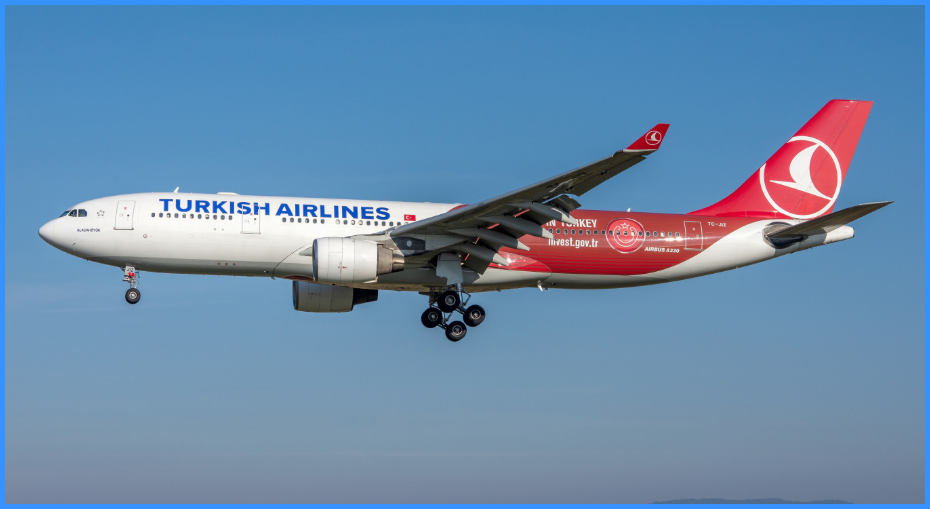
In a decisive move to solidify its standing as a top-tier global carrier, Turkish Airlines (THY) has broken ground on a monumental $2.3 billion (100 billion TRY) investment initiative. Announced on January 2, 2026, the strategic program targets the rapid expansion of the airline’s ground infrastructure at Istanbul Airport, including the development of the world’s largest air cargo terminal and massive upgrades to its maintenance, catering, and digital ecosystems.
The project is a critical pillar of the carrier’s “Vision 2033” strategy, which aims to operate a fleet of over 800 aircraft and transport 170 million passengers annually by the Republic’s centenary.
Building a Logistics Powerhouse: The “SmartIST” Expansion
The centerpiece of the investment is the second phase of the SmartIST cargo terminal. Already one of the most advanced facilities in Europe, the expansion will propel Turkish Cargo into a league of its own.
- Capacity Surge: Annual cargo handling will more than double, rising from 2.2 million tonnes to 4.5 million tonnes by 2028.
- Global Ranking: The project is designed to position Turkish Cargo as one of the world’s top three air freight providers.
- Automation: The facility will integrate high-tech robotics, Automated Storage and Retrieval Systems (ASRS), and unmanned ground vehicles to slash turnaround times.
Technical and Service Resilience
Beyond logistics, the $2.3 billion fund addresses the critical support services required to maintain a rapidly growing fleet.
| Infrastructure Project | Estimated Completion | Impact & Scale |
| Turkish Technic Hangars | 2026 | 20% increase in heavy maintenance capacity; fits 12 aircraft. |
| New Engine MRO Centre | 2027 | Specialized support for Rolls-Royce Trent XWB (A350) engines. |
| Main Catering Facility | 2027–2028 | Capacity to serve 500,000+ passengers per day. |
| Flight Training Centre | 2026–2027 | Next-gen simulators to support massive pilot recruitment. |
Economic Engine and Digital Backbone
The scale of the initiative is expected to create approximately 26,000 new jobs in 2026 alone, with the total workforce expected to grow by 36,000 upon full completion.
To ensure operational continuity as it scales, Turkish Airlines is also constructing a dedicated Istanbul Data Center. This facility will serve as the “digital backbone” for the airline’s global network, securing sensitive flight and passenger data against cyber threats while powering AI-driven maintenance and scheduling systems.
“We are not just building facilities; we are building an ecosystem for the future of our country’s economy,” stated Prof. Ahmet Bolat, Chairman of the Board. “Today, our contribution to the national economy is $65 billion; by 2033, we aim for $144 billion.”
Strategic Context: The Battle for Eurasia
This infrastructure surge comes as Istanbul faces stiff competition from Gulf hubs. By integrating its massive 355-aircraft Airbus order with world-leading ground services, Turkish Airlines is positioning Istanbul as the undisputed clearinghouse for trade between Asia, Europe, and Africa.
Turkish Airlines Picture by Kloner on goodfon.com CC BY-NC 4.0