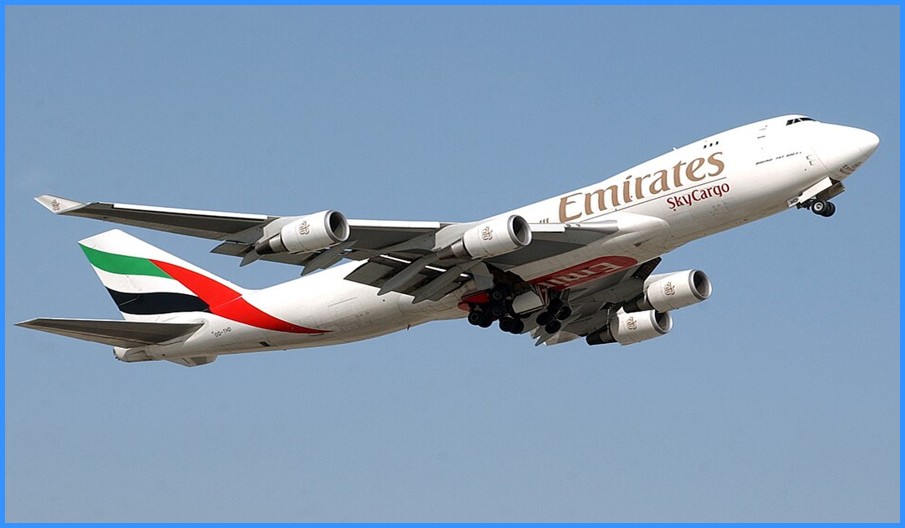
DUBAI / LONDON — In a stark illustration of how the escalating conflict in the Middle East is paralyzing global aviation, Emirates flight EK10 from London completed a massive 9,100-kilometer “phantom flight” on Monday, returning to its point of origin after nearly 12 hours in the air. The U-turn occurred as the aircraft cruised over Saudi Arabia, just as news broke of a successful Iranian drone strike on a fuel-storage tank at Dubai International Airport (DXB).
The incident is one of dozens of “flights to nowhere” recorded since March 16, 2026, as airlines scramble to protect passengers and assets from a barrage of drone and missile alerts.
The Anatomy of a Marathon U-Turn
Flight EK10, which normally connects London Gatwick to Dubai in under seven hours, became a symbol of the war’s logistical chaos for the hundreds of passengers on board.
- Mid-Air Pivot: Flight data from FlightRadar24 shows the Boeing 777-300ER reversing course over the Saudi desert. Rather than diverting to a regional hub like Muscat or Riyadh—already nearing capacity with other diverted traffic—the flight was ordered back to the UK.
- Fuel and Logistics: The aircraft returned to Gatwick after 11.5 hours of flying, effectively burning thousands of gallons of fuel to land exactly where it had started.
- The “Dawn Landing” Shock: Passengers expecting a morning arrival in the UAE instead found themselves back in London. “Was supposed to wake up on approach to Dubai,” one traveler posted on social media, sharing a map of his aircraft turning around near Cairo.
Dubai International: The World’s Busiest Hub Under Siege
The disruption was triggered by a Shahed-type drone that struck a fuel-storage facility just outside the DXB perimeter early Monday morning.
- Immediate Closure: The strike sparked a large fire and forced UAE authorities to activate the “airfield red” contingency plan, temporarily shutting down the world’s busiest airport for international passengers.
- Mass Rerouting: Roughly 30 Emirates flights were ordered to return to their origin or divert mid-flight. Services from Madrid, Lisbon, and Paris also performed surprise U-turns, while long-haul flights from New York, Tokyo, and Shanghai were forced into marathon detours to Karachi and Cairo.
- The 2,000-Flight Toll: Data from Cirium reveals that since the conflict began on February 28, Emirates has been forced to cancel over 2,000 flights—representing 54% of its scheduled services.
A Fragmented Airspace
While UAE airspace has since partially reopened, the regional aviation network remains in a state of high-alert “irregular operations.”
- Foreign Airline Ban: On Tuesday, the UAE government took the unprecedented step of temporarily suspending landing permissions for all foreign airlines at Dubai airports, reserving limited runway capacity for local carriers Emirates and flydubai.
- Sky-High Costs: Beyond the “phantom flights,” the war has triggered a 60% spike in jet fuel prices as tanker traffic through the Strait of Hormuz remains at a virtual standstill.
- Human Toll: Tens of thousands of travelers remain stranded in transit hubs, with aviation experts warning that even if a ceasefire were called today, it would take weeks to “reassemble the airlines” and return to regular operations.
As of Thursday, March 19, DXB is operating on a significantly reduced schedule. Travelers are being advised to maintain a 72-hour “buffer” for all time-sensitive itineraries, as the threat of intermittent drone activity continues to rewrite the world’s flight paths in real-time.
Emirates Airlines Plane Picture by Steven Byles