Author: Human Rights Watch

  • West Bank: Israel Emptying Refugee Camps a Crime Against Humanity

    West Bank: Israel Emptying Refugee Camps a Crime Against Humanity

    [ad_1]

    • The Israeli government’s forced displacement of the populations of three West Bank refugee camps in January and February 2025 amount to war crimes and crimes against humanity.
    • The Geneva Conventions prohibit displacement of civilians from occupied territory except temporarily for imperative military reasons or the population’s security. Displaced civilians are entitled to protection, accommodation, and to return as soon as hostilities in the vicinity cease.
    • Senior Israeli officials, including Prime Minister Benjamin Netanyahu and Defense Minister Israel Katz, should be investigated for the refugee camp operations and appropriately prosecuted for war crimes and crimes against humanity. Governments should impose targeted sanctions and take other urgent action to press Israeli authorities to end their repressive policies.

    (Jerusalem) – The Israeli government’s forced displacement of the populations of three West Bank refugee camps in January and February 2025 amount to war crimes and crimes against humanity, Human Rights Watch said in a report released today. The 32,000 people reportedly removed have not been permitted to return to their homes, many of which Israel forces have deliberately demolished.

    The 105-page report, “‘All My Dreams Have Been Erased’: Israel’s Forced Displacement of Palestinians in the West Bank,” details “Operation Iron Wall,” an Israeli military operation across Jenin, Tulkarem, and Nur Shams refugee camps that began on January 21, 2025, days after a temporary ceasefire was announced in Gaza. Israeli forces issued abrupt orders to civilians to leave their homes, including with loudspeakers mounted on drones. Witnesses said soldiers moved methodically through the camps, storming homes, ransacking properties, interrogating residents, and eventually forcing all families out.

    “Israeli authorities in early 2025 forcibly removed 32,000 Palestinians from their homes in West Bank refugee camps without regard to international legal protections and have not permitted them to return,” said Nadia Hardman, senior refugee and migrant rights researcher at Human Rights Watch. “With global attention focused on Gaza, Israeli forces have carried out war crimes, crimes against humanity, and ethnic cleansing in the West Bank that should be investigated and prosecuted.”

    Human Rights Watch interviewed 31 displaced Palestinian refugees from the three camps and analyzed satellite imagery and Israeli military demolition orders confirming the widespread destruction. Researchers also analyzed and verified videos and photographs of the Israeli military operations.

    On January 21, Israeli forces stormed Jenin refugee camp, deploying Apache helicopters, drones, bulldozers, and armored vehicles to support hundreds of ground troops who forced people from their homes. Residents told Human Rights Watch they saw bulldozers demolishing buildings as they were being expelled. Similar operations took place in Tulkarem refugee camp on January 27 and in nearby Nur Shams camp on February 9.

    The Israeli military provided no shelter or humanitarian assistance to displaced residents. Many sought shelter in the crowded homes of relatives or friends, or turned to mosques, schools, and charities.

    A 54-year-old woman said that Israeli soldiers “were yelling and throwing things everywhere…. It was like a movie scene – some had masks and they were carrying all kinds of weapons. One of the soldiers said, ‘You don’t have a house here anymore. You need to leave.’”

    Since the raids, Israeli authorities have denied residents the right to return to the camps, even with no active military operations in the vicinity. Israeli soldiers have fired upon people trying to reach their homes, and only a few have been allowed to collect their belongings. The military has bulldozed, razed, and cleared spaces for apparently wider access routes inside the camps, and have blocked all entrances.

    Human Rights Watch analysis of satellite imagery found that six months later, more than 850 homes and other buildings had been destroyed or heavily damaged across the three camps. The assessment focused only on areas of mass destruction that included buildings destroyed and severely damaged, often due to the widening of alleys and roads in the densely built camps.

    satellite image

    October 14, 2024: © 2025 Planet Labs PBC. July 24, 2025: © 2025 Planet Labs PBC.

    Satellite imagery recorded before and after the Israeli military raided Nur Shams refugee camp in February 2025 shows destruction within the refugee camp after six months of Israeli military operations. Before image: October 14, 2024 © 2025 Planet Labs PBC. After image: July 24, 2025 © 2025 Planet Labs PBC. Camp boundaries (2017): Palestinian Central Bureau of Statistics (PCBS), accessed on September 5, 2025. 

    A preliminary satellite imagery assessment by the United Nations Satellite Center from October 2025, found that 1,460 buildings sustained damage in the three camps, including 652 that showed signs of moderate damage.

    The UN Relief and Works Agency for Palestine Refugees in the Near East (UNRWA) established the three camps in the early 1950s to house Palestinians who were expelled from their homes or forced to flee following Israel’s creation in 1948. Those refugees—those displaced and their descendants—had resided there ever since.

    Article 49 of the Fourth Geneva Convention, applicable in occupied territory, prohibits displacement of civilians except temporarily for imperative military reasons or for the population’s security. Displaced civilians are entitled to protection and proper accommodation. The occupying power must ensure the return of displaced people as soon as hostilities in the area have ceased.

    Israeli officials said in a letter to Human Rights Watch that Operation Iron Wall was initiated “in light of the security threats posed by these camps and the growing presence of terrorist elements within them.” However, Israeli authorities have made no evident attempt to establish that their only feasible option was the complete expulsion of the civilian population to achieve their military objective or why they have prohibited residents from returning, Human Rights Watch found.

    Israeli officials have not responded to Human Rights Watch queries about when if ever Israel will allow the Palestinians to return. Finance Minister and Minister in the Defense Ministry Bezalel Smotrich said in February that if camp residents “continue their acts of ‘terrorism,’” the camps “will be uninhabitable ruins,” and that “[t]heir residents will be forced to migrate and seek a new life in other countries.”

    The authorities’ forced removal of Palestinians from the camps also amounted to ethnic cleansing, a non-legal term to describe the unlawful removal one ethnic or religious group from an area by another ethnic or religious group.

    The raids were carried out while the spotlight has been on Gaza, where Israeli authorities have committed war crimes, ethnic cleansing, crimes against humanity—including forced displacement and extermination—and acts of genocide.

    Since the Hamas-led October 7, 2023 attacks in southern Israel, Israeli forces have killed nearly 1,000 Palestinians in the West Bank. Israeli authorities have increased their use of administrative detention without charge or trial, demolitions of Palestinian homes and building of illegal settlements, while state-backed settler violence and torture of Palestinian detainees are also on the rise. Forced displacement and other repression of Palestinians in the West Bank is part of Israeli authorities’ crimes against humanity of apartheid and persecution.

    Senior Israeli officials should be investigated for the refugee camp operations and, where found responsible, appropriately prosecuted for war crimes and crimes against humanity, including as a matter of command responsibility. Those who should be investigated include Maj. Gen. Avi Bluth, the Central Command commander who was in charge of West Bank military operations, and oversaw camp raids and demolition orders; Lt. Gen. Herzi Halevi and Lt. Gen. Eyal Zamir, who each served as Chief of the General Staff of the Israeli military; Minister in the Defense Ministry, Bezalel Smotrich, who sits on the security cabinet and also serves as Finance Minister; Defense Minister Israel Katz; and Prime Minister Benjamin Netanyahu.

    The International Criminal Court (ICC) Office of the Prosecutor and domestic judicial authorities under the principle of universal jurisdiction should investigate Israeli officials credibly implicated, including as a matter of command responsibility, in atrocity crimes in the West Bank.

    Governments should impose targeted sanctions against Bluth, Zamir, Smotrich, Katz, Netanyahu, and other Israeli officials implicated in ongoing grave abuses in the Occupied Palestinian Territory. They should also press Israeli authorities to end their repressive policies and to impose an arms embargo, suspend preferential trade agreements with Israel, ban trade with illegal settlements, and enforce ICC arrest warrants.

    “Israel’s escalating abuses in the West Bank underscore why governments, despite the fragile ceasefire in Gaza, should urgently act to prevent Israeli authorities from escalating their repression of Palestinians,” Hardman said. “They should impose targeted sanctions on Prime Minister Netanyahu, Defense Minister Katz, and other senior officials responsible for grave crimes against Palestinians and enforce all International Criminal Court warrants.”

    [ad_2]

    Source link

  • Taliban’s Mandatory Burqa in Herat Assaults Women’s Autonomy

    Taliban’s Mandatory Burqa in Herat Assaults Women’s Autonomy

    [ad_1]

    The Taliban in Afghanistan’s western province of Herat have recently banned women doctors, patients, and healthcare workers from entering hospitals without wearing a burqa. On November 10, 2025, authorities prevented Shabnam Fazli, a female surgeon, from entering a major hospital in the provincial capital and detained her for several hours, allegedly for not wearing a burqa.

    The requirement of a burqa, a full-face and body covering, immediately affected access to health care: Médecins Sans Frontières (Doctors Without Borders) observed a 28 percent drop in urgent admissions during the first few days. The restriction has reportedly been expanded to all government institutions and women teaching in primary schools in the province.

    These restrictions assault women’s autonomy and violate their rights to freedom of movement, employment, and health services, among others.

    In response, activist groups in HeratKabul, and in exile have staged symbolic protests, setting their burqas on fire. Some danced and recorded messages demanding freedom, such as: “We burn this not out of hatred, but for freedom. There is no power stronger than a woman’s will for free life”; “A woman’s body is not a site for [playing] politics”; “Your silence helps the Taliban”; and “I’m a woman, not a shadow, don’t cover my voice…. Behind this garment is a woman who continues to dream!

    Forced hijab is part of the Taliban’s policy of controlling women’s bodies to make women invisible. Afghan women and United Nations human rights experts have called this “gender apartheid.”

    The crackdown in Herat reflects a broader pattern. In May 2022, the Taliban ordered women throughout the country to wear burqas or black hijabs that cover their faces. Mahram, women’s male guardians, were made liable for enforcing these rules, and women outside their homes were required to be accompanied by a mahram.  

    In August 2024, the Taliban issued the Law on the Promotion of Virtue and Prevention of Vice, a formal morality codethat prohibits women’s voices from being heard outdoors. The Taliban’s morality police have increasingly arrested and detained women for dress code violations.

    Every new Taliban restriction pushes women further into isolation and exclusion. Women in Herat and across the country are resisting in every way they can. Governments should answer their call and urgently act to hold the Taliban accountable until Afghan women’s freedom is restored.


    [ad_2]

    Source link

  • US Preterm Birth Worsening, Including in Petrochemical Polluted Louisiana

    US Preterm Birth Worsening, Including in Petrochemical Polluted Louisiana

    [ad_1]

    March of Dimes issued their annual report on US rates of preterm birth on November 17. The findings are a gut punch.

    Rates worsened between 2023 and 2024 in 21 states. Preterm birth rates among babies born to Black women climbed to 14.7 percent, 1.55 times higher than the rate for white moms. For the fourth year running, fewer pregnant people began prenatal care in the first trimester in 2024 than the year prior.

    In Louisiana, the hike in preterm rates is especially grim because the state has long had some of the worst in the country. In 2024, 14 percent of Louisiana’s babies were born too soon: an increase from 13.4 percent in 2023 and higher than ten years ago. Racial disparities are striking: 17.4 percent of Black women’s births in Louisiana are preterm, compared to 11.6 percent of white women. Nationwide, 10.4 percent of births are preterm.

    Louisiana is in a reproductive rights crisis. More than a quarter of all parishes are maternity deserts, areas without access to birthing facilities or maternity care providers. Abortion bans have also driven down access to prenatal care in the first trimester in part because healthcare providers fear getting into trouble if a patient’s miscarriage is misinterpreted as an abortion.

    But as a 2024 Human Rights Watch’ report showed, high rates of preterm births and low birth weight births, in addition to other outcomes, were found to be connected to petrochemical pollution in Cancer Alley and other heavily-industrialized parts of the state, including in predominately Black communities. That report featured a study that found a 25 percent higher risk of preterm birth in census tracts with the highest levels of air pollution compared to unpolluted tracts.

    Advocacy by environmental justice organizations made significant progress in fighting state and federal failures to adequately regulate industry and provide health information about petrochemical harms, but the Trump administration is rolling back crucial regulations including those that apply to pregnancy-harming pollutants like benzene, which is present in Cancer Alley.

    Everyone in the US should be concerned that these statistics might worsen further still.

    [ad_2]

    Source link

  • Brazil: Don’t Strip Protection of Environment, Defenders

    Brazil: Don’t Strip Protection of Environment, Defenders

    [ad_1]

    (Belém) – Brazil’s Congress should reject proposals to dismantle environmental licensing requirements and to revoke a plan to protect human rights defenders, Human Rights Watch said today. Instead, it should contribute to global efforts to curb climate change by approving the Escazú agreement. 

    “As the world comes together to tackle the climate crisis at COP30 in Brazil, its Congress is considering proposals that would exacerbate it,” said César Muñoz, Brazil director at Human Rights Watch. “Brazil’s elected leaders should protect basic rights, which are under threat from environmental degradation and global warming.”

    Thousands of government officials, experts, journalists, environmental defenders, and representatives from nongovernmental organizations and business are gathered at the 30th annual United Nations climate summit (COP30), which runs through November 21, 2025, in the Brazilian city of Belém.

    Meanwhile, in Brasilia, some lawmakers are promoting measures that would undermine the conference’s objectives, Human Rights Watch said. 

    The Senate announced a joint session of both chambers of the National Congress for November 27 to review the General Environmental Licensing Law. In July, lawmakers had approved the law, called the “devastation bill” by its opponents for eliminating environmental requirements and protections. In August, President Luiz Inácio Lula da Silva, signed the law, though he vetoed some problematic provisions.

    Congress can override Lula’s vetoes by securing majorities in each house; 257 votes in the Chamber of Deputies and 41 in the Senate. Lawmakers could reinstate a vetoed provision that would allow those proposing small or medium sized projects with alleged small or medium environmental impact potential to obtain licenses simply by filling out an environmental adherence form, without any need for environmental impact assessments.

    study by the Climate Observatory, a coalition of Brazilian environmental organizations, found that among the projects that would be included in that category would be dams like the one that collapsed in Brumadinho on January 25, 2019, causing 270 deaths and very extensive environmental damage. 

    Congress could also reintroduce provisions that would reduce the protection of Indigenous and rural Afro-Brazilian communities whose territories have not been formally recognized by the authorities.

    Congress is also considering at least seven proposals to suspend the National Plan to Protect Human Rights Defenders. Established by federal decree in November, the plan seeks to strengthen coordination of policies and programs to protect individual human rights defenders and communities under threat, and guarantees civil society participation in monitoring its implementation. Brazilian human rights organizations had been pressing successive governments to develop such a plan for 20 years.

    In 2007, the government issued a decree that required the creation of the plan within 90 days, but it never happened. Ten years later, federal prosecutor Enrico Rodrigues de Freitas sued the federal government to force it to comply with the decree, and in 2021, in response, a federal court ordered the government to design the plan. In 2022, in the Sales Pimenta case, the Inter-American Court of Human Rights ordered Brazil to create a working group to develop actions to address the causes of violence against defenders.

    The Brazilian government established the Sales Pimenta working group, whose members were authorities and civil society representatives in equal numbers, which drafted the plan. At a COP30 event on November 16, Rodrigues de Freitas said that suspension of the plan by Congress “would violate domestic and international judicial decisions.”

    Congress should not just refrain from suspending the decree that established the plan, but the protection of rights defenders by turning the plan into a law Human Rights Watch said. The Sales Pimenta working group developed a draft bill with that goal, Rodrigues de Freitas said.

    The human rights and citizenship minister, Macaé Evaristo, said at a COP30 event that 1,458 people are enrolled in the federal program to protect human rights defenders, many of whom defend land rights or the environment.

    The Pastoral Land Commission, a nonprofit organization affiliated with the Catholic Church, reported that 13 people were killed in conflicts over the use of land and resources in 2024, while it had documented 272 death threats. The urgency of the plan was highlighted on November 16, when gunmen killed an Indigenous man and injured four others during an attack within an Indigenous territory that is in the process of being demarcated.

    Ratification of the Escazú agreement, a landmark treaty for Latin American and Caribbean nations that advances the right to a healthy environment, would strengthen protection of environmental defenders, Human Rights Watch said. In addition, the treaty ensures access to information, public participation in decision-making, and pathways to prevent and redress environmental harm. The Chamber of Deputies approved it on November 5, and it is pending before the Senate.

    “Brazil’s Congress should open its eyes to the enormous impact of environmental destruction on the lives of millions of Brazilians and of violence against defenders,” Muñoz said. “Members of Congress should send a signal to Brazilians and to the world by approving the Escazú agreement.”

    [ad_2]

    Source link

  • Thailand: Rights Priorities for New Government

    Thailand: Rights Priorities for New Government

    [ad_1]

    (Bangkok) – The new Thai government should reverse the trend of past administrations and take concrete action to uphold human rights, Human Rights Watch said in a letter to Prime Minister Anutin Charnvirakul on November 12, 2025. Anutin took office on September 7 following a parliamentary election and royal endorsement.

    “The Anutin government should make human rights a priority and demonstrate a commitment through swift and effective action,” said Elaine Pearson, Asia director at Human Rights Watch. “The government should revoke abusive laws, end the repression of fundamental rights, and exonerate all those prosecuted for peacefully expressing their views.”

    Since the 2014 military coup, Thai authorities have imposed tight restrictions on viewpoints critical of the government and dissident opinions. They have prosecuted nearly 2,000 people for exercising their rights to freedom of expression and peaceful public assembly. At least 284 people have been prosecuted on draconian lese majeste (insulting the monarchy) charges. The authorities have often held critics of the monarchy in pretrial detention for months without access to bail.

    The Thai government should reform the lese majeste law, adopt a moratorium on prosecution and pretrial detention under the current law, and ensure that any amnesty bill adopted by parliament includes amnesty for critics of the monarchy, Human Rights Watch said.

    The government should also immediately dismiss all pending Covid-19 restriction-related charges. The nationwide enforcement of emergency measures to control the spread of Covid-19 was lifted in October 2022, but at least 1,469 people are still being prosecuted under the charges related to those measures.

    The killing and enforced disappearance of human rights defenders and other civil society activists remains a serious blot on Thailand’s human rights record. Cover-ups have effectively blocked efforts to pursue justice, even in high-profile cases, such as the ethnic Lahu activist Chaiyaphum Pa-sae, the ethnic Karen activist Porlajee Rakchongchareon, and the Muslim lawyer Somchai Neelapaijit.

    The authorities have failed to protect rights defenders from reprisals by government agencies and private companies using strategic lawsuits against public participation (known as SLAPPs). The Thai government should immediately curb the abuse of the judicial system to harass and punish critics and whistleblowers.

    In November, United Nations human rights experts expressed concerns about reports of death threats and online attacks against Senator Angkhana Neelapaijit, a former national human rights commissioner, and Human Rights Watch adviser Sunai Phasuk as a result of their comments regarding possible international humanitarian law violations in the recent Thailand-Cambodia border conflict.

    Prime Minister Anutin should enforce measures to end torture and enforced disappearance in line with the law on the Prevention and Suppression of Torture and Enforced Disappearance. Numerous allegations of police and military torture and other ill-treatment have gone unpunished.

    None of the outstanding cases of enforced disappearance have been resolved, including cases of nine exiled Thai dissidents who were abducted in neighboring countries during the previous government of Gen. Prayut Chan-ocha. The UN Working Group on Enforced or Involuntary Disappearances has raised concerns about enforced disappearances in the context of transfers of dissidents between Thailand and neighboring countries.

    Thai authorities in recent years have violated the international prohibition against refoulement, that is returning refugees and asylum seekers to countries where they are likely to face persecution, torture or other serious ill-treatment, or a threat to life. Thai authorities have forcibly returned asylum seekers and refugees from Bahrain, Cambodia, China, Laos, Malaysia, Myanmar, Turkey, Vietnam, and other countries. This inhumane practice undermines Thailand’s reputation as a safe haven for people fleeing war and persecution.

    In February, the government of then-Prime Minister Paetongtarn Shinawatra sent 40 Uyghur men to China, where they could face torture, arbitrary detention, and long-term imprisonment. After the murder of a former Cambodian opposition parliament member, Lim Kinya, in Bangkok in January, many critics of the Cambodian government living in Thailand have expressed concern for their safety.

    The Thai government should be commended for a new policy that went into effect on October 1 allowing Myanmar refugees in camps along the Thai-Myanmar border to work legally. The Thai government should introduce a protection framework for more recent arrivals from Myanmar, whether they are in border areas or elsewhere in Thailand.

    “Prime Minister Anutin has a chance to chart a new path for Thailand by ending ongoing human rights abuses,” Pearson said. “The new Thai government should quickly adopt a clear plan to address human rights issues and implement it.”

    [ad_2]

    Source link

  • UN Security Council Should Resist South Sudan Attempt to Undermine Peacekeepers

    UN Security Council Should Resist South Sudan Attempt to Undermine Peacekeepers

    [ad_1]

    The South Sudanese government has demanded that the United Nations drastically scale back its peacekeeping mission in the country (UNMISS), including withdrawing 70 percent of its international peacekeeping forces (though not regional forces), grounding its helicopters, and closing its operating bases and civilian protection sites. The call should ring alarm bells as civilians in South Sudan face grave abuses.

    The UN’s peacekeeping chief, Jean-Pierre Lacroix, warned the UN Security Council that gutting the peacekeeping force’s presence in the country would jeopardize the mission and its mandate to protect civilians. The UN has already begun to roll out plans to close some offices, reduce staff, and cut back on the number of deployed peacekeepers in the country due to a funding crisis.

    The South Sudanese government has long resisted international scrutiny and obstructed UNMISS’ work. And scrutiny in South Sudan is more important than ever, as civilians need greater protection. In September, UNMISS reported a twofold increase in the number of civilian casualties by warring parties compared with 2024.

    In March, Human Rights Watch reported how government forces carried out aerial attacks using improvised incendiary weapons in Nasir, Longechuk, and Ulang counties, all in Upper Nile state, killing at least 58 people and severely burning many others. The government’s airstrikes have hit civilian infrastructure, including a Doctors Without Borders-run hospital in Old Fangak, Jonglei state, in what the humanitarian organization called a “deliberate bombing.”

    Clashes between government and opposition forces in parts of Western Equatoria, Central Equatoria, and Upper Nile states have also led to killings, forced displacement, sexual violence, and grave violations against children by all sides, among others abuses. 

    South Sudan’s humanitarian crisis also remains dire. The Integrated Food Security Phase Classification reported that 1.3 million people in South Sudan need urgent food aid, while residents of Nasir and Fangak are at risk of famine. The government has restricted aid access to conflict-affected areas controlled by opposition forces.

    The UN Security Council should press South Sudan to end ongoing access restrictions and ensure UNMISS can safely operate. The council should also reject revisions to operational capacity and staffing that would dilute the mission’s independence and weaken early warning, protection, and human rights monitoring functions. The stakes for civilians who have borne the brunt of abuse by warring parties couldn’t be higher. 

    [ad_2]

    Source link

  • Bangladesh: Hasina Found Guilty of Crimes Against Humanity

    Bangladesh: Hasina Found Guilty of Crimes Against Humanity

    [ad_1]

    The International Crimes Tribunal of Bangladesh on November 17, 2025, found Sheikh Hasina, the former prime minister, and Asaduzzaman Khan Kamal, the former home minister, guilty of crimes against humanity during the violent suppression of student-led protests in 2024, Human Rights Watch said today.

    Both were prosecuted in absentia, not represented by counsel of their choosing, and sentenced to death, raising serious human rights concerns. The third accused in the case, Chowdhury Abdullah Al-Mamun, a former police chief who is in custody and served as a prosecution witness, was given a reduced sentence of five years in prison.

    “There is enduring anger and anguish in Bangladesh over Hasina’s repressive rule, but all criminal proceedings need to meet international fair trial standards,” said Meenakshi Ganguly, deputy Asia director at Human Rights Watch. “Those responsible for horrific abuses under the Hasina administration should be held to account after impartial investigations and credible trials.”

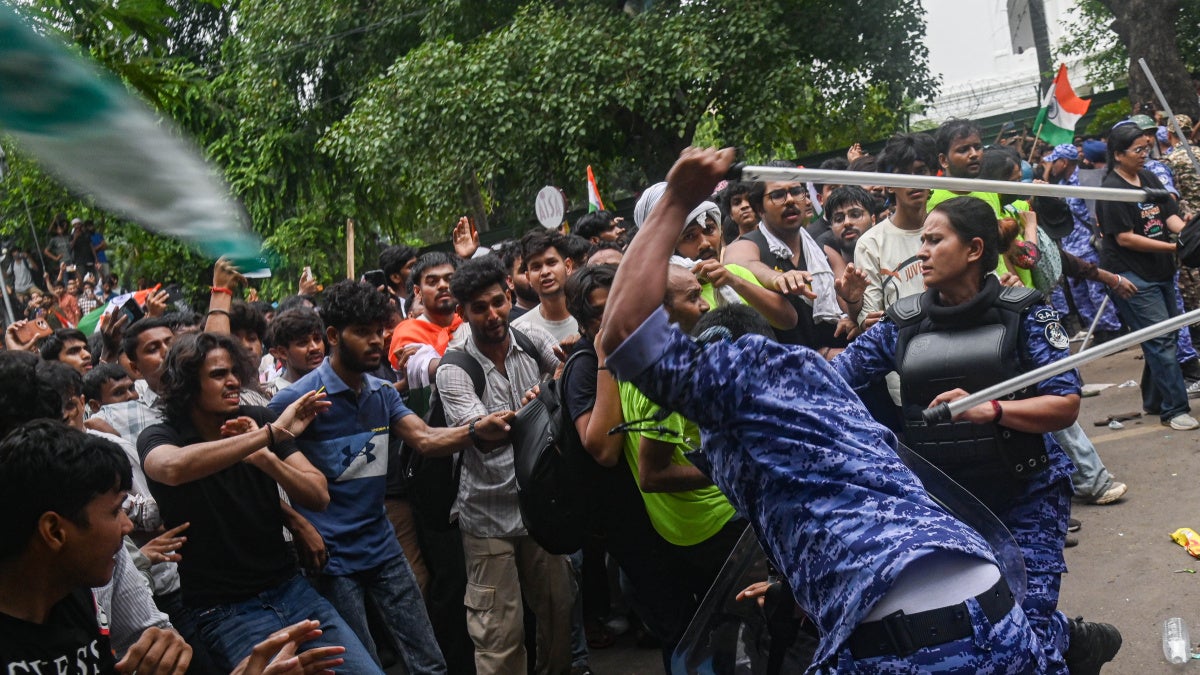
    The Bangladeshi authorities committed serious human rights violations during the three weeks of protests in July and August 2024 that toppled the Hasina government. The protests and crackdown resulted in about 1,400 deaths, mostly protesters shot dead by security forces, according to a United Nations report.

    While those responsible for abuses should be appropriately held to account, the prosecution failed to meet international fair trial standards, including for a full opportunity to present a defense and question the witnesses against them, and the right to be represented by counsel of one’s choosing. Concerns over the fairness of the trial are exacerbated by the death sentences.

    The three defendants were accused of inciting widespread and systemic attacks on protesters by security forces and supporters of Hasina’s Awami League party, and ordering the use of drones, helicopters, and lethal weapons to target unarmed demonstrators. They were also accused of failing to prevent atrocities or take punitive action in three specific cases of illegal killings by the security forces.

    The prosecution produced 54 witnesses. About half of them provided expert testimony, while the rest were victims or family members.

    The evidence against Hasina included audio recordings of conversations with officials in which she appeared to order the use of lethal weapons. While a government-appointed defense lawyer for Hasina and Khan, who received no instructions from the defendants, could cross-examine witness, he did not produce any witnesses to counter the allegations.

    Trials in absentia fundamentally undermine the right to a fair trial as set out in article 14 of the International Covenant on Civil and Political Rights (ICCPR), which is crucial to a legitimate legal process. The UN Human Rights Committee, which monitors compliance with the ICCPR, has stated that to guarantee defendants’ rights, “all criminal proceedings must provide the accused with the right to an oral hearing, at which he or she may appear in person or be represented by counsel and may bring evidence and examine witnesses.”

    In their 453-page ruling, the judges said that article 7 of the Rome Statute of the International Criminal Court (ICC), which defines crimes against humanity, had formed the basis of the tribunal’s proceeding, and that the testimony of the victims had informed its finding of crimes against humanity. The judges also said that while Hasina in recent interviews blamed “breakdowns in discipline among security forces on the ground,” she also accepted her “leadership responsibility.”

    The need for justice and accountability for serious rights violations by the Hasina government, including enforced disappearances, extrajudicial killings, and torture, is critical, Human Rights Watch said. However, Bangladesh authorities have a long history, including under the Hasina government, of bringing politically motivated cases, including before the International Crimes Tribunal, to arbitrarily arrest and detain, unfairly prosecute, and in some cases carry out death sentences against political opponents.

    Such practices have continued under the interim government led by Muhammad Yunus, who took charge in August 2024 after Hasina fled to neighboring India.

    The International Crimes Tribunal is a domestic court that Hasina created in 2010, originally to prosecute crimes against humanity during Bangladesh’s 1971 independence movement. Tribunal proceedings during Hasina’s rule repeatedly failed to meet international fair trial standards and imposed the death penalty. Human Rights Watch opposes the death penalty in all circumstances because of its inherent cruelty.

    While the Yunus government has not abolished the death penalty, it amended the International Crimes (Tribunals) Act in November 2024 to bring provisions on command responsibility and crimes against humanity closer to the ICC’s Rome Statute. The amendments specifically list enforced disappearances as a crime.

    However, further amendments in 2025 gave the tribunal broad authority to prosecute and dismantle political organizations, which could be used to violate international standards of due process and freedom of association. In the Hasina trial verdict, the tribunal did not rule on dismantling the Awami League but said the government should confiscate Hasina and Khan’s properties to compensate victims. Hasina is also a defendant in three more cases before the tribunal, two relating to enforced disappearances during her rule and one relating to mass killings in 2013.

    The Yunus government should adopt measures to ensure that the fundamental rights of the accused are protected, Human Rights Watch said. Articles 47(3) and 47A of Bangladesh’s constitution specifically strip those accused of international crimes, such as crimes against humanity, of fundamental rights that are otherwise guaranteed to defendants. These include the right to protection of the law (article 31), fair trial guarantees (article 35), and the right to seek remedies from the Supreme Court for the violation of fundamental rights (article 44). The Bangladeshi government should ensure equal access to constitutional remedies for all defendants, and to impose a moratorium on the death penalty with a plan to abolish it altogether.

    The government should respond to any demonstrations in accordance with the UN Basic Principles on the Use of Force and Firearms by Law Enforcement Officials, Human Rights Watch said. Awami League leaders should discourage violence by party supporters opposing the tribunal verdict.

    The UN Office of the High Commissioner for Human Rights and the Bangladeshi government signed a three-year Memorandum of Understanding in July 2025 to open a mission in the country “to support the promotion and protection of human rights.” The interim government, which has pledged to hold elections in February 2026, should also seek international assistance for fair trials. Such assistance will require a moratorium on capital punishment.

    Following the guilty verdicts, Bangladesh’s Foreign Ministry called on the Indian government to turn over Hasina and Khan, citing an extradition agreement between the two countries. While Indian authorities should support accountability efforts in Bangladesh, any extradition request should allow for the individuals sought to contest the extradition in legal proceedings in India that meet due process standards. No one should be extradited if they would face a trial abroad that does not meet international fair trial standards and could result in the death penalty.

    “Victims of grave rights violations committed under the Hasina government need justice and reparations through proceedings that are genuinely independent and fair,” Ganguly said. “Ensuring justice also means protecting the rights of the accused, including by abolishing the death penalty, which is inherently cruel and irreversible.”

    [ad_2]

    Source link

  • Australia: Press Laos on Rights Abuses

    Australia: Press Laos on Rights Abuses

    [ad_1]

    (Sydney) – Australian officials should press the Lao government to take concrete steps to improve its human rights record, Human Rights Watch said today. The 9th Australia-Laos Human Rights Dialogue is scheduled for Vientiane on November 18, 2025.

    In an October submission to Australia’s Department of Foreign Affairs and Trade, Human Rights Watch urged Australian officials to forcefully raise the Lao government’s attacks on critics and cross-border abuses, known as transnational repression, during the dialogue.

    “The Lao government has a track record of arbitrary arrests, enforced disappearances, and extrajudicial killings of its critics,” said Daniela Gavshon, Australia director at Human Rights Watch. “Australia should use the Human Rights Dialogue as an opportunity to press the Lao authorities to fully investigate and appropriately prosecute those responsible for serious abuses.”

    The Lao government denies allegations that it has abducted activists, critics, and political dissidents. But December is the 13-year anniversary of the enforced disappearance of Sombath Somphone, a Lao civil society leader whose case exemplifies the country’s impunity for the grave rights violations against its critics.

    Over the past decade, the Lao government has engaged in apparent quid pro quo agreements with neighboring countries, including Thailand and China, to forcibly return exiled dissidents. These so-called “swap mart” arrangements are aimed at deterring critics and dissidents. Such efforts by governments to silence dissent outside of their territorial jurisdiction have become known as “transnational repression.” Swap mart victims have included both dissidents from neighboring countries who fled to Laos and Lao dissidents who fled to Thailand.

    Australian officials should urge the Lao government to ratify the International Convention for the Protection of All Persons from Enforced Disappearance, which it signed in 2008. Lao officials should immediately disclose the whereabouts or situation of those forcibly disappeared and end any policy or practice in conjunction with neighboring governments, including Thailand, that facilitates transnational repression.

    “The upcoming Australia-Laos dialogue is an important reminder that bilateral relations are contingent on respect for human rights and the rule of law,” Gavshon said. “Australia should focus on the Lao government’s attacks on its critics and the need to resolve enforced disappearances, end transnational repression, and set clear benchmarks for progress on human rights.”

    [ad_2]

    Source link

  • Mali: Army, Militias Massacre Villagers in Central Region

    Mali: Army, Militias Massacre Villagers in Central Region

    [ad_1]

    (Nairobi) – Mali’s military and allied militias killed at least 31 civilians and burned homes on October 2 and 13, 2025, in 2 villages in the country’s embattled Segou region, Human Rights Watch said today.

    On October 2, Malian army forces and the Dozo, a predominantly ethnic Bambara militia that has been taking part in counterinsurgency operations for a decade, killed at least 21 men and burned at least 10 homes in Kamona village. On October 13, these forces killed 9 men and one woman in Balle village, about 55 kilometers away. The two villages are in a central Mali region controlled by the Al-Qaeda-linked Group for the Support of Islam and Muslims (Jama’at Nusrat al-Islam wa al-Muslimeen, or JNIM). Witnesses said soldiers and Dozo militias summarily executed the villagers after accusing them of collaborating with JNIM.

    “The October massacres in Segou region are just the latest atrocities attributed to the Malian army and allied militias,” said Ilaria Allegrozzi, senior Sahel researcher at Human Rights Watch. “Malian authorities should credibly and impartially investigate these killings and hold those responsible to account in fair trials.”

    Human Rights Watch interviewed 10 people with knowledge of the incidents by phone in October, including 5 witnesses and 5 community leaders, civil society activists, and journalists. On November 8, Human Rights Watch wrote to Mali’s justice and defense ministers with its findings and questions but has received no replies by the time of publication.

    Witnesses said they identified the soldiers by their camouflage uniforms and the Dozo by their traditional attire and amulets around their necks.

    On October 2, at about 10 a.m., soldiers, on at least seven pickup trucks and three armored vehicles and Dozo militiamen on motorbikes entered Kamona and began searching for male villagers. Witnesses said JNIM fighters had alerted residents that the military was coming, leading many residents to flee.

    “Those who could not flee were rounded up and executed,” a survivor told Human Rights Watch.

    Witnesses said that JNIM fighters fled the village before the military arrived and that there was no confrontation between the two sides.

    Witnesses believe the killings, which media reports corroborated, were linked to recent JNIM attacks in Segou region, including one that destroyed the sugar production plant in Siribala on August 8.

    Villagers later found 17 bodies under a tree in the village and 4 more on the northern side of Kamona. They said the soldiers burned at least 10 huts and 3 sheds belonging to ethnic Fulani residents.

    A 40-year-old herder who hid in an abandoned home with his 9-year-old daughter said that when the assailants left, at about 4 p.m., he found the 17 bodies. “The people had been sprayed with bullets,” he said. “One had his head completely smashed. I also saw several bullet casings next to the bodies.”

    Another man, 39, said he helped bury the bodies. “We dug a mass grave under the tree and put the 17 men inside,” he said. “Further north, we found 4 more bodies. All had been shot in the stomach and head, so we dug another grave, put them inside, and covered them with sand.”

    Villagers provided a list of the 21 victims, all men, ages 20 to 65. They believe soldiers killed more people during the attack. “We heard that at least 15 other men were killed in the bush that day,” said one villager. “But we didn’t go there to verify as we were afraid the military would return.”

    On October 13, at about 1 p.m., Malian soldiers on 5 pickup trucks and Dozo militiamen on at least 30 motorbikes entered Balle village, causing some residents to flee. “I didn’t flee immediately, but when I saw soldiers going door to door and slapping and kicking men, I ran away,” a 24-year-old man said. “From my hiding place, I heard gunshots.”

    Witnesses said that the soldiers and Dozo militiamen killed 10 civilians, including a 55-year-old woman, and 9 men, ages 22 to 67, and stole at least 100 cows.

    A 33-year-old man said that after the attack, he found the 10 bodies in the middle of the village. “They were one by the other, riddled with bullets,” he said. “Some had their legs and arms broken.”

    The 21-year-old daughter of the woman who was killed said her mother shouted at soldiers, accusing them of abusing villagers. “She walked toward the soldiers,” she said. “So they took her where the men had been rounded up and shot her.”

    In an October 14 statement, the Malian army’s chief of staff said that on October 13, soldiers conducted an “offensive recognition” operation around Balle resulting in the “neutralization of about 20 terrorists,” and the seizing of military equipment.

    Witnesses and residents said that Balle has for several years been under JNIM control. “We pay the zakat [Islamic tax] every year,” said a man. “If there are disputes, the jihadists settle them. There are no soldiers, no gendarmes, no police here. As a result, the army assumes we’re JNIM fighters. The army doesn’t differentiate between us and them.”

    Since 2012, successive Malian governments have fought armed conflicts with various Islamist armed groups. The hostilities have resulted in the deaths of thousands of civilians and have forcibly displaced over 402,000 more. Human Rights Watch has documented grave abuses by the Malian armed forces and allied militias and mercenary groups during counterinsurgency operations, as well as atrocities by JNIM and other armed groups.

    The military assaults on civilians in the Segou region took place after JNIM began a siege of Mali’s capital, Bamako, in early September. The siege has cut off fuel supplies to Bamako and prompted the military junta to temporarily shut down all schools and universities across the country.

    All parties to Mali’s armed conflict are bound by international humanitarian law, notably Common Article 3 of the Geneva Conventions of 1949 and customary laws of war. The laws of war prohibit attacks directed at civilians, as well as murder, cruel treatment, and torture of anyone in custody. Individuals who commit serious violations of the laws of war with criminal intent or are responsible as a matter of command responsibility may be prosecuted for war crimes.

    Although Mali withdrew from the International Criminal Court (ICC) in September, the country is still party to the court’s Rome Statute until September 2026. In January 2013, the court opened an investigation into alleged war crimes in Mali since 2012.

    The African Union (AU) has largely failed to respond effectively to the worsening conflict in Mali, despite its mandate to promote peace and security, Human Rights Watch said. While the security situation has deteriorated in recent months, the AU Peace and Security Council has offered little more than statements of concern.

    “The AU Peace and Security Council should make the conflict in Mali a priority,” Allegrozzi said. “It should hold regular briefings, strengthen diplomacy, and coordinate regional and international action to strengthen accountability for abuses by all sides.”

    [ad_2]

    Source link

  • Brussels Rips EU Corporate Accountability Law

    Brussels Rips EU Corporate Accountability Law

    [ad_1]

    On November 13, a European Parliament majority sold out rights protections to corporate interests in the course of negotiating amendments to the European Union’s landmark Corporate Sustainability Due Diligence Directive (CSDDD). It ripped through years of efforts to build comprehensive legislation that holds corporations accountable for human rights and environmental abuses in their global supply chains. 

    In the negotiations, the European People’s Party (EPP) sided openly with far-right parties to create a majority toeing the demands of corporate lobbies for deregulation. Their proposed amendments mostly mirrored those of lobbyists, including from the fossil fuel industry, deleting climate transition plans and prohibiting EU member states from proposing better provisions when transposing the directive into national law. Leaning on the far-right has unfortunately become more frequent for the EPP, to the detriment of human rights guarantees.

    As the EU Commission, Council, and Parliament head into tripartite negotiations to finalize the Omnibus I amendments, the low bar already set by each of them risks making what remains of the CSDDD a mostly empty shell. The combined institutions’ positions could mean there would be no harmonized civil liability, no climate transition plans, limited access to justice for victims, and even when suppliers are involved in cases of severe abuses, the requirement for companies to disengage from those relationships will be optional if such a disengagement could substantially prejudice the company’s business interests.

    These decisions falsely pit human rights and environmental standards against competitiveness. In fact, a recent report by the UN Development Program and the World Benchmarking Alliance reveals a positive link between improved rights records of companies and “enhanced asset efficiency.” The report reinforces that human rights due diligence is a “strategic investment in resilience and long-term value” rather than an obstacle to competitiveness.

    EU institutions should spare no effort during the trilogue to protect the risk-based approach to due diligence across the supply chain, and to further strengthen the law by reintroducing civil liability at the European level. Failing again would dangerously normalize a global erosion of human rights standards at the hands of corporate lobbies.

    [ad_2]

    Source link