Author: Human Rights Watch

  • Iraq: Exhume Mass Grave Sites to Ensure Justice

    Iraq: Exhume Mass Grave Sites to Ensure Justice

    [ad_1]

    (Beirut) – The bodies of hundreds of thousands of victims of unlawful killings remain buried in mass graves across Iraq, Human Rights Watch said today. The graves contain the bodies of victims of successive conflicts, including Saddam Hussein’s genocide against the Kurds in 1988 and mass killings by the Islamic State (also known as ISIS) between 2014-17. 

    The United Nations Investigative Team to Promote Accountability for Crimes Committed by Da’esh/ISIL (UNITAD), created by the UN Security Council in 2017 to document serious crimes committed by ISIS in Iraq, has supported the Iraqi government’s Mass Graves Directorate and the Medico-Legal Directorate in the excavation of 67 mass graves related to ISIS during its mandate. But in late 2023, at the request of the Iraqi government, the UN Security Council elected to extend UNITAD’s mandate for only one additional year, meaning that it will stop its work in September 2024. 

    “Mass graves are painful reminders of the most violent chapters of Iraqi history and exhuming them is crucial for allowing families of victims – and the nation – to get any hope of justice and heal from these wounds,” said Sarah Sanbar, Iraq researcher at Human Rights Watch. “People have a right to know the fate of their loved ones and give them a proper and dignified burial.” 

    The Strategic Center for Human Rights in Iraq estimates that Iraq’s mass graves contain the remains of 400,000 people. Iraq has one of the highest numbers of missing persons in the world, estimated between 250,000 and 1 million, many of whom are believed to be buried in mass graves.

    To advance justice and accountability for victims and their families, the Iraqi government should intensify efforts to exhume graves, identify victims, return remains to families for proper burials, issue death certificates, and compensate families, as required under Iraqi law, Human Rights Watch said. 

    Officials have opened 288 mass graves since 2003, Dhiaa Kareem Taama, the Iraqi federal government’s director general of the Department of Mass Graves Affairs and Protection, told Human Rights Watch. “As long as there is no unified national registry, there is no way for us to know how many people may be buried in mass graves,” Taama said. 

    Between 2017 and 2023, UNITAD assisted Iraqi authorities to exhume 1,237 victims of the Camp Speicher massacre, where ISIS killed 1,700 soldiers, cadets, and volunteers escaping from the Tikrit Air Academy between June 12-14, 2014, from 14 graves and two riverine crime scenes. UNITAD’s June 2024 report finds reasonable grounds to believe the massacre was undertaken with genocidal intent, amounting to crimes against humanity and war crimes.

    Most recently, on May 28, 2024, Iraqi authorities and UNITAD announced that they had begun the excavation of the Alo Antar pit, a mass grave in Tel Afar district. The grave, about 60 kilometers west of Mosul, is believed to contain the bodies of over 1,000 people. Between 2014 and 2017, ISIS used the pit for mass executions and dumping bodies. 

    But as the September 17 deadline to terminate UNITAD’s operations in Iraq approaches, there is concern that the gap they leave may not be adequately filled by Iraqi authorities. 

    “Our one hope as victims and survivors was UNITAD,” a man whose father, brother, and two uncles were found in a mass grave south of Sinjar told Human Rights Watch. “Many things are going to get worse when they leave. I’m not sure that the Iraqi government has the capacity to fill the gap that will be left by UNITAD’s departure.”

    “Of course, there will be a vacuum when they [UNITAD] leave,” Taama said. “But the Iraqi government has issued its decision that the team’s mandate has expired, so we must have an alternative plan.”

    The massive caseload coupled with limitations in the Iraqi government’s capacity has meant that for families of victims, the process has been painstakingly slow.

    The remains of one man’s father, brother, and two uncles were found in a mass grave discovered by a shepherd in Sabahia, Sinjar district, in October 2017. Two years later, the remains were exhumed and sent to Baghdad for identification. “It has been five years, and until now we haven’t had any news from the Medico-Legal Directorate,” the man said. “We don’t know why.”

    The man said he is unable to obtain death certificates for his relatives until their remains are identified. Without the death certificates, his family is unable to apply for compensation paid to families of victims of terrorism under Law No. 20 of 2009.

    Iraq has just one laboratory authorized to conduct DNA identification of remains exhumed from mass graves, the Medico-Legal Directorate’s forensic DNA laboratory in Baghdad, Taama told Human Rights Watch. 

    In preparation for its departure, UNITAD has been supporting the Medico-Legal Directorate’s forensic DNA laboratory to obtain accreditation from the International Organization for Standards, ISO/IEC 17025. Accreditation would mean that determinations made by the laboratory in Baghdad would be internationally recognized, allowing its findings to be accepted as evidence in courts globally. 

    Khabat Abdullah, an adviser at the Ministry of Martyrs and Anfal Affairs in the Kurdistan Regional Government (KRG), told Human Rights Watch that the KRG Ministry of Interior’s criminal forensics department runs a lab with the capacity to do DNA identification of five to seven remains per day. But under Iraq’s Law on Protection of Mass Graves (Law No. 5 of 2006), only the lab in Baghdad is authorized to analyze DNA samples taken from mass graves.

    Sabah Sabri, whose father and uncle were killed by ISIS in 2014 and dumped in a mass grave in Khanasour, told Human Rights Watch, “I recognized my father by his clothes. My neighbor also recognized his father because he had his medicines and the house keys on him.” 

    Kurdish officials took DNA samples from Sabah and other community members to confirm the identities of those in the grave. Sabah later received official confirmation that his father was among those found in the grave. 

    Despite this, Sabah said that his family still has not received any death certificate for his father as of July. “The federal Iraqi government refuses to recognize the DNA tests conducted by Kurdish authorities, so they aren’t giving us a death certificate. The KRG told us they would issue a death certificate for us, but federal authorities told us they wouldn’t recognize that, either.”

    Without the death certificate, the family can’t claim his retirement benefits or any other government support. “I’ve spent over $3,000 and seven years trying to get his death certificate,” Sabah said. 

    For families of victims buried in mass graves, the pace of exhumations and bureaucratic obstacles prevent them from closure add insult to injury. “My father’s remains were identified recently,” said Shireen Khairo, whose father was killed by ISIS and found in a mass grave in Hardan, Sinjar district. “But we only received half of his skeleton to bury. I can’t describe how painful and tormenting to the soul this process has been.”

    Rebwar Ramazan was one year old when his father, grandfather, six of his uncles, and 105 other men from his family were taken, killed, and their bodies placed in an unmarked mass grave in southern Iraq. Rebwar’s family members were part of the 8,000 men from the Barzan area killed in 1983 by Saddam Hussein’s government, which the Supreme Iraqi Criminal Tribunal ruled was an act of genocide and crime against humanity. 

    In 2019, Ramazan went to Samawa, in southern Iraq, to attend the excavation of a recently discovered mass grave from that era. “My mother told me my father was only wearing one sock when they took him, so I was looking at all the remains for a bone wearing one sock thinking maybe I would find him,” Ramazan said. 

    To date, approximately 2,500 remains of Kurds killed between 1980 and 1988 have been recovered from mass graves and returned to the Kurdistan region, Abdullah told Human Rights Watch. 

    Exhuming mass graves is critical to ensuring the right to know the truth about gross violations of human rights and ensuring Iraq is able to fulfil its duty to guarantee effective remedies and reparations and conduct effective investigations. Evidence gathered from mass graves can and should also be used in criminal proceedings to ensure perpetrators of crimes are held accountable. 

    The Iraqi government should increase efforts to exhume mass graves in Iraq through an impartial approach independent of the identity of the victims and alleged perpetrators. The government should also increase funding for the Mass Graves Directorate and Medico-Legal Directorate, enhancing their capacity for evidence collection, including through digital surveying and crime scene reconstruction, facilities for the storage of biological material, and victim identification processes. 

    “Exhuming all of Iraq’s mass graves will require a serious and sustained commitment from Iraqi authorities, and it’s one that must absolutely be made,” Sanbar said. “Healing the wounds of the past won’t be possible without it.” 

    [ad_2]

    Source link

  • Mexico: Inadequate Abortion Access in State of Mexico Violates Human Rights

    Mexico: Inadequate Abortion Access in State of Mexico Violates Human Rights

    [ad_1]

    • Authorities and healthcare providers in the state of Mexico, the nation’s most populous state, are failing to guarantee access to abortion care, even in cases in which it is legal.
    • Barriers to legal abortion care make it more difficult for people to get services they are entitled to, especially people living in poverty, adolescents, and those with disabilities.
    • The state of Mexico should fully decriminalize abortion. Health institutions should increase joint efforts to ensure that everyone has access to abortion services without discrimination. 

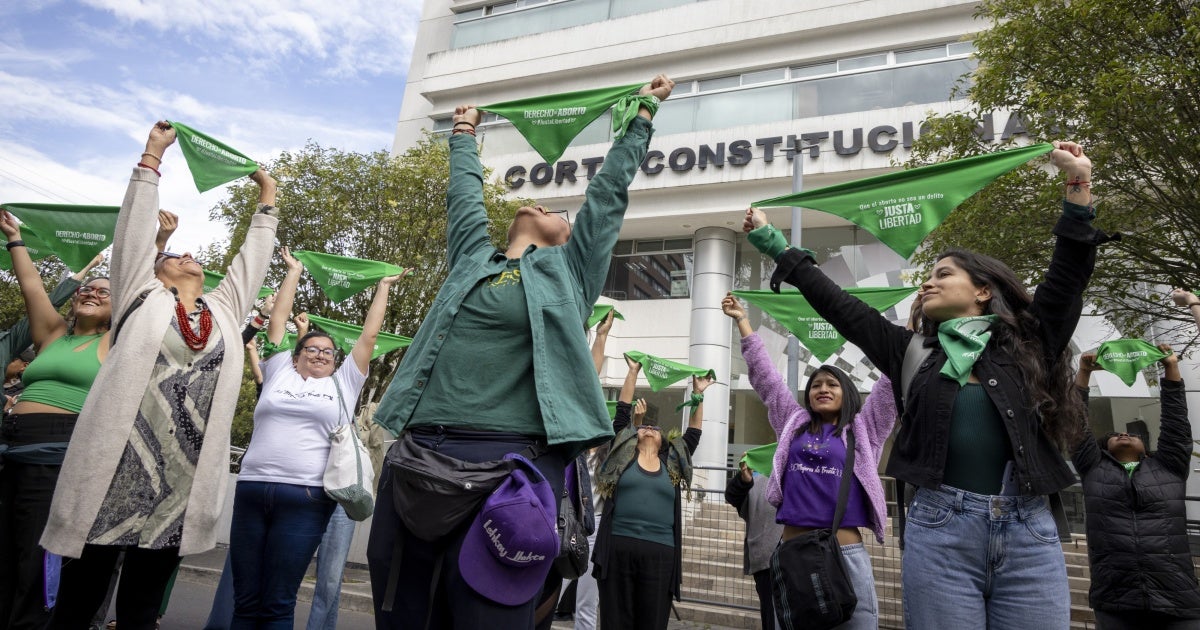
    (Mexico City) – Authorities and healthcare providers in the state of Mexico, the nation’s most populous state, are failing to guarantee access to abortion care, even in cases in which it is permitted under state law, Human Rights Watch said in a report released today. Despite nationwide strides towards recognizing access to abortion as a constitutional and human right, the state of Mexico continues to criminalize abortion, allowing exceptions only in cases of rape, “negligent abortions,” risk to the pregnant woman’s life, or when the fetus has “serious congenital or genetic alterations.”

    The 44-page report, “Navigating Obstacles: Abortion Access in the State of Mexico,” found that the state’s abortion law does not guarantee access to this essential service, even for legally eligible cases. Barriers to access include healthcare providers denying or delaying services, withholding necessary information, questioning the veracity of sexual violence survivors’ statements, subjecting women to mistreatment, and imposing arbitrary requirements for access that contradict existing law and regulations. 

    “Significant hurdles persist for women, girls, and other pregnant people seeking abortion, even for those who fall within the exceptions under the law of the state of Mexico,” said Cristina Quijano Carrasco, women’s rights researcher at Human Rights Watch. “The state of Mexico needs to fully decriminalize abortion as a key step to achieving gender equality.” 

    Inadequate abortion access in the state forces a high number of people to travel to Mexico City, where abortion services are unrestricted up to twelve weeks of pregnancy, highlighting the stark differences in protections for reproductive rights across state borders within Mexico. With alarming rates of gender-based violence in the state, including femicides and sexual violence, restricted abortion access further compounds discrimination against women and girls. 

    Human Rights Watch interviewed more than 66 healthcare personnel, government officials, representatives from civil society organizations, and other experts. Human Rights Watch found that gender-based biases and stereotypes present in health care in the state of Mexico underlie the significant obstacles in accessing legal abortion. Doctors, nurses, and psychologists from several hospitals interviewed said they had observed mistreatment of patients by their personnel, including questioning their motives for seeking abortion care and making stigmatizing comments such as “a good mother doesn’t do these things.” Some patients who experience mistreatment leave without getting the care they need.

    Some hospitals and providers further restrict access by imposing arbitrary requirements that contradict or undermine existing laws and regulations. For example, some providers require survivors of sexual violence to report their cases to authorities before accessing abortion care, even though state law does not require such reporting. 

    Fear of legal repercussions also deters healthcare personnel from providing services and patients from seeking abortion care. The continued treatment of abortion as a crime makes women and girls afraid to seek information about how to legally terminate their pregnancies, making safe access even more difficult. Fear of facing criminal charges can also lead to women not seeking medical help when they need it, Human Rights Watch found. 

    Lack of staff available for abortion care due to staff shortages and conscientious objection by medical personnel also leads to delays in time-sensitive abortion care, contrary to international human rights standards. Human Rights Watch found that there have been instances in which healthcare personnel who object to providing abortions have also refused to provide information about how to get such services, contrary to the Mexican Supreme Court’s ruling on conscientious objection.

    Human Rights Watch found that adolescents seeking abortion care face additional barriers. Though state law does not require parental authorization for anyone over age 12, some providers unlawfully require parental involvement up to age 18.

    Women, girls, and other pregnant people with disabilities in the state of Mexico encounter additional barriers due to the existence of legal guardianship, which allows a third party to make decisions for people under this system, even for health treatment.

    In 2023, the state of Mexico Congress approved the National Civil and Family Procedure Code, recognizing full legal capacity for anyone age 18 or older, including people with disabilities. But the state legislature has yet to amend its civil code, thus maintaining a substitute decision-making system. This can deprive people with disabilities of their right to make their own decisions about their health, including access to abortion services.

    Since 2007, 72,336 women, girls, and pregnant people living in the state of Mexico have accessed abortion services in Mexico City. However, forcing people who live in the state of Mexico to travel into Mexico City to obtain abortion services disproportionately burdens people living in conditions of poverty, those with disabilities or care responsibilities, adolescents, and others who may not be able to travel easily. 

    “The state of Mexico should join the other 16 states in the country that have fully decriminalized abortion and taken the lead in protecting women’s rights,” Quijano Carrasco said. “Health institutions, both at the state and federal level, should increase their joint efforts to ensure that everyone has access to abortion services without discrimination.” 

    [ad_2]

    Source link

  • Cameroonian Social Media Activist Feared Forcibly Disappeared

    Cameroonian Social Media Activist Feared Forcibly Disappeared

    [ad_1]

    In a video circulated on social media on July 21, Steve Akam, alias Ramon Cotta, a Cameroonian social media activist, stands before a barrier in an outdoor space, handcuffed and surrounded by members of the Cameroonian police. It was the last time he was seen.

    Human Rights Watch contacted sources in Cameroon, and geolocated and analyzed the video, determining it was filmed between July 19 and July 21 at a border post between Gabon and Cameroon in the Cameroonian town of Kye-Ossi.

    Cotta, who has been living in Gabon for the past ten years, is known for his TikTok videos in which he criticizes the Cameroonian authorities.

    On August 7, lawyers representing Cotta said they sent requests for information to various Cameroonian authorities about their client’s situation and whereabouts, to no avail. The lawyers believe that Cameroonian authorities extrajudicially returned Cotta to Cameroon from Gabon, and that he is a victim of an enforced disappearance, meaning Cameroonian authorities have detained him but are refusing to acknowledge his detention or disclose any information on his whereabouts, depriving him of protection of the law.

    The Central Africa Human Rights Defenders Network, a prominent Cameroonian human rights group, and Maurice Kamto, the head of the main opposition party Movement for the Renaissance of Cameroon, both called on authorities to immediately reveal Cotta’s whereabouts.

    The Cameroonian government has for years cracked down on opposition and free speech, jailing political activists, journalists, and dissidents. Ahead of elections in 2025, it has increasingly restricted freedoms of expression and association.

    In March of this year, the territorial administration minister banned two opposition coalitions, describing them as “clandestine movements.” In June, gendarmes in N’Gaoundéré, Adamawa region, arbitrarily rearrested prominent artist Aboubacar Siddiki, known as Babadjo, for “insulting” a governor. In July, the head of the Mfoundi administrative division issued a decree threatening to ban anyone insulting state institutions from the division. Also in July, members of the intelligence services in Douala, Littoral region, arrested Junior Ngombe, a social media activist, for his TikTok videos advocating for democratic change. Ngombe was released on bail on July 31.

    In an August 7 statement following a visit to Cameroon, Volker Türk, the United Nations high commissioner for human rights, said that the process leading up to the elections will be “a key opportunity … to ensure the free expression of political opinions.”

    Forcibly disappeared people are vulnerable to a wide range of abuses, including life threatening. Cameroon’s authorities should immediately confirm the detention and location of Cotta and respect his rights by releasing him.

    [ad_2]

    Source link

  • Afghanistan: Taliban Tighten Grip 3 Years into Rule

    Afghanistan: Taliban Tighten Grip 3 Years into Rule

    [ad_1]

    (New York) – The Taliban have created the world’s most serious women’s rights crisis since taking power in Afghanistan on August 15, 2021, Human Rights Watch said today. Afghanistan is also experiencing one of the world’s worst humanitarian crises, with aid severely underfunded, thousands of Afghans forced back into Afghanistan from Pakistan, and thousands of others expecting to emigrate to Western countries still waiting.

    Under the Taliban, Afghanistan is the only country where girls are banned from education beyond the sixth grade. The Taliban have also violated women’s right to freedom of movement, banned them from many forms of employment, dismantled protections for women and girls experiencing gender-based violence, created barriers to them accessing health care, and barred them from playing sports and even visiting parks. The United Nations special rapporteur on Afghanistan, Richard Bennett, has described the situation as “an institutionalized system of discrimination, segregation, disrespect for human dignity, and exclusion of women and girls.”

    “Under the Taliban’s abusive rule, Afghan women and girls are living their worst nightmares,” said Fereshta Abbasi, Afghanistan researcher at Human Rights Watch. “All governments should support efforts to hold the Taliban leadership and all those responsible for serious crimes in Afghanistan to account.”

    Since January 2024, the Taliban have detained women and girls in Kabul and other provinces for what they call “bad hijab” – that is, for not abiding by the prescribed dress code. UN experts have reported that some of those detained have been held incommunicado for days and subjected to “physical violence, threats and intimidation.” In addition to intensified restrictions on women’s and girls’ rights, the Taliban have severely curtailed freedom of expression and the media and have detained and tortured protesters, critics, and journalists.

    The cutoff in development assistance has helped to create Afghanistan’s humanitarian crisis. The UN Office for the Coordination of Humanitarian Affairs has reported that more than half of the population – 23 million people – face food insecurity. Women and girls are among the most seriously affected. The UN humanitarian response plan for 2024 is underfunded; as of August, donor countries had contributed only 12 percent of the funds needed.

    The loss of foreign assistance has severely harmed Afghanistan’s healthcare system and exacerbated malnutrition and illnesses resulting from inadequate medical care. Taliban restrictions on women and girls have impeded access to health care, jeopardizing their right to health. The Taliban’s education bans guarantee future shortages of female health workers, Human Rights Watch said. Donor countries need to find ways to mitigate the ongoing humanitarian crisis without reinforcing the Taliban’s repressive policies against women and girls.

    More than 665,000 Afghans have arrived in Afghanistan from Pakistan since September 2023, having been forced out during a Pakistani government crackdown on foreign immigrants and refugees. Many had lived in Pakistan for decades. The numbers have added to the millions who have been internally displaced in Afghanistan and have strained existing humanitarian support.

    Thousands of Afghans who fled the country after the Taliban takeover live in limbo in Iran, Türkiye, the United Arab Emirates, and other countries as resettlement processes in countries that pledged to take in Afghans, including the United States, United Kingdom, Germany, and Canada, have been slow and inadequate to the needs of at-risk Afghans.

    “The third anniversary of the Taliban’s takeover is a grim reminder of Afghanistan’s human rights crisis, but it should also be a call for action,” Abbasi said. “Governments engaging with the Taliban should consistently remind them that their abuses against women and girls and all Afghans violate Afghanistan’s obligations under international law. Donors should provide assistance aimed at reaching those most in need and crafting durable solutions to Afghanistan’s humanitarian crisis.”

    [ad_2]

    Source link

  • Tunisia Hollows Out its Media Landscape Ahead of Elections

    Tunisia Hollows Out its Media Landscape Ahead of Elections

    [ad_1]

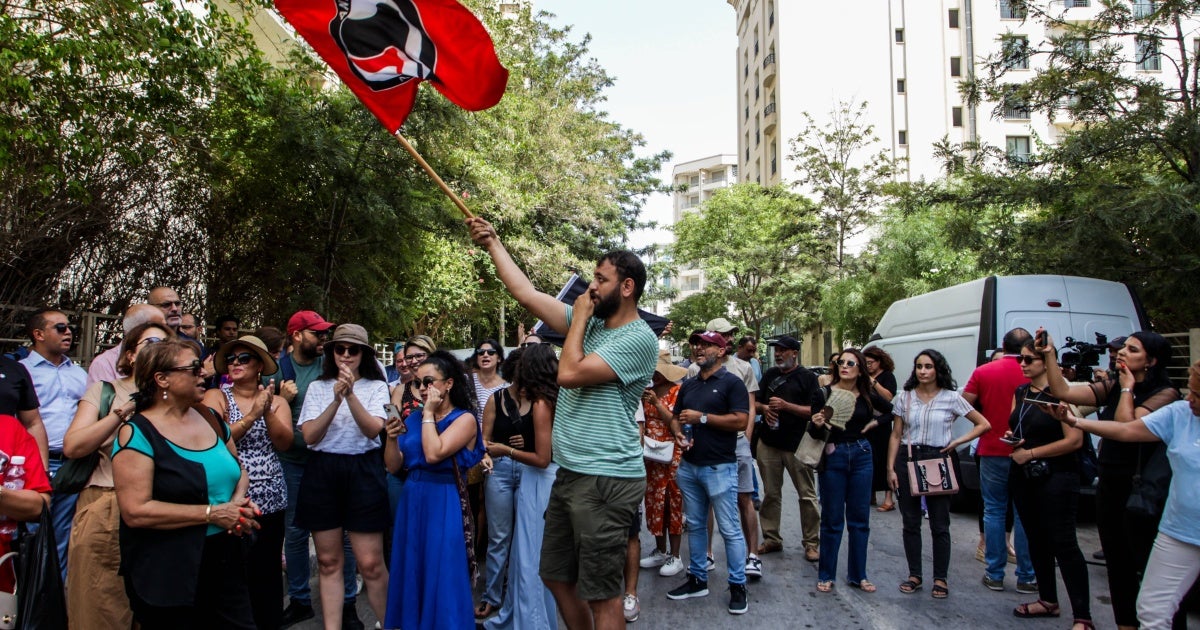
    When veteran journalist Elyes Gharbi announced on June 28 that he was leaving the “Midi Show” on Tunisia’s leading radio station, Mosaïque FM, after nine years, he did not explain why. However, Gharbi’s decision came just months after he acknowledged “unbelievable threats” against journalism in the country and a year after police investigated him for comments made on the show.

    As Tunisia gears up for its first presidential election since President Kais Saied’s 2021 power grab, authorities are stifling dissent, especially in the media. Human Rights Watch found that at least five media professionals are currently behind bars for their work or opinions. According to the National Syndicate of Tunisian Journalists (Syndicat National des Journalistes Tunisiens, SNJT), at least 39 cases have been brought against journalists for their work since May 2023, including under the repressive decree-law 2022-54 on Cybercrime and the 2015 counterterrorism law.

    In May and July 2024, prominent journalists Borhen Bsaies and Mourad Zeghidi, as well as lawyer and pundit Sonia Dahmani, were sentenced to one year in prison under the cybercrime law. At the end of July, a Tunis court of appeals reduced Bsaies and Zeghidi’s sentences to eight months in prison. Last year, Noureddine Boutar, director of Mosaïque FM, was detained for three months and accused of “money laundering,” “conspiracy,” and “terrorism,” including for alleged incitement against President Saied. Police also recently questioned executives of other private broadcasters as well as the independent outlet Nawaat.

    This clampdown is gradually wiping out criticism and diversity of opinion from Tunisia’s media landscape. Political debate has almost disappeared from the airwaves. Private radio IFM and Carthage+ TV channel have suspended their most popular shows that had featured the imprisoned Dahmani, Bsaies, and Zeghidi, as well as IFM’s “90 minutes,” whose host, Khouloud Mabrouk, was questioned by police about her journalism in April. Mabrouk said the show’s premature end was partly due to “pressure.”

    Public media journalists have been fighting against censorship and to safeguard their public service mission since President Saied started purging their leadership in 2021. His government appointed new leadership, including to Tunis Afrique Press (TAP), the Tunisian national news agency, who have sometimes revived old authoritarian habits. For example, according to the SNJT, TAP’s CEO Najeh Missaoui on July 4 ordered a widely picked-up dispatch about a new presidential candidate be deleted.

    President Saied owes much to Tunisia’s free press: he was himself elected after participating in the first-ever televised presidential debates in 2019. It is now his responsibility to ensure media freedoms and the free flow of information ahead of the October 6 election.

    [ad_2]

    Source link

  • Türkiye: Restore Access to Instagram

    Türkiye: Restore Access to Instagram

    [ad_1]

    (London, August 9, 2024) – The Turkish authorities’ arbitrary decision on August 2, 2024, to impose a blanket block on access to Instagram violates the rights to freedom of expression and of access to information for millions of users, Human Rights Watch and the Freedom of Expression Association (İfade Özgürlüğü Derneği, İFÖD) said today. The block also interferes with small business owners in Türkiye who depend on the platform for their work.  

    Türkiye’s government-controlled internet regulator, the Information and Communication Technologies Authority (Bilgi Teknolojileri ve İletişim Kurumu, BTK), has not published the decision laying out the grounds for blocking access to Instagram. However the move came two days after President Recep Tayyip Erdoğan’s communications director accused Instagram’s parent company, Meta, of removing condolence messages relating to the former head of Hamas’ political bureau, Ismail Haniyeh, who was killed in Iran on July 31.  

    “Blocking everyone’s access to an entire social media platform is a grossly disproportionate measure that violates the right to free expression and information of millions of users of the platform in Türkiye and should be reversed immediately,” said Deborah Brown, technology and rights deputy director at Human Rights Watch. “A government’s disagreement over certain decisions either to take down or to permit certain content on a platform should never be used as a pretext to block access to the platform in its entirety.”

    Public officials have issued contradictory messages about the ban, with some claiming that the decision was due to the platform’s failure to comply with requests to remove alleged criminal content. Without an official explanation, millions of users in Türkiye are left in the dark about why the decision was made. The Turkish government should ensure access is immediately restored, Human Rights Watch and the Freedom of Expression Association said. 

    Social media platforms should uphold freedom of expression and the right to information of their users by taking bold steps to challenge government decisions to block their platforms and by making public announcements informing the public of the measures they will take to protect their users’ rights in response to arbitrary blocking decisions.

    Social media is one of the last arenas where people have access to independent news and can express themselves with relative freedom after the broad crackdown on media in Türkiye in recent years. This is despite Türkiye’s restrictive internet law, which gives the authorities the power to arbitrarily block and remove websites and other online content. Turkish officials have previously used this authority to block entire platforms.

    Türkiye has previously blocked access in the country to Twitter, YouTube, Wikipedia, Google Sites (a wiki and web page creation tool created by Google), and WordPress platforms. In July and August, the authorities also blocked access to the popular Wattpad and Roblox platforms. 

    Turkish officials have indefinitely blocked the Deutsche Welle and Voice of America news platforms in the country since June 2022. The Freedom of Expression Association’s EngelliWeb project announced that as of the end of March, Türkiye had blocked over one million websites.

    In decisions relating to Google Sites, YouTube, Twitter, and Wikipedia, the European Court of Human Rights and Türkiye’s own Constitutional Court have found violations of freedom of expression and of the right of the public to receive information as well as impart it.  

    Under international law, governments have an obligation to ensure that any restrictions to information online are provided for in law, are a necessary and proportionate response to a specific threat, and are in the public interest. 

    “Blocking access to the Instagram platform is not only disproportionate but also arbitrary, as the details of the decision by Türkiye’s internet regulator have not been revealed and the blocking order was issued without a court order,” said Dr. Yaman Akdeniz, one of the co-founders of the Freedom of Expression Association (İFÖD). “This clearly violates freedom of expression and access to information but also breaches the constitutional obligation to guarantee an effective remedy through a court of law.” 


    [ad_2]

    Source link

  • Nepal: New Government Should Seize Moment for Rights

    Nepal: New Government Should Seize Moment for Rights

    [ad_1]

    (London) – Nepal’s new government should seize opportunities for progress on human rights, including transitional justice and social security, Human Rights Watch said in a letter to Prime Minister Khadga Prasad Oli on August 6, 2024. The government should also act to protect the rights of migrant workers and lesbian, gay, bisexual and transgender (LGBT) people.

    Oli became prime minister for the third time on July 15, following a new coalition agreement between his Unified Marxist Leninist party and the Nepali Congress party. The new government has continued negotiations started by its predecessors to pass legislation that would establish a transitional justice process to address serious abuses committed during the 1996-2006 civil war.

    “Nepal’s political leaders have made progress toward a credible transitional justice process, but success depends on legislation that meets standards set by Nepal’s Supreme Court and international law,” said Meenakshi Ganguly, deputy Asia director at Human Rights Watch. “The government should agree on amendments to address shortcomings in the transitional justice bill, then present it for passage in parliament without further delay.”

    In October 2023, United Nations Secretary-General António Guterres noted that Nepal is closer than it has ever been to beginning a meaningful transitional justice process and pledged UN assistance.

    The transitional justice bill contains provisions guaranteeing the right to reparations and the right of families of enforced disappearance victims to their relatives’ property. It mandates the Truth and Reconciliation Commission to study the root causes and impact of the conflict and to recommend institutional reforms. However, the bill still needs significant revisions if it is to ensure victims’ right to justice.

    A recent report by the UN special rapporteur on transitional justice stated that allocating sufficient resources is key to guaranteeing the independence of transitional justice mechanisms. Donor funding should be managed in an accountable manner that upholds the independence of future transitional justice bodies, Human Rights Watch said.

    Nepal has made significant achievements in protecting people’s right to social security, including through the Child Grant program, which has led to increased birth registration, improved access to food, and a lower likelihood of child labor for the recipients and their siblings. Research shows that the popular Child Grant program increases public support for the government.

    However, while about 40 percent of Nepal’s population is under 18, children receive only about 4 percent of the government’s social protection budget. The Child Grant has been endorsed by numerous Nepali civil society organizations and international policy experts, including UNICEF, the International Monetary Fund, the World Bank, and the European Union, but is currently only available to 9.5 percent of Nepali children. Successive governments have not followed through on commitments to roll the program out nationwide. In April 2023, 16 Nepali and international civil society organizations wrote to Nepal’s finance minister urging expansion of the Child Grant program.

    The Nepali government should adopt concrete measures to extend the Child Grant to all districts and increase the monthly payment to meet the ultimate goal of providing an adequate monthly income to all Nepali families with children, Human Rights Watch said.

    The government should also act to protect Nepali migrant workers through bilateral labor agreements with destination countries that include strong provisions on responsible recruitment, wage protection, access to health care, occupational health and safety, and access to justice. Human Rights Watch also urged the government to ensure that Nepal’s embassies in migrant destination countries have sufficient resources to support workers who experience abuse.

    Nepal is widely recognized for its achievements in advancing LGBT rights, particularly through a series of landmark Supreme Court decisions. However, the authorities have failed to properly carry out the rulings, in part due to a lack of comprehensive legislation. The government should bring legislation before parliament recognizing marriage equality. It should also issue a directive that transgender Nepalis can change their legal name and gender to male, female, or other without having to submit to medical verification.

    “Prime Minister Oli has an opportunity to seize the moment and make important achievements on key rights issues, but the government will need to make sustained efforts and work closely with victims’ groups, rights organizations, and other partners,” Ganguly said. “Donor governments and the UN should stand ready with robust and adequate plans to support a Nepali-led process.”

    [ad_2]

    Source link

  • Gaza: Israeli Forces Open Fire While Storming Home

    Gaza: Israeli Forces Open Fire While Storming Home

    [ad_1]

    (Jerusalem, August 8, 2024) – Israeli forces stormed a Gaza City home on December 21, 2023, throwing grenades inside and opening fire on a room where a civilian family was sheltering, Human Rights Watch said today.

    The attack killed seven people, including a pregnant woman, and severely injured two, including a 5-year-old. Witnesses also allege that Israeli forces shot a blind 73-year-old man after securing the building and forcing all other family members out. The incident should be investigated as a possible war crime, and forces involved should be held accountable.

    “There is no excuse for soldiers storming into a home full of civilians and firing without precaution,” said Belkis Wille, associate crisis, conflict, and arms director at Human Rights Watch. “They decimated a Palestinian family and orphaned a small child who may never be able to walk again.”

    Human Rights Watch interviewed three al-Khalidi family members, two who witnessed the attack and were interviewed over the phone, and in June 2024 they met with Faisal, the injured 5-year-old, in Qatar, where he was receiving medical care. Researchers also analyzed a video uploaded to the Israeli armed forces’ X (formerly known as Twitter) account, IDFonline, parts of which were verified as having been filmed between December 20 and 21. It shows Israeli soldiers and armored vehicles in the vicinity but no ongoing fighting or soldiers coming under fire.

    Mohammed al-Khalidi, 40, and Mu’min al-Khalidi, 21, cousins, said that in the night between December 20 and 21, a munition hit a home in Sheikh Radwan, in north Gaza City, near five schools sheltering displaced people. Mohammed, Mu’min, and 29 other family members were in the house next door, having fled their homes following an evacuation phone call from the Israeli military. They said that Mohammed’s sister-in-law Fatma al-Khalidi, 32, who was seven months pregnant, suffered a broken leg during the munition attack.

    About 30 minutes after the attack, Mohammed said, Israeli forces arrived with armored vehicles and bulldozers. “We looked out and saw them smashing windows, running over cars with their tanks, destroying electricity lines, destroying everything else they could,” Mohammed said. Many residents of the area fled south, but the al-Khalidis did not, as older family members were unable to flee quickly. Both said no one in the house was armed or had any ties to an armed group, nor did they know of any fighters in the vicinity at the time.

    At about noon the following day, both Mu’min and Mohammed said, Israeli forces fired munitions at the first floor of their building. Then, at about 5 p.m., over a dozen Israeli soldiers rammed through the gate into the yard and, without warning or provocation, tossed a grenade through a window of the home’s empty front room. After, Mohammed said, soldiers threw another grenade into the house’s main corridor, proceeded down it, kicked down a door and threw at least 2 more grenades into a room in which 12 people were sheltering, including Mu’min and Mohammed.

    Both said when they heard soldiers approaching, they had grabbed their identity documents and were holding them up in their hands. Mu’min said he was injured and fell to the ground against the wall, with his uncle Amjad al-Khalidi, 42, on top of him.

    The women screamed and a soldier entered and opened automatic rifle fire on everyone, both men said. Fatma, who was killed, along with her husband, Ahmed, was holding Faisal, who was seriously injured. When the shooting stopped, Fatma’s 6-year-old son, Adam, ran out of the room on seeing his father, Mohammed’s brother, Ahmed al-Khalidi, 34, “lying on the floor in a puddle of blood, like a slaughtered sheep,” Mohammed said. Adam was uninjured.

    The cousins said the attack killed seven members of the family: Fatma; Ahmed; Mohammed’s brothers-in-law Shaaban Abu Jabal, 33, and Adham Abu Jabal, 20; and Nawal al-Khalidi, 70, and her children Raed al-Khalidi, 49, and Amjad al-Khalidi.

    “One soldier said in Arabic, ‘Whoever is alive, stand up,’” Mohammed said. “I stood and he looked at me and said, ‘You survived, you fucker didn’t you?’ They took me outside and scanned my face with a machine.”

    Abd Rabu al-Khalidi, Nawal’s 73-year-old husband, who was blind and uninjured, did not leave the room. Other family members – all children and women – who had been sheltering in a different room were also ordered outside by the soldiers. Mohammed said soldiers strip-searched the surviving men and searched the women and children. They asked where the original residents of the house were, and Mohammed said they didn’t know.

    Then, Mohammed said, “We heard bullets being fired inside. I think that’s when they killed whoever had survived inside. They told us, ‘Your last chance to live is to walk in a line behind that soldier.’ We asked, ‘Where are you taking us?’ He said, ‘Shut up and just walk behind him.’”

    Mu’min had also been unable to leave the room. “I couldn’t move, and I couldn’t hear anything because the explosions made me temporarily lose my hearing,” he said. “I quickly lost consciousness.” When he came to the next day, he realized he was lying under a pile of bodies.

    “There are no words to describe what I felt,” he said. “All I want to know is why? Why did I have to live though such a massacre? Why did I lose all these people? What did we do to deserve all this? There were no resistance fighters in the house, no weapons of any kind, just civilians.”

    Metal fragments from the explosion had wounded Mu’min in his knee, calf and foot, and a bullet hit his thigh. He said that when he regained consciousness, he was able to reach for a bottle of water, but soon lost consciousness again, and only was able to revive himself and drag himself out from under the bodies the following day, able only to move his hands. By this point Abd Rabu had been killed, apparently once soldiers reentered the house after evacuating Mohammed and others.

    Mohammed found Mu’min when he returned four days later with a doctor to retrieve the bodies. “The legs of Amjad, Raed, and Shaaban had been shattered by the grenade explosion,” Mohammed said. “They looked like mincemeat, and metal fragments had pierced Ahmed in the stomach and neck. I saw Fatma’s belly and face full of metal fragments. Blood was sprayed all over the wall. Adham had a bullet wound that went in through his jaw and exited the back of his head…. Abd Rabu was also dead, with bullet wounds.”

    Mohammed said he found over 60 bullet casings in the house.

    Faisal had four surgeries in Gaza for ruptured intestines, a punctured bladder, and multiple hip fractures, and three more in Qatar. Six months after the attack, a plaster cast encased him from the waist to the top of his legs. Doctors say he may never walk again. Abdulhafith al-Khalidi, Faisal’s uncle and now his guardian, who accompanied him to Doha, said the attack had dramatically changed the child: “[Faisal] used to be so social and outgoing. He was always independent, running around and talking to new people. He was never afraid. Now if I go to the other room, he starts calling for me. He can never be left alone.”

    Mu’min said he has not received clearance to leave Gaza and remains in the north with no medication, his injuries largely untreated, including multiple ruptured tendons.

    Surviving al-Khalidi family members identified the house where the attack took place on a map. Human Rights Watch analyzed a video made up of seven clips posted online by the Israeli military on December 24. One shows Israeli forces operating less than 160 meters from the home the al-Khalidis identified.

    The Israeli military report accompanying the video said the units appearing in the video are the 13th Shayetet and 401st Brigade. Human Rights Watch established that at least one clip from the video was filmed between the morning of December 20 and late afternoon on December 21. It shows at least 17 Israeli military personnel outside the Al-Taqwa Mosque, 170 meters southwest of the home.

    In the same X post, the Israeli military posted a photograph and said it raided a school, which Human Rights Watch located on the opposite side of the street, and found a cache of weapons and explosives. The Israeli authorities have not publicly provided any further information about the attack. Additionally, they did not respond to a July 15 Human Rights Watch letter summarizing its findings and requesting specific information about the incident.

    “This incident highlights the deadly cost of Israeli forces’ failure to safeguard, and in some cases to apparently target civilian lives in Gaza, including children,” Wille said. “Other governments should press the Israeli government to end unlawful attacks, and avoid complicity in possible war crimes by halting arms transfers to Israel.”

    [ad_2]

    Source link

  • Kazakhstan Comic Finds Authorities Can’t Take a Joke

    Kazakhstan Comic Finds Authorities Can’t Take a Joke

    [ad_1]

    On July 26, a court in Kazakhstan’s capital, Astana, sentenced 31-year-old Alexandr Merkul, a stand-up comedian, to 10-days detention on charges of “petty hooliganism” allegedly for using obscene language during a performance in June. It’s yet another instance of the extent of Kazakh authorities’ crackdown on freedom of expression.

    Merkul, who pleaded guilty, often touches on social issues during his performances. For example, at the June concert he made a joke that “Kazakhstan is new, poverty is old,” presumably referring to “Zhana Kazakhstan,” a slogan that translates to “New Kazakhstan” and is used regularly by President Kassym-Jomart Tokayev. On this occasion, rather than mere laughter, it seems to have provoked the authorities to respond by prosecuting him for “obscene” words used elsewhere in his act.

    March 2023 amendments to Kazakhstan’s administrative code toughened penalties for the use of obscene language in public.

    In a May interview on a Kazakh podcast, Merkul remarked that, “it is a bad situation when a comedian [or someone else] is jailed for their words.” Commenting on neighboring Russia’s use of laws to target critical comedians and artists, he reflected that when he writes his scripts, he doesn’t think about [the Kazakh authorities] targeting him. He added that “social and politically important issues” can be best addressed through a good comedian.

    Merkul is not the only comedian Kazakh authorities have targeted for hooliganism. In May, an Almaty court sentenced another stand-up comic, Nuraskhan Baskozhayev, to 15 days in detention for swearing in public. Baskozhayev, who also pleaded guilty, had joked about corruption in Kazakhstan and made a comment about massive flooding in the country’s north earlier this year that caused the displacement of at least 120,000 people.

    Targeting comedians appears to be part of a wider crackdown on free speech in Kazakhstan. On August 2, a court sentenced Duman Mukhammedkarim, a journalist and activist held in pretrial detention since June 2023, to seven years in prison on charges of “financing extremist activities” and “participating in the activities of a banned extremist organization.” He repeatedly criticized the government in his work.

    People in Kazakhstan should be able to express critical opinions and commentary, not least through satire, without fear of retribution. Freedom of expression is not absolute, but international human rights law sets clear boundaries on legitimate government measures to regulate it. Kazakhstan is acting well beyond those boundaries, and it is past time it starts respecting them.

    [ad_2]

    Source link

  • Vandalism, Attacks Follow Bangladesh Prime Minister’s Exit

    Vandalism, Attacks Follow Bangladesh Prime Minister’s Exit

    [ad_1]

    Bangladesh’s interim government, led by the Nobel Peace Prize laureate Muhammad Yunus, should urgently act to protect human rights.

    Soon after Sheikh Hasina resigned as prime minister and left the country, tens of thousands of Bangladeshis celebrated the end of her repressive rule. In some places, however, celebrations turned violent, with hundreds killed or injured as demonstrators sought reprisals against those perceived to have supported Hasina’s government.

    Rioters burned down historical structures and targeted members of Hasina’s Awami League party. In several districts around the country, members of the Hindu community, which is generally considered to have largely backed the Awami League, were violently attacked, their homes torched, temples vandalized, and shops looted. There were also reports of attacks against the Ahmadiyya Muslim community and ethnic minorities.

    A Hindu businessman in the city of Tangail told Human Rights Watch that “while the crowd was celebrating Hasina’s fall, some crowd members suddenly started attacking the businesses nearby, including my shop.” An Awami League politician in Jessore said that “soon after the news spread in my neighborhood that Sheikh Hasina had fled the country, our businesses and houses were targeted by rioters. They were venting their anger by chanting against Sheikh Hasina and Awami League leaders.”

    In many places, Muslim clerics, students, and community leaders came out to protect Hindu temples and Christian churches, while political leaders, as well as student protest organizers, called for calm.

    Rioters have frequently targeted and attacked members of the police, who are widely despised for years of rampant human rights abuses, including during the protest that led to Hasina’s resignation. Mohammad Mainul Islam, the police chief, publicly apologized for “unprofessional officers” who “did not follow the accepted principles of applying force, and violated human rights.” He has pledged accountability.

    Yunus has urged Bangladeshis to refrain from reprisals and violence. “Violence is our enemy,” he said. “Be calm and get ready to build the country.”

    Authorities should ensure minorities are protected and the rule of law respected. They also need to ensure that the police and other law enforcement agencies do not escalate or contribute to the violence. The interim government, once in place, should take up the United Nations’ offer to establish an independent investigation to identify and prosecute those responsible for past human rights violations as well as violations during the recent violence, which will be crucial to rebuilding faith in Bangladesh’s justice system.

    [ad_2]

    Source link