Author: Human Rights Watch

  • Taliban’s Relentless Assault on Afghan Women’s Bodies, Autonomy

    Taliban’s Relentless Assault on Afghan Women’s Bodies, Autonomy

    [ad_1]

    Last week, the Taliban in Afghanistan published outrageous new laws on “vice and virtue” that require women to completely cover their bodies, including their faces, in public at all times.

    In issuing the law, the Taliban claimed that women’s voices could lead to vice, referring to their voices as aurat (a term in Sharia, or Islamic law, that signifies a man or woman’s intimate parts, which must be covered).

    Reducing their voices and bodies to things and sources of sin is an egregious act of sexualizing and objectifying women. These laws attack women’s personhood and autonomy, contributing to their further erasure from society. The Taliban have also announced that women should not be heard speaking, singing, or reciting aloud in public.

    When the Taliban regained power in Afghanistan three years ago, some were optimistic that “version 2.0” would be different and more open to women’s rights and human rights, as if their initial rule from 1996 to 2001 was not already defined by oppression and misery for the people of Afghanistan, particularly women and girls. For much of the international community, it seemed the Taliban’s past record, marked by unrelenting repression, flogging, stoning, and public executions, was easily forgotten. Many diplomats seemed quick to overlook the civilian lives lost due to Taliban attacks throughout the previous republic era.

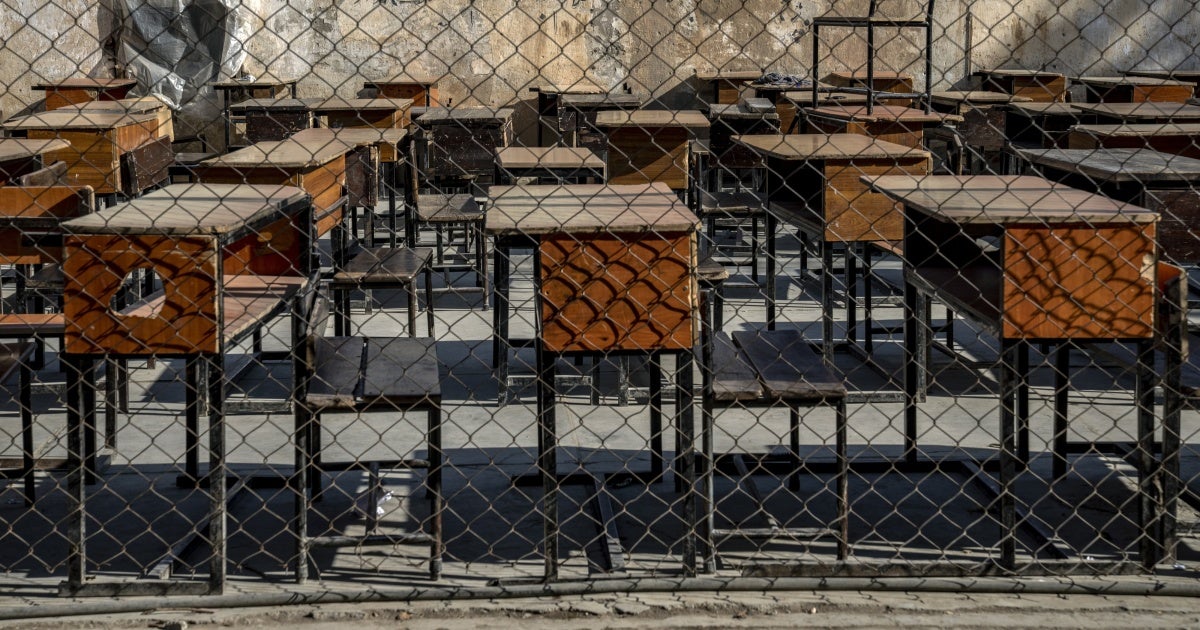
    Since 2021, the Taliban have persistently attacked women’s autonomy, oppressing them from every angle. They have banned girls and women from education beyond sixth grade, many forms of employment, and from public life. Having reduced women and girls to the status of non-humans, they severely restrict their movement, denying them any sense of agency or autonomy.

    After the new laws were announced, many Afghan women bravely defied the ban. Some women inside Afghanistan posted videos of them singing. Others gathered in parks outside the country, singing about freedom and women’s resistance, chanting that no one and nothing can silence the women of Afghanistan.

    [ad_2]

    Source link

  • China: UN Needs to Address Crimes Against Humanity

    China: UN Needs to Address Crimes Against Humanity

    [ad_1]

    (New York) – The Chinese government persists in committing crimes against humanity against Uyghurs and other Turkic Muslims in Xinjiang while denying repression there, Human Rights Watch said today.

    Ahead of the two-year anniversary from August 31, 2022, when the United Nations human rights office’s damning report on Xinjiang was released, the UN high commissioner for human rights and UN member countries should intensify pressure on the Chinese government to end its abuses.

    “Beijing’s brazen refusal to meaningfully address well-documented crimes in Xinjiang is no surprise, but shows the need for a robust follow-up by the UN human rights chief and UN member states,” said Maya Wang, associate China director at Human Rights Watch. “Contrary to the Chinese government’s claims, its punitive campaign against millions of Uyghurs in Xinjiang continues to inflict great pain.”

    Over the past two years, the Chinese government has dismissed all calls to end its severe repression in Xinjiang, which includes mass arbitrary detention, torture, enforced disappearances, mass surveillance, cultural and religious persecution, separation of families, forced labor, sexual violence, and violations of reproductive rights.

    Hundreds of thousands of Uyghurs and other Turkic Muslims remain wrongfully imprisoned. Those abroad have little to no contact with their families in China. Many live with the uncertainty about whether their loved ones – sometimes dozens of their family and relatives – remain detained, imprisoned, or forcibly disappeared. Some families do not know if their relatives who have been taken into custody are even still alive. While a number have been released, they remain subjected to strict police surveillance and further restrictions on their rights.

    On August 27, 2024, the UN High Commissioner for Human Rights, Volker Türk, acknowledged that in Xinjiang “many problematic laws and policies remain in place,” and reported that his office continues to press the Chinese authorities to free those being held in arbitrary detention, and clarify the status and whereabouts of those missing.

    He expressed hope that, through continued “engagement” with the government, his office could work toward “tangible progress in the protection of human rights for all in China.” He said that his office was “continuing to advocate for implementation” of its recommendations, even though the Chinese delegation has continued to reject all recommendations from the 2022 Xinjiang report. Chinese authorities have dismissed the report as “illegal and void” as recently as during the conclusion of the UN Universal Periodic Review of China’s human rights record in July.

    China’s high-profile rejection of the UN Human Rights Office report and recommendations, and repeated pleas from Uyghur victims and families, have not led Türk to issue a comprehensive public update on the situation or on the implementation of the recommendations made in the office’s 2022 report.

    “The UN human rights commissioner has recognized that many of the ‘problematic laws and policies’ that led to the abusive crackdown against Uyghurs remain in place,” Wang said. “Two years since the UN Human Rights Office report concluded that abuses in Xinjiang ‘may constitute crimes against humanity,’ the office needs to issue an update on the current situation in Xinjiang and present a concrete action plan for holding those responsible to account.”

    UN member states also have a responsibility to follow-up on the report’s grave conclusions, Human Rights Watch said. Since a narrowly defeated attempt to put the situation in Xinjiang on the UN Human Rights Council’s agenda in 2022, UN member states have engaged in little collective action against the crimes being committed against Uyghurs and others.

    At the upcoming Human Rights Council session, starting on September 9, countries from all regions should issue a joint statement asking the UN High Commissioner for an update on Xinjiang and concrete recommendations for holding accountable those responsible for serious abuses. Ultimately, they should take long-overdue action to open a China-specific inquiry into the serious abuses throughout the country, as over 50 UN experts and hundreds of rights groups around the world have recommended.

    The UN Human Rights Office and governments from around the globe should work together to challenge the Chinese government’s impunity,” Wang said. “The UN Human Rights Commissioner should make clear that no government, however powerful, can get away with such serious international crimes.”

    [ad_2]

    Source link

  • Mexico: Flawed Inquiry on Soldiers’ Alleged Killing of Child

    Mexico: Flawed Inquiry on Soldiers’ Alleged Killing of Child

    [ad_1]

    (Mexico City) – The Mexican Attorney General’s Office has failed to properly investigate allegations that soldiers shot and killed a 4-year-old girl in August 2022, Human Rights Watch said in a report, including visual evidence, published today.

    The report, “Who Killed Heidi Pérez?” details the serious omissions and errors committed by prosecutors leading the investigation. The Attorney General’s Office failed to take basic steps to corroborate the military’s version of events, despite irregularities in the evidence presented by soldiers and inconsistencies between the military’s timeline and video evidence from the night of the shooting, Human Rights Watch found. The authorities also failed to follow up on a ballistics test result that showed a possible but inconclusive match between the bullet that killed the young girl and one of the weapons carried by a soldier that night. 

    “Nearly two years after Heidi Pérez’s killing, the Attorney General’s Office has done next to nothing to examine the serious inconsistencies in the military’s story about what happened on the night of August 31, 2022,” said Juanita Goebertus, Americas director at Human Rights Watch. “The Attorney General’s Office should not just passively accept the Defense Ministry’s claims that soldiers had nothing to do with Pérez’s death. That is a recipe for impunity.”

    Heidi Pérez was killed by shots fired into the rear windshield of her family’s car as they drove through downtown Nuevo Laredo, Tamaulipas state, on the night of August 31, 2022. Her family has said that soldiers fired at the car, causing the young girl’s death. 

    Human Rights Watch reviewed thousands of pages from the criminal investigation file, interviewed Heidi’s family and their lawyers, visited the scene of the shooting, and examined the car in which Heidi was riding. Researchers also consulted with independent forensic and ballistics experts and reviewed satellite and open-source imagery and security camera footage from the night Heidi was killed. The evidence reviewed in the case file includes witness statements, forensic studies, and photographs of the crime scene, vehicles, ammunition, and of the wounds. 

    The Defense Ministry has claimed Pérez was killed by unidentified members of a criminal group who allegedly opened fire on soldiers nearby. Human Rights Watch reviewed this claim but found it is not supported by any reliable evidence. 

    Human Rights Watch sent a letter to Attorney General Alejandro Gertz Manero on August 1, describing the findings and urging him to take steps to rectify omissions in the investigation. He has not replied. 

    Human Rights Watch sent a letter to the Defense Ministry in February, asking for information about the events of the night of August 31, 2022, including a list of the soldiers and military vehicles in the area. The Directorate General for Human Rights replied in May, saying an internal investigation had determined that “military personnel did not violate human rights.”

    Heidi’s mother, Cristina Pérez, said that in September 2022, a Defense Ministry official approached her to offer “support” if the family agreed to stop speaking publicly about the killing. She interpreted this to mean an offer of money, she told Human Rights Watch. She refused. “The only thing I want right now is the truth” she told Human Rights Watch. “I want the Attorney General’s Office to do their job.”

    The military harassed the family after she refused the offer. She said that soldiers followed her family around Nuevo Laredo and began appearing outside their home at night. Eventually, she left Nuevo Laredo to protect her family from harassment. 

    Mexico’s Defense Ministry often offers financial compensation to families of people killed or injured by soldiers. From 2010 to 2022, journalists found more than 230 such agreements between the Defense Ministry and victims’ families. The Defense Ministry refused a Human Rights Watch request for information on 2023 agreements.

    [ad_2]

    Source link

  • Stop Politicizing Education for Lebanon’s Refugee Children

    Stop Politicizing Education for Lebanon’s Refugee Children

    [ad_1]

    Ahead of the upcoming school year, local authorities and politicians in Lebanon are seeking to impose discriminatory restrictions that could result in tens of thousands of refugee children being denied their right to education.

    On July 8, Lebanese Forces party leader Samir Geagea wrote on social media that the Education Ministry must require all students to provide identification papers to register for the 2024-25 school year, for both public and private schools. Foreign students, including Syrians, he insisted, must have valid residency permits to register.

    In July and August, at least two municipalities in Lebanon issued their own statements requiring valid Lebanese residency permits for Syrian children to enroll in school.

    But due to the red tape and stringent criteria for renewal of Lebanese residency permits, only around 20 percent of Syrian refugees have valid residency status in Lebanon. The United Nations High Commissioner for Refugees also halted formal registration of Syrian refugees in 2015 in compliance with a government order.

    Through no fault of their own, the children of the approximately 80 percent of Syrian refugees in Lebanon who are unregistered and undocumented risk losing their access to school.

    For years, Lebanon’s refugee population has endured toxic anti-refugee rhetoric blaming them for the country’s overlapping crises. Much of that scapegoating is directed at Lebanon’s Syrian refugee community, estimated to be around 1.5 million people, and has resulted in discrimination, violence, and summary deportations.

    But now, such anti-refugee policies are targeting one of the most basic needs of hundreds of thousands of Syrian refugee children: education.

    In an interview with L’Orient le Jour on August 13, 2024, Lebanese Minister of Education Abbas Halabi reiterated that his ministry is committed to the core principle of the Convention on the Rights of the Child, and that all children, regardless of nationality or status, will be registered for school in Lebanon.

    As the new school year begins, foreign donors that have given substantial sums to education in Lebanon should press the government to follow through on Halabi’s words. The Lebanese government should ensure all children, regardless of nationality or status, can register for school and are not denied the right to an education.


    [ad_2]

    Source link

  • Philippine Censors Ban Film on Enforced Disappearances

    Philippine Censors Ban Film on Enforced Disappearances

    [ad_1]

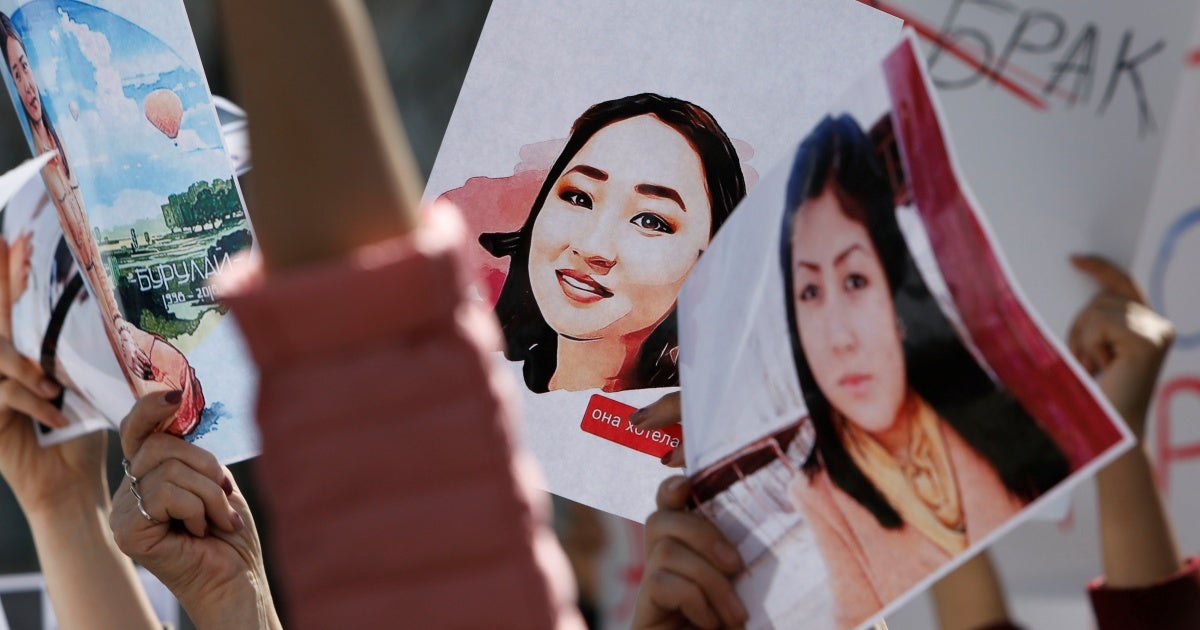
    Last week, Philippine government censors put an X rating on a documentary film about the enforced disappearance of a peasant activist, effectively banning the movie from public showing. The filmmakers said that the Movie and Television Review and Classification Board ruled that their film, “Alipato at Muog” (Flying Embers and a Fortress), “tends to undermine the faith and confidence of the people in their government and/or duly-constituted authorities.”

    The film is about the 2007 abduction of Jonas Burgos, a farmer and peasant organizer from Bulacan province, north of Manila, and his family’s search to find him. Burgos was inside a mall in Quezon City on April 28, 2007, when men believed to be military intelligence agents forcibly abducted him. He remains missing, one of many unresolved disappearnaces of activists in the Philippines. 

    Among the military officials implicated in Burgos’ disappearance was Col. Eduardo Año, the intelligence chief of the Philippine army at the time and current national security advisor to President Ferdinand Marcos Jr. He has denied involvement in the Burgos case. 

    JL Burgos, younger brother of Jonas, wrote and directed the documentary, which was among the entries in this year’s Cinemalaya, the Philippines’ independent film festival. The director said he would appeal the movie board’s ruling and X rating. Under Philippine law, an X-rated movie cannot be shown legally. “Alipato at Muog” is being shown in such venues as the University of the Philippines Film Center, which is not covered by the movie board. 

    The Marcos administration should not wait for the formal appeals process but instead should overturn the movie board’s rating and allow the screening of the documentary. This banning follows the cancellation of the public showing of a movie weeks before about people involved in cockfighting who went missing. The banning of “Alipato at Muog” is not merely about classifying movies, but about freedom of expression, which the administration claims to be committed to. Foreign leaders who have praised President Marcos for his reforms should recognize that banning movies have broader human rights implications and should denounce such censorship.

    [ad_2]

    Source link

  • Bangladesh: Back UN Investigation into Grave Abuses

    Bangladesh: Back UN Investigation into Grave Abuses

    [ad_1]

    (Geneva) – The Bangladesh interim government should seek a resolution at the upcoming session of the United Nations Human Rights Council to establish an independent mechanism to investigate and pursue accountability for recent grave abuses in Bangladesh, Human Rights Watch said in a letter to chief advisor Muhammad Yunus and other interim government officials that was released today. The council should also ensure ongoing monitoring of Bangladesh’s human rights situation by UN Office of the High Commissioner for Human Rights (OHCHR) and establish regular reporting back to the council. The 57th session of the UN Human Rights Council begins on September 9, 2024.

    The interim government should also work with OHCHR and relevant UN experts to set up an independent domestic inquiry into enforced disappearances, torture, and extrajudicial killings during former Prime Minister Sheikh Hasina’s 15-year administration, Human Rights Watch said. This domestic mechanism should operate with UN support and oversight to ensure its independence and adherence to international human rights standards.

    “Following Sheikh Hasina’s resignation amid mass protests, Bangladesh’s interim government has the heavy responsibility of accounting for the past to steer the country toward a rights-respecting future,” said Lucy McKernan, deputy UN Geneva director at Human Rights Watch. “The government should support a Human Rights Council-backed investigation into recent abuses while also seeking UN backing for an independent domestic inquiry into the former government’s 15 years of rights violations.”

    The interim government should urgently implement measures to bring civilian oversight over security forces, disband the notorious Rapid Action Battalion, reform institutions in line with international human rights standards, and revise abusive laws.

    The crackdown on protests leading to Sheikh Hasina’s departure was the deadliest in Bangladesh’s recent history. At least 440 people were killed and thousands were injured between July 15 and August 5, with most deaths and injuries attributed to excessive force by law enforcement and violence by student and youth groups affiliated with the Awami League, Sheikh Hasina’s political party. An estimated additional 250 people died after August 5, mostly in violent reprisals against Sheikh Hasina’s supporters.

    Since taking office, the interim government has replaced officials who had allegedly engaged in political partisanship. The Supreme Court chief justice stepped down after protests demanding his resignation. Law enforcement had collapsed after the Hasina government’s fall, leaving Hindus and other minority communities at risk of violence, but the interim government has said that most police stations are now functioning. However, activists fear that the authorities are replicating the abuses of the previous government by arbitrarily arresting Awami League officials and supporters, including journalists, and denying due process and proper access to legal counsel.

    The Yunus administration has publicly urged calm, acted to quell the violence, and committed to investigate and prosecute those responsible for unnecessary and excessive use of force to crush the protests. The interim government also swiftly released political prisoners detained during the protests, dropped charges against activists, committed to signing the International Convention for the Protection of All Persons from Enforced Disappearance, and pledged to investigate the over 700 cases of enforced disappearances committed under Sheikh Hasina’s rule.

    To effectively follow through on its commitments to justice and accountability amid a highly divisive political environment, the interim government should ask the Human Rights Council to establish an independent mechanism with a comprehensive mandate to investigate, collect, store, and analyze evidence and cooperate with credible and independent national and international judicial bodies toward accountability for the July and August violence and its root causes. A Human Rights Council-mandated investigation would have the greatest independence and credibility for Bangladeshis, who distrust domestic institutions and could avoid the political interference that could undermine purely domestic measures.

    The council resolution should also mandate OHCHR to monitor the human rights situation in Bangladesh through the transition period until there are free and fair elections, and report back regularly.

    The recent protests reflect the frustration that Bangladesh’s economic progress has been unevenly shared. Social protection should be reformed to guarantee an adequate level of protection for all, and to ensure that no one is excluded from public benefits because of their inability to pay bribes or because they lack social or political connections.

    The interim government needs to reform institutions, the security sector, and its justice and legal system, all of which have been deeply eroded under the previous government and earlier administrations, to bring about lasting, human rights changes, Human Right Watch said. The interim government should welcome the technical assistance of OHCHR to ensure the full independence of legal and judicial bodies.

    In addition to disbanding the Rapid Action Battalion, the interim government should implement robust human rights training protocols across all security forces and remove laws that enable impunity for security force abuse, Human Rights Watch said.

    “Without deep institutional reform and UN support to ensure independence and transparency, the hard-won advancements in Bangladesh could be easily lost,” McKernan said. “The UN and member states should demonstrate their support for all Bangladeshis by backing fact-finding and accountability measures and by investing in rights-based institutional and security sector reform.”

    [ad_2]

    Source link

  • UN Report Details Sri Lanka’s Dire Rights Situation

    UN Report Details Sri Lanka’s Dire Rights Situation

    [ad_1]

    The Sri Lankan government has been trying to persuade international partners of its achievements in reforming the economy and protecting human rights. 

    However, a new report by the United Nations high commissioner for human rights warns that Sri Lanka is facing renewed threats to fundamental freedoms. It finds that authorities have sought new repressive laws and engaged in intimidation and violence against victims of past abuses, civil society activists, journalists, and government critics.

    The government denies responsibility for grave abuses during Sri Lanka’s 1983-2006 civil war. “This entrenched impunity has also manifested itself in the corruption, abuse of power and governance failures that were among the root causes of the country’s recent economic crisis,” the report says.

    The economic crisis, which escalated in 2022, has doubled the poverty rate. The UN estimates that a quarter of households are suffering food insecurity, yet “democratic reforms and accountability for corruption and economic mismanagement remain largely unfulfilled.”

    The report finds that “ill-treatment by police and security forces remain prevalent.” Between January 2023 and March 2024, the Human Rights Commission of Sri Lanka recorded 21 alleged extrajudicial killings, 26 deaths in custody, and 1,342 arbitrary arrests and detentions. The UN examined recent allegations of “abduction, arbitrary detention, torture, ill-treatment and sexual violence perpetrated against individuals of Tamil ethnicity by Sri Lankan security forces.”

    Since ending a moratorium on the abusive Prevention of Terrorism Act in 2022, the government has used the law dozens of times against perceived critics, especially Tamils. The families of victims of enforced disappearance face reprisals for engaging with the UN or foreign diplomats. Authorities have detained 121,957 people in a brutal anti-drugs campaign, sending thousands to military-run “rehabilitation” centers.

    Meanwhile, new laws “have profound implications for … fundamental freedoms and the rule of law,” the report says. The Online Safety Act contains powers to restrict freedom of expression, and proposed legislation curtailing nongovernment organizations would severely affect groups already suffering from “surveillance, intimidation and harassment.”  

    The high commissioner calls upon members of the UN Human Rights Council to renew UN mandates for monitoring and evidence collection and for “the international community … to help break the cycle of systematic impunity… [by] using all potential forms of jurisdiction.” Human Rights Watch echoes this call and urges UN member states to ensure the Human Rights Council, at its upcoming September session, adopts a resolution renewing those mandates.

    [ad_2]

    Source link

  • Cameroon: ‘Disappeared’ Activist Resurfaces with Marks of Torture

    Cameroon: ‘Disappeared’ Activist Resurfaces with Marks of Torture

    [ad_1]

    (Nairobi) – Cameroon’s authorities and security forces forcibly disappeared Ramon Cotta, a social media activist, and apparently tortured him, Human Rights Watch said today. Cotta, born Yves Kibouy Bershu, has been living in Gabon for the past 10 years, where he also went by the name of Steve Akam. He is known for his TikTok videos in which he criticizes the Cameroonian authorities.

    On August 20, 2024, lawyers representing Cotta told Human Rights Watch that they had located him in a security cell of the military court in Yaoundé, Cameroon’s capital, paralyzed on his left side and with “severe visual impairments,” following torture in detention. The last time Cotta had been seen was in a video circulated on social media on July 21, where he stood handcuffed and surrounded by members of the Cameroonian police at a border post between Gabon and Cameroon, in the Cameroonian town of Kye-Ossi. The authorities should immediately release Cotta, ensure that he urgently has access to adequate and appropriate medical care, and investigate his apparent torture and inhuman and degrading treatment in detention.

    “There are worrying reports that Cotta may already have lost his sight and ability to walk properly as a result of torture, so prompt action is immediately needed,” said Ilaria Allegrozzi, senior Sahel researcher at Human Rights Watch. “Cameroonian authorities should ensure that he urgently gets access to appropriate and adequate medical care, and thoroughly investigate Cotta’s apparent torture.”

    Cotta’s lawyers said the Gabonese police arrested their client in Libreville, Gabon’s capital, on July 19 at about 10 a.m., and held him incommunicado in an unidentified location until July 21, when they handed him over to the Cameroonian authorities. The authorities then took him to the Directorate General for External Research (Direction Générale de la Recherche Extérieure, or DGRE), the headquarters of Cameroon’s intelligence services in Yaoundé. His lawyers said that on July 24, Cotta was transferred to the State Defense Secretariat (Secrétariat d’Etat à la défense), the headquarters of the National Gendarmerie, also in Yaoundé, where he is still being held.

    Cotta’s lawyers said DGRE members interrogated Cotta twice, and tortured him, including with serious beatings during one of the interrogations, and subjected him to other inhuman and degrading treatment.

    “Cotta told us that DGRE agents tied his hands and feet and walked over him repeatedly, and that they beat him multiple times,” said Hippolyte Tiakouang Meli, one of Cotta’s lawyers. “He also reported that he was held in a room where he was exposed to very bright lights through a projector, which caused him serious eye issues.”

    Cotta’s lawyers said their client has been charged with acts of terrorism, insurrection, financing of terrorism, arms trafficking, and insulting the head of state and members of the government. They said he was not taken before a judge, but instead before the military prosecutor twice. “The first time, we were not informed,” said Meli. “The second time, on August 20, we were informed and could speak with our client.” Cameroonian law gives the military judicial system jurisdiction over civilians charged with terrorism offences, even though this is incompatible with international norms. The UN Human Rights Committee has long called on Cameroon to reform this aspect of its laws, which violates fair trial guarantees.

    On August 7, lawyers representing Cotta had sent requests for information to various Cameroonian authorities about their client’s situation and whereabouts, to no avail. They had also expressed concerns that Cameroonian authorities extrajudicially returned Cotta to Cameroon from Gabon, and that he was a victim of an enforced disappearance.

    The Central Africa Human Rights Defenders Network, a prominent Cameroonian human rights group, and Maurice Kamto, the head of the main opposition party Movement for the Renaissance of Cameroon, had both called on authorities to immediately reveal Cotta’s whereabouts.

    The Cameroonian government has for years cracked down on opposition and free speech, jailing political activists, journalists, and dissidents. Ahead of the general elections in 2025, it has increasingly restricted freedoms of expression and association.

    In March, the territorial administration minister banned two opposition coalitions, describing them as “clandestine movements.” In June, gendarmes in N’Gaoundéré, Adamawa region, arbitrarily rearrested a prominent artist, Aboubacar Siddiki, known as Babadjo, for “insulting” a governor.

    In July, the head of the Mfoundi administrative division issued a decree threatening to ban anyone insulting state institutions from the division. Also in July, members of the intelligence services in Douala, Littoral region, arrested Junior Ngombe, a social media activist, for his TikTok videos advocating democratic change. Ngombe was released on bail on July 31.

    In an August 7 statement following a visit to Cameroon, Volker Türk, the United Nations high commissioner for human rights, said the process leading up to the elections will be “a key opportunity … to ensure the free expression of political opinions.”

    Human Rights Watch and other human rights groups have previously documented the widespread use of torture and incommunicado detention in Cameroon’s detention centers, including ungazetted detention facilities, such as military barracks.

    Under human rights law, all forms of torture, as well as inhuman and degrading treatment and punishment of detainees, are strictly prohibited, and Cameroonian law provides that detainees shall not be subjected to any physical or mental constraints, or to torture, and that their counsel and families should be able to visit them at any time.

    “Instead of respecting the work of social media activists, Cameroon’s authorities and security forces forcibly disappeared and apparently tortured Cotta,” Allegrozzi said. “They should release him as a matter of urgency and ensure that his rights are respected.”

    [ad_2]

    Source link

  • Ukraine Moves to Join ICC

    Ukraine Moves to Join ICC

    [ad_1]

    Ukraine is taking key steps toward becoming a member of the International Criminal Court (ICC), a milestone in advancing global justice. This comes after years of campaigning by national and international human rights groups. The Ukrainian government should ensure that membership moves forward, while dropping a limitation in the law that risks shielding war criminals.

    On August 21, 2024, Ukraine’s parliament approved a law, which was then signed by President Volodymyr Zelensky on August 24, providing for ratification of the Rome Statute, the ICC’s founding treaty. But the law invokes the use of the treaty’s article 124, which allows governments to limit the court’s jurisdiction over war crimes for seven years following ratification.

    “Zelensky’s endorsement of the parliament’s will to become a full member of the ICC is a positive step in building a global system for accountability for the worst crimes,” said Liz Evenson, international justice director at Human Rights Watch. “Limitations in the law, however, risk shielding perpetrators from justice and fall short of what should be expected of a full commitment to ICC membership.”

    Ukraine needs to take several more steps to join the court. The ratification law will only enter into force once the parliament passes a related bill, also submitted by President Zelensky, which addresses the implementation of the Rome Statute into Ukraine’s national legislation. Ukraine’s government will then need to formally deposit a ratification instrument with the United Nations in New York. After 60 days pass, the Rome Statute will enter into force for Ukraine on the first day of the following month.

    The ratification law comes 10 years after Ukraine accepted the court’s jurisdiction, on an ad hoc basis, through two declarations. Ukraine’s earlier acceptance of jurisdiction is the basis for the court’s ongoing investigations, which have so far yielded arrest warrants against six individuals, including Russian President Vladimir Putin, on charges of war crimes and crimes against humanity.

    Ukraine would become the ICC’s 125th member country, following Armenia’s ratification in 2023. It would mark another significant step forward in making the court’s treaty and reach universal, key to building out a global system to end impunity for international crimes, Human Rights Watch said. As a full member of the court, Ukraine would belong to the court’s Assembly of States Parties, being able to participate in the election of the ICC prosecutor and judges, setting the court’s budget, and engaging in efforts aimed at enhancing the court’s effective implementation of its mandate, including by bolstering state support. Ratification is also a requirement for progress in Ukraine’s accession to the European Union.

    The reference to article 124 in the law raises concerns about Ukraine’s commitment to ensuring that all victims have access to justice, Human Rights Watch said. The law seeks to avoid the court’s jurisdiction for seven years concerning war crimes when these crimes are alleged to have been committed by Ukrainian nationals. Such a limitation could come about if the government submits what is known as an article 124 declaration after ratification.

    Only two other ICC member countries, France and Colombia, have used this article and in both cases, the restriction has since been withdrawn or lapsed. In 2015, the ICC’s Assembly of States Parties adopted an amendment to delete article 124 from the Rome Statute, but the amendment has yet to be ratified by a sufficient number of member states to enter into force.

    While the text of the bill seeks to exclude only Ukrainian nationals from the court’s jurisdiction, article 124 refers to war crimes “committed by [a state party’s] nationals or on its territory.” No other state has attempted to use article 124 in this way. The court has jurisdiction over war crimes, crimes against humanity, and genocide committed by nationals of states parties or other states accepting the court’s mandate and within their territories.

    Ukraine’s attempt to shield its own nationals – while preserving the court’s jurisdiction over others – is at the very least inconsistent with the spirit of the Rome Statute which seeks to apply the rule of law equally. A selective approach to accountability reinforces growing criticism of states’ double standards toward international law and risks discrediting the system globally, Human Rights Watch said.

    ICC member countries should call on Ukraine to move forward with the steps required for ratification without article 124. The European Union should insist that, in the context of Ukraine’s accession to the EU, ratification without an article 124 declaration is required. ICC member countries should also act swiftly to ratify the 2015 amendment that would permanently delete article 124 from the treaty.

    Even with these limits, Ukraine’s decision to actively work toward joining the court sends a powerful signal about the importance of the ICC at a time when the court and those working with it face multiple threats and attacks, Human Rights Watch said. In 2023, Russian authorities issued arrest warrants against the court’s prosecutor and six ICC judges after the ICC issued an arrest warrant against President Putin. Russian lawmakers also enacted a law criminalizing cooperation with the ICC.

    More recently, after the ICC prosecutor, Karim Khan, announced on May 20 that he was seeking arrest warrants against two senior Israeli officials and three Hamas leaders, the US House of Representatives passed a bill that would impose sanctions on court officials. Israeli Prime Minister Benjamin Netanyahu called on governments to prevent the court from issuing warrants. Ninety-four member countries of the ICC have declared their “unwavering support” for the court in the face of these threats.

    Under what is known as the “principle of complementarity,” the ICC may only exercise its jurisdiction when a country is either unwilling or genuinely unable to investigate and prosecute these grave crimes. Ensuring justice for serious violations is, in the first instance, the responsibility of the state whose nationals are implicated in the violations.

    Instead of limiting the ICC’s jurisdiction, Ukraine should prioritize efforts to fully align its national legislation with the Rome Statute and international law, including by incorporating provisions to investigate and prosecute genocide, crimes against humanity and war crimes effectively before its national courts and to ensure that the country’s domestic criminal system works in complementarity with the ICC. The Ukrainian parliament should move swiftly to examine, strengthen, and pass the implementation legislation, to ensure that the ratification process moves forward.

    “While this long-awaited ratification should be cause for celebration, the limitation introduced in the law send the worrying message that Ukraine wants to pick and choose who gets to see justice for serious crimes,” Evenson said. “There’s still time for Ukraine to stand for equal justice and ratify the statute without limitation.”

    [ad_2]

    Source link

  • Kazakhstan: Unjustified ‘Financing Terrorism’ Restrictions

    Kazakhstan: Unjustified ‘Financing Terrorism’ Restrictions

    [ad_1]

    • Authorities in Kazakhstan are misusing extremism and terrorism legislation to target peaceful government critics and others, in violation of international human rights law.
    • People convicted on overbroad extremism and terrorism charges – even those who have not participated in, instigated, or financed violence – are automatically subject to wide-ranging financial restrictions that interfere with their economic and social rights.
    • The Kazakhstan government should amend extremism and terrorism-related legislation to comply with international human rights standards and remove people convicted of nonviolent crimes from the list.

    (Berlin) – Peaceful opposition activists and others in Kazakhstan face unjustified state-imposed financial restrictions as a consequence of being prosecuted on overbroad extremist or terrorism-related criminal charges, Human Rights Watch said in a report released today. These financial restrictions can violate internationally protected economic, social, and cultural rights.

    The 29-page report, “Politically Targeted, Economically Isolated: How Kazakhstan’s Financing Terrorism List Compounds Human Rights Harms,” documents that people on Kazakhstan’s Financing Terrorism List face financial restrictions that cause them significant hardship. The restrictions lead to violations of rights guaranteed by the International Covenant on Economic, Social, and Cultural Rights (ICESCR) to which Kazakhstan is a state party, including the rights to an adequate standard of living and access to work and social security benefits. This is particularly egregious when the prosecutions are for alleged nonviolent “extremist” or “terrorist” crimes, that should not be considered crimes in the first place.

    “If you participate in peaceful anti-government protests in Kazakhstan, not only can the government prosecute you as an ‘extremist,’ but it can cut you off financially,” said Mihra Rittmann, senior Central Asia researcher at Human Rights Watch. “Kazakhstan should immediately end its pernicious use of extremism and terrorism laws against peaceful critics and others and remove anyone currently on the Financing Terrorism List who has been convicted of nonviolent crimes.”

    Human Rights Watch interviewed 18 people, 15 of whom had been prosecuted on extremism- or terrorism-related charges and 3 whose adult children had been prosecuted on such charges. Human Rights Watch also interviewed two human rights lawyers and reviewed relevant court documents and media articles pertaining to several of the cases documented in this report.

    Kazakhstan’s legislation does not distinguish between violent and nonviolent extremism and multiple articles in the criminal code relating to extremism and terrorism are vaguely worded and overbroad. Kazakhstan authorities have used these provisions to criminalize activities and speech that are protected under international human rights law.

    Anyone prosecuted in Kazakhstan on criminal charges that authorities qualify as “extremist” or “terrorist” is automatically placed on the state’s “list of people and organizations associated with financing terrorism and extremism” regardless of whether the individual instigated, participated in, or funded violence. Under Kazakhstan’s 2009 money laundering law, people on the Financing Terrorism List are blocked from accessing their bank accounts and cannot use credit or debit cards. They are also banned from conducting certain financial transactions at notaries or post offices, for example.

    A majority of people interviewed for the report were prosecuted for alleged “participation in a banned extremist organization,” an overbroad criminal charge that authorities have long used to harass and silences peaceful opposition activists.

    Human Rights Watch found that state-imposed financial restrictions are unjustified and inappropriate when applied to people who have not engaged in, instigated, or financed violence. Not only do the authorities fail to uphold due process when subjecting people to financial restrictions, but people interviewed also reported significant barriers in getting jobs and interference with getting social security and other benefits. Together, these restrictions have led to people being unable to fully experience other economic and social rights guaranteed under international human rights law, including, but not limited to, the right to an adequate standard of living.

    Being included on the Financing Terrorism List has serious consequences for the individual’s well-being and that of their family, and violates their right to be protected from arbitrary interference with their personal and family lives, Human Rights Watch said.

    Abaibek Sultanov, a civic activist from a town outside Almaty who was prosecuted on extremism-related charges in 2021 and is currently subject to financial restrictions tied to his prosecution, described it to Human Rights Watch as being under an “economic blockade.”

    Kazakhstan should exclude crimes qualified as “extremist” from automatic inclusion on the Financing Terrorism List, and immediately lift financial restrictions on anyone currently on the list who was convicted of nonviolent “extremist” or “terrorism” crimes.

    The Kazakhstan authorities should revise the criminal code’s provisions on extremism and terrorism so that they have sufficient precision to guarantee legal certainty. Kazakhstan also should not criminalize legitimate exercise of freedoms of speech, expression, and association, or violate other rights protected by international law.

    “It is bad enough that people in Kazakhstan can be wrongfully prosecuted on “extremism” or “terrorism”-related charges simply for exercising their rights to free speech, religion, or peaceful assembly; they are forced to endure unjustified financial restrictions as well,” Rittmann said. “The government urgently needs to amend extremism and terrorism-related legislation to ensure it complies with international human rights standards.”

    [ad_2]

    Source link