Author: Human Rights Watch

  • Mongolia: Arrest Putin | Human Rights Watch

    Mongolia: Arrest Putin | Human Rights Watch

    [ad_1]

    Mongolia should deny entry to Russian President Vladimir Putin or arrest him if he enters the country. The Kremlin announced that Putin is planning to travel to Mongolia on September 3, 2024, following an invitation by Mongolian President Ukhnaa Khurelsukh to attend a military anniversary event.

    President Putin has been wanted by the International Criminal Court (ICC) since March 17, 2023, when the court’s judges issued arrest warrants against him and his children’s rights commissioner, Maria Lvova-Belova, for the war crimes of unlawful deportation and unlawful transfer of children from occupied areas of Ukraine to Russia.

    “Mongolia would be defying its international obligations as an ICC member if it allows Russian President Vladimir Putin to visit without arresting him,” said Maria Elena Vignoli, senior international justice counsel at Human Rights Watch. “Welcoming Putin, an ICC fugitive, would not only be an affront to the many victims of Russian forces’ crimes, but would also undermine the crucial principle that no one, no matter how powerful, is above the law.”

    Mongolia became a member of the ICC in 2003. Under the court’s founding treaty, Mongolia has an obligation to cooperate with the court, including by arresting and surrendering any suspects who enter its territory. Without its own police force, the ICC must rely on states and the international community to assist in arrests.

    If Putin visits Mongolia, it would be the first time that an ICC member country had welcomed him since the court issued a warrant for him. In August 2023 Putin was expected to attend the BRICS annual leaders’ summit – a group of states that includes both South Africa and Russia – in Johannesburg, but his visit was ultimately cancelled, following pressure by civil society and a South African court decision reaffirming South Africa’s obligation to execute the ICC arrest warrant against him. 

    All ICC members should follow South Africa’s example and uphold their obligations under the court’s treaty, Human Rights Watch said. 

    Allowing Putin’s visit would also signal a reversal of Mongolia’s support for the ICC. On June 15 Mongolia joined a statement by 94 ICC member countries declaring their “unwavering support” for the ICC in light of growing threats against the court and its officials. The statement also called on all members “to ensure full cooperation with the Court for it to carry out its important mandate of ensuring equal justice for all victims of genocide, war crimes, crimes against humanity and the crime of aggression, grave crimes that threaten the peace, security and well-being of the world.” 

    In 2023, Mongolia also nominated one of its supreme court judges, Justice Erdenebalsuren Damdin, to join the ICC bench. He was then elected as the first Mongolian ICC judge.

    Along with forced deportation of Ukrainian civilians to Russia, including children, Human Rights Watch has documented numerous violations by Russian forces since their 2022 full-scale invasion of Ukraine, that should be investigated as potential war crimes. These include unlawful attacks on civilians and civilian infrastructure; indiscriminate attacks including widespread use of prohibited weapons, such as cluster munitions; and arbitrary detention, torture, and summary executions of civilians and of Ukrainian soldiers attempting to surrender. 

    The court’s investigations have so far yielded arrest warrants against six individuals on charges of war crimes and crimes against humanity.

    “When Putin planned to attend a BRICS summit in South Africa last year, South Africa faced the choice Mongolia does but made clear that it recognized its obligations to arrest him and he ultimately stayed home,” Vignoli said. “The Mongolian authorities have a chance now to demonstrate in concrete terms their commitment to justice for international crimes by denying Putin entry or arresting him if he enters the country.”

    [ad_2]

    Source link

  • After Riots, UN Calls on UK to Tackle Systemic Racism, Colonial Legacies

    After Riots, UN Calls on UK to Tackle Systemic Racism, Colonial Legacies

    [ad_1]

    In the wake of recent racist and Islamophobic riots in the United Kingdom, the United Nations’ anti-racism body has issued a report on the UK’s record addressing racial discrimination. In it, the UN  urged the UK government to finally right the wrongs committed against Black Britons from the Windrush generation and the Chagossian people as part of a broader effort to tackle rights violations rooted in systemic racism. 

    UN experts echoed concerns regarding the government’s response to the “Windrush Scandal” and its ongoing impact on the Windrush generation and their descendants. 

    The “Windrush” generation were people invited to the UK from predominantly former colonies to help rebuild after World War II. In 2018, media stories uncovered that the government’s “hostile environment” policy saw their British citizenship questioned, leading to thousands being wrongfully detained, threatened with deportation, and denied basic rights, including losing their access to housing, health care, and bank accounts.

    The previous UK government apologized to the Windrush generation, set up a compensation scheme, and commissioned a lessons learned review. But now six years later, many claimants are still awaiting  compensation. The previous government had also dropped key recommendations from this review. 

    The UN experts found that the compensation scheme’s “complexity … creates undue burden on the claimants” and recommended the government simplify it to ensure fair, prompt, and effective access to compensation, calling on the UK government to implement all 30 recommendations of the Windrush review

    The UN experts also reiterated the government’s “lack of progress on withdrawing all discriminatory restrictions” on allowing the return of Chagossians to the Chagos islands.

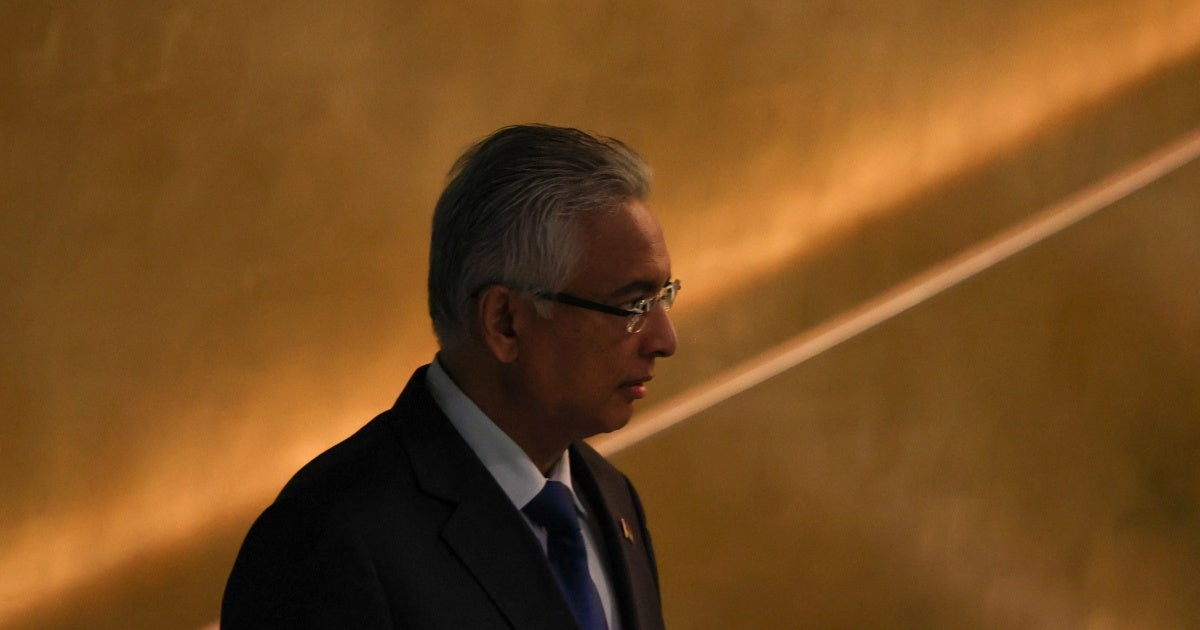
    The Chagossians are an Indigenous people who were forcibly displaced by the UK and US governments from the Chagos islands in the Indian Ocean over 50 years ago, as part of Britain’s continued colonial rule, to build a military base, actions amounting to crimes against humanity. The UK has refused to allow the Chagossians to return or engaged meaningfully with them despite current negotiations with Mauritius over their homeland, following an advisory opinion by the International Court of Justice.

    The UN experts urged the government to “hold full and meaningful consultations with the Chagossians […] to facilitate their return to their islands and to provide them with an effective remedy, including compensation.” 

    On August 14, the new UK government had responded to questions from the UN body, committing to addressing racial discrimination, including righting injustices against the Windrush generation and working to “support new Chagossian arrivals,” but neglected to recognize their right to return, stating it was a “priority to resolve the issue.” Giving effect to these important commitments should start with listening to the Windrush generation and the calls of the Chagossians to be allowed to return home.

    [ad_2]

    Source link

  • Mexican State Approves Six-Week Abortion Ban

    Mexican State Approves Six-Week Abortion Ban

    [ad_1]

    This week, Mexico’s Aguascalientes state took an alarming step backwards on access to abortion in violation of Mexico’s legal obligations.

    One year ago, in August 2023, Mexico’s Supreme Court ordered the decriminalization of abortion in Aguascalientes, after five civil society organizations – GIRE, CECADEC, Cultivando Género, Morras Help Morras, and TERFU A.C. – challenged the abortion prohibition in the state’s criminal code. In accordance with the ruling, the Aguascalientes Congress reformed the state’s criminal code in December 2023, decriminalizing abortion during the first 12 weeks of pregnancy.

    But by approving this new law, that same Congress is now effectively outlawing abortion access. The sharp reduction in the number of weeks in which women, girls, and pregnant people can access legal abortion, from 12 weeks to 6, will severely limit access to this essential health service.

    The change conflicts with Mexico’s obligations under international human rights law, including those concerning sexual and reproductive health, and autonomy and nondiscrimination. Restrictions on access to safe and legal abortion services can place many other internationally protected rights at risk, including the right to life, health, and information; to freedom from torture and cruel, inhuman, and degrading treatment; to privacy and bodily autonomy and integrity; and to decide the number and spacing of children.

    The six-week ban also contradicts Mexico’s Supreme Court precedents and the World Health Organization (WHO) has recommended avoiding the enactment of laws prohibiting abortion based on gestational age limits.

    The six-week limit will in practice place abortion out of reach for many due to its excessively tight time constraints. It will disproportionately affect adolescents and young people, those living in conditions of poverty, and people with disabilities. It will compel painful choices: forcing pregnant people to travel outside of the state to access care, manage abortion outside the health system, or continue a pregnancy against their wishes.

    This harmful law will now reach the Aguascalientes governor’s desk. She should veto it.

    [ad_2]

    Source link

  • Azerbaijan: Escalating Crackdown on Critics

    Azerbaijan: Escalating Crackdown on Critics

    [ad_1]

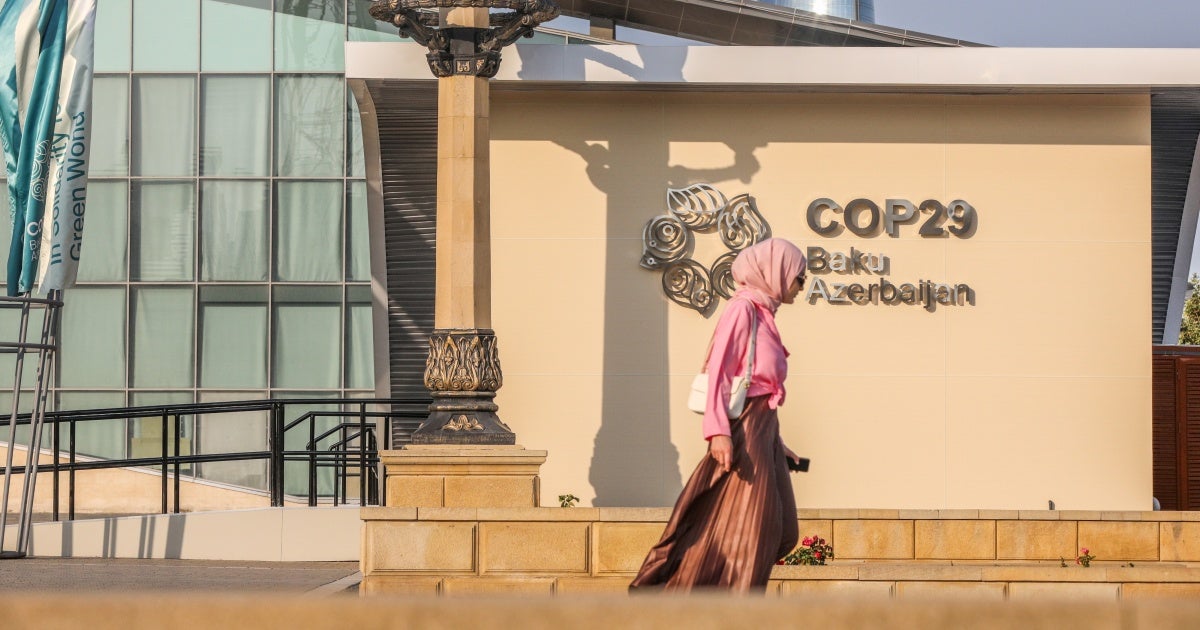
    (Berlin) – Azerbaijani authorities have arrested a researcher and political analyst, Bahruz Samadov, on spurious treason charges, in the government’s escalating crackdown against its critics, Human Rights Watch said today. A Ph.D. candidate at Prague’s Charles University, Samadov is the latest scholar targeted ahead of COP29, the global United Nations climate summit, to be hosted by Azerbaijan in November 2024.

    In July, the authorities arrested another researcher, Igbal Abilov, also on spurious treason charges. The courts sent both men to four months of pretrial custody. If convicted, they face lengthy prison terms, or even a life sentence. Samadov’s and Abilov’s arrests are the latest in a staggering series of arrests targeting critical voices in the country.

    “Azerbaijani authorities are on a relentless assault against dissenting voices, and the arrests of Samadov and Abilov are the latest illustrations of this crackdown,” said Giorgi Gogia, associate Europe and Central Asia director at Human Rights Watch. “Azerbaijan’s hostility towards independent civic activism raises serious concerns about whether human rights defenders, academics, journalists, and other independent members of civil society will be able to participate meaningfully at COP29.” 

    Samadov, 29, is a regular contributor to numerous international and regional publications and media, often writing critical pieces about political developments in Azerbaijan. He was also an outspoken critic of the Second Karabakh War, fought in 2020, in which Azerbaijan reestablished control over Nagorno-Karabakh, and wrote about retaliation against anti-war advocates.

    The authorities arrested Samadov on August 21, while he was visiting Baku during the summer break to spend time with his grandmother. Several state security service officers searched his house and confiscated two mobile devices, two laptops, university diplomas, Samadov’s identity card, and passport. 

    The authorities charged Samadov with treason and on August 23 a Baku court ordered his detention for four months of pretrial custody, which the Baku Court of Appeals upheld on August 27. The authorities claimed that Samadov communicated sensitive information to Armenian nationals on WhatsApp Messenger and acted on their orders.

    During the custody hearing, Samadov adamantly denied the charges, stating that he had no sensitive information to disclose and that he had not acted on anyone’s orders. He also said that he is a “prisoner of peace,” as he is firmly against wars and people dying because of them. Samadov was among a handful of voices that dared to criticize the Azerbaijani authorities’ military operation in Nagorno-Karabakh in 2020. Samadov was among the signatories of a peace statement in early October 2020. He has been called a “traitor” and otherwise harassed online in retaliation for his activism.

    On July 22, the authorities arrested Igbal Abilov, 34, a member of the Talysh minority ethnic group who studied ethnic minorities. He is one of the founders of the Talysh National Academy, established in 2010, and the editor-in-chief of its namesake publication.

    Abilov, who lives in Belarus, was visiting Azerbaijan for his cousin’s wedding. His lawyer told Human Rights Watch that when he tried to return to Belarus at the end of June, border officials refused to allow him to leave the country and told him he was under a travel ban. A few weeks later, police arrested Abilov in his village and a Baku court sent him to pretrial custody pending investigation into charges of treason, sedition based on orders of foreign actors, and inciting national, racial, social, or religious hatred and enmity. A pro-government media outlet accused him of acting on behalf of Armenia’s national security services.

    The authorities have imposed a ban on any communication with his family, including visits. His lawyer told Human Rights Watch that they have appealed the ban to a court and are awaiting a response.

    On August 27, another well-known Azerbaijani researcher, Cavidan Aghayev (Cavid Aga), was in the Baku airport on his way to Lithuania to pursue his studies there, when his friends and family lost contact with him. Hours later, Aghayev posted on social media that the authorities had prevented him from leaving the country and were holding him for questioning as a witness in the ongoing investigation against Samadov. Aghayev remains in Azerbaijan.

    In the year leading up to COP29, the authorities have arrested over 30 independent journalists, civil society activists, and academics on a variety of bogus criminal charges, including smuggling money into the country, illegal entrepreneurship, money laundering, and tax evasion. Among those arrested is a veteran human rights defender, Anar Mammadli, who in the weeks before his arrest co-founded an independent climate justice organization, and who is currently in pretrial detention. 

    Another is a prominent economist and professor, Gubad Ibadoghlu, who specializes in revenue transparency and anti-corruption in the oil and gas sectors, was arrested in July 2023 and spent nine months in pretrial custody before being transferred to house arrest.

    Meaningful civil society participation and open debate, free of fear of retaliation, are important to hold governments to account and ensure ambitious and rights-respecting climate outcomes at COP29, Human Rights Watch said.

    “Azerbaijan should release those unjustly imprisoned and end the crackdown,” Gogia said. “They should guarantee that activists, human rights defenders, and journalists will be able to participate meaningfully before, during, and after the COP29 conference.”

    [ad_2]

    Source link

  • Indonesian Police Crack Down on Anti-Corruption Protests

    Indonesian Police Crack Down on Anti-Corruption Protests

    [ad_1]

    It was an extraordinary sight for Indonesia: On August 28, protesters set up tents outside a government guesthouse in Yogyakarta city where the president, Joko Widodo, known as Jokowi, was staying the night after inaugurating a local market. Hundreds of protesters, surrounded by police officers and presidential guards, shouted slogans accusing the president of corruption and nepotism. 

    Street protests have erupted in at least 16 cities in Indonesia, including the capital, Jakarta, after President Jokowi’s ruling coalition invited their allies to meet in parliament on August 22 to amend the election law and allow candidates below the age of 30 to run for office. There’s only one candidate in the November 27 elections under 30: 29-year-old Kaesang Pangareb, the president’s youngest son, who is running for deputy governor of Central Java. 

    Just two days earlier, Indonesia’s Constitutional Court had rejected a request permitting politicians younger than 30 to run for office. 

    When Jokowi sought to bypass the courts through legislative means, college students and union workers accused him of nepotism. A coalition of 27 civil society organizations alleged he was placing his sons and son-in-law in government positions without a fair election process. In February, Jokowi had allegedly bent election rules to help his eldest son, Gibran Raka, 36, successfully contest the presidential election as Prabowo Subianto’s running mate.

    On August 22, protesters in Jakarta surrounded the parliament building, forcing legislators to move the meeting to a hotel. Two days later, with protests raging, the parliamentarians decided not to proceed with the amendment. The police arrested at least 300 protesters, mostly high school students, accusing them of attacking the police and destroying the fence of the parliament compound. Police and military officers assaulted at least 11 journalists, seizing their phones. A Tempo journalist was taken to a police station and forced to delete his video of the protests. Police also beat a Kompas journalist who had witnessed the arrest.

    Security forces used tear gas and water cannons to disperse protests in Semarang, Central Java, and in Makassar, South Sulawesi. In some other places, the police also hit peaceful protesters with batons. Several suffered injuries and were hospitalized. Police obstructed legal aid lawyers from meeting the detained protesters. 

    The authorities should impartially investigate the reports of police violence and appropriately punish those involved, including their commanding officers.

    [ad_2]

    Source link

  • Ecuador Sets Plan to End Sexual Violence in Schools

    Ecuador Sets Plan to End Sexual Violence in Schools

    [ad_1]

    • The president’s decree launching the Public Policy to Eradicate Sexual Violence in Schools is an important step in Ecuador’s efforts to tackle endemic levels of school-related sexual violence.
    • Human Rights Watch analysis shows the policy lacks adequate long-term funding, which could affect its implementation, reinforce longstanding barriers to response, and jeopardize the implementation of the policy’s prevention and “access to justice and reparations” aims.
    • The government should meaningfully involve the legal representatives in the case, civil society organizations, and children in the development of the policy’s operational plan, as well as in the implementation and evaluation of the public policy.

    (New York) – President Daniel Noboa of Ecuador on August 20, 2024, signed a decree for a Public Policy to Eradicate Sexual Violence in Schools, an important step to address the problem, Human Rights Watch said today. The document details the government’s plans to tackle sexual violence through 2030.

    Sexual and gender-based violence is endemic in Ecuador’s schools. Over the last decade, the Ministry of Education received reports of close to 6,500 cases of school-related sexual violence, affecting 7,303 children across the country. These numbers undoubtedly understate the true total, as most cases of sexual violence go unreported.

    “The president’s decree signals that ending sexual violence against students is of utmost importance for Ecuador’s government,” said Elin Martínez, senior children’s rights researcher at Human Rights Watch. “A high number of students experience school-related sexual violence throughout Ecuador, often without support as they cope with the abuses and faced with limited chances of seeking justice and reparations.”

    The public policy responds to various measures ordered by the Inter-American Court of Human Rights in June 2020 in Paola Guzmán Albarracín v. Ecuador, the court’s first case on school-related sexual violence. It outlines the government’s commitments on prevention of and response to sexual violence, dissemination of information and data related to school-related sexual violence, and access to justice and reparations.

    Ecuador’s education system faces significant challenges in responding to abuses, including a shortage of student welfare teams, schools’ tendencies to shield staff and protect their reputations over student welfare, and setbacks in sanctioning teachers who have been accused of sexual violence. The widespread levels of insecurity and violence in recent years have had a dire impact on children’s rights, and have further hampered government institutions’ ability to detect and respond to cases of sexual violence.

    Survivors and their families face an uphill battle to find justice for abuses, including adequate reparations. Many face retraumatization due to deep discriminatory and prejudicial challenges entrenched in judicial institutions and having to retell their stories countless times. They share a prevailing feeling that impunity prevails in the judicial system. The Attorney General’s Office and Judiciary Council’s limited financial and human resources hamper efforts to guarantee effective justice for children.

    The public policy details various actions to address hurdles identified in the education and justice systems to effectively address sexual violence in schools. Human Rights Watch analysis of the policy shows that it lacks adequate long-term funding, including adequate budgets for prevention and eradication of school-related sexual violence and gender-based violence against children. For example, the estimated budget for “access to justice and reparations” through 2030 is just US$1.5 million. The Judiciary Council has said that it needs a total yearly budget of $22 million to maintain its services specializing in addressing violence cases.

    This could affect its implementation, reinforce longstanding barriers to response, and jeopardize the implementation of the policy’s prevention and “access to justice and reparations” aims. The policy outlines a goal to provide 90 percent of staff involved in administrative and judicial proceedings with at least one training session on sexual violence by 2030. This limited goal overlooks the need to provide ongoing training on sexual and gender-based violence, and violence against children for judicial staff. The policy also fails to increase the number of staff needed to investigate sexual violence cases against children.

    Inconsistent funding, insufficient spending, and subsequent budget cuts within various government institutions have historically stalled efforts to address school-based sexual violence. Ministry of Education funding for prevention and response of sexual violence has fluctuated over the years. Funding to address gender-based violence, part of which would go toward school-based sexual violence, was not fully spent in 2023 and was reduced in 2024.

    Human Rights Watch has also found that cuts to the Judiciary Council’s budget in previous years led this institution to partner with national and international organizations to fund repairs of Gesell chambers, rooms designed to protect children’s wellbeing and identities during preliminary investigations.

    In 2024, the National Assembly’s Education Commission conducted an audit of all institutions tasked with addressing violence against children, including the Ministry of Education, the Attorney General’s Office, and the Judiciary Council. The Commission’s report demonstrates the gaps in government institutions’ efforts to respond to violence against children. The Ministry of Economy and Finances reported to the Commission that in 2022 and 2023, none of the institutions examined had utilized 100 percent of the funding they already had to address sexual violence. It similarly found that the lack of staff, including trained and specialized staff in the judicial system, interferes with directives to adequately work with survivors, including to prevent retraumatization.

    The president’s decree says that the government’s Interinstitutional Roundtable with representatives of various agencies is responsible for the policy and for reporting to the Inter-American Court. The Center for Reproductive Rights and CEPAM-Guayaquil, the legal representatives of Paola Guzmán’s family in the Paola Guzmán Albarracín v. Ecuador case, who have been involved in development of the policy, raised concerns about the lack of involvement of Ecuadorian civil society organizations and children in the finalization and introduction of the policy. The government should meaningfully involve the legal representatives in the case, civil society organizations, and children in the development of the policy’s operational plan, as well as in the implementation and evaluation of the public policy, Human Rights Watch said.

    “The government should do its utmost to fully deliver on its commitment to prevent and tackle school-related sexual violence at the scale needed to end the scourge of sexual and gender-based violence against children,” Martínez said. “Now that it’s a national priority, the government should ensure its public policy has adequate funding and the requisite human resources to guarantee every student’s right to learn in a safe environment.”

    [ad_2]

    Source link

  • Hong Kong: Two Journalists Convicted on Baseless ‘Sedition’ Charge

    Hong Kong: Two Journalists Convicted on Baseless ‘Sedition’ Charge

    [ad_1]

    (New York) – The Hong Kong government should quash the politically motivated convictions of two journalists and cease its assault on media freedom, Human Rights Watch said today.

    On August 29, 2024, the Hong Kong District Court convicted two editors of the now-defunct Stand News – Chung Pui-kuen, 54, the former editor-in-chief, and Patrick Lam, 36, the former acting editor-in-chief – and the paper’s parent company, Best Pencil (Hong Kong) Limited, of “conspiring to publish seditious materials.” Chung and Lam face up to two years in prison.

    “The Hong Kong government is sending a dire message to journalists that reporting on issues of public concern will get you thrown in jail,” said Maya Wang, associate China director at Human Rights Watch. “The Hong Kong and Chinese governments should immediately quash Chung’s and Lam’s convictions and end the crackdown on media freedom.”

    During the 57-day trial, the prosecutor presented 17 articles published in Stand News as evidence that the popular award-winning media outlet had sought to “incite hatred against the Hong Kong and central governments.” The district court judge, whom the government hand-picked to oversee national security cases, ruled that 11 of these articles were “seditious.” Police raids and arbitrary arrests of staff members had forced Stand News to close in December 2021.

    One allegedly “seditious” article profiled the former journalist Gwyneth Ho when she ran in an informal primary to select pro-democracy candidates for the 2020 Legislative Council elections. A court later ruled the primary “illegal” and convicted Ho and 44 other activists under the National Security Law, which the Chinese government had imposed on Hong Kong in June 2020.

    Other articles included commentaries by the journalist Allan Au characterizing a national security trial as a “show trial” and the government’s use of the sedition law as “lawfare” and an opinion piece by the exiled activist Sunny Cheung on being wanted by the Hong Kong police.

    The judge ruled that, “considering the societal unrest and the unstable emotions of the public at the time,” these articles intended to “undermine the authority of the Hong Kong and Chinese governments” and “incite public hatred against them.”

    The court will hand down Chung’s and Lam’s sentences on September 26. Lam was not present for the verdict hearing due to health issues, local media reported.

    Under the National Security Law, the Chinese and Hong Kong governments have taken rapid-fire steps to erase civil liberties in Hong Kong. The Hong Kong government has increasingly abused an overly broad colonial-era sedition law to crack down on peaceful expression. It has used the law against children’s book authors, academics, people who distributed pro-independence flyers, and those who clapped during the trial of a pro-democracy activist.

    In March, after the Hong Kong government introduced another draconian national security law that further expands its powers to curb dissent, the colonial-era sedition law was replaced by new legislation that carries penalties of up to seven years in prison.

    Since 2020, the Chinese and Hong Kong governments have dismantled Hong Kong’s once-thriving independent media, which for decades had often been highly critical of the Chinese Communist Party. The Hong Kong government turned Radio Television Hong Kong, a public broadcaster that previously had editorial independence, into a government propaganda outlet.

    Hong Kong police raided and shuttered Apple Daily, arresting its owner, top executives, and staff, and froze the company’s assets. At least seven other news outlets shut down in fear of the crackdown. The Hong Kong government has repeatedly harassed the Hong Kong Journalist Association, including prosecuting its former head for “obstruction” while reporting and making an apparently politically motivated claim for HK$400,000 (US$51,000) in back taxes.

    Several governments and the United Nations have expressed concern about the rapid deterioration of freedoms in Hong Kong since 2020. However, except for the United States, which imposed targeted sanctions on Chinese and Hong Kong officials because of the National Security Law, few governments have taken concrete action.

    “The dramatic decline of Hong Kong’s media freedoms have global implications, as the world had long benefited from the city’s intrepid journalists reporting on China,” Wang said. “Concerned governments should stand up for what remains of this space by sanctioning abusive officials and supporting Hong Kong’s journalists.”

    [ad_2]

    Source link

  • Australia: Bolster Global Advocacy Against Death Penalty

    Australia: Bolster Global Advocacy Against Death Penalty

    [ad_1]

    (Sydney) – The Australian government should strengthen its global advocacy to abolish the death penalty, Human Rights Watch said in a recent submission to Parliament’s Joint Standing Committee on Foreign Affairs, Defence and Trade (JSCFADT). The Committee is currently reviewing Australia’s international engagement to promote the abolition of the death penalty. 

    Human Rights Watch opposes the death penalty in all circumstances because of its inherent cruelty. Around 170 countries, including Australia, have abolished or introduced a moratorium on the death penalty either in law or in practice. 

    “Australia has consistently spoken out against the death penalty at the United Nations, but time and again the government has missed opportunities to make strong public comments regarding certain countries,” said Daniela Gavshon, Australia director at Human Rights Watch. “The government needs to be more outspoken to put sustained political pressure on governments still using this terrible and globally condemned form of punishment.”

    Most notably, the Australian government has missed many opportunities to publicly convey its concerns about executions in Singapore. In 2023, the Singaporean authorities carried out the highest number of executions for drug-related offenses in over a decade, including the first woman put to death in nearly 20 years. Singaporean authorities executed two men for drug trafficking on August 2 and August 7, 2024, despite both having pending appeals when the executions were scheduled. 

    Australia and Singapore have annual leaders’ meetings, yet the death penalty has not been raised publicly during those meetings, even when executions in Singapore have occurred immediately before the leaders’ summit. 

    The Australian government should also update its 2018 Strategy for the Abolition of the Death Penalty to include government-to-government assistance and police cooperation in a death penalty context. Currently, Australian police cooperate with foreign police forces on, for example, drug trafficking cases. This could have grave consequences if it is cooperating with a country that executes people for drug-related crimes. Although the Australian Federal Police has an internal oversight board for “sensitive” investigations, there is no mandatory external and human rights oversight. Without this oversight, there is a serious risk that Australian police could cooperate with a foreign police force in a way that leads to someone being sentenced to death and executed. 

    “It’s not good enough to rely on internal oversight for matters as serious as the death penalty,” Gavshon said. “At the very least, any Australian police and government oversight board should include a government human rights specialist; the stakes are much too high to risk getting it wrong.”

    [ad_2]

    Source link

  • Waiting for Justice for Afghanistan’s Forcibly Disappeared

    Waiting for Justice for Afghanistan’s Forcibly Disappeared

    [ad_1]

    Afghanistan has one of the world’s highest number of enforced disappearances, with tens of thousands of people unaccounted for after being detained by government or militia forces since the late 1970s. Authorities of all stripes have forcibly disappeared opponents in Afghanistan. On August 30, International Day of the Disappeared, advocates grappling with ending longstanding impunity in Afghanistan should recall these victims and their families still waiting for answers.

    Enforced disappearances are grave international crimes and are considered ongoing crimes so long as the fate of those disappeared remains unacknowledged and their whereabouts unknown. They cause profound suffering to families who can never really mourn. 

    The Taliban are among abusive authorities over the past 46 years, who use enforced disappearances to assert control and instill fear in those who oppose them. The victims include hundreds of members of the former government’s security forces, many of whom are feared to have been summarily executed after being detained, and women protesters who have been held incommunicado, sometimes for many weeks.

    The publication in 2013 of a list of people forcibly disappeared in Afghanistan after the communist coup in 1978 finally allowed families to holdfatehas (mourning ceremonies) for relatives. But the so-called death list of 4,785 names represented only a fraction of the tens of thousands forcibly disappeared and presumably executed between 1978-79.

    Otherlists include more than 600 people captured by various rival militia forces during the intense fighting that engulfed Kabul between 1992 and 1995. They include students, journalists, shopkeepers, and other civilians detained and disappeared by every militia force fighting in Kabul, including Shura-e Nazar, Ittihad, Junbish, Hezb-i Wahdat, and the Taliban. 

    Between 2010 and 2018, United States-backed police forces in Kandahar were responsible for some 2,200 enforced disappearances of accused Taliban as well as civilians belonging to rival tribal communities. Most are believed to be buried in mass graves in the desert.

    No entity implicated in disappearances in Afghanistan has ever acknowledged responsibility. Families have created memorials with photographs of the disappeared, commemorations reminiscent of other cases of large-scale atrocities, such as in Cambodia under the Khmer Rouge between 1975 and 1979. These efforts suggest a longing for the truth to be acknowledged and justice for thousands of Afghan families whose loved ones remain missing.

    [ad_2]

    Source link

  • Sri Lanka: Families of ‘Disappeared’ Persecuted

    Sri Lanka: Families of ‘Disappeared’ Persecuted

    [ad_1]

    (Geneva) – The Sri Lankan government continues to persecute the families of victims of enforced disappearance who seek to enforce their rights, Human Rights Watch said today. Security forces persistently harass families through surveillance, intimidation, false allegations, violence, and arbitrary arrests.

    On August 29, 2024, a court in Trincomalee granted a request by police to ban relatives of the disappeared from holding a procession to mark the International Day of the Victims of Enforced Disappearance on August 30. 

    “The relatives of the disappeared experience the daily torment of not knowing what happened to their family members, which state agencies have cruelly compounded by trying to silence them,” said Meenakshi Ganguly, deputy Asia director at Human Rights Watch. “Hundreds of mothers, wives, and others have passed away without learning what happened to their loved ones, and many more express fear they might not live to see justice done.”

    Sri Lanka has one of the world’s highest rates of enforced disappearance, including those who disappeared during the leftist Janatha Vimukthi Peramuna insurgency (1987-89) and the civil war between the government and the separatist Liberation Tigers of Tamil Eelam (1983-2009). Sri Lankan authorities have for decades refused to reveal the fate of the disappeared or to prosecute those responsible, leading the United Nations human rights office to call for international prosecutions.

    In his August 22 annual report on Sri Lanka to the UN Human Rights Council, the UN high commissioner for human rights, Volker Türk, described “a persistent trend of surveillance, intimidation and harassment of journalists and civil society actors, especially those working on enforced disappearances … and reprisals against family members of the disappeared engaging with the UN or international actors, including members of the diplomatic community.”

    The high commissioner also examined allegations of abduction, arbitrary detention, torture, and sexual violence by Sri Lankan security forces carried out as recently as January. The victims in these cases, whom they said were primarily men, had been involved in protests over issues such as enforced disappearances.

    In May, Human Rights Watch met with relatives of disappeared people throughout north and east Sri Lanka, mostly the wives or mothers of victims. They described a pattern of ongoing abuses. Several are facing court proceedings after being arrested at protests, including three who had been hospitalized as a result of police violence against protesters.

    One woman in the Eastern Province, campaigning to know the fate of her husband, who surrendered to the military in 2009, said she believes she is under regular surveillance by security agencies, including the police Criminal Investigation Department, Terrorism Investigation Division, Special Task Force, and the army. She said they offer to pay her neighbors for information about her, in tactics apparently designed to isolate her from her community.

    “We can’t raise our voices, we have no freedom to move,” said a woman in the Northern Province, whose husband has not been seen since his arrest in 2008. “They [security agencies] threaten us, and even take action against our family members. We have no freedom to do anything.”

    The women said that police officers habitually deliver stay orders – prohibiting them from attending memorialization events or protests – in the middle of the night when they are dressed in their nightclothes and take photographs. “If my gate is locked, police climb over the wall or cut the fence to deliver a stay order,” one said. Another showed a pile of eight stay orders, although she said she had received more. “If anything is happening in the Northern or Eastern Provinces I get a stay order,” she said.

    Several mothers of the disappeared said the most frightening threats were directed at their other children. One said that when she attends protests the police tell her, “You have to look after your child who is still alive.” Another said that days after she was arrested at a protest in 2023, her son was arrested in an allegedly fabricated drugs case and sent for custodial “rehabilitation.” Criminal cases against both her and her son are ongoing.

    In December, the authorities launched an abusive anti-narcotics campaign called “Yukthiya,” which the UN says had resulted in over 121,000 arrests five months later. Families of the disappeared said the authorities are increasingly using false drug cases to harass them. The mother of a disappeared man said that police – including anti-narcotics officers – began making inquiries about her surviving son in December, leading her to fear that they would plant drugs in her home. “I have already lost a son,” she said. “He is now the only one I have left. I sent him to India [for his safety].”

    Relatives of the disappeared said they have little or no recourse to domestic avenues for redress. In 2017 the Sri Lankan government established the Office of Missing Persons (OMP), which is supposed to establish the whereabouts or fate of the disappeared but has resolved almost no cases. Relatives accused the OMP of pressuring them to agree to receive compensation payments that they fear will lead to their cases being closed without further investigation.

    One relative said, “The OMP says ‘take this certificate, get Rupees 200,000 [US$665], don’t support this movement [for truth and justice].” Another, whose daughter disappeared in 2009, said, “When I went to the OMP I noticed that they were pressing many families like us. They said to the families, ‘we don’t want any documents, we just want the details of the [disappeared] person.’ Some people took compensation, and some refused.”

    “Earlier we trusted the OMP but after they recruited certain commissioners, we lost our faith,” said the mother of a disappeared person from Mannar, in northwest Sri Lanka, referring to the appointment of former senior security forces officials to the body. She said she has refused offers of compensation because “I need to know what happened to my son.”

    Many relatives of the disappeared are also skeptical of the current government’s proposal for a new domestic truth and reconciliation commission, following numerous similar bodies that have previously failed to deliver truth or accountability. “We don’t accept it. We don’t have faith in it,” one said. They emphasized the importance of international involvement, including in criminal investigations.

    The UN Human Rights Council, concerned governments, and other UN bodies should implement the recommendations in the UN high commissioner’s report, including:

    • Investigating and prosecuting alleged perpetrators of international crimes committed in Sri Lanka under the principle of universal jurisdiction.
    • Imposing targeted sanctions on alleged perpetrators.
    • Carrying out enhanced vetting of Sri Lankan officials, including those involved in UN peacekeeping missions.
    • Renewing the Human Rights Council’s mandate for UN monitoring, reporting, and work on accountability for human rights violations and related crimes in Sri Lanka.

    “Successive Sri Lankan governments have resisted any progress to address the terrible legacy of enforced disappearances, and instead compounded the anguish of victims’ families,” Ganguly said. “While the Sri Lankan government commits these abuses, the Human Rights Council and governments around the world need to stand with the families of the disappeared.”

    [ad_2]

    Source link