Author: Human Rights Watch

  • Escalation in West Bank Signals Risk of Further Atrocities

    Escalation in West Bank Signals Risk of Further Atrocities

    [ad_1]

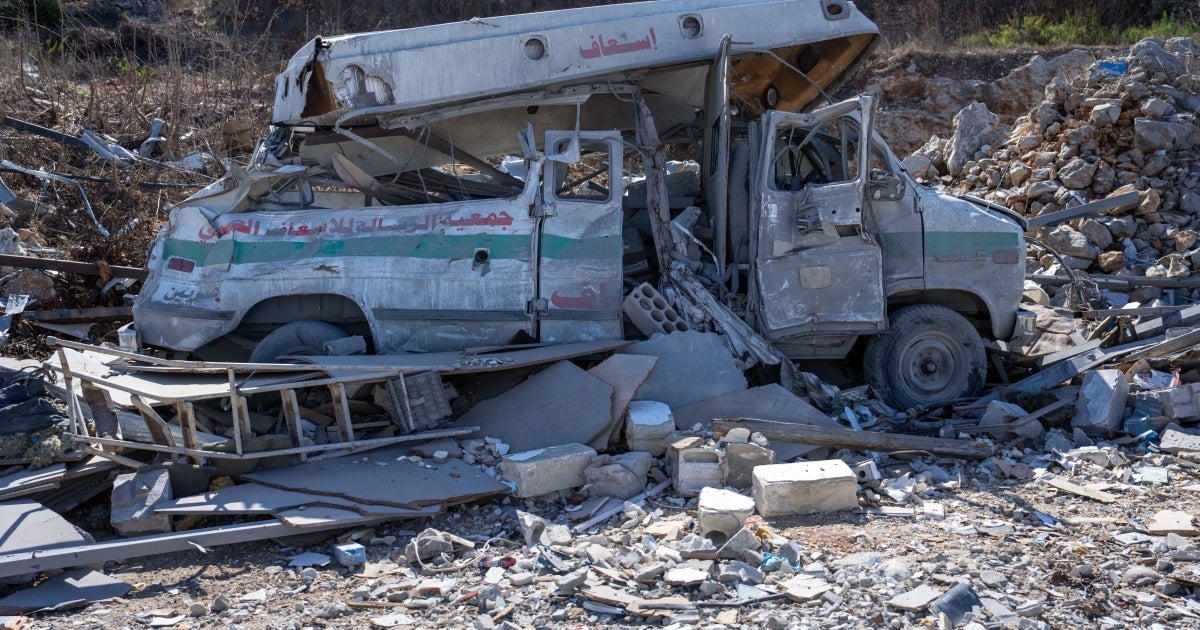
    In recent days Israeli security forces in the West Bank have reportedly blocked medical workers from getting to people in need, dug up roads making them impassable, and used airstrikes and drones launching missiles to kill dozens of Palestinians, including children. Taken together, these moves represent a worrying escalation of the use of force in the West Bank.

    Israeli officials have described their actions as a counterterrorism operation, but Foreign Minister Israel Katz has gone further, suggesting Israel “must deal with the threat [in the West Bank] just as we deal with the terrorist infrastructure in Gaza, including the temporary evacuation of Palestinian residents.”

    This escalation comes within the context of a decades-long military occupation in which the Israeli government has approved and funded the growth of illegal settlements and enabled settler violence against Palestinians, including by providing settlers with weapons. The International Court of Justice in July ruled that Israel is committing apartheid and ordered Israel to evacuate all settlers in the West Bank and East Jerusalem. The opposite is underway. More than 5,000 Palestinians in the West Bank have been displaced by either Israeli military demolitions or settler violence since October 2023.

    Even in the context of occupation, international human rights law applies to Israel’s conduct towards Palestinians in the West Bank. Should fighting in the West Bank reach the level of an armed conflict, international humanitarian law for the methods and means of warfare could become applicable there. But it does not do so now. Therefore, Israeli forces have to comply with the legal rules governing law enforcement, which permits the use of lethal force only in very limited circumstances and only when less extreme means are insufficient to achieve these objectives. 

    But the United Nations has found that Israel is reverting to “more lethal war-like tactics.” After years without airstrikes, the UN says 95 Palestinians have been killed by Israeli airstrikes in the West Bank since the beginning of the year, with 41 of those (almost half) killed in August alone. Any intentional use of lethal force that is not strictly necessary in each and every case to prevent an imminent threat to life, is inappropriate as a tool of law enforcement. According to the UN, Israeli airstrikes in refugee camps have killed children in their homes and on the street, and a man preparing milk for his child in his kitchen.

    Governments like the United States, that have committed to conduct atrocity risk assessments in the face of escalating violence, should act on the warning signs in the West Bank and mobilize other governments to respond as well.

    The European Union’s foreign policy chief, Josep Borrell, and Stéphane Séjourné, the minister for Europe and foreign affairs of France, have been publicly expressing concern about the latest escalation, which is a start. The United States, European Union, United Kingdom, and Canada already sanctioned some Israeli settlers. There should be sanctions on those ministers responsible for the unlawful use of lethal force on the West Bank, including Itamar Ben Gvir who has been distributing weapons to settlers and directing police to not enforce laws against violent settlers.

    For months, the world’s eyes have been on Gaza, but atrocity prevention is needed in the West Bank too.

    [ad_2]

    Source link

  • Germany-Central Asia Summit Should Promote Rights

    Germany-Central Asia Summit Should Promote Rights

    [ad_1]

    Olaf Scholz will make history on September 17 as the first German chancellor to visit Central Asia for a summit with the region’s five heads of state. The summit aims to promote closer ties on economic, energy, and development issues.

    The initiative highlights the significance Germany attaches to relations with Central Asia, especially following Russia’s full-scale invasion of Ukraine in February 2022. Berlin is more likely to achieve its own goals in the region if it prioritizes the need for Central Asia’s authoritarian governments to respect human rights and the rule of law.

    The geo-political and economic context for closer relations between Germany and the five Central Asian states – Kazakhstan, Kyrgyzstan, Tajikistan, Turkmenistan, and Uzbekistan – shifted following Russia’s 2022 attack on Ukraine. For Germany, the region now offers access to alternative energy resources, having previously relied heavily on Russia. In addition, Germany, along with other European Union states, has sought to thwart Russia’s efforts to evade economic sanctions via imports through Central Asia. While Central Asian countries have not severed ties with Moscow, they have sought to reinforce other relationships, such as with Germany, to provide a counterbalance.

    The summit follows a similar gathering that took place in Berlin in September 2023. This latest event will serve “to bring this regional partnership to life,” according to Scholz’s spokesperson. To ensure the event is credible and effective, Scholz needs to focus on improving human rights in Central Asia, which are vital in and of themselves but also the route to achieving the common aims of the nascent “partnership.”

    Serious human rights concerns across the region include suppression of the rights to protest and express opinions, including online, jailing of activists, torture in detention, crackdowns on civil society, violence against women, impunity for abusive security forces, and a lack of free and fair elections.

    Unless these concerns are addressed, little or no progress is possible on the many topics the six leaders highlighted as common priorities last September. It won’t be possible to “bring to life” more investment from Germany, sustainable development in Central Asia, or genuine people-to-people contacts between partners without respect for international human rights and rule of law standards.

    The German government cannot pretend closer ties with Central Asia are possible without a significant improvement in human rights in the region. The upcoming summit offers a chance to make this clear.

    [ad_2]

    Source link

  • Time to End Business as Usual in Unlawful West Bank Settlements

    Time to End Business as Usual in Unlawful West Bank Settlements

    [ad_1]

    The United Nations’ core human rights agency is mandated to produce a database, updated annually, of businesses involved in Israel’s unlawful policy of establishing Jewish settlements in the occupied West Bank, including East Jerusalem.

    So far, this has been a political football, with some states like the United States rejecting the mandate and attempting to limit the agency’s resources, and the Office of the UN High Commissioner for Human Rights (OHCHR) dragging its feet. The database was first published in 2020 – four years after it was mandated – and revised once in 2023. On Monday, the OHCHR issued a new report on the database without adding or removing any businesses but weakly asking for more time “given delays in the recruitment of staff to implement the mandate.”

    A recent International Court of Justice (ICJ) ruling, which found Israel’s presence in the West Bank is illegal, is a watershed development in international law and could give the database the importance it deserves.

    Businesses should not enable, facilitate, or profit from serious violations of international law. What’s more, countries where businesses are located are obliged to prevent them behaving lawlessly and harming human rights at home or abroad.

    Third states have their own obligations to prevent businesses making the violations in occupied Palestinian territory even worse. It’s in this connection that the July 19 ICJ opinion bolsters the importance of the UN’s mandate on settlement businesses.

    Among the court’s findings are that Israel violates the prohibition on apartheid and racial segregation, that international law requires reparations to Palestinians including “the evacuation of all settlers from existing settlements,” and that third states should “prevent trade or investment relations” that help maintain the settlements.

    Business involvement entrenches these illegal settlements. Sometimes it’s possible to mitigate human rights harms caused by business activities, but not in the occupied West Bank, where Israeli settlement policies are part of a systemic regime of repression that constitutes apartheid and persecution of Palestinians. The only solution for businesses is to stop doing business in the occupied territories.

    The UN database could be a vital tool to assist states in upholding their obligations to end businesses’ complicity in the egregious rights violations that are inextricable from Israeli settlements. That means ending all trade and investment in West Bank settlements.

    With Palestinians facing the worst ever levels of unlawful Israeli violence and displacement, continuing settlement construction, and land seizures, it’s urgent that states support and utilize the database to ensure their businesses are not pouring fuel on the fire.

    [ad_2]

    Source link

  • Egypt: US Waives Human Rights Conditions on Military Aid

    Egypt: US Waives Human Rights Conditions on Military Aid

    [ad_1]

    (Washington, DC) – The Biden administration’s decision to waive all human rights conditions on military assistance to Egypt disregards the country’s long-running human rights crisis and the ongoing repression that undermines Egyptians’ political and economic rights, Human Rights Watch said today. 

    The Biden administration has partially withheld military assistance from Egypt for the past three years based on human rights concerns, which US appropriations legislation requires them to consider. This is the first year the entire conditioned amount will be granted.

    “Rights protections for the Egyptian people are the point of these Congressional conditions,” said Sarah Yager, Washington director at Human Rights Watch. “The decision to roll through them might seem to serve a short-term gain but only adds to impunity for the Egyptian government as it continues its assault on its own population.”

    Currently, the US government gives Egypt $1.3 billion annually in Foreign Military Financing. For the current fiscal year, $320 million of this sum is conditioned on Egypt meeting certain human rights benchmarks or criteria. The US government makes an annual human rights assessment, and $225 million can be withheld if the government has not taken “sustained and effective” steps to improve a range of rights and freedoms, such as protecting freedom of expression and association, and strengthening the rule of law. 

    Secretary of State Antony Blinken waived these conditions due to the “US national security interest,” a State Department spokesperson said. The spokesperson said that this decision was important to both “advancing regional peace” and in recognition of Egypt’s contributions to various US national security priorities, including “to finalize a ceasefire agreement for Gaza, bring the hostages home, and surge humanitarian assistance for Palestinians in need.”  

    Another $95 million of aid is specifically tied to demonstrating progress on the release of political prisoners. The Biden administration determined that Egypt has made sufficient progress to grant these funds, the spokesperson said. Human Rights Watch calls into serious question this assessment given that thousands of prisoners are being arbitrarily detained on political grounds. US Senators Chris Coons and Chris Murphy share those concerns, writing in a joint statement that the Egyptian government has not made “clear and consistent progress” as required by the law.

    Indeed, the human rights situation in Egypt is dire. In May 2024, a prominent opposition leader was imprisoned for trying to challenge President Sisi in the December 2023 elections. In recent weeks, Egyptian authorities arbitrarily detained and referred for prosecution at least four critics of the government for exercising their freedom of expression. 

    In waiving rights conditions put in place by Congress, the US government is placing short-term political considerations above longstanding human rights concerns, Human Rights Watch said. It is sending a message that these abuses will be tolerated under the right conditions. This approach has proven to be counterproductive. The rampant impunity for the military and security forces in Egypt and Israel, the two largest recipients of US military aid, has fueled additional abuses, war crimes, and most likely crimes against humanity.  

    “Once again, the US government is sending security assistance to a major rights abusing government despite conditions that are supposed to prevent it from doing so,” Yager said. “Progress on human rights requires political will and we’re just not seeing it here.”

    [ad_2]

    Source link

  • Afghanistan’s Hazara Community Needs Protection

    Afghanistan’s Hazara Community Needs Protection

    [ad_1]

    The Islamic State Khorasan Province (ISKP), affiliated with ISIS, has claimed responsibly for killing 14 men in Daikundi province this week, the latest attack on the Hazara community in Afghanistan.

    The killings took place in a remote border district between Daikundi, which has a predominantly Hazara population, and Ghor provinces, in central Afghanistan. The men were returning from a pilgrimage to Shia holy sites in Karbala, Iraq when gunmen opened fire on the group.

    Since emerging in Afghanistan in 2015, ISKP has killed and injured thousands of Hazaras and members of other religious minorities in attacks targeting mosques, schools, and workplaces. After the Taliban took over Afghanistan in August 2021, ISKP has claimed responsibility for at least 17 attacks against Hazaras, killing and injuring more than 700 people.

    In October 2021, Human Rights Watch concluded that ISKP bombings and other targeted attacks against the Hazara community amounted to crimes against humanityRichard Bennett, the United Nations special rapporteur on human rights in Afghanistan, has called for investigations into ISKP attacks. This latest attack underscores the urgent need for the Taliban to take effective measures to protect all at-risk communities in Afghanistan, including Hazaras and other Shia Muslims.

    Governments engaging with the Taliban should also call for better protection for these communities and encourage and support mechanisms to strengthen accountability for international crimes committed in Afghanistan.

    The Office of the Prosecutor of the International Criminal Court has an ongoing investigation in Afghanistan limited to alleged crimes by the Taliban and ISKP. Governments should back the office with the financial, logistical, and political support it needs to carry out these investigations.

    The UN Human Rights Council, which is currently meeting in Geneva, should heed the call by Afghan and international human rights groups to establish a comprehensive international mechanism on Afghanistan to advance accountability for these and other grave abuses. Survivors and the families of victims need support in their quest for justice in a country where perpetrators of grave abuses have enjoyed impunity for more than four decades.

    [ad_2]

    Source link

  • India: Renewed Ethnic Violence in Manipur State

    India: Renewed Ethnic Violence in Manipur State

    [ad_1]

    (New York) – Indian authorities should urgently intervene to address renewed violence between ethnic groups in India’s northeastern state of Manipur, Human Rights Watch said today. Both the Manipur state and central governments should take prompt measures to resolve disputes, investigate abuses, and appropriately punish those responsible.

    Armed groups from the predominantly Christian Kuki-Zo community and the mostly Hindu Meitei community have engaged in deadly violence, which has reportedly killed at least 11 people. Students and others have protested the violence, and some have clashed with security forces and attacked government buildings. On September 10, 2024, the Manipur state government imposed a curfew in three districts and suspended the internet in five districts until September 15.

    “The state government’s response to increasingly violent ethnic clashes in Manipur has just caused greater harm,” said Meenakshi Ganguly, deputy Asia director at Human Right Watch. “Instead of protecting vulnerable communities and upholding the rule of law, the authorities have deepened longstanding anger and distrust among the communities through polarizing policies.”

    Manipur’s Bharatiya Janata Party (BJP) state government, led by Chief Minister N. Biren Singh, an ethnic Meitei, has replicated his party’s divisive policies used nationally to promote Hindu majoritarianism. He has publicly claimed without any basis that the Kuki were providing sanctuary to illegal immigrants from Myanmar and engaged in drug trafficking, deforestation, and militancy.

    Since May 2023, over 200 people have been killed and hundreds injured. More than 60,000 people have been displaced and are living in cramped shelters. Several Kuki women have reported sexual violence and rape by Meitei mobs. Homes, businesses, villages, and places of worship, mostly targeting the Kuki community, have been burned down, attacked, and vandalized.

    The latest violence reportedly began on September 1, when suspected Kuki militants attacked villages in West Imphal district using drones, killing two villagers and wounding several others. On September 6 in Bishnupur district, suspected Kuki militants carried out rocket attacks, killing an older man and injuring six others, including a 13-year-old girl. On September 7 in Jiribam district, six people were killed in gun violence between Meitei and Kuki groups. In Sekmai, a mob allegedly beat to death a Kuki man, while Meitei armed groups attacked a Central Police Reserve Force camp and nearby homes, killing a woman.

    The current violence in Manipur state erupted on May 3, 2023, after tribal communities protested a Manipur High Court order granting the majority Meitei community certain benefits, including land ownership in protected areas and quotas in government jobs and college admissions. Such affirmative action is usually reserved for tribal groups to correct historical and structural inequity and discrimination. The protest, which included Kuki-Zo, among the larger tribal communities in Manipur, who live primarily in hill areas where the Meitei would be allowed to purchase land under the new ruling, turned violent with clashes between Meitei and Kuki-Zo. Manipur High Court revoked the contentious order in February 2024.

    Tensions had already been rising for months with Meitei community members accusing the Kuki-Zo of being illegal migrants, cultivating poppies for the illegal drug trade, and benefiting from government quotas in jobs and education. The Kuki-Zo community accused the authorities of discrimination and of escalating the eviction of Kuki tribal villagers from forest areas.

    Local activists have alleged that the state government has provided political patronage to violent vigilante groups that support the Meitei community. The Kuki-Zo communities have accused the groups of violent attacks, sexual abuse, and murder. The Manipur authorities have failed to investigate or take any action against groups implicated in violence.

    Manipur has long faced secessionist insurgencies in which armed groups and government security forces have committed serious human rights abuses. Longstanding ethnic disputes, especially over land and natural resources, have often turned violent.

    The Manipur state government should urgently adopt measures to protect the security of all communities, especially those particularly vulnerable, and de-escalate the violence. Local authorities need to ensure unhindered and adequate humanitarian aid to affected communities, permit access to the internet, and engage with civil society, including women from all sides, to address the longstanding issues between the communities. The state government should work with India’s central government to provide redress for victims of abuses, including for sexual violence, investigate and fairly prosecute those responsible, and act to demobilize and disarm abusive groups.

    Local authorities in Manipur should uphold the rights to freedom of expression, association, and peaceful assembly in their response to the current situation. Security forces should abide by the United Nations Basic Principles on the Use of Force and Firearms by Law Enforcement Officials, which provide that security forces use the minimum necessary force at all times. In dispersing violent assemblies, firearms may only be used when other less harmful means are not practicable but to the minimum extent necessary. Law enforcement officers may only intentionally resort to lethal force when strictly unavoidable to protect life.

    “Manipur’s government has lost the trust of communities due to its partisan politics and failure to protect them from violence,” Ganguly said. “It can begin to build that trust by ensuring that victims and their families receive prompt redress, those responsible for abuses are held to account, and all communities are protected from further violence.”

    [ad_2]

    Source link

  • Philippines Worst in Asia for Killings of Environmental Defenders

    Philippines Worst in Asia for Killings of Environmental Defenders

    [ad_1]

    Global Witness released a report on Tuesday that again showed the alarming level of violence against land and environmental defenders in the Philippines. Of the 196 defenders reportedly killed or forcibly disappeared globally in 2023, 17 were in the Philippines, the highest toll in Asia. More environmental defenders have been killed in the country than anywhere else in the region over the past 11 years.

    Many of the attacks documented by Global Witness and other groups were linked to the defenders’ opposition to destructive industries such as mining. This is an alarming global trend, with more than 2,000 activists killed worldwide over the past decade. Many of the victims in the Philippines, which is notorious for frequently carrying out enforced disappearances targeting activists, are Indigenous leaders defending their land from environmentally harmful projects.

    Global Witness listed 10 of the Filipino victims as killed and 7 others as “disappeared.” The enforced disappearance of land and environmental defenders and Indigenous activists is common across the Philippines. “We have so many cases of killings and arbitrary arrests and detention. Many of these are what I call invisible cases because little is known about them publicly,” Joan Carling, executive director of the Indigenous Peoples Rights International, told me last month.

    Apart from abductions, arbitrary detention, politically motivated prosecutions, and murder, environmental defenders and Indigenous leaders in the Philippines are also subjected to harassment and intimidation through “red-tagging,” where authorities allege them to be sympathizers or supporters of the country’s communist insurgency. Red-tagging is often a precursor to physical violence.

    The Global Witness report should prompt the administration of President Ferdinand Marcos Jr. to protect land and environmental defenders and credibly investigate attacks on them. The international community, including multinational companies and investors, should be more concerned about the violence, speak out against it, and ensure that their business practices in the Philippines are consistent with international human rights principles and standards.

    [ad_2]

    Source link

  • Winding Path to Justice for Australian War Crimes

    Winding Path to Justice for Australian War Crimes

    [ad_1]

    Australian Defence Minister Richard Marles announced this week that he has stripped distinguished service medals from some military commanders who served in senior roles in Afghanistan. The move was described as a “final step” in enacting recommendations from the 2020 Independent Afghanistan Inquiry, known as the Brereton Report, which found credible information of war crimes, including the unlawful killing of 39 people by Australian special forces in Afghanistan from 2005 to 2016.

    As the Brereton Report recommended, the Australian government established an Office of the Special Investigator to investigate the incidents. In March 2023, the police made their first arrest of a soldier accused of murdering an Afghan civilian in 2012. While it was a step rarely seen in other coalition countries, the accused has not yet been tried and no other arrests have been made.

    Last month, after years of advocacy by victims and rights groups, the Department of Defence set out a compensation scheme for victims and family members of victims of incidents identified in the report. However, the scheme falls short, lacking due process safeguards, clear criteria on compensation, and a requirement to inform and consult with victims.

    In August, a group of United Nations independent human rights experts expressed concern that “[r]egrettably, Australia has not directly apologised to the victims and their families or informed them about its investigations, prosecutions or military reforms, and has not yet enabled their families to participate in Australian proceedings.”

    This week at the UN Human Rights Council in Geneva, the UN human rights office presented a report on Afghanistan highlighting the importance of addressing decades of conflict and impunity for widespread rights abuses. It specifically refers to states involved in past military interventions needing to hold their personnel accountable for violations. While Australia is on a path to do this, no country has provided meaningful accountability for serious abuses committed by their personnel in Afghanistan.

    Australia should be lending vocal support to the call by Afghan and international human rights groups for the Human Rights Council to establish a comprehensive accountability mechanism on Afghanistan during the council session in Geneva and press other countries to commit to accountability for grave crimes in Afghanistan.

    [ad_2]

    Source link

  • Vietnam: Drop Charges, Release Democracy Campaigner

    Vietnam: Drop Charges, Release Democracy Campaigner

    [ad_1]

    (Bangkok) – The Vietnamese authorities should immediately drop all charges and release the democracy campaigner Phan Van Bach, Human Rights Watch said today. 

    Hanoi police arrested Phan Van Bach, 49, on December 29, 2023, for his posts on Facebook, and charged him under article 117 of the penal code, which prohibits distributing “anti-state propaganda.” A court is scheduled to hear his case on September 16, 2024. If convicted, Phan Van Bach faces up to 12 years in prison.

    “Phan Van Bach is the latest victim of the Vietnamese government’s ongoing campaign to crush all dissent,” said Patricia Gossman, associate Asia director at Human Rights Watch. “The list of Vietnamese citizens locked up for speaking their minds is getting longer, even as Vietnam’s trading partners look away from its systemic rights abuses.”

    Phan Van Bach’s trial takes place one week before Vietnam’s Secretary General To Lam arrives in New York to attend the United Nations Summit of the Future. 

    Since mid-August 2024, Vietnamese courts have tried and sentenced at least nine human rights activists who have campaigned for freedom of expression and social justice, including Nguyen Chi Tuyen, Tran Van Khanh, and Nguyen Vu Binh. All have been sentenced to long prison terms.

    Phan Van Bach has been campaigning for basic civil and political rights in Vietnam for more than a decade. He has participated in public demonstrations against Vietnam’s repressive Law on Cybersecurity. He joined protests against Formosa Ha Tinh Steel, a Taiwanese company that discharged toxic waste off the coast of Ha Tinh province, killing millions of fish and destroying the livelihoods of fishing communities in April 2016.

    Phan Van Bach has also publicly voiced support for fellow activists including prominent rights campaigners Tran Huynh Duy ThucNguyen Tuong ThuyPham Chi ThanhLe Van DungLe Trong HungCan Thi Theu, and Hoang Duc Binh

    In March 2016, Phan Van Bach tried to run for the National Assembly as an independent candidate, but his self-nomination was nullified in the first round. Even self-nominated candidates have to be approved by the ruling Communist Party of Vietnam. In May 2021, Phan Van Bach boycotted the next election on the grounds it would not be free and fair.

    From 2017 to 2018, Phan Van Bach participated in a YouTube channel called Chan Hung TV (“to reinvigorate [the country]”). A group of activists including Le Van DungLe Trong Hung, and others ran the channel as well as the livestream function on Facebook to comment on social and political issues. They interviewed and provided advice to farmers who were facing confiscation of their land, and to people who had experienced other forms of government persecution or injustice, including the mother of a death-row inmate, Ho Duy Hai.

    Presenters like Phan Van Bach also provided information about basic rights and law to their viewers, and distributed free copies of Vietnam’s constitution. In July 2018, on behalf of Chan Hung TV, Phan Van Bach went to Lam Dong province to visit a fellow activist, Dinh Van Hai, who had been assaulted after visiting another former political prisoner. Dinh Van Hai is serving a five-year prison sentence for criticizing the government.

    Because of his activism, the police have harassed, intimidated, detained, and interrogated him numerous times. In a September 2024 interview with Radio Free Asia, Phan Van Bach’s wife expressed serious concern about his health in detention, saying that during a short visit in June 2024, she “hardly recognized” her husband, who had lost almost 25 kilograms since his arrest in December 2023.

    “The only ‘crime’ Phan Van Bach committed was to call on the Vietnamese government to respect human rights and stop abusing its citizens,” Gossman said. “Vietnam’s trade partners, including the US, European Union, Australia, and Japan, need to stop sweeping the Vietnam government’s violations under the rug.”

    [ad_2]

    Source link

  • Key Arrests in Central African Republic

    Key Arrests in Central African Republic

    [ad_1]

    Last week the Special Criminal Court (SCC) in the Central African Republic arrested and charged Abakar Zakaria Hamid, known as “SG”, a former Seleka leader for alleged crimes against humanity and war crimes linked to a brutal attack 10 years ago on a church and displacement camp in the country’s capital, Bangui. Seven other individuals have already been arrested and charged in relation to this case. 

    The May 28, 2014, attack at the Notre-Dame church in Bangui’s Fatima neighborhood remains emblematic of the impunity that has emboldened rival armed groups to commit atrocities across the Central African Republic for over a decade. 

    Killings had been on the rise in Bangui since December 2013 when anti-balaka militias from across the country took the fight to the capital. The anti-balaka formed as a response to the takeover of the Central African Republic by the Seleka, a predominantly Muslim armed group that had wracked the country with violence. The anti-balaka quickly began to target Muslim civilians, associating them with the Seleka coalition, which retaliated by launching more brutal attacks.

    I remember the day I received a phone call from a resident of Fatima as the attack on the church unfolded. He was panicking and said thousands of people were fleeing the neighborhood. I visited the church shortly after and found that 17 people had been killed in the camp, allegedly by fighters aligned with SG and the Seleka. However, the tally was likely higher as some victims were buried immediately. Survivors showed me the spot where Paul Emile Nzale, a beloved priest, had been shot dead.

    The attack on Fatima was the first in a long line of egregious attacks on camps for internally displaced people in the country. The Notre-Dame church continued to serve as a displacement camp and was attacked again in 2018, when at least 16 people were killed and many others wounded.

    Earlier this year, on the eve of the ten-year anniversary of the attack, I spoke with a family member of one of the victims who said she was still waiting for justice.

    By opening this case, conducting fair proceedings, and giving the family of the victims access to justice, the SCC can play a vital role in addressing the widespread impunity that persists in the Central African Republic.

    [ad_2]

    Source link