Author: Human Rights Watch

  • Qatar: Authorities’ Religious Discrimination Against Baha’is

    Qatar: Authorities’ Religious Discrimination Against Baha’is

    [ad_1]

    (Beirut) – Qatari authorities have discriminated against members of the Baha’i faith, including with unlawful detentions, based solely on their religious identity, Human Rights Watch said today.

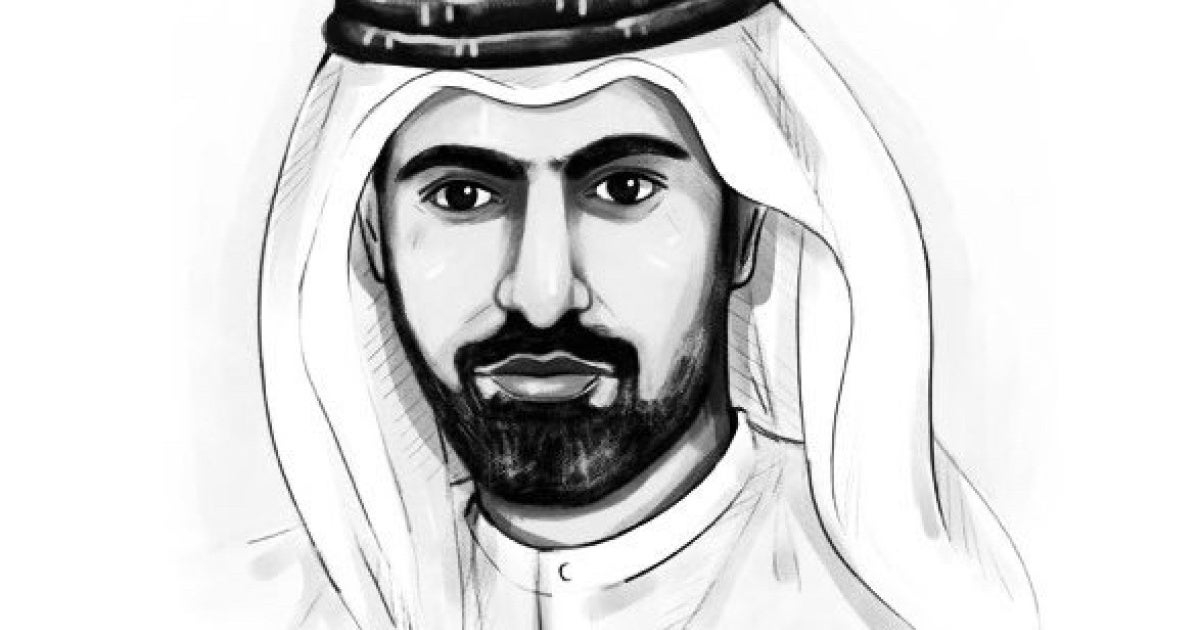
    Qatari authorities arrested and detained Remy Rowhani on April 28, 2025. Rowhani is the chair of the National Spiritual Assembly of the Baha’is of Qatar, an elected body that governs the affairs of Baha’is in Qatar. Rowhani was previously released from a prior detention in January 2025 following the completion of a one-month prison sentence.

    “The Baha’i community of Qatar has endured decades of government discrimination and intimidation, and authorities have consistently ignored community leaders repeated efforts to engage the government in dialogue and seek redress,” said Michael Page, deputy Middle East director at Human Rights Watch. “This state-sponsored discrimination poses a threat to the very existence of the Baha’i community of Qatar.”

    Qatar’s government has discriminated against Baha’is in Qatar for decades, with hundreds of people harmed by a pattern of punishment and discriminatory policies. The government has deported as many as 14 members of the group for no apparent reason other than individuals belonging to the Baha’i faith in cases Human Rights Watch documented from 2003 to 2025. Qatari authorities have also previously terminated the employment of a Baha’i member and refused to grant a certificate of good conduct, which is required for employment in Qatar, to four members of the group. 

    Qatar’s Interior Ministry did not respond to a request from Human Rights Watch for more information about the cases.

    Many Baha’is in Qatar fear raising public alarm over their cases because of the danger of reprisals and further discriminatory actions, and informed source told Human Rights Watch.

    Islam is Qatar’s official religion. And while the Qatari constitution guarantees freedom to practice religious rites, Qatari authorities have discriminated against the Baha’i minority in the country in administrative and legal matters. A high-ranking Qatari religious figure told one of the now-deported Baha’is that if he announced his conversion to Sunni Islam, he could “make the deportation go away.”

    The Baha’i religion, established in Iran in the 19th century by Baha’u’llah, believes that the prophets of all major faiths come from the same one God, and is centered around the unity of the human race.

    In addition to the deportations, officials have delayed the community’s attempts to reestablish an existing Baha’i cemetery and refused to accept marriage certificates issued by elected Baha’i institutions in Qatar. Baha’is have also faced discrimination elsewhere in the region, including the crime against humanity of persecution in Iran and other forms of repression in Egypt and Yemen.

    In 2021, Qatari authorities charged Rowhani under articles 4 and 42(5) of Law No. (15) of 2014 on the Regulation of Charitable Activities for collecting funds in 2013 and 2014 “without permission from the Board [of Directors of the Regulatory Authority for Charitable Activities],” according to court documents reviewed by Human Rights Watch. This law took effect after being published in the country’s official gazette on October 2, 2014. The retrospective application of the penalties under this law contradicts article 40 of Qatar’s constitution and article 15 of the International Covenant on Civil and Political Rights (ICCPR).

    The charges were based on Rowhani’s collection of donations from Baha’is in Qatar as part of his role on the National Spiritual Assembly of the Baha’is of Qatar, the Baha’i International Community (BIC) said. Financial donations are considered a religious obligation (but without pressure or coercion from other Baha’is or Baha’i institutions) and are central to the Baha’i faith. 

    Article 18 of the ICCPR protects the freedom to practice religion, as does the Universal Declaration on the Elimination of All Forms of Intolerance and of Discrimination Based on Religion or Belief.

    Rowhani was convicted and sentenced to six months in prison and a fine of 100,000 Qatari Riyals (US$27,470), later reduced to one month in prison and a fine of QR 50,000 ($13,700), according to court documents. Rowhani learned of the decision issued in absentia in April 2021 through a letter posted to his home address in Doha.

    Despite verbal assurances from immigration authorities that he was free to travel, Rowhani was arrested on December 23, 2024, at Hamad International Airport in Doha, an informed source told Human Rights Watch. He was summoned to the State Security Criminal Investigations Department for questioning and detained again on April 28 under Law No. (14) of the 2014 Cybercrime Prevention Law, the BIC said, and court documents reviewed by Human Rights Watch showed.

    He was charged with “disseminating news, photos or video or audio recording related to the sanctity of people’s private or family life, even if the same is true,” the documents say. This charge carries a maximum sentence of three years in prison and/or a fine of QR 100,000 ($27,465).

    Those charges relate to an account on X created five years ago that represents the Qatari Baha’i community, the BIC said. Human Rights Watch reviewed the posts on the X account and found them to be limited to celebrating Qatari holidays and Baha’i values.  

    “The charges against Remy Rowhani are not just an attack on one individual, they are an assault on the entire Baha’i community of Qatar,” said Dr. Saba Haddad, a Baha’i International Community Representative to the United Nations in Geneva. “This unjust targeting seeks to intimidate a peaceful religious group solely because of their faith, and to undermine principles of religious tolerance and social cohesion.”

    Qatari authorities also issued a deportation order in January 2025 for a Baha’i individual, without justification, an informed source told Human Rights Watch. He was born and raised in Qatar to Iranian parents and had lived there for 52 years during which he founded a company, got married, and had his daughter. He was also a member of the National Spiritual Assembly of the Baha’is in Qatar, the source said.

    He was summoned to the Immigration Department on January 8, where a police officer informed him that he was to be deported for “disrupting public order” and that he had one week to leave Qatar, the source said. The officer in charge cited “immense pressure from above” to deport this person in particular, the source told Human Rights Watch. The Interior Ministry’s communication with the individual about the deportation was entirely verbal, the source said.

    The individual continued to request weekly extensions until late February, when an influential Qatari friend intervened on his behalf, and he was given until March 26 to leave the country. His written request to the Ministry of Interior to reconsider the deportation order received no response. He left Qatar on March 22 and was told by officials that he is blacklisted, barring him from reentry.

    This follows a series of deportations and blacklisting of Baha’is by Qatari authorities for over 20 years, as documented by the United Nations special rapporteurs on minority issues and freedom of religion or belief. According to their 2019 report, Qatari authorities’ discriminatory treatment against Baha’is has resulted in the separation of families and the loss of employment and income.

    “The Qatari government’s discriminatory policies have created an environment of fear of family separation and loss of employment among Baha’is in the country,” Page said. “Qatar should immediately stop deporting and blacklisting Baha’is and provide effective remedy for those affected.”

    [ad_2]

    Source link

  • DR Congo: Army-Backed Militias Abuse Civilians in South Kivu

    DR Congo: Army-Backed Militias Abuse Civilians in South Kivu

    [ad_1]

    (Nairobi) – A coalition of Congolese army-backed militias known as the “Wazalendo” have recently committed widespread abuses against civilians in South Kivu province, eastern Democratic Republic of Congo, Human Rights Watch said today. 

    The Congolese government has supported the Wazalendo (“patriots” in Swahili) to fight against the abusive M23, although the extent of the army’s command and control over the armed group is unclear. Wazalendo fighters have committed beatings, killings, and extortion against civilians, at times on an ethnic basis. Civil society groups in North Kivu have also denounced the Wazalendo’s “reign of terror.”

    “The Congolese army risks being complicit in abuses by supporting the Wazalendo militias,” said Clémentine de Montjoye, senior Africa researcher at Human Rights Watch. “Congolese authorities should end their support of and disarm the Wazalendo coalition and impartially investigate and prosecute all those responsible for abuses.”

    The Rwanda-backed M23 armed group’s latest offensive, leading to the capture of Goma in North Kivu and Bukavu in South Kivu provinces in early 2025, resulted in the Congolese army’s retreat. Since then, the Wazalendo have taken control of several localities in South Kivu.

    In March and April, Wazalendo fighters set up roadblocks on main roads connecting towns across South Kivu, where they harassed people and collected between 500 and 1,000 Congolese Francs (between US$0.17 and US$0.34). The interim governor of South Kivu, Jean-Jacques Elakano, told the media on April 23 that the province was unable to collect taxes because of the Wazalendo fighters, who should “not take the place of the state.” A recent report highlighted that although the Wazalendo receive military supplies from the government, the militia largely “lives off the back of the population,” leading to extortion.

    In April, Human Rights Watch received credible reports of Wazalendo fighters beating and whipping men and women they accused of acting improperly. “Some of the Wazalendo act as if they are the police, and think they can resolve disputes between civilians,” said a resident of Uvira, South Kivu.

    On March 3, in Sange, Uvira territory, a Wazalendo commander detained and whipped a 48-year-old man accused of stealing a television. A relative and a neighbor said the man died of his injuries. The commander, who was later implicated in the killing of a Congolese soldier, was removed from his post but has not faced prosecution for the killings. Military, humanitarian, and other sources expressed concern about the Congolese army’s lack of command and control over the Wazalendo, who in some instances have reportedly disarmed or attacked Congolese soldiers.

    The warring parties in eastern Congo have increasingly appealed to ethnic prejudices, triggering waves of discrimination and abuses. Many Wazalendo abuses have targeted the Banyamulenge (plural for Munyamulenge, referring to mainly South Kivu-based Congolese Tutsis), who have long been accused of being M23 supporters. The Rwandan government and M23 have increasingly played up anti-Banyamulenge and anti-Tutsi incidents to justify the M23’s resurgence and Rwanda’s support to the armed group.

    A Munyamulenge community leader in Uvira territory said that for years they have been accused of not being Congolese, making their situation difficult. “Since the M23 captured Bukavu, it’s worsened,” he said. “If you say that you are Munyamulenge, [the Wazalendo] say that [we] don’t exist.” 

    On February 14, Wazalendo fighters killed a 25-year-old Munyamulenge man in Mulongwe, Uvira, after accusing him of being Rwandan. They shot him twice in the hip, and he died from his injuries, according to two sources. Following the M23’s capture of Bukavu, Wazalendo fighters entered over 20 Banyamulenge households in Uvira, stealing goods and threatening residents. In one case, they shot a woman in the head and beat at least three people. 

    On March 3, Wazalendo fighters attacked several Banyamulenge villages within a 10-kilometer radius around Bibokoboko, Fizi territory, South Kivu. A military source and residents said there was no known presence of opposing armed groups near Bibokoboko at the time of the attack. “They [the Wazalendo] said we are not Congolese, that we are Rwandan. They said they came to Bibokoboko to ‘clean out’ the Banyamulenge,” a community leader said. “They killed seven people and destroyed houses, health centers, and schools.”

    Human Rights Watch interviewed relatives of a 60-year-old man and a 25-year-old man who were killed during the attack. A military source confirmed that Wazalendo armed groups attacked nearby villages before heading toward Congolese army positions in Bibokoboko. Human Rights Watch used satellite imagery and verified and geolocated photographs to confirm that houses were burned in several villages, including Madjdja, Lulimba I, and Bibokoboko, on that day.

    The Congolese army has nonetheless continued to provide weapons, ammunition, and financial support to the Wazalendo. On April 4, an armed group commander wrote to President Félix Tshisekedi complaining that Justin Bitakwira Bihona Hayi, a member of the National Assembly who coordinates support for the Wazalendo coalition in South Kivu, was not fully distributing government funding to all the Wazalendo armed groups. 

    The United Nations Group of Experts on Congo reported that Bitakwira has engaged in hate speech and encouraged discrimination and hostility towards the Tutsi community, including the Banyamulenge. In July 2023, Bitakwira was summoned by the public prosecutor’s office at the Cour de cassation and questioned on his usage of “tribal language” against the Tutsi community, but no legal action was pursued. In 2024, Bitakwira made promises to South Kivu armed groups of integration into the Congolese army’s reserve force.

    Officials who knowingly provide weapons to abusive armed groups may be complicit in crimes they commit. Commanders may be liable for war crimes as a matter of command responsibility if they knew or should have known about abuses by forces under their control but did not stop or punish them. 

    The long-running conflict in the Hauts Plateaux—an area covering parts of Fizi, Mwenga, and Uvira territories in South Kivu—involves the Twirwaneho and Ngumino armed groups from the Banyamulenge community—now allied with the M23—and Mai Mai armed groups from the Babembe, Bafuliru, and Banyiundu communities, among others. Security incidents involving armed groups and the Congolese army in South Kivu increased after the UN peacekeeping mission in Congo, known by its French acronym MONUSCO, completely disengaged from the province on June 30, 2024, as part of an agreement between the UN and the government.

    The resurgence of the M23 in late 2021 led these and other armed groups to form the Wazalendo to fight the M23. Most of these militias are organized along ethnic lines, and some were previously rivals. Military and other sources estimate there are currently about 20,000 Wazalendo fighters, although the exact figure is unknown.

    In September 2023, some members of the Wazalendo coalition formed the Patriotic Defense Volunteers (Volontaires pour la défense de la patrie, VDP), an “official” auxiliary force. The Congolese government also supports the Democratic Forces for the Liberation of Rwanda (Forces démocratiques de libération du Rwanda, FDLR)—a largely Rwandan Hutu armed group, some of whose leaders took part in the 1994 genocide in Rwanda—to fight alongside Congolese forces.

    Congolese authorities should act to prevent ethnically motivated harassment and attacks, including by investigating and appropriately prosecuting all those responsible for them; additionally, the authorities should prohibit discriminatory practices that may lead to further abuses.

    President Tshisekedi’s administration should overhaul the security sector and establish a vetting mechanism for the military and other security services. It should also prioritize addressing impunity for serious crimes, including raising with relevant stakeholders the creation of an internationalized justice mechanism that would help tackle the lack of accountability while strengthening domestic justice processes. Such systemic reform, as well as an effective demobilization program aimed at militia and armed group fighters, should be central to ongoing peace discussions.

    “Supporting the Wazalendo coalition has deadly consequences, and the Congolese government should address how its continued backing of this group impacts civilians,” de Montjoye said. “Ensuring that perpetrators of serious crimes are brought to justice is a necessary part of broader efforts to end years of abuses in eastern Democratic Republic of Congo.”

    [ad_2]

    Source link

  • UN: Start Talks on Treaty to Ban ‘Killer Robots’

    UN: Start Talks on Treaty to Ban ‘Killer Robots’

    [ad_1]

    (New York, May 21, 2025) – Global momentum to prohibit and regulate “killer robots” seems to be building, as evidenced by numerous countries’ participation in the first United Nations General Assembly meeting on autonomous weapons systems, Human Rights Watch said today. 

    Officials from 96 countries, along with representatives from UN agencies, the International Committee of the Red Cross (ICRC), and nongovernmental organizations, attended the General Assembly meeting in New York on May 12-13, 2025. 

    “Dozens of states expressed grave concerns and alarm about removing human control from weapons systems,” said Mary Wareham, deputy crisis, conflict and arms director at Human Rights Watch. “Amid increasing desire for regulating autonomous weapons systems, states should commit to open negotiations on a ‘killer robots’ treaty this year.”

    Technological advances and military investments are spurring the rapid development of autonomous weapons systems, which would operate without human intervention. Once activated, these weapons systems rely on software, often using algorithms, input from sensors like cameras, radar signatures, heat shapes, and other data to identify a target. After finding a target, they would fire or release their payload without the need for approval or review by a human operator. That means a machine, rather than a human, would determine where, when, and against what force is applied.

    The UN meeting saw many states call for a new international treaty to address these and other concerns, with most advocating for a strict prohibition on autonomous weapons systems that are unpredictable. 

    At the opening of the UN meeting, UN Secretary-General António Guterres and ICRC President Mirjana Spoljaric Egger reiterated their call for the conclusion of a legally binding instrument banning these “politically unacceptable, morally repugnant” weapons by 2026. The secretary-general has also emphasized this call in his forthcoming 2025 report on the protection of civilians, which will be presented to the UN Security Council on May 22. 

    More than 120 countries support calls to negotiate a treaty that prohibits and regulates autonomous weapons systems. The ICRC, civil society groups, and many governments say the treaty should prohibit autonomous weapons systems that operate without meaningful human control or that target people. Regulations should ensure that all autonomous weapons systems not covered by the prohibitions operate only with meaningful human control.

    Last week’s UN meeting considered the serious ethical, legal, humanitarian, security, and technological challenges and concerns raised by allowing machines to take human life on the battlefield as well as in policing and other circumstances.

    The UN meeting was mandated by a General Assembly resolution on lethal autonomous weapons systems adopted on December 2, 2024, by a vote of 166 in favor, 3 opposed (Belarus, North Korea, and Russia), and 15 abstentions. 

    Countries have discussed lethal autonomous weapons systems at Convention on Conventional Weapons (CCW) meetings in Geneva since 2014, but with no substantive outcome. Progress has been hindered by the framework convention’s reliance on consensus decision-making, an approach that means a single country can block or reject a proposal that every other country agrees to. A handful of major military powers investing in autonomous weapons systems—most notably India, Israel, Russia, and the United States—have exploited this process to repeatedly block proposals to negotiate a legally binding instrument. 

    The UN General Assembly, however, provides a more inclusive forum that allows more thorough consideration of the human rights, ethical, security, and other concerns raised by autonomous weapons systems compared to the CCW, which has focused narrowly on military, legal, and technological aspects under international humanitarian law

    “It is essential that all UN member states, regardless of size or technological capability, participate fully in shaping the rules governing these emerging technologies. The risks are global and so must be the response,” said Sierra Leone’s foreign minister, Musa Timothy Kabba, at the May General Assembly meeting. At least two dozen states that have not joined the CCW attended the meeting.

    Human Rights Watch and Harvard Law School’s International Human Rights Clinic distributed a new in-depth report at the meeting entitled “A Hazard to Human Rights.” The report elaborates how autonomous weapons systems contravene fundamental human rights during both peacetime and armed conflict, including the rights to life, peaceful assembly, privacy, and remedy, as well as the principles of dignity and nondiscrimination.  

    During the UN meeting, several states highlighted human rights implications of autonomous weapons systems. Algeria said that such systems “fundamentally challenge the right to life by removing human judgement from lethal force decisions.” El Salvador and Ireland similarly expressed deep concern about the incompatibility of autonomous weapons systems with the right to life.

    Austria, Costa Rica, El Salvador, Guatemala, and other countries raised concerns about the accountability gap created by autonomous weapons systems, as it is unclear who could be held legally responsible if such systems violate international humanitarian law or human rights law. There are obstacles to holding individual operators criminally liable for the unpredictable actions of a machine they cannot understand. Additionally, there are significant legal challenges to finding programmers and developers responsible under civil law. 

    Human Rights Watch is a co-founder of the Stop Killer Robots campaign, a coalition of more than 270 nongovernmental organizations in 70 countries that calls for a new international treaty to prohibit and regulate autonomous weapons systems. The campaign supports the development of legal and other norms that ensure meaningful human control over the use of force, counter digital dehumanization, and reduce automated harm.

    “Autonomous weapons systems will invariably violate international humanitarian law and human rights law and raise a multitude of ethical concerns,” Wareham said. “Countries need to go beyond simply stating their concerns and begin immediate treaty negotiations to protect humanity from these dangers.”

    [ad_2]

    Source link

  • UN General Assembly Should Act on North Korea

    UN General Assembly Should Act on North Korea

    [ad_1]

    (New York) – The United Nations General Assembly should establish a new body to examine the connections between the North Korean government’s repressive system and its military programs and nuclear weapons development, Human Rights Watch said today.

    On May 20, the General Assembly will hold a special high-level plenary session on North Korea. In the December 2024 resolution calling for the special session, the General Assembly stressed that the country’s grave human rights situation is linked to its weapons programs, highlighting the impacts of the government’s mass diversion of resources to the military and its severe repression of the population, which has enabled the mobilization of forced labor to support military programs crucial for the development and production of nuclear weapons.

    “The UN General Assembly needs to step up pressure on North Korea since the Security Council remains deadlocked,” said John Sifton, Asia advocacy director at Human Rights Watch. “Maintaining scrutiny of North Korea’s human rights record and its weapons programs will help ensure that future diplomatic negotiations and UN discussions on North Korea will address both issues together, and not just focus on nuclear proliferation and sanctions compliance.”

    More than 10 years have passed since a historic UN Commission of Inquiry on North Korea—after documenting extensive crimes against humanity and other serious violations—recommended that the Security Council refer North Korea to the International Criminal Court. The General Assembly transmitted that report to the Security Council in 2014.

    While the Security Council met in 2015 to debate North Korea’s human rights situation and has held a handful of debates since, including one in June 2024, it has failed to produce any meaningful actions or resolutions. Over the same period, North Korea’s human rights situation has only grown worse.

    High-level plenary meetings of the General Assembly such as the one on North Korea are not common. They often include the participation of heads of state, ministers, as well as ambassadors, and are a means of spotlighting major global issues.

    At the upcoming General Assembly session, UN member states should consider options for a standing UN body—staffed by experts in international human rights and humanitarian law, weapons proliferation, and sanctions—to better document how North Korea’s systemic rights violations increasingly threaten peace and security, not just on the Korean peninsula but worldwide. Focus areas could include the North Korean government’s extensive use of forced labor, unregulated arms exports to abusive governments, and the humanitarian impacts on North Korea’s people of the diversion of resources from social services to support the government’s weapons programs.

    A standing body to examine and report on information about human rights abuses and their links to security issues and weapons proliferation could also contribute to future accountability for serious abuses, Human Rights Watch said. Additionally, it could provide reporting on the humanitarian impact of sanctions on North Korea and recommendations for sanctions compliance and human rights monitoring.

    “Concerned governments need to send high-level officials to the May 20 plenary to offer specific ideas on how the General Assembly can better hold North Korea accountable by documenting the links between North Korea’s rights abuses and its weapons programs,” Sifton said. “The North Korean people deserve more than ritualistic recitations of statements of concern.”

    [ad_2]

    Source link

  • Chad: Opposition Leader Arrested | Human Rights Watch

    Chad: Opposition Leader Arrested | Human Rights Watch

    [ad_1]

    (New York) – Chadian authorities arrested Succès Masra, the former prime minister and leader of Chad’s main opposition party, at his residence in N’Djamena early on May 16, 2025, Human Rights Watch said today.

    Masra’s arrest raises concerns of escalating harassment and threats against the opposition party Les Transformateurs (The Transformers) as well as other political opponents of the ruling party. If Chadian authorities are not charging Masra with a credible offense, he should be released promptly.

    “Succès Masra and his party, Les Transformateurs, have the right to express their opinions freely without fear of arrest,” said Lewis Mudge, Central Africa director at Human Rights Watch. “Chadian authorities have instead used arrests and other forms of repression to clamp down on peaceful dissent time and time again.”

    A witness at Masra’s residence in the Gassi neighborhood of N’Djamena, the capital, said that government security forces arrived just before 6 a.m. to arrest Masra. Party members told Human Rights Watch that Masra, 41, was being held by the judicial police in N’Djamena, where he has access to his lawyers.

    Security footage of Succès Masra being arrested at his residence in the Gassi neighborhood in N’Djamena, Chad, on the morning of May 16, 2025. © 2025 Private

    At a news conference, the public prosecutor, Oumar Mahamat Kedelaye, said Masra was arrested following an intercommunal clash in the Logone Occidental province in southwestern Chad that killed 42 people on May 14. According to Kedelaye, Chadian authorities are accusing Masra of inciting hatred and violence through social media posts and implicating him in the violence. However, following the Logone Occidental violence, Masra had expressed condolences to the victims, stating that “no Chadian’s life should be taken for granted.”

    While clashes between herders and farmers are common in southern Chad, intercommunal violence has become more acute over the past several years, resulting in the deaths of scores of people.

    Masra and his supporters have faced threats prior to the May 2024 elections, in which Masra ran against then-transitional president, Gen. Mahamat Idriss Déby. After Déby was declared the winner, his presidency ended a transitional period that started in 2021, following the death of his father, then-President Idriss Déby Itno, who was killed while fighting an armed group a day after being re-elected to his sixth term.

    Under the current government, authorities have shown opposition to debate or dissent, including open discussions about Chad’s past.

    The government’s crackdown on freedom of expression and association has at times been violent: after the 2021 re-election of Idriss Déby Itno and his subsequent death, security forces used excessive force, including live ammunition fired indiscriminately, to disperse opposition-led demonstrations across the country. Several protesters were killed. Authorities detained activists and opposition party members, and security forces beat journalists covering the protests.

    On October 20, 2022, security forces fired live ammunition at protesters—killing and injuring scores of demonstrators—and beat and chased people into their homes. Hundreds of men and boys were arrested, and many were taken to Koro Toro, a high security prison 600 kilometers away from N’Djamena. Several detainees died en route to the prison, some due to lack of water. At Koro Toro, protesters suffered further abuse, including torture and ill-treatment by other detainees.

    In October 2023, dozens of members of Les Transformateurs were arrested in the lead-up to a constitutional referendum to allow Mahamat Déby to run as a candidate.

    The period prior to the May 2024 presidential elections was also marred by violence. On February 28, 2024, security forces killed Yaya Dillo, the president of the Parti socialiste sans frontières (Socialist Party Without Borders), during an attack on the party’s headquarters in N’Djamena. More than one year on, the authorities have not clarified the circumstances of his death.

    “The Chadian government should be seeking ways to dialogue with the political opposition, rather than shutting them down through the use of intimidation and violence,” Mudge said. “They should immediately release Masra if he is not charged with a valid offense.”

    [ad_2]

    Source link

  • UN Security Council Should Renew South Sudan Arms Embargo

    UN Security Council Should Renew South Sudan Arms Embargo

    [ad_1]

    As hostilities escalate across South Sudan, the United Nations Security Council should renew its arms embargo on the country. The council should also act to prevent additional weapons from reaching the warring parties and foreign forces from adding to the violations.

    In recent months, government forces have attacked populated areas, often using helicopter gunfire and air-dropped munitions, putting civilians at grave risk. In March, Human Rights Watch found that the government had used improvised incendiary bombs that horrifically burned and killed dozens of people, including children, in Upper Nile state, exacerbating an already catastrophic humanitarian situation. The use of incendiary weapons in populated areas may amount to war crimes

    Tens of thousands of people have fled the current hostilities, many to neighboring countries. Humanitarian access remains difficult, with aid organizations facing bureaucratic restrictions and attacks, as evidenced by the recent bombing of a Médecins Sans Frontières hospital.

    South Sudan has been under a UN arms embargo since 2018. The restrictions prohibit weapons transfers and external military support to the country’s warring parties.

    The recent deployment of armed Ugandan soldiers and military equipment in South Sudan was a brazen violation of the embargo, as Human Rights Watch and Amnesty International reported.

    The South Sudan government’s house arrest of opposition leader Riek Machar and other opposition members without due process risks returning the country to protracted conflict.

    The Security Council should call out Uganda’s violation of the embargo and ensure it is extended for another year to help protect civilians from abusive forces. The council should also press the South Sudanese leadership to ensure that the UN peacekeeping mission, UNMISS, can move freely and safely in the country.

    For years, South Sudan’s President Salva Kiir has called for lifting the arms embargo, eroding support among some states for the UN sanctions. Last year the council only narrowly approved a resolution to renew the embargo until May 31, 2025.

    Rather than lifting the arms embargo, which could embolden the warring parties to commit further atrocities, the Security Council should keep it in place and hold violators to account.

    [ad_2]

    Source link

  • South Sudan: 3 Years On, No Justice for Abuses in Southern Unity

    South Sudan: 3 Years On, No Justice for Abuses in Southern Unity

    [ad_1]

    • South Sudan’s authorities have not brought to justice those responsible for attacks on civilians three years ago by government forces and allied militias in Leer and other opposition-controlled areas in southern Unity state.
    • The lack of meaningful justice for the most serious crimes in Leer and other counties in southern Unity drives new cycles of abuse.
    • The government should build on recent efforts to enhance justice in southern Unity and ensure credible prosecutions of those responsible for serious violations of international humanitarian and human rights law in 2022.

    (Nairobi) – South Sudan’s authorities have yet to bring to justice those responsible for brutal and fatal attacks on civilians three years ago in southern Unity state, Human Rights Watch said today.

    Between February and May 2022, county officials in Koch and Mayendit in Unity state, with the backing of government forces and local militia groups, carried out a series of systematic and coordinated attacks on civilians and civilian property in opposition-controlled territories mainly in Leer and in parts of Koch and Mayendit. Human Rights Watch research bolsters the findings of the United Nations investigations and ceasefire monitors. 

    “The lack of meaningful justice for the most serious crimes in southern Unity is giving rise to impunity that drives new cycles of abuse,” said Nyagoah Tut Pur, South Sudan researcher at Human Rights Watch. “Survivors of the horrific violence in southern Unity have lived for years with the consequences and deserve justice.”

    The government established a commission of inquiry in April 2022 to investigate the Leer violence, but its findings were never made public. The government dismissed officials implicated in the violence in 2024, but no one has been prosecuted. The government should build on recent efforts to enhance justice in southern Unity and ensure credible prosecutions of those responsible for serious violations of international humanitarian and human rights law in 2022. 

    In May and July 2022, Human Rights Watch interviewed 98 people in Leer county who had been displaced from villages in Leer, Koch, and Mayendit counties. Some were also survivors of previous cycles of violence in Unity state since 2013. 

    Human Rights Watch found that organized forces including police, army, and wildlife rangers, and local youth militias allied with Koch and Mayendit county officials killed, beat, and raped civilians, and looted livestock and essential goods in opposition-controlled areas in Leer, Koch, and Mayendit between February and April 2022.

    The violence was rooted in power struggles between county commissioners of Koch and Mayendit, who oversaw government and allied militia groups, and the Sudan People’s Liberation Army-in-Opposition (SPLA-IO) commanders and allied militia groups. The opposition also controlled key trade routes and markets, denying these county officials access to tax revenue, which compounded political tensions and fueled the violence.

    The violence took place 10 months before elections initially scheduled for December 2022, but postponed to December 2024 and then again to December 2026. Human Rights Watch found that the violence appeared to be designed to weaken the opposition and displace populations deemed to be their supporters.

    Human Rights Watch researchers found widespread burning and destruction of civilian homes and property in multiple villages in Leer that appeared to be designed to force displacement and discourage returns. Government allied forces and militias also burned children, older people, and people with disabilities in their homes and targeted civilians, especially men and boys who were attempting to flee or hide.

    A woman said she saw government-allied forces force four people, including a woman who was deaf and blind and a man with a psychosocial disability, into a home and then set it on fire. She said all four were burned to death. “They stood by the house with a gun and watched it burn to the ground.”

    Government-aligned forces also abducted and subjected women and girls to sexual violence. One woman said she saw five men gang rape two teenage girls in Pillieny on April 9, 2022: “When they finished, they left the younger one, age 13, by the roadside because she was heavily bleeding.”

    Under international law, governments are obligated to investigate and prosecute serious crimes such as crimes against humanity and war crimes, ensuring victims’ rights to truth, justice, and an effective remedy while combating impunity.

    On April 13, 2022, President Salva Kiir established an ad-hoc investigation committee to look into the “incidents in Koch, Leer, and Mayendit,” but the investigation stalled. The committee did not visit Leer until nearly a year after the events. Committee members met with President Kiir in March 2024 to present their findings, however, the committee’s findings have not been made public.

    President Kiir subsequently dismissed state and county officials, some of whom were implicated in the abuses documented by ceasefire monitors, the UN Mission in South Sudan (UNMISS), the UN Commission on Human Rights in South Sudan, and the Leer Investigation Committee, but did not specify the reason for their dismissal.

    South Sudanese authorities have not initiated any criminal proceedings to bring to justice those responsible for the grave violations in Leer. On March 15, 2025, authorities with the support of UNMISS deployed a mobile court to Leer to address a decade-long backlog of criminal cases in southern Unity state. While the court can hear cases on charges of murder, rape, and other serious crimes, it does not have jurisdiction to prosecute war crimes or crimes against humanity, meaning that justice for the scope and severity of the crimes in Leer in 2022 would be lost.

    South Sudan authorities should take concrete steps to ensure accountability and effective remedies for victims of these most serious crimes. South Sudan’s partners should press the authorities to publish and disseminate the Leer investigation findings and ensure there is a credible, independent process to prosecute those responsible for crimes, Human Rights Watch said.

    South Sudan’s leaders agreed in 2018 to carry out a comprehensive transitional justice process to address past atrocities. In September 2024, South Sudan’s parliament passed laws to establish a Commission for Truth, Reconciliation, and Healing and a Compensation and Reparations Authority but did not move forward with legislation to set up the hybrid AU-South Sudan court which would try the most serious crimes.

    The African Union (AU) and the South Sudanese government should take all necessary steps to ensure that the hybrid court is established and begins work to fulfill its important mandate, Human Rights Watch said.

    International partners should continue to provide technical and financial support across these transitional justice mechanisms, while holding the South Sudanese government accountable for its commitments to establish the hybrid court.

    Recent political tensions have led to a surge in violence in Upper Nile and Western Equatoria, including indiscriminate aerial bombardments on civilians and their forced displacement. On March 8, 2025, President Kiir pledged not to return the country to war. This pledge should come with practical steps to ensure attacks on civilians and other serious abuses stop, and that credible, independent justice processes move ahead with investigations and criminal prosecutions against those responsible for serious crimes, Human Rights Watch said.

    “The unchecked violence in Leer was not an isolated event, but part of a recurring cycle of violence that is fueled by impunity,” Pur said. “South Sudan’s leaders need to provide a meaningful justice response to prevent further atrocities, prosecute those responsible, and ensure that survivors can receive adequate redress and start a process of healing.”

    For more details regarding abuses in Leer and southern Unity, please see below.

    Conflict Dynamics in Leer

    Leer county, the birthplace and stronghold of the Sudan People’s Liberation Army-in-Opposition (SPLA-IO) historical leader Riek Machar, and home to the Dok people (a section of the Nuer ethnic group), has experienced political unrest, insecurity, and humanitarian challenges since South Sudan’s civil war started mid-December 2013.

    Both government forces and the opposition SPLA-IO, carried out fierce large-scale attacks and counterattacks in key towns and positions, often accompanied by grave abuses and other disastrous consequences for civilians by both sides.

    In April 2022, the Ceasefire and Transitional Security Arrangements Monitoring and Verification Mechanism which monitors South Sudan’s 2018 peace deal documented that commissioners of Koch and Mayendit instigated allied forces, armed youth, and defected opposition soldiers to commit murder, mass rape, and destruction of villages and humanitarian facilities in Leer and Koch between February and April for political and economic reasons. It also found one opposition commander responsible for the violence.

    In September 2022, the UN Mission in South Sudan (UNMISS) reported that between February 11 and May 31, 2022, joint government forces and allied militia attacked civilians during operations against opposition groups in Leer and parts of Koch and Mayendit counties, affecting at least 28 villages and settlements. Approximately 173 civilians were killed and at least 44,000 people were displaced.

    UNMISS also documented that women and girls were abducted as spoils of war and that 131 were subjected to sexual violence. UNMISS said it also received reports that the opposition force, the SPLA-IO, also killed, injured, abducted, and raped women and girls in Rubkuay, Mayendit county, and in the town of Koch.

    UNMISS said that the violence was part of a long term government objective to increase its control in Unity state and mirrored tactics from past violence. 

    In April 2023, the UN Commission on Human Rights in South Sudan (hereinafter referred to as the UN commission)reported that impunity fuels violence in South Sudan with detailed findings from investigations in Leer. It found that government-aligned forces and affiliated militias committed war crimes including killings, widespread sexual violence such as gang rape and sexual slavery, and use of starvation as a method of war, some of which and may also constitute crimes against humanity. The UN commission found that county officials “characterized the Dok Nuer as allies of ‘the enemy’ Riek Machar, the SPLM/A-IO leader,” and that they “must unite to cleanse the SPLM/A-IO from the area and drive out the Dok Nuer civilians in Leer County.”

    Attacks on Civilians, February-May 2022 

    This section draws on UNMISS, the UN commission, and unpublished Human Rights Watch research from May and July 2022, including interviews with 98 victims and witnesses, and with 22 officials, humanitarian actors, and civil society members. A member of the Leer investigation committee and UNMISS were also interviewed in April 2025.

    Unlawful Killings, Beatings, Torture, or Ill-Treatment

    UNMISS estimated that government aligned forces and aligned militias killed at least 173 civilians during the 2022 attacks. The UN commission reported that killings were intentional, especially targeting males, and included public executions and killing by immolation. It found strong grounds to conclude that the deliberate killings constituted the war crime of murder and may also meet the threshold for crimes against humanity as they appeared to be part of a widespread and systematic attack on civilians.

    Human Rights Watch also documented 48 killings including at-risk populations such as older people, people with disabilities, and children. 

    Families often left older people and people with disabilities behind, believing that they would be spared but a chief in Gandor said that government forces and aligned militias killed Baad Gatjang a 28-year-old shopkeeper and farmer with a mental health condition: “He was left behind when people fled. They shot him near his grandmother’s house. No one could bury him for two days because people had fled.”

    A woman in her 70s with a visual disability was also left behind by her family. “We told the old woman to stay as we thought no one would harm her,” a family member said. “In the evening, I returned and found the house burned and the old lady burned to death.” 

    Witnesses in Buow told researchers that government forces and aligned militias killed three people: Geah Bul Buoy, a fisherman in his late 50s; 28-year-old Tut Puot Jal, a teacher in Buow primary school; and a blind woman in her late 70s. Witnesses in Yang said they found the bodies of two women in their 80s, Nyanong Row and Duany Deang, burned inside their home following attacks by government forces. 

    A woman from Adok, who was also gang raped, said she saw public executions by hanging and other abuses: “Those who refused to walk were hanged or beaten. I saw two men hanged from the tree. They were in their 40s. They also hanged two women from a tree; one was my age. An 18-year-old man was beaten severely and left for dead.”

    Violence Against Women, Girls 

    Both UN bodies found that sexual violence was widespread and systematically used as a tactic of war. UNMISS documented 131 cases of rape that included numerous instances of gang rape. The UN commission found that sexual violence was planned and tolerated by commanders and used as a tool to punish the opposing community. It documented that government forces and aligned militias abducted dozens of women, including women who were pregnant and breast-feeding, some for sexual slavery. It also reported that 11 children were abducted. 

    Human Rights Watch researchers spoke to six survivors of sexual violence and multiple people who had witnessed rape, gang rape, sexual slavery, unlawful killings, and other abuses. Service providers told researchers that girls as young as 8 and women as old as 72 were raped. 

    One woman in her 50s said that she fled her home in Thonyor and spent four days hiding in the swamps and rivers along with other women. On April 11, 2022, government aligned forces captured her and seven other women as they fetched food and other essential items from their homes. 

    Two men raped her and then made her carry jerricans of cooking oil and buckets of washing powder 45 kilometers to a government camp in Pilliny. She witnessed and heard about rape, gang rape, and sexual slavery of other women and girls at the camp, including that of her 26-year-old niece:

    Women were sitting in groups, some under trees, others in their homes. [The attackers] would just come and pick whoever they wanted. [Their leaders] would not stop them or even advise them to stop what they were doing. I saw six women and a breastfeeding mother being raped…. I met four breastfeeding mothers, whom I knew, three from Yang and one from Thonyor. All of them said they had been in the camp for two days and raped more than once. Every day they were there, anyone could rape them.

    The woman from Adok said that on April 9 government allied forces set fire to the reeds where she was hiding and that five of them then gang raped her: “They pinned me down and pointed a gun at me. They didn’t even say a word. They beat me and raped me one after another.”

    Another woman said that she was five months pregnant in February 2022 when government aligned forces caught her. They made her carry bags of sorghum from her village in Padeah to their base in Mirmir and beat her with sticks and tree branches, causing her to miscarry.

    Destruction and Pillage of Food, Civilian Properties 

    UNMISS found that joint government forces and aligned militias engaged in widespread pillage and burning of civilian property. In some cases, attackers conducted house to house searches, stole valuables, and then burned dwellings. The UN commission found that government-aligned forces deliberately used starvation as a method of war and that fighters were rewarded with pillaged resources. 

    Human Rights Watch also found that government forces and allied youth militias burned homes and, in some cases, even entire villages as they moved through the southern part of Leer. People interviewed said that government forces and allied militias burned the food they did not loot. A woman from Rupjiech village said:

    They took everything from my house. They took 3 sacks of sorghum, 20 goats, and one bag of maize, and burned my two houses and one kitchen. They also took all my clothes and utensils. They left the house empty. They beat me … and accused me of hiding food. They were hitting me with gumboots, slapping, and kicking me. They then ordered me to carry for them what they had taken from my house to [their base in] Mirmir.

    Government and aligned militias stole tens of thousands of cattle and deliberately targeted civilians fleeing with livestock, effectively destroying the community’s livelihood. In mid-May 2022, allied youth targeted Muom, where displaced people had fled, with the purpose of raiding cattle. They also killed 9 civilians and injured 11, including a child. As a direct result of the attacks, many people said they could barely manage to put together one meal a day and others said they were plucking, cooking, and eating water lilies, roots, and wild fruits. 

    Attacks on Aid

    UNMISS found that at least 18 facilities in at least 9 locations providing lifesaving assistance to vulnerable populations were pillaged and/or burned. The UN commission concluded that government-aligned forces pursued a strategy to deprive civilians of assistance and create conditions of starvation and dependence. 

    Human Rights Watch also documented the looting and destruction of warehouses, stores, and healthcare centers run by aid agencies and spoke to dozens of civilians who were made to carry the looted items to government and allied youth camps and bases. Researchers found that government-aligned militias killed at least two aid workers and injured another. 

    A local group that provides health and nutrition services said that government fighters ransacked and destroyed eight of their primary health care facilities during the April 2022 attacks. 

    Three local workers for nongovernmental groups in Leer said that seeing their colleagues killed and injured, as well as the challenging working conditions took a toll on their mental health. 

    Impunity Unchecked 

    Despite the gravity of events in Leer, neither the state nor the central government has taken meaningful steps to ensure criminal accountability for those responsible. 

    The UNMISS-backed peace dialogue meetings, including one in October 2022 involving commissioners from Leer, Koch, and Mayendit, paved way for reconciliation but did not end abuses. By November 2023, attacks on SPLA-IO positions by a splinter group led to renewed displacement and reported arbitrary detention of civilians. The UN commission later warned of ongoing risks due to unresolved power struggles and government efforts to orchestrate defections. 

    The United KingdomEuropean Union, and United States issued sanctions against Gatluak Nyang, Mayendit county commissioner, and Koang Biel, Koch county commissioner. The United States also sanctioned Unity state governor Joseph Nguen Monytuil. 

    In May 2024, President Kiir replaced governor Monytuil with Justice Riek Bim Top, who implemented a number of rule of law reforms and directed county officials to curb violence or face dismissal.

    In June 2024, President Kiir replaced Nyang as commissioner for Mayendit and dismissed Biel from his position in December 2024.

    In April 2025, the state government—in cooperation with UNMISS—deployed a mobile court to Leer, to prosecute ordinary crimes and reduce rampant violence and insecurity.

    Justice System in Leer 

    Rule of law institutions in Leer, as in many other places in South Sudan, are largely nonexistent. The police have very limited capacity and there is no prosecutor, judge, or court. Customary authorities handle most matters but in serious cases suspects must be transported to Bentiu, the state capital, for any formal judicial process. A burned and rusted shipping container, which was also the site of a massacre of Nuer men and boys in 2015 by government forces, serves as the prison.

    Leer Investigation Committee 

    The Leer Investigation Committee suffered from similar shortcomings as other government-appointed investigation committees. It did not begin work until March 2023, a year after the events, and although it concluded its report in April 2023, it did not present its findings to President Kiir until March 2024. The committee reportedly recommended, among other actions, removing the officials responsible for abuses from their positions. The findings of the report, however, have never been made public.

    UN-led Mobile Court in Leer

    On April 15, 2025, the state government—in cooperation with UNMISS—deployed a mobile court in Leer which addressed 57 civil and criminal cases including murder, rape, theft, committed in Leer, Koch, Mayendit, and Panyijiar counties. 

    While the mobile court provides temporary relief to communities without access to the formal justice system, it does not have jurisdiction to prosecute serious international crimes such as war crimes or crimes against humanity

    A UN official told Human Rights Watch in April 2025 that he was not aware if formal complaints linked to the violence against civilians during the 2022 conflict had been filed, but that the UN was making efforts to encourage reporting such cases, including gender-based violence and particularly conflict-related sexual violence, and that fear of retaliation continues to limit disclosures. 

    To be effective, mobile courts should form part of a broader strategy to strengthen the rule of law, including building the state’s capacity to investigate and prosecute serious crimes under national and international law in a credible manner, and to protect victims, Human Rights Watch said. In this regard, the government should implement the recommendations of the Judicial Reform Committee report, submitted to the President Kiir in December 2024. The report, prepared by jurists from South Sudan and the region, offers practical and noncontentious reforms.

    Transitional Justice 

    South Sudan has made incremental progress in implementing transitional justice mechanisms outlined in the 2018 Revitalized Agreement. In September 2024, parliament passed the Commission for Truth, Reconciliation, and Healing (CTRH) Act and the Compensation and Reparations Authority (CRA) Act, with President Kiir signing both laws in November.

    In September, the Ministry of Justice and Constitutional Affairs issued a two-year strategic plan focusing on promoting human rights, harmonizing national laws with regional standards, and establishing institutions such as an independent public prosecution office and a legal training institute, as well as the Truth and Reconciliation Commission. But in March, President Kiir fired Justice and Constitutional Affairs Minister Ruben Madol, who had championed transitional justice and other human rights reforms. 

    In February 2025, the Justice Ministry called on the AU and UN to nominate their members to the Truth and Reconciliation commission. On April 18, media reported that the government was still waiting for the lists. 

    Despite these legislative advancements, the establishment of the Hybrid Court for South Sudan, intended to prosecute serious crimes from the conflict period, remains stalled. 

    The establishment of the Commission for Truth, Reconciliation, and Healing and the Compensation and Reparations Authority, and eventually the Hybrid Court is vital to addressing atrocities like those committed in southern Unity in 2022. Delivering justice for such crimes not only meets the rights of victims and their families but also sets a critical precedent: signaling that future abuses will not go unpunished and helping to break South Sudan’s entrenched cycle of impunity.

    [ad_2]

    Source link

  • Mali Opposition Politicians Feared Forcibly Disappeared

    Mali Opposition Politicians Feared Forcibly Disappeared

    [ad_1]

    In Mali on Thursday, two political opposition leaders went missing, sparking fears they may have been forcibly disappeared.

    Abba Alhassane, 68, is the secretary general of the opposition party Convergence for the Development of Mali (Convergence pour le développement du Mali, or CODEM). His colleagues said that on May 8, 2025, masked gunmen claiming to be gendarmes arrested him at his home in the capital, Bamako, and took him away in an unmarked car. 

    The same day, unidentified men took El Bachir Thiam, a leader of The Change party (Le changement, or YELEMA) off the streets of Kati town, about 15 kilometers from Bamako, according to party members and local media.

    Alhassane and Thiam’s colleagues said they have searched for them in police and gendarmerie stations across Bamako and Kati to no avail. Authorities have not provided any information on their whereabouts, nor have they indicated if their cases are being investigated.

    Both leaders’ parties were involved in a large gathering that Mali’s political opposition organized on May 3 to protest the military junta’s April 30 decision to dissolve all political parties and name the junta’s leader, Gen. Assimi Goïta, as president until 2030. 

    General Goïta, who took power in a 2021 coup, has repeatedly promised to hold elections but has continued to delay the restoration of civilian rule. The military authorities have also jailed and forcibly disappeared political opponents, activists, and dissidents, and severely restricted freedom of expression and association.

    During the May 3 gathering, hundreds of people took to Bamako’s streets. At least 80 political parties and 2 civil society organizations drafted a declaration calling for the junta to return Mali to civilian rule by December 31, 2025, create a timetable for the return to the constitutional order, and release political prisoners.

    The Malian Council of Ministers responded by suspending all political activities in the country, citing the need to maintain public order.

    International human rights law defines enforced disappearance as the detention of a person by state officials or their agents and a refusal to acknowledge the detention or to reveal the person’s fate or whereabouts. “Disappeared” people are at high risk of grave abuse. 

    The disappearance of Alhassane and Thiam sends a chilling message to the political opposition in Mali. The junta should immediately disclose their whereabouts and release them.

    [ad_2]

    Source link

  • Vietnam: End Persecution of Human Rights Activist

    Vietnam: End Persecution of Human Rights Activist

    [ad_1]

    (Bangkok) – The Vietnamese authorities should immediately release the prominent human rights activist Trinh Ba Phuong and drop all charges against him, Human Rights Watch said today.

    In April 2025, the authorities in Quang Nam province charged Trinh Ba Phuong under article 117 of the penal code with anti-state propaganda. He was already serving a 10-year prison sentence under article 117 for criticizing the Vietnamese government, when in November 2024 he created signs in prison saying, “Down with the Communist [Party of] Vietnam for violating human rights (Da dao cong san Viet Nam vi pham nhan quyen).” He is currently being held incommunicado pending further investigation.

    “Trinh Ba Phuong is already serving an outrageous prison sentence for expressing views the Vietnamese government doesn’t like,” said Patricia Gossman, associate Asia director at Human Rights Watch. “By imposing yet another draconian charge against him, the Vietnamese authorities are demonstrating the absurd lengths to which they’ll go to trample on freedom of expression.”

    Trinh Ba Phuong, 40, comes from a family of land rights activists. During the first two decades of the 21st century, he joined his mother, father, and younger brother in numerous protests and campaigns in support of human rights, land rights, and environmental protection.

    In June 2020, Trinh Ba Phuong was arrested and charged with anti-state propaganda under article 117, which criminalizes “making, storing, disseminating or propagandizing information, materials, and products that aim to oppose the State of the Socialist Republic of Vietnam.” Prior to his arrest, he was instrumental in amplifying the voices of farmers in Hanoi’s Dong Tam commune, where a police raid in January 2020 left an 84-year-old farmer, Le Dinh Kinh, and three policemen dead. Trinh Ba Phuong was one of the authors of the “Dong Tam Report,” which shed light on the violent land clash.

    In December 2021, a court in Hanoi convicted and sentenced him to 10 years in prison, from which he has continued to advocate for human rights, including by engaging in hunger strikes to protest the appalling conditions. In November 2024, he carried out a hunger strike at An Diem prison in Quang Nam province for more than 20 days to protest the prison guards’ confiscation of books, paper, and pens.

    Trinh Ba Phuong’s family has endured repeated harassment by the police, intimidation, house arrest, and physical assaults.

    Trinh Ba Phuong’s mother, Can Thi Theu, and younger brother, Trinh Ba Tu, are both serving 8-year-prison sentences, also on charges of anti-state propaganda. This is the third time that Can Thi Theu has served a prison sentence for advocating for human rights. In March, a Facebook post said she told her husband, Trinh Ba Khiem, during a visit that her prison cellmate had threatened to kill her if she continued to file grievances.

    Trinh Ba Khiem is also a former political prisoner. He was convicted and sentenced to 14 months in prison in 2014 for campaigning for land rights.

    In April 2025, police summoned Trinh Ba Khiem and the couple’s daughter Trinh Thi Thao for interrogation because they have continued to campaign for the release of their relatives. That month, police put Trinh Ba Phuong’s wife, Do Thi Thu, under intrusive surveillance prior to and during the commemoration of the 50th anniversary of the end of the war in Vietnam.

    “The Vietnamese authorities for many years have subjected Trinh Ba Phuong’s entire family to persecution for refusing to stay silent in the face of injustice,” Gossman said. “Vietnam’s international trade partners and donors should publicly urge the Vietnamese government to release Trinh Ba Phuong, Trinh Ba Tu, and Can Thi Theu, and immediately end its abusive campaign against this family of activists.”

    [ad_2]

    Source link

  • Indonesian Court Restricts Criminal Defamation Lawsuits

    Indonesian Court Restricts Criminal Defamation Lawsuits

    [ad_1]

    In an important step towards protecting online speech, Indonesia’s Constitutional Court on April 29 issued two rulings that provide important clarifications to the country’s Electronic Information and Transaction Law, used to regulate the internet.

    For decades, government officials and powerful private actors, including companies and religious groups, have brought criminal defamation lawsuits under the internet law to silence their critics. According to the advocacy group Safenet, hundreds of cases have been filed, with 170 defamation claims in 2024. But the court’s recent rulings restrict how the law’s defamation clauses can be used going forward.

    The first ruling said that the law’s definition of “public unrest” is limited to physical space, not “digital/cyber space,” rejecting lawsuits involving online posts. The second saidthat government agencies, companies, or “groups with specific identities,” including religious groups, can no longer file criminal defamation complaints under provisions designed to protect an individual’s reputation.

    The petition to review the internet law’s criminal defamation clause was filed by environmental activist Daniel F.M. Tangkilisan. Tangkilisan was convicted in 2003 for “defaming” shrimp farmers operating in protected waters. He appealed and was acquitted in May 2024. In July, Tangkilisan and his lawyer, Todung Mulya Lubis, petitioned the Constitutional Court to revoke provisions of the internet law, including article 27 on criminal defamation.

    The government defended the law, saying it “emphasizes the importance of accountability in freedom of speech and prevents the abuse of such freedom in the digital era.”

    The court has not revoked article 27 but said that by restricting complaints only to individuals, it was preventing “arbitrariness by the law enforcer.” Lubis told Human Rights Watch that the ruling falls short because “powerful public figures” can still file lawsuits against activists who lack the resources to defend themselves.

    International human rights law allows for restrictions on freedom of expression to protect the individuals’ reputations so long as such restrictions are necessary and narrowly drawn. The United Nations Human Rights Committee has said that governments should consider the decriminalization of defamation and that “imprisonment is never an appropriate penalty” for defamation. Human Rights Watch considers criminal defamation laws to be incompatible with the obligation to protect freedom of expression.

    Indonesia retains several criminal defamation laws, including in the new 2022 criminal code, that do not meet international standards. In March 2024, the Constitutional Court found three defamation articles in the criminal code to be unconstitutional.

    The government should review these laws and repeal all criminal defamation articles.

    [ad_2]

    Source link