Author: Human Rights Watch

  • Chad: 20-Year Sentence for Opposition Leader

    Chad: 20-Year Sentence for Opposition Leader

    [ad_1]

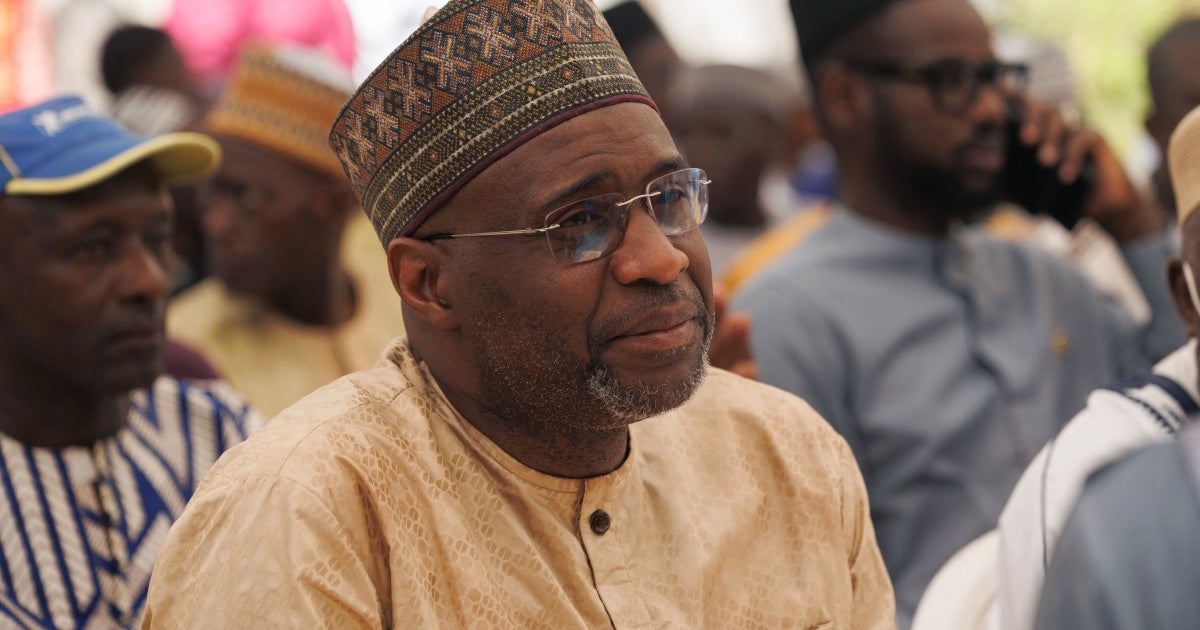
    (Nairobi) – The guilty verdict and 20-year sentence imposed on August 9, 2025, on Succès Masra, leader of Chad’s main opposition party, is the culmination of a trial based on politically motivated charges, Human Rights Watch said today.

    Masra, the former prime minister, is an ardent critic of President Mahamat Idriss Déby. The criminal court in Ndjamena found Masra guilty of spreading racist and xenophobic messages and of complicity in murder tied to intercommunity conflict.

    “The sentence given to Succès Masra sends a chilling message to critics and demonstrates the Chadian government’s intolerance of criticism and political opposition parties,” said Lewis Mudge, Central Africa director at Human Rights Watch. “The courts should not be used for such political purposes.”

    Masra was arrested on May 16 and accused of inciting hatred and violence through social media posts after intercommunal clashes killed 42 people on May 14 in Mandakao, in the Logone Occidental province, located in the southwest.

    Human Rights Watch has not yet seen the court’s judgment, but spoke with people who were at the trial, including some of Masra’s lawyers. While clashes between herders and farmers are common in southern Chad, intercommunal violence has become more acute over the past several years, resulting in scores of deaths.

    Masra, who pleaded not guilty, was tried alongside 74 co-defendants, all accused of collaboration in the killings at Mandakao. While at least 9 of the defendants were released, those remaining also received 20-year sentences. The court also imposed a fine of 1 billion CFA francs (approximately US$1.8 million) against Masra and his co-defendants. Lawyers for Masra and the other defendants have announced their intention to appeal to the Supreme Court.

    Masra’s conviction comes amid shrinking political space across Chad. He and supporters of his opposition party The Transformers (Les Transformateurs) faced threats prior to the May 2024 presidential elections, in which Masra ran against Déby, the then-transitional president. The period leading up to the elections was marred by violence.

    On February 28, 2024, government security forces killed Yaya Dillo, the president of the Socialist Party Without Borders (Parti socialiste sans frontières), during an attack on the party’s headquarters in N’Djamena. More than one year on, the authorities have not clarified the circumstances of his death.

    Political violence has been on the rise since 2021, when security forces used excessive force, including live ammunition, and fired indiscriminately to disperse opposition-led demonstrations across the country. Several protesters were killed. The authorities detained activists and opposition party members, and security forces beat journalists covering the protests. The violence culminated on October 20, 2022, when security forces fired live ammunition at protesters, killing and injuring scores of demonstrators, and beat and chased people into their homes.

    The protests were held to mark the date on which the military administration, in power since the death of President Idriss Déby Itno—father of the current president—on April 20, 2021, had initially promised to hand over power to a civilian government. Hundreds of men and boys were arrested and many were taken to Koro Toro, a high security prison 600 kilometers from N’Djamena. Several detainees died en route to Koro Toro, where protesters suffered further abuse.

    Masra fled the country after the October 2022 violence but returned after regional peace efforts by President Félix Tshisekedi of the Democratic Republic of Congo, in his role as facilitator of the Chad political transition process for the Economic Community of Central African States (ECCAS).

    The resulting Kinshasa Accord suspended an arrest warrant against Masra and guaranteed him and his supporters safe return from exile. It also provided legal guarantees to The Transformers party to freely conduct political activity. Upon Masra’s return in January 2024, he accepted the position of prime minister, but resigned in May 2024, claiming the presidential vote had been rigged.

    President Tshisekedi and ECCAS should call for the restoration of political rights and guarantees and full compliance with the Kinshasa Accord, Human Rights Watch said.

    “Masra’s conviction has upended hopes for a meaningful political opposition and an independent judiciary in Chad,” Mudge said. “Chad’s regional and international supporters should denounce this politically motivated judgment and urge the country’s leaders to make good on promises for democratic reform.”

    [ad_2]

    Source link

  • Cameroon Doubles Down on Excluding Opposition Candidate from Elections

    Cameroon Doubles Down on Excluding Opposition Candidate from Elections

    [ad_1]

    On August 5, Cameroon’s Constitutional Council backed the electoral commission’s decision to bar Maurice Kamto, a key opposition leader and challenger to incumbent President Paul Biya, from the country’s upcoming presidential elections. The move threatens the credibility of the electoral process and has triggered yet another crackdown on political opposition.

    Cameroon’s electoral commission rejected Kamto’s candidacy last month, claiming that the African Movement for New Independence and Democracy party (Mouvement africain pour la nouvelle indépendance et la démocratie, MANIDEM), which had backed him, had also sponsored a second candidate. However, MANIDEM’s president said his party only supported Kamto and that the electoral commission’s decision was arbitrary.

    Kamto appealed the decision to the Constitutional Council, which rejected his appeal as “unfounded.” It also rejected 34 petitions from other prospective challengers and its rulings cannot be appealed.

    “The decision of the Constitutional Council is based on political rather than legal grounds,” Hyppolite Meli Tiakouang, a member of Kamto’s legal team, told Human Rights Watch. “Kamto is a victim of fraudulent maneuvers that aim at shutting down any opposition, laying the foundations for unfair elections.”

    Kamto’s removal sparked criticism among his supporters and party members who have been holding marches and peaceful protests across the capital, Yaoundé, since July 26. Security forces used tear gas to disperse crowds, including dozens of Kamto’s supporters, who had gathered in front of the Constitutional Council on August 4. They have detained at least 35 of Kamto’s supporters since July 26.

    Those detained, including seven women, are being held at various police and gendarmerie stations across Yaoundé on charges including public disorder and rebellion. Their lawyers called the charges politically motivated.

    The decision to bar Kamto from the presidential race reflects the government’s long-standing intolerance for any opposition and dissent and comes amid an intensified crackdown on opponents activists, and lawyers ahead of the elections slated for later this year.

    Excluding Kamto undermines the rights of Cameroonians to participate in free and fair elections. He should be allowed to run, and people should be able to choose freely. The authorities should stop their crackdown on the opposition and immediately release all those arrested for political reasons, lest the elections be deemed unfair before the campaigning even starts.

    [ad_2]

    Source link

  • Australia: Set Human Rights Benchmarks for Vietnam

    Australia: Set Human Rights Benchmarks for Vietnam

    [ad_1]

    (Sydney, August 11, 2025) – Australia should press the Vietnamese government on human rights by seeking clear, concrete, and measurable benchmarks for progress, Human Rights Watch said today in a recent submission to the Australian government. The 20th Australia-Vietnam Human Rights Dialogue will take place tomorrow on August 12, 2025, in Vietnam.

    Vietnam has incarcerated more than 170 political prisoners under draconian laws restricting free expression and peaceful activism for human rights and democracy. The Vietnamese authorities harshly repress independent rights groups, labor unions, media, religious groups, and other organizations seeking to operate outside of government control.

    “Australia has now held 19 human rights dialogues with Vietnam over the past two decades and it’s virtually impossible to identify any lasting human rights progress,” said Daniela Gavshon, Australia director at Human Rights Watch. “These dialogues will only be worthwhile if Australia’s leadership sets specific and measurable human rights benchmarks for the Vietnamese government to meet.” 

    Human Rights Watch, in its submission, recommended that the Australian government focus on five priority human rights concerns in Vietnam: releasing political prisoners and arbitrarily held activists; ending persecution of environmental activists; respecting labor rights; ensuring due process for criminal suspects and defendants; and allowing the right to freely practice religion and belief.

    The Australian government should raise the cases of detained rights activists including

    Pham Doan TrangBui Tuan LamPham Chi DungDang Dinh BachLe Dinh LuongDinh Van Hai, and Nguyen Thai Hung.

    “The Vietnamese government’s increasingly broad and intense crackdown on freedom of speech and assembly is a direct affront to the human rights dialogues,” Gavshon said. “The Australian government should press for systemic reforms that recognize these dialogues are only one part of its human rights relationship with Vietnam.”

    [ad_2]

    Source link

  • Saudi Arabia: Executions Surge in 2025

    Saudi Arabia: Executions Surge in 2025

    [ad_1]

    (Beirut) – Saudi authorities have been carrying out an unprecedented surge in executions in 2025 without apparent due process, Human Rights Watch and the Middle East Democracy Center said today. The June 14 execution of Turki al-Jasser, a journalist known for exposing corruption within the Saudi royal family, raises concerns that the Saudi government is using the death penalty to crush peaceful dissent. 

    Saudi authorities had executed at least 241 people in 2025 as of August 5, with 22 executions in the previous week alone, according to the international human rights organization Reprieve. Reprieve reported that the number of executions in 2025 would exceed all prior records if executions continue at the same rate.

    “Saudi authorities have weaponized the country’s justice system to carry out a terrifying number of executions in 2025,” said Joey Shea, researcher for Saudi Arabia and the United Arab Emirates at Human Rights Watch. “The surge in executions is just the latest evidence of the brutally autocratic rule of Crown Prince Mohammed bin Salman.”

    Rampant due process violations and systemic abuses against defendants in Saudi Arabia’s courts and criminal justice system make it highly unlikely that any of those executed in 2025 received a fair trial. They include 162 people executed for nonlethal drug-related offenses, and more than half of those executed have been foreign nationals, according to Reprieve. Al-Jasser was the first journalist Saudi authorities had executed since the murder of Jamal Khashoggi in October 2018. Saudi law requires the king or crown prince to approve all executions.

    Al-Jasser, in his late 40s, was a prominent Saudi writer, journalist, and blogger. He wrote for Al[KA1] -Taqreer, an independent newspaper that championed democracy and human rights, which Saudi authorities shuttered in September 2015. Al-Jasser operated the popular anonymous X account “Kashkool,” which regularly exposed corruption and human rights abuse linked to the Saudi royal family. The account was closed soon after al-Jasser’s 2018 arrest.

    On June 14, the Interior Ministry issued a statement announcing al-Jasser’s execution, accusing him of various “terrorist crimes,” including “destabilizing the security of society and the stability of the state.” The authorities did not detail nor provide evidence for these alleged crimes.

    Al-Jasser’s arrest, detention, trial, and execution were shrouded in secrecy. His family visited him shortly before his execution but received no information or indication that he had been sentenced to death or that his execution was imminent, the Middle East Democracy Center reported. Al-Jasser’s family has not received his body.

    In March 2018, Saudi authorities raided al-Jasser’s home, seized his electronic devices, and arrested him during a widespread crackdown on dissent. The authorities held al-Jasser in the country’s notorious al-Hai’r prison, where he was allegedly tortured. No information is available about al-Jasser’s trial: no family members or lawyers were able to attend, nor did anyone receive any court documents related to his case. It is unclear whether al-Jasser himself received any court documents related to his own case. 

    Saudi activists believe that al-Jasser’s execution was deliberately carried out the day after Israel attacked key Iranian military and nuclear sites, when regional and international media would not be focused on events in Saudi Arabia.

    Al-Jasser’s execution is one of at least two recent executions in which activists suspect the death penalty was used to crush dissent.

    On February 27, 2024, Saudi authorities executed Abdullah al-Shamri, a Saudi political analyst specializing in Türkiye. In a statement announcing the execution, the Interior Ministry accused al-Shamri of various terrorist crimes including “threatening the stability and endangering the security” of Saudi Arabia. Al-Shamri met regularly with journalists from prominent news outlets and had appeared as a political commentator on television.

    In July 2023, the Specialized Criminal Court, Saudi Arabia’s counterterrorism tribunal, convicted Muhammad al-Ghamdi, a retired Saudi teacher, of several criminal offenses related solely to his peaceful expression online and sentenced him to death, using his tweets, retweets, and YouTube activity as the evidence against him. His sentence was later commuted to 30 years in prison. 

    Saudi prosecutors are also seeking the death penalty against the prominent Islamic scholar Salman al-Alodah on various vague charges related to his peaceful political statements, associations, and positions, as well as religious reformist thinker Hassan Farhan al-Maliki on vague charges relating to his peaceful religious ideas. 

    These cases highlight that Saudi authorities are increasingly weaponizing the use of the death penalty to repress freedom of expression in the country, Human Rights Watch and the Middle East Democracy Center said.  

    Human Rights Watch and the Middle East Democracy Center have repeatedly criticized rampant abuses in Saudi Arabia’s criminal justice system, including long periods of detention without charge or trial, denial of legal assistance, and the courts’ reliance on torture-tainted confessions as the sole basis for conviction. The violations of defendants’ rights are so fundamental and systemic that it is hard to reconcile Saudi Arabia’s criminal justice system with a system based on the basic principles of the rule of law and international human rights standards, the groups said.

    Saudi authorities executed 81 men on March 12, 2022, the country’s largest mass execution in years, despite the leadership’s promises to curtail the use of the death penalty. Saudi activists told Human Rights Watch that 41 of the men belonged to the country’s Shia Muslim minority, who have long experienced systemic discrimination by the government. Saudi Arabia executed 47 men for terrorism offenses in January 2016. In April 2019, it executed 37 men, at least 33 of whom were Shia and had been convicted following unfair trials for various alleged crimes, including protest-related offenses, espionage, and terrorism.

    International human rights standards, including the Arab Charter on Human Rights, ratified by Saudi Arabia, obligate countries that use the death penalty to only do so for the “most serious crimes” and in exceptional circumstances. The Office of the United Nations High Commissioner for Human Rights released a statement in November 2022 on the alarming rate of executions in Saudi Arabia after it ended a 21-month unofficial moratorium on the use of the death penalty for drug-related offenses.

    “Behind closed doors, Saudi Arabia is executing peaceful activists and journalists following politicized trials,” said Abdullah Alaoudh, senior director of countering [KA2] authoritarianism at the Middle East Democracy Center. “These state-sanctioned killings are an assault on basic human rights and dignity that the world cannot afford to ignore.”

    [ad_2]

    Source link

  • Videos Highlight Urgency for Israeli Hostages’ Release

    Videos Highlight Urgency for Israeli Hostages’ Release

    [ad_1]

    In recent days, two Palestinian armed groups have released videos of hostages that underscore the horrendous conditions they are facing. 

    On August 1, Hamas’ armed wing published two videos showing an emaciated 24-year-old Evyatar David in a tunnel, first sitting next to a chart that he says tracks his extremely limited food intake and then scraping at the ground with a shovel while he says he is digging his own grave.

    The day before, the Palestinian Islamic Jihad’s armed wing published a video of emaciated 22-year-old hostage Rom Braslavski, in which he says how weak he feels due to a lack of food and water. “It’s important that the world sees,” his mother said, “despite my personal pain in publicly showing my Rom in the condition he’s in.” 

    Israeli Prime Minister Benjamin Netanyahu has said that the recent videos are evidence that Palestinian armed groups are purposefully starving hostages. Hamas denies this, saying in an August 4 letter to the United Nations Security Council that hostages “are experiencing the same conditions as the people of Gaza.” Israeli authorities’ use of starvation as a weapon of war and their intentional deprivation of aid and basic services—amounting to war crimes, crimes against humanity and acts of genocide—have caused mass starvation across Gaza.

    Taking hostages is a war crime, yet Palestinian armed groups have remained impervious to global calls to free them, including at a special session of the Security Council on August 5. David and Braslavski are among the 251 civilians and security force personnel Palestinian armed groups took hostage in Israel on October 7, 2023. Israeli authorities say that 49 hostages remain in Gaza, of whom only 20 are presumed to be alive. Palestinian armed groups should immediately and safely release all civilians they are holding hostage, just as Israeli authorities should immediately and safely release all unlawfully held Palestinians. International law also requires Palestinian armed groups in Gaza to treat those they are holding humanely and ensure adequate food. Publishing videos showing hostages in such a vulnerable state is a form of inhumane treatment and constitutes “outrages upon [their] personal dignity,” also a war crime. 

    Other countries should use all their leverage to press for an end to this ongoing nightmare. 

    [ad_2]

    Source link

  • DR Congo: Armed Group Massacres Dozens in Church

    DR Congo: Armed Group Massacres Dozens in Church

    [ad_1]

    (Nairobi) – The Allied Democratic Forces (ADF) armed group killed more than 40 people, including several children, with guns and machetes during a nighttime church gathering on July 26-27, 2025, in eastern Democratic Republic of Congo, Human Rights Watch said today. Several other children were abducted and remain missing.

    The Ugandan-led ADF pledged allegiance to the Islamic State (ISIS) in 2019, but current ties between the two armed groups are unclear. ISIS claimed responsibility for the attack in Komanda, Ituri province, on its Telegram channel, saying 45 people were killed. The massacre heightens concerns about the ability of Congo’s national army, stationed nearby, and the United Nations peacekeeping force to protect civilians.

    “The Allied Democratic Forces’ killings of civilians, including worshipers in church, demonstrated incomprehensible brutality,” said Clémentine de Montjoye, senior Great Lakes researcher at Human Rights Watch. “The massacre at Komanda and other mass killings this year highlight the insecurity in eastern Congo and the need for the Congolese government to urgently step up efforts to protect civilians and hold those responsible to account.”

    Komanda residents and witnesses told Human Rights Watch that worshipers had gathered for celebrations at the Catholic church on July 26, and many spent the night ahead of Sunday mass. ADF fighters entered the church compound around 1 a.m. on July 27 and began their attack on a building where people were sleeping, witnesses said. Survivors and a witness said fighters attacked people with blunt instrument blows to the head, machetes, and gunfire. According to the parish, at least 33 people died immediately or later from their injuries.

    “They told us to sit down, and then started hitting people [with blunt instruments] on the back of the neck. They killed two people I didn’t know, and that’s when I decided to flee with four others,” a survivor told Human Rights Watch. “We managed to run away – they shot at us but didn’t hit us.”

    The ADF fighters killed at least five other people in the town and set fire to houses and kiosks, according to a local civil society leader, media reports. Videos on social media that Human Rights Watch geolocated show burned buildings on the town’s main road near the church.

    Human Rights Watch received the names of 39 people killed, 9 injured, and 9 children between ages 7 and 14 abducted. According to a list shared by the parish on August 2, more than 30 people were abducted, and 7 injured during the attack on the building next to the church. On July 27, the UN Organization Stabilization Mission in the Democratic Republic of Congo (MONUSCO) reported at least 43 deaths, including 9 children, as well as people killed in surrounding areas. According to two sources, some of those kidnapped have since escaped.

    The Congolese army was deployed about 3 kilometers south of the church, while MONUSCO was about a kilometer south. Human Rights Watch received information that network issues at the time of the attack impeded efforts to sound the alarm.

    “During all this time, neither the FARDC [Congolese army] nor MONUSCO intervened,” said a civil society leader. “The police didn’t come either. They all came eventually, but it was too late. They just saw the damage done.”

    The government imposed martial law in North Kivu and Ituri in April 2021 to end insecurity in the two provinces. However, martial law failed to curb abuses against civilians and enabled the military and police to curtail freedom of expression, suppress peaceful demonstrations with lethal force, and arbitrarily detain and prosecute activists, journalists, and political opposition members.

    Congo’s influential conference of Catholic bishops stated on July 29 that “[o]ur indignation is all the greater because this latest massacre occurred in one of the provinces that has been under [martial law] for several years, supported by the joint efforts of the armed forces of the Democratic Republic of the Congo (FARDC) and those of Uganda (UPDF), along with the decades-long presence of the United Nations Peacekeeping Mission (MONUSCO).”

    Congo’s government condemned the killings as “horrific,” and military officials described it as a “large-scale massacre” in response to recent military operations against the ADF. MONUSCO condemned the killings and warned that the attacks would exacerbate “an already extremely concerning humanitarian situation in the province.”

    In response to written questions from Human Rights Watch, a public information officer of the rapid deployable battalion at MONUSCO’s Komanda base stated that “The ADF is known to employ silent killer tactics, striking swiftly, organized and unpredictable. In this case, the attack occurred in the early hours of the morning, targeting a religious gathering attended by a large number of civilians” and that MONUSCO had taken steps to “intensify protection efforts in the area.”

    A Congolese military source told Human Rights Watch that a military justice investigation had been opened and further troops deployed to the area to ensure the protection of civilians. The Congolese government and MONUSCO should urgently complete the investigation into the July attack and the response of the armed forces and MONUSCO and make its findings public.

    Congolese authorities, with MONUSCO’s assistance, should adopt measures to re-establish trust with civilians, including by reinforcing early warning networks and consulting with communities and civic groups about protection needs. The authorities should take all necessary steps to protect civilians, including by promptly responding to reports of armed group activity and movements. Additionally, efforts should be made to hold perpetrators of these killings, which could amount to war crimes, to account, Human Rights Watch said.

    In recent years, the ADF armed group has been implicated in scores of killings and abductions in North Kivu province’s Beni and Lubero territories and increasingly in the neighboring Irumu territory of Ituri province. ADF attacks earlier in July killed 82 civilians in Ituri and North Kivu, according to the UN. The UN Group of Experts on the Democratic Republic of Congo reported that, “January 2025 marked the second time in which ADF-attributed fatalities exceeded 200 within a single month – predominantly in the Beni region and Lubero territory.” In 2024, the ADF was the armed group responsible for the highest number of killings in Congo, mainly civilians.

    In early 2025, the Ugandan armed forces expanded a joint military campaign, known as “Operation Shujaa,” that began in late 2021. The UN reported, though, that the operation “did not curb ADF violence against civilians in North Kivu and Ituri Provinces.” Some security experts believe that the joint deployment has pushed the ADF from some strongholds near the Ugandan border further into Ituri and North Kivu provinces.

    The African Union and UN Security Council should press for a credible strategy to address the deepening security crisis and grave rights abuses in all parts of eastern Congo, Human Rights Watch said.

    “President Félix Tshisekedi, with international support, should focus on protecting civilians and providing tighter military oversight in eastern Congo to spare long-suffering communities from further atrocities,” de Montjoye said. “The government has a duty to protect civilians and ensure justice for victims of these repeated atrocities.”

    [ad_2]

    Source link

  • Vietnam: Free Imprisoned Activists at Medical Risk

    Vietnam: Free Imprisoned Activists at Medical Risk

    [ad_1]

    (New York) – The Vietnamese government should immediately release two wrongfully imprisoned activists who have developed serious health problems in prison, Human Rights Watch said today.

    Can Thi Theu, 63, a land rights activist, was recently hospitalized for abdominal pain and fever. Le Dinh Luong, 59, a pro-democracy campaigner, suffers from spinal degeneration and chronic stomach pain. Neither has received adequate medical care while incarcerated and both need to obtain medical treatment either in Vietnam or abroad.

    “Can Thi Theu and Le Dinh Luong are among the many Vietnamese activists imprisoned for their opinions and peaceful advocacy,” said Patricia Gossman, associate Asia director at Human Rights Watch. “By arbitrarily detaining Can Thi Theu and Le Dinh Luong and then denying them necessary medical care, the Vietnamese authorities are putting their health at risk and compounding the violations of their rights.”

    Can Thi Theu is serving an eight-year prison sentence at Prison No. 5 in Thanh Hoa province for her participation in protests against land confiscation and environmental degradation, and for publicly voicing support for other human rights activists and political prisoners. In separate arrests on June 24, 2020, police detained Can Thi Theu and her adult sons Trinh Ba Tu and Trinh Ba Phuong. The three were sentenced and imprisoned under article 117 of Vietnam’s penal code, which prohibits “conducting propaganda against the state.”

    Can Thi Theu has told her family that she was hospitalized at Ngoc Lac Hospital from July 28 to July 30, 2025, for intense stomach cramps and intermittent fever, treated with antibiotics, and then sent back to prison. Can Thi Theu reportedly asked to see her medical diagnosis record or a copy, but the authorities denied her request. As of August 1, Can Thi Theu has continued to suffer from pain and severe fatigue. The authorities have not responded to her family’s request on Aug 5 date to be granted another visit (beyond the allowed one-per-month prison visit), proper medical treatment, as well as full access to her medical record.

    Le Dinh Luong has long campaigned for democracy, human rights, and environmental protections. He had often visited former political prisoners upon their release from prison, as well as the families of people imprisoned for campaigning for democracy and human rights. After one such visit in 2017, he was arrested, charged with carrying out activities “to overthrow the people’s administration” under penal code article 79, and sentenced to 20 years in prison. He is currently serving his prison sentence at Nam Ha prison in Ninh Binh province.

    Le Dinh Luong’s health has deteriorated in prison. He reportedly requested medical treatment but was denied. In May, he carried out a hunger strike to protest the prison’s maltreatment of his health situation. In June, his family’s visit was reportedly cut short, and prison guards dragged him away in front of his grandchildren. In July, he was reportedly put in solitary confinement as a disciplinary measure.

    Under rule 27 of the United Nations Standard Minimum Rules for the Treatment of Prisoners (also known as the Nelson Mandela Rules), “[a]ll prisons shall ensure prompt access to medical attention in urgent cases. Prisoners who require specialized treatment or surgery shall be transferred to specialized institutions or to civil hospitals.”

    “The Vietnamese authorities should immediately release Can Thi Theu and Le Dinh Luong, or at least give them prompt access to the medical care they need,” Gossman said. “Governments seeking improved ties with Vietnam should press for the release of all political prisoners.”

    [ad_2]

    Source link

  • Macao: Ex-Lawmaker Held on National Security Charge

    Macao: Ex-Lawmaker Held on National Security Charge

    [ad_1]

    (New York) – Macao authorities should unconditionally release the former lawmaker and veteran pro-democracy activist Au Kam San (區錦新), who was arrested on national security charges, Human Rights Watch said today. This is the first time the draconian Law on Safeguarding National Security has been invoked in China’s Macao Special Administrative Region.

    On July 30, 2025, Macao police arrested Au for violating article 13 of the national security law, which carries a maximum 10-year sentence. Au is being held without bail pending investigation.

    “The arrest of Au Kam San reflects the broadening repression radiating from China to Hong Kong and Macao under Chinese leader Xi Jinping,” said Maya Wang, associate China director at Human Rights Watch. “Macao’s authorities should stop suppressing peaceful criticism and immediately and unconditionally free this activist and former legislator.”

    The Macao Judicial Police accused Au of “having long-term contacts” with “overseas anti-China entities,” providing them with “false and inflammatory information,” “arousing hatred,” “disrupting Macao’s 2024 chief executive election, and causing foreign countries to take hostile actions against Macao.”

    Au, a 68-year-old Portuguese citizen and former primary school teacher, became an activist after the Chinese government’s Tiananmen Massacre of pro-democracy demonstrators in 1989. Since then, he and others have played a major role in the city’s small civil society. For 30 years, Au’s group, the Macao Union of Democratic Development (澳門民主發展聯委會), organized annual vigils to commemorate the crackdown, even as Au and fellow organizers endured abuse including physical assaults and loss of jobs.

    The group finally disbanded under government pressure in 2023. Between 2001 and 2021, Au was elected to local office five times and became Macao’s longest serving pro-democracy lawmaker.

    Macao was a Portuguese colony until 1999, when its sovereignty was transferred to the People’s Republic of China. Macao’s government has long suppressed critical voices. It has arrested opposition figures and journalists, severely restricted protests, and barred Hong Kong pro-democracy activists and journalists from entering the territory.

    Macao authorities’ repressive efforts appear to have accelerated in recent years, especially after 2019, when mass protests broke out in Hong Kong, and after 2020, when the Chinese government imposed the draconian National Security Law on Hong Kong.

    In 2021, Macao’s Court of Final Appeal upheld the government’s ban on the Tiananmen Massacre annual vigil, ruling that the political slogans used by the organizers violated the Chinese Constitution and Macao’s functional constitution, the Basic Law, by urging the public to “overthrow the existing political system.” The authorities disqualified 21 people in 2021 and 12 in 2025 from running for legislative seats, citing vague reasons such as “disloyalty” to Macao.

    Macao’s Law on Safeguarding National Security, enacted in 2009 and amended in 2023, undermines rule of law and human rights guarantees enshrined in Macao’s de facto constitution, the Basic Law, and contravenes the International Covenant on Civil and Political Rights, which applies to Macao via the Basic Law. The revised national security law empowers the authorities to prosecute peaceful activities, which they had previously limited powers to restrict.

    While the 2009 law provided punishments for seven crimes, including treason, secession, subversion, and theft of state secrets, the 2023 amendments significantly broadened the scope of national security offenses and the powers of authorities. The amendments introduced an additional 30 articles. They expanded the definitions of “secession” and “subversion” to cover nonviolent acts, introduced a new offense of “instigating or supporting rebellion,” and expanded the law’s extraterritorial jurisdiction from applying only to overseas activities by Macao residents to both residents and nonresidents.

    Article 13, which Au is accused of violating, makes it a criminal offense to establish “links with organizations, groups, or individuals” outside Macao to “conduct activities endangering national security.”

    Article 25 stipulates that suspects shall be subject to “preventive detention measures” or pretrial detention, without the option of bail.

    In Hong Kong, where the pro-democracy movement attracted mass participation, the authorities have arrested at least 326 people for violating the city’s national security laws since 2020.

    The European Union condemned Au’s arrest in an August 2 statement but did not call for his release. Portuguese media, citing “a diplomatic source,” said the Portuguese government is “following up on the case.”

    “The Chinese government, having dismantled Hong Kong’s freedoms, has now turned to Macao, arresting Au Kam San, the backbone of the city’s pro-democracy movement,” Wang said. “Portugal, the European Union, and other concerned governments should forcefully press for his immediate release.”

    [ad_2]

    Source link

  • Trump Should Raise Rights Issues with Azerbaijan Leader

    Trump Should Raise Rights Issues with Azerbaijan Leader

    [ad_1]

    US President Donald Trump is set to host Armenian Prime Minister Nikol Pashinyan and Azerbaijani President Ilham Aliyev at the White House on August 8 to sign a memorandum of understanding that could lead to a peace deal between the two countries.

    President Trump is expected to hold bilateral meetings with both leaders as well. While the Washington meetings are intended to cement progress toward regional stability, Trump’s meeting with Aliyev also presents a critical opportunity for the United States to raise urgent concerns about Azerbaijan’s staggering crackdown on dissent.

    Since late 2023, Azerbaijan has conducted an all-out assault on independent mediacivil society, and the political opposition. It has silenced most independent and opposition media. Nongovernmental groups face an increasingly hostile environment that has forced many to dissolve or operate surreptitiously.

    Human Rights Watch has documented dozens of arbitrary detentions and politically motivated prosecutions of journalists, activists, and rights defenders. Among them are at least 25 journalists from the top independent Azerbaijani news outlets who are behind bars.

    Most recently, in June, a court handed down long prison terms for seven journalists: Farid Mehralizada of Radio Free Europe/Radio Liberty, and six from Abzas Media. The convictions, based on bogus allegations of smuggling and tax evasion, are widely viewed as retaliation for uncovering government corruption, and emblematic of the broader campaign to silence critical media.

    The crackdown builds on long-term, systemic efforts to marginalize civic groups and prosecute activists, including by denying them registration, restricting access to funding, and criminalizing unregistered activity. New measures require groups and individuals to register all contracts, including for services, if they involve any foreign funding, with penalties for failing to comply, shutting down a pathway independent media had used to finance their work.

    The upcoming White House meeting signals that the Trump administration has influence with Aliyev that it should use including to press for the immediate and unconditional release of all political prisoners and for meaningful reforms to protect freedom of the press and ensure space for civil society. Trump should ensure, and communicate this clearly to his counterparts, that future high-level engagement can’t be uncoupled from respect for fundamental freedoms.

    [ad_2]

    Source link

  • Gaza: Israeli School Strikes Magnify Civilian Peril

    Gaza: Israeli School Strikes Magnify Civilian Peril

    [ad_1]

    • Israeli forces’ deadly attacks on schools sheltering Palestinian civilians highlight the absence of safe places for displaced people, the vast majority of Gaza’s population.
    • Hundreds of Israeli attacks since October 2023 have struck over 500 school buildings, many used as shelters, killing hundreds of civilians and causing significant damage to nearly all of Gaza’s schools.
    • The Israeli attacks have denied civilians safe access to shelter, and will contribute to the disruption of access to education for many years, as repair and reconstruction of schools can require significant resources and time.

    (Jerusalem, August 7, 2025) – Israeli forces’ deadly attacks on schools sheltering Palestinian civilians highlight the absence of safe places for Gaza’s displaced people, Human Rights Watch said today. Since October 2023, Israeli authorities have carried out hundreds of strikes on schools sheltering displaced Palestinians, including unlawfully indiscriminate attacks using US munitions, that have killed hundreds of civilians and damaged or destroyed virtually all of Gaza’s schools. 

    Recent Israeli strikes on schools-turned-shelters are part of Israeli forces’ current military offensive that is demolishing much of Gaza’s remaining civilian infrastructure, displacing again hundreds of thousands of Palestinians, and worsening the already dire humanitarian situation. Governments, including the United States, which has provided weapons used in unlawful attacks, should impose an arms embargo on the Israeli government and take other urgent measures to enforce the United Nations Convention on the Prevention and Punishment of the Crime of Genocide (Genocide Convention). 

    “Israeli strikes on schools sheltering displaced families provide a window into the widespread carnage that Israeli forces have carried out in Gaza,” said Gerry Simpson, associate crisis, conflict and arms director at Human Rights Watch. “Other governments should not tolerate this horrendous slaughter of Palestinian civilians merely seeking safety.”

    Human Rights Watch investigated Israeli attacks that struck the Khadija girls’ school in Deir al-Balah on July 27, 2024, killing at least 15 people, and al-Zeitoun C school in al-Zeitoun neighborhood of Gaza City on September 21, 2024, killing at least 34 people. Human Rights Watch found no evidence of a military target at either school.

    These findings were based on a review of satellite imagery, photos, and videos of the attacks and their aftermath, social media material relating to men known to have died in the two strikes, and phone interviews with two people who witnessed the aftermath of the Khadija school strike and another present during the attack on al-Zeitoun C school. 

    The Israeli authorities have not publicly provided information about the attacks that Human Rights Watch documented, including details about the intended target or any precautions taken to minimize harm to civilians. They did not respond to a July 15 letter summarizing Human Rights Watch findings on these strikes and requesting specific information.

    The absence of a military target in the Khadija and al-Zeitoun school strikes would make the attacks unlawfully indiscriminate in violation of international humanitarian law. Schools and other educational facilities are civilian objects and protected from attack. They lose that protection when used for military purposes or are occupied by military forces. The use of schools to house civilians does not alter their legal status.

    Between July 1 and 10, 2025, Israeli forces struck at least 10 schools-turned-shelters, including some that had been damaged previously, reportedly killing 59 people and displacing again dozens of families, according to the UN Office for the Coordination of Humanitarian Affairs (OCHA). The UN Relief and Works Agency for Palestine Refugees in the Near East (UNRWA) reported that about one million displaced people in Gaza had sheltered in schools amid the hostilities, and that as of July 18, at least 836 people sheltering in schools had been killed and at least 2,527 injured.

    The most recent assessment by the Occupied Palestinian Territory Education Cluster found that 97 percent of school buildings in Gaza (547 out of 564) have sustained some level of damage, including 462 (76 percent) that were “directly hit”, and that 518 (92 percent) require “full reconstruction or major rehabilitation work to become functional again.”

    The Israeli attacks have denied civilians safe access to shelter and will contribute to the disruption of access to education for many years, as repair and reconstruction of schools can require significant resources and time, with a significant negative impact on children, parents, and teachers.

    The Israeli publications +972Magazine and Local Call reported on July 24 that the Israeli military set up “a special strike cell to systematically identify schools, which are referred to as ‘centers of gravity,’ in order to bomb them, claiming that Hamas operatives hide among the hundreds of civilians.” The report noted that “double tap” strikes—second attacks in the same location designed to hit survivors of the initial strike and first responders—have “become particularly common in recent months when Israel bombs schools in Gaza.”

    The Israeli military has claimed with respect to dozens of attacks on schools that Hamas or other Palestinian fighters or “command and control” centers were deployed at the school, without providing specific information. Human Rights Watch is aware of only seven instances in which the Israeli military published names and photographs of alleged members of Palestinian armed groups it said were present in a school at the time of the attack.

    After a June 6, 2024, attack on al-Sardi school, the Israeli military identified 17 names of alleged fighters. However, a Human Rights Watch review of the names found that three were people who appeared to have been killed in earlier attacks.

    The presence of Palestinian armed groups at any of the attacked schools would not necessarily make the attacks lawful. The laws of war prohibit attacks on military objectives if the anticipated harm to civilians and civilian objects is disproportionate compared to the expected military gain from the attack. 

    The laws of war also require, unless circumstances do not permit, warring parties to give “effective advance warning” of attacks that may affect the civilian population.

    Armed groups deployed at schools-turned-shelters would place civilians at unnecessary risk. The laws of war obligate warring parties to take all feasible precautions against the effects of attacks and to avoid locating military targets near densely populated areas. 

    Serious violations of the laws of war by individuals with criminal intent—that is, deliberately or recklessly—are war crimes. Individuals may also be held criminally liable for assisting in, facilitating, aiding, or abetting a war crime. All state parties to an armed conflict are obligated to investigate alleged war crimes by members of their armed forces.

    The Safe Schools Declaration, an international political commitment endorsed by 121 countries, aims to protect education during times of war by strengthening the prevention of, and response to, attacks on students, teachers, schools, and universities, including by avoiding the use of education facilities for military purposes. While Israel has not joined, Palestine endorsed the declaration in 2015.

    Governments should suspend arms transfers to Israel, given the clear risk that the arms might be used to commit or facilitate serious violations of international humanitarian law. The US government’s provision of arms to Israel, which have repeatedly been used in strikes on schools-turned-shelters and to carry out apparent war crimes, has made the United States complicit in their unlawful use.

    On June 10, the UN Commission of Inquiry on the Occupied Palestinian Territory, including East Jerusalem, and Israel reported that Israeli authorities had “obliterated Gaza’s education system” and that its attacks on educational, as well as religious and cultural sites in the Occupied Palestinian Territory, were “part of a widespread and relentless assault against the Palestinian people in which Israeli forces have committed war crimes and the crime against humanity of extermination.”

    “After nearly two years of frequent Israeli attacks killing civilians in schools and other protected locations, governments providing military support to Israel can’t say they weren’t aware of the consequences of their actions,” Simpson said. “Governments should suspend all arms transfers to Israel and take other actions to prevent further mass atrocities.”

    Israeli Attacks on Schools-Turned-Shelters

    Human Rights Watch was unable to visit sites of the strikes on Khadija girls’ school and al-Zeitoun C school because Israeli authorities have blocked virtually all entry into Gaza since October 2023. Israel has repeatedly denied Human Rights Watch requests to enter Gaza since 2008. 

    Khadija Girls’ School, Deir al-Balah, July 27, 2024

    On July 27, 2024, starting shortly before noon and until about 3 p.m., Israeli forces carried out at least three airstrikes, two with US munitions, on Khadija girls’ school in Deir al-Balah, killing at least 15 people. The Palestinian Civil Defence in Gaza, a body providing emergency and rescue services, reported that the school had sheltered about 4,000 displaced people for many months. The director of al-Aqsa Martyrs Hospital in Deir al-Balah, about a kilometer east of the school, said the school had a “field hospital” connected to his hospital. Reports of the attack started appearing on social media shortly before noon.

    The school consists of five buildings next to a playground on about 5,000 square meters of land. 

    Human Rights Watch found no indication of a military objective in or near the school on the day of the attack. A review of social media on the men known to have been killed in the attack and the online pages of Palestinian armed groups and Israeli forces showed no evidence of a Palestinian armed group’s presence at the school. The Israeli military did not reply to a Human Rights Watch request for more information about the target.

    Airwars, a nongovernmental organization that investigates civilian harm in conflict zones, reviewed social media and other open sources and found the names of 15 people killed, including 7 men, 4 women, and 4 children, as well as 2 others without their complete names. Airwars also found the full names of 9 people injured, including 4 men, 2 children, and 3 males whose ages are unknown. The identified dead and injured are from 18 families. Human Rights Watch reviewed social media and other open sources, but found no additional names.

    Gaza’s Ministry of Health said that the attack killed at least 30 people and injured 100. The victims were taken to al-Aqsa Martyrs Hospital nearby.

    Human Rights Watch spoke by phone with a journalist who was based at the hospital. He said that at around noon, he heard a single explosion from the direction of the school and ran toward it. “When we arrived, I saw a horrific scene,” the journalist said. “I saw injured women, children, the elderly and some doctors in their medical clothes. Women were shouting, ‘Where are my children?’ or ‘My son, I want my son.’”

    Human Rights Watch also spoke with another journalist who was about two kilometers from the school when at around noon, he heard a bomb falling and then an explosion. He arrived at the school about 20 minutes later.

    “I saw that a two-story building on the eastern side of the school had been completely destroyed,” he said. “Can you imagine, a building full of displaced people levelled in the blink of an eye? I saw people with serious and more minor injuries, and then saw human remains on the ground.”

    Human Rights Watch verified four videos relating to the attacks on the school, though none showed the initial attack. The first was posted to social media by the Saudi news channel Asharq News, which an analysis of the shadows in the video show it was filmed around midday. The video shows damage to, and debris from, the northern part of the campus, as well as injured people being carried out of one of the buildings.

    Human Rights Watch analyzed two further videos uploaded to social media on July 27 that were filmed sometime between 2 p.m. and 3 p.m. The first captures the moment two munitions strike the school almost simultaneously. The second, filmed approximately 200 meters southeast of the school, captures a loud explosion, followed by a group of people running through a plume of smoke and into the school compound. It then shows significant damage to the western and southern parts of the school campus, including two entirely destroyed buildings. The camera then pans onto a munition remnant lodged in the ground in the middle of the school compound. 

    fourth video uploaded to social media from an account that posted two other videos from the attack shows an unexploded munition inside what is said to be one of the school’s rooms. Human Rights Watch was unable to confirm where the video was filmed or at what time, although the color of blown-out window frames matches the first video from the school. 

    Based on the photos and videos, and identifiable munition remnants, including an unexploded item, Human Rights Watch determined that at least two air-dropped GBU-39 Small Diameter Bombs were used in the attack. These munitions are produced by the Boeing Company and transferred to Israel with US government approval under the Foreign Military Sales or Direct Commercial Sales programs.

    The Gaza Media Office reported that Israeli fighter jets dropped three bombs on the field hospital in the school. A witness told the Washington Post that four munitions had hit the school, all around noon.

    A man who said he was about 500 meters from the school around midday described two attacks involving multiple munitions. He told Human Rights Watch that after the first attack, Israeli authorities contacted the residents of a house near the school and said that people should “leave the area as they were going to strike the school again.” He also said that the second set of attacks involved multiple bombs that completely destroyed the building that had been hit during the first strikes. 

    The UN Office of the High Commissioner for Human Rights also found that the Israeli military had issued a warning ahead of the second and third strikes, “but not the first in which most of the casualties had reportedly occurred.”

    About an hour after the attack, the Israeli military said on their Telegram channel that they had “struck terrorists operating a Hamas command and control center embedded inside the Khadija School in central Gaza.” The Israeli military provided no further details.

    Human Rights Watch reviewed online materials concerning the seven men listed as killed by Airwars, as well as the Telegram channels and associated social media channels of Hamas’ armed wing, Izz a-Din al-Qassam Brigades, and Islamic Jihad’s armed wing, al-Quds Brigade. These groups often announce the killing of their fighters, but neither group mentioned the strike. 

    The Israeli military has presented no information demonstrating the presence of a military target or other military objective within or near the building. The military also has not said why it did not provide an effective advance warning to those taking shelter at the school and the residents of nearby buildings to evacuate before the initial noon attack.

    Al-Zeitoun C School, Gaza City, September 21, 2024

    On September 21, 2024, at about 10:45 a.m., an Israeli airstrike struck al-Zeitoun C school in al-Zeitoun neighborhood of Gaza city, killing at least 34 people.

    Human Rights Watch found no indication of a military objective in or near the school the day of the attack. A review of social media of men known to have been killed in the attack and of the online pages of Palestinian armed groups and Israeli forces, as well as an interview with a man who lived at the school, showed no evidence of a Palestinian armed group presence at the time of the attack. The Israeli military did not reply to a Human Rights Watch request for more information about the target of the attack, nor to a request by journalists for information about the intended target. The BBC reported that an undisclosed source said that the attack had targeted and killed “a local Hamas figure” without providing more details.

    The Palestinian Civil Defence in Gaza reported that the school was sheltering “thousands” of displaced people. The Gaza Media Office said that many of the displaced were widows and orphans who also received small cash payments to help cover food costs.

    Al-Zeitoun C school is part of a three-school complex, including Al-Zeitoun A/B and al- Falah Elementary Boys B school and al-Falah preparatory Boys B school. Al-Zeitoun C has two main buildings along with several smaller structures, all situated on approximately 5,000 square meters of land.

    Airwars reviewed social media and other open sources for information about the attack, and found the full names of 23 people killed from 9 families, including 3 men, 4 women, and 16 children. Gaza’s Ministry of Health and the Gaza Media Office said that 22 people were killed, including 6 women and 13 children.

    Human Rights Watch reviewed social media and other open sources and found the full names of four other people who were killed. They include one woman, two boys, and one female of an unknown age.

    Human Rights Watch spoke with a man who was in the school at the time of the attack and who said the strike killed eight members of his family, one of them a boy on the Airwars list. The other seven were three women, three children, and one man who were not identified by Airwars.

    Human Rights Watch reviewed social media for mentions of the four men listed by Airwars as having been killed in the attack and found no ties to any armed groups. 

    The Palestinian Civil Defence in Gaza said that one of the women who was killed was pregnant and that about 30 people were injured, including 9 children whose limbs had to be amputated. A video posted to social media by the Saudi Arabian news channel Asharq News and analyzed by Human Rights Watch shows a rescue worker standing outside one of the school buildings holding what the channel said was a dead fetus.

    The victims were taken to al-Ahli Arab Baptist Hospital in Gaza city. 

    Human Rights Watch analyzed two other videos of the aftermath of the attack uploaded to social media on September 21. Human Rights Watch confirmed geolocations initially determined by two open source researchers, Anno Nemo and Jack Dev

    One video filmed around 11:30 a.m. shows two men carrying two injured and bloodied children across the campus. People are also surrounding two severely injured children, one motionless, and attempting to treat their wounds. A second video shows the school courtyard after the strike, dozens of people at a building entrance on the western side of the campus, and then several dead children.

    The man who lost eight family members said that four munitions hit the school without warning. Another witness told a journalist that he saw explosions when two munitions struck the compound. A woman living at the school who was there during the attack told another journalist that “suddenly missiles started raining down on us – there was no warning.”

    Three photographs uploaded to X with the logo of Quds News Network show a child holding three identifiable munition remnants in one of the classrooms. Based on these images, Human Rights Watch determined that at least one US produced GBU-39 Small Diameter Bomb directly hit at least one of the school buildings.

    The witness who lost eight family members said he had not seen any weapons or military material at the school and that no militants were there, “only civilians seeking safety.”

    The Human Rights Watch review of online materials relating to the men listed by Airwars as killed in each of the strikes found no evidence that any were combatants. Human Rights Watch reviewed the Telegram channels and associated social media of the armed wings of Hamas, Izz a-Din al-Qassam Brigades, and Islamic Jihad, al-Quds Brigade. Neither made mention of the strike.

    The videos Human Rights Watch analyzed of the aftermath of the strikes on the school did not indicate any Palestinian armed group’s presence or military equipment in or near the building at the time of the attack.

    On the day of the strike, the Israeli military said it had “conducted a precise strike on terrorists who were operating inside a Hamas command and control center … embedded inside a compound that previously served as the Al-Falah School.” According to a person with close knowledge of the schools who spoke with Airwars, al-Falah Elementary Boys B school and Al Falah Preparatory Boys B school is located about 200 meters from al-Zeitoun C school, with al-Zeitoun A/B school separating them. Palestinian media mentioned an Israeli strike on al-Falah school the same day, which reportedly resulted in injuries. The Israeli military did not make a separate statement relating to the strike on al-Zeitoun C school and has presented no information that would demonstrate the existence of a military target there. The military has also not said why it did not provide an effective advance warning to the residents of al-Zeitoun C school, and nearby buildings, to evacuate before the initial attack. 

    A girl who survived the attack told the BBC, “What have we done as children? We wake up and go to sleep terrified. At least protect the schools; we don’t have schools or homes – where do we go?” 


    [ad_2]

    Source link