Author: Marcel Plichta, PhD Candidate in the School of International Relations, University of St Andrews

  • Ukraine’s drone air war has given Zelensky additional bargaining power with Putin – new research

    Ukraine’s drone air war has given Zelensky additional bargaining power with Putin – new research

    [ad_1]

    Donald Trump appears to be making another attempt to organise a three-way summit with Vladimir Putin and Ukraine’s president, Volodymyr Zelensky, to end the Russian invasion.

    Putin’s reluctance to meet his Ukrainian counterpart so far has often made it appear that he doesn’t think Ukraine has enough bargaining power to enter direct negotiations. But one thing that may be helping to shift the balance in Zelensky’s favour at this stage in the war is Ukraine’s enhanced drone capability.

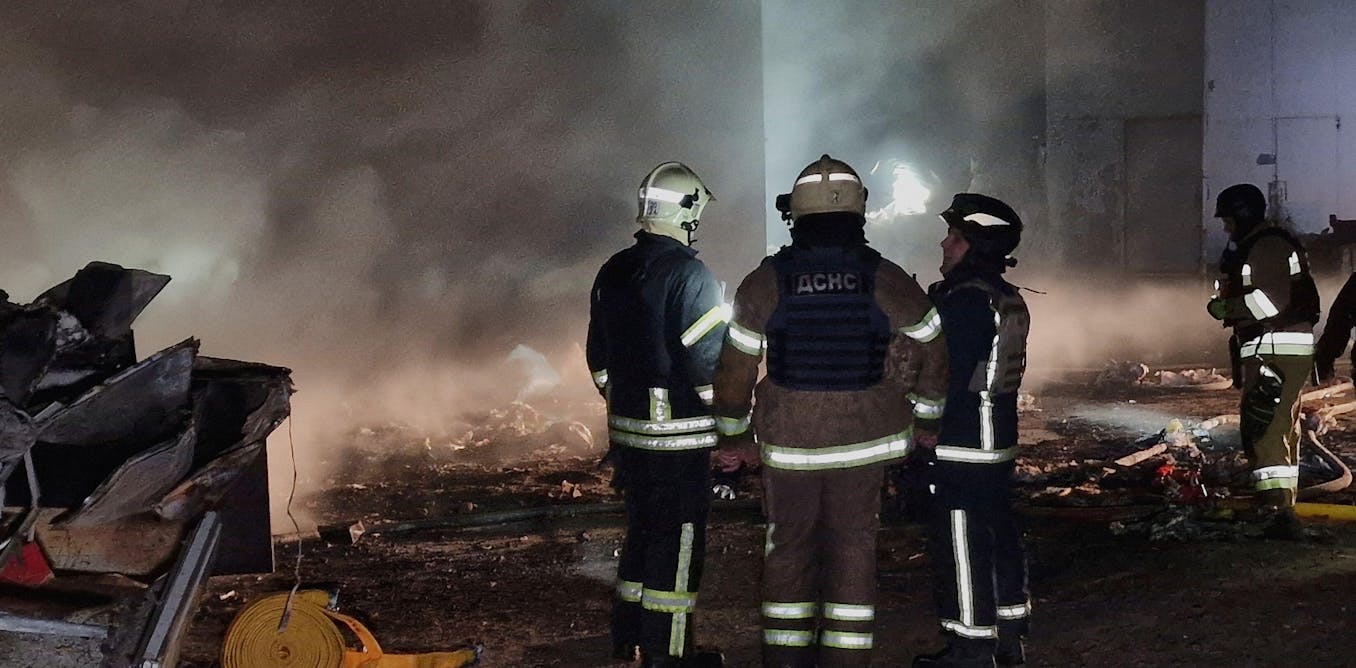
    Ukrainian drones have made it impossible for the Russian population to isolate itself from the effects of a conflict fought mostly on Ukrainian soil. Attacks on Moscow, in particular, have caused disruptions to air travel within Russia and forced the Russian government to divert dozens of air defence systems to ensure that the capital is protected.

    Kyiv’s use of long-range one-way attack (OWA) drones against Russia has done far more damage to Russia’s military and economy than had previously been predicted. Previous drone analysis suggested that the current generation were too easy for defenders to shoot down to have a strategic impact and that prior cases of drone use overstated their strategic benefits.

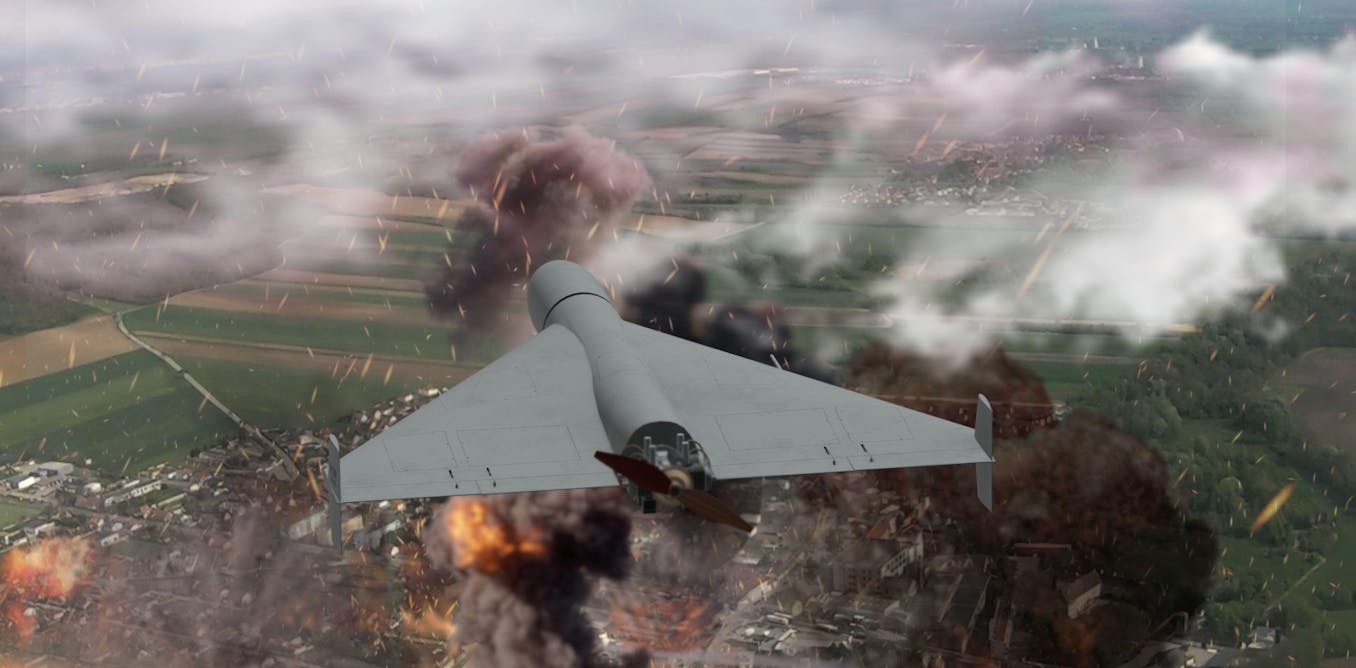
    Unlike traditional military drones, OWA drones are designed to detonate on or above a designated target. In my new research, I analysed Ukraine’s use of these OWA drones from mid-2022 to early 2025 to research whether they can indeed have a notable strategic impact on conflict. I found that Ukraine’s OWA drone campaign was not only able to overcome Russian air defences, but that the impact of the campaign has so far had far-reaching effects, ranging from where Russia has placed its air defences to stoking fuel price rises.

    Independent estimates suggest that the damage to Russian oil facilities caused by OWA drones, from late 2024 to early 2025, could have cost Russia more
    than US$700 million (£516 million). Ukraine’s drone campaign has done so much damage to Russian infrastructure and economy, that it has given Ukraine’s president, Volodymyr Zelensky, a significant bargaining chip with Vladimir Putin.

    Ukraine launches drone attack on Moscow.

    In early 2024, Ukraine launched a large series of strikes on Russian oil
    infrastructure. By April, Nato officials claimed that the strikes had temporarily halted approximately 15% of Russia’s refining capacity, caused a halt in exports and caused fuel price spikes in Russia.

    Once Ukrainian drones started regularly attacking targets deep within Russia, Moscow had to respond. Putin began by moving air defence systems. For instance, in early 2023, the Russian military placed Pantsir air defence systems on Moscow rooftops to intercept OWA drones. Russia was also forced to move air defence systems to public places to reassure the public, once Ukrainian drone attacks began to hit targets near major cities.

    My assessment is based on data collected from Ukrainian and international journalists as well as independent researchers who documented Ukrainian strikes and the level of damage. On the economic side, Ukrainian drones have struck dozens of oil refineries, depots, and storage facilities. Russia’s economy is heavily reliant on the fossil fuel industry, so damaging these kinds of facilities quickly increases costs and lowers state revenue.

    The Russian military is also under pressure from these drone attacks. Ukraine has successfully struck airbases, long-range radars and command centres that Russia needs to continue the war. Notably, Ukraine has struck the drone factory at Yelabuga (where Russia manufactures its own OWA drones) on multiple occasions in an effort to slow its drone campaigns.

    Zelensky’s bargaining power

    The success of the drone campaign gives Ukrainian diplomats a strong bargaining chip. Zelensky’s calls for a ceasefire in the sky and at sea in early 2025 were partially underpinned by the threat Ukraine was able to pose.

    Belarussian president Alexander Lukashenko has said that Putin wanted to pressure Ukraine to end drone attacks by appealing to the US, which indicates that the Kremlin is feeling public pressure on this front. And recently Zelensky offered Donald Trump a “mega deal” to share its drone technology and bring the US up to speed, in exchange for US weapons.

    So what accounts for the unexpected impact of Ukraine’s drone use? The data indicates that while individual drones are often easy to shoot down, large numbers of long-range OWA drones attacking multiple targets are tricky to stop. This is because Russia needs to guess where Ukraine will attack and place defences accordingly.

    Russia has lots of air defence systems, but it is also the largest country on earth and cannot defend everything at once. The need to pick and choose what areas of the country to defend and which to leave vulnerable creates an air defence dilemma for Russia that Ukraine has exploited.

    My findings that an OWA drone campaign can impose serious costs on defenders like Russia are consequential for how other countries should organise their air defences. As the case of Ukraine shows, the fact that these drones combine long-range and relative precision means that attackers can target lots of different sites across the country and take circuitous paths around air defence to get there. These factors make it difficult for all nations to anticipate where the next attack will come from and take action in time.

    This is a global problem. The relative ease of manufacturing, procuring, and proliferating OWA drones, compared to a missile means that many states and terror groups could acquire the ability to launch long-range attacks much more easily than a few years ago. Drones costs tend to be in the tens of thousands of dollars while missiles are often in the hundreds of thousands at the very least.

    Countries that might not benefit from procuring OWA drones may still have to find ways to intercept hostile ones. The UK, for instance, found itself shooting down Houthi OWA drones that threatened shipping in the Red Sea. The UK development of “Dragonfire”, a ship-mounted air defence laser for the Royal Navy, was at least partially motivated by this kind of threat.

    Even as Kyiv puts more effort into developing conventional missiles, OWA drones have proven too effective to ignore. For the Russian leadership, these attacks create a serious dilemma and force them to pick what parts of the country are “worth” defending. This kind of technology is altering the nature of conflict and other nations will need to take note.

    The Conversation

    Marcel Plichta works as an intelligence instructor for Grey Dynamics Ltd.

    [ad_2]

    Source link

  • Russia has been working on creating drones that ‘call home’, go undercover and start fires. Here’s how they work

    Russia has been working on creating drones that ‘call home’, go undercover and start fires. Here’s how they work

    [ad_1]

    Russia launched its largest single drone attack of the war against Ukraine’s cities on June 1. The Ukrainian Air Force reported that they faced 472 unmanned one-way attack (OWA) drones overnight.

    The record may not stand for long. The prior record was on May 26, when Moscow launched some 355 drones. The day before Russia had set a record with 298 Shaheds, which itself surpassed the May 18 tally.

    Russia’s enormous OWA drone attacks came as a surprise to politicians and the general public, but it’s the culmination of years of work by the Russia military. Initially purchased from Iran, Russia began building factories in 2023 to assemble and then manufacture Shaheds (Iranian-designed unmanned drones) in Russia. Greater control over production gave Russia the opportunity to expand the number of Shaheds quickly.


    Get your news from actual experts, straight to your inbox. Sign up to our daily newsletter to receive all The Conversation UK’s latest coverage of news and research, from politics and business to the arts and sciences.


    It also helps them gradually upgrade their drones. Investigations into downed Shaheds show that Russia has been coating the drones in carbon, which resists detection by radar by absorbing incoming waves instead of reflecting them back. They have also been adding SIM cards to transmit data back to Russia through mobile networks.

    Shaheds also had their warheads upgraded. On May 20 the Ukrainian media reported that Shaheds were using newer incendiary and fragmentation warheads which start fires and spread large volumes of shrapnel respectively to increase their effectiveness.

    Russia hit Kyiv with its biggest ever drone strike a few days ago.

    These upgrades were simple in order to keep the cost of the drone, its major advantage over a missile, under control. These drones are both inexpensive and long-range.

    This means that an attacker such as Russia can launch hundreds every month at targets across Ukraine with little concern about how many are lost along the way. Meanwhile, the defender is stuck figuring out how to shoot all incoming drones down at a reasonable cost indefinitely.

    The problem is made even more complicated by the fact that air defence systems are sorely needed at the front line to shoot down hostile aircraft, making it a difficult trade-off.

    Adding to the problem is the recent production of decoy Shaheds. While they carry no warhead and pose little threat by themselves, Ukrainian air defence cannot always tell the decoy from the real thing and still need to shoot them down. In late May, Ukrainian officials told the media that up to 40% of incoming Shaheds were decoys.

    Consequently, Russia’s 472-drone attack reflects all of Russia’s innovations so far. These have improved the number of drones that survive, increased lethality, while using decoys alongside armed drones to ensure as many as possible reach their target.

    What are the challenges for Ukraine?

    Ukraine shoots most incoming Shaheds down. Even the 472-drone attack still had 382 claimed interceptions, a rate of 81%. However, the relatively high interception rate disguises the Shahed’s benefits for Russia.

    Shaheds are cheap by military standards, so launching constant attacks is a disproportionate burden for Ukrainian air defence units. Kyiv has mobilised an enormous amount of resources to protect its cities, from mobile units in trucks to counter-Shahed drones that function like a cheaper anti-aircraft missile.

    That said, these systems often have short ranges, which means that the savings per interception are somewhat offset by the need to maintain many hundreds of systems across a country as large as Ukraine. Ukraine also has the option of trying to strike Russia’s Shahed factories, which they have attempted a few times.

    Despite Ukraine’s evolving air defence, Russia still sees military benefits to constant Shahed attacks. In a study I contributed to last year, we found that Russia’s initial OWA drone strategy in 2022 and 2023 did little to force Ukraine to negotiate an end to the war on terms favourable to Russia.

    That may still be the case now, but the volume of drones and the high tempo of attacks means that Russian strategy could well be aimed at systematically exhausting Ukrainian air defence.

    As Ukraine grapples with unpredictable US military support, Kyiv is more vulnerable to running out of ammunition for its more advanced air defence systems. This means that constant Shahed attacks make it more difficult for Ukraine to stop incoming missiles, which carry much larger warheads.

    Ukraine’s drone strike this week.

    Of course, Ukraine has its own versions of the Shahed, which it uses to routinely launch strikes against Russian military and oil facilities. Less is known about Ukraine’s OWA drones, but they often use many similar features to Shaheds such as satellite navigation.


    Read more:
    Ukraine ‘spiderweb’ drone strike fails to register at peace talks as both sides dig in for the long haul


    For Russia’s Vladimir Putin, using Shaheds is not all about military benefit. Politically, he has increasingly used Shahed attacks to project a sense of power to his domestic audiences. On May 9, Russia paraded Shaheds through Moscow’s streets as part of its annual Victory Day celebrations, which had not been done in years past.

    Ukraine has begun employing its own OWA drones as part of the “Spiderweb” operation to attack military and oil infrastructure across Russia.

    Russia’s 472-drone attack is unlikely to remain its largest attack for long. Putin has shown a determination to expand the scale and tempo of its drone campaign and resist Ukaine’s calls for a permanent “ceasefire in the sky”, but this week Ukraine’s drone strategy has shown that prolonging the drone war can also have serious and unexpected effects for Moscow.

    So long as the conflict continues, Ukraine’s defenders will find themselves facing more, and better, drones aimed at their cities. But increasingly it looks like Russia must worry about Ukraine’s drone capabilities too.

    The Conversation

    Marcel Plichta works for Grey Dynamics Ltd. as an intelligence instructor.

    [ad_2]

    Source link