The event blended reflection, celebration and urgency, highlighting both the progress made in advancing women’s rights and the growing challenges many women and girls face worldwide.
The gathering in the General Assembly Hall brought together diplomats, advocates and activists, with speakers reminding the audience that progress on women’s rights has never come automatically – it has always been driven by those willing to insist on change.
The day began with a similar message of empowerment as Grammy Award‑winning singer and Broadway performer Michelle Williams took the stage to deliver “We Are Fearless,” a powerful tribute to the strength and resilience of women and girls everywhere.
A call to action
UN Women Executive Director Sima Bahous described International Women’s Day as both a celebration and a call to action.
“It is about appreciation of the talents and energies of women and girls everywhere. Their courage, their resilience, their contributions, and their leadership,” she said.
But she warned that pushback against gender equality is growing. “In its face, we do not back down. We redouble our efforts. We rise higher.”
Determined to succeed
Actor and UN Women Goodwill Ambassador Anne Hathaway reflected on the tension between celebrating progress and confronting ongoing inequality.
“It’s hard to bear the knowledge that the distance between the promise of equality and the experience of it are yet still so far apart, for so many,” she said.
Still, she insisted that celebration itself is an act of defiance.
“Yes, we absolutely do,” she said, stressing the day should still be celebrated amid ongoing injustice. “Our celebration today affirms our determination to outlast it.”
UN Women Goodwill Ambassador Anne Hathaway addresses the UN General Assembly Hall during the observance of the 2026 International Women’s Day.
Justice cannot be selective
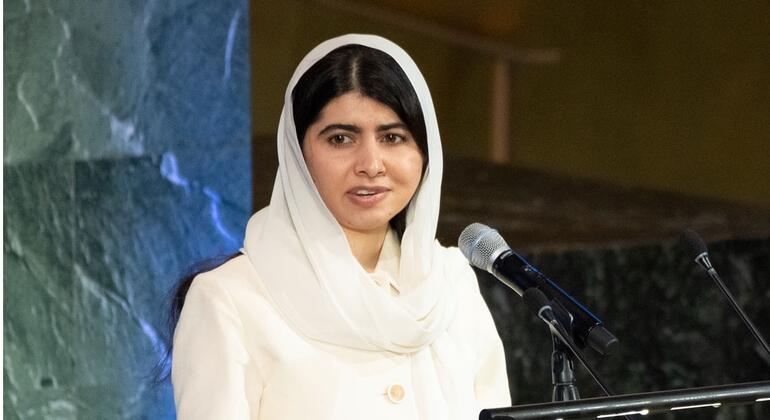
Nobel Peace Prize laureate Malala Yousafzai delivered a sobering address, warning that justice cannot be applied selectively.
“You will be hearing a lot this week about ‘access to justice,’” she told the audience. “But true justice does not defend the humanity of children in one place and ignore it in another.”
Pointing to conflicts and repression around the world, she spoke of girls in Iran, Gaza and Afghanistan and urged governments to confront what she described as systemic discrimination against Afghan women and girls.
“This is not culture. It is not religion,” she said. “It is a system of segregation and domination – we must call the regime in Afghanistan by its true name: gender apartheid.”
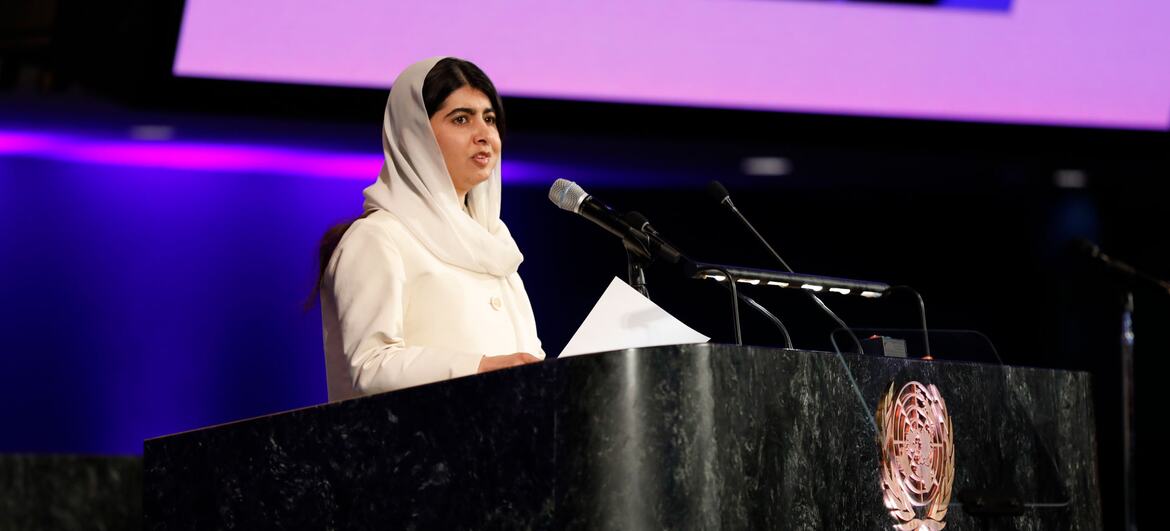
Nobel laureate and UN Messenger of Peace Malala Yousafzai, addresses the commemoration.
Girls everywhere are counting on us
The hall also heard from Sumbul Reha, a young Afghan student and musician who spoke about what it means to grow up in a place where girls’ voices are suppressed.
“I know what it means when a girl’s voice is silenced. I have lived it,” she said.
Despite the hardships faced by women and girls in Afghanistan and elsewhere, she expressed hope in the determination of young people.
“We are undaunted. We will not stop. We have hope,” she said, urging world leaders to defend girls’ right to education and women’s right to speak out.
“There are millions of girls who stand here in spirit with me – they are counting on all of us and they’re counting on all of you.”