BRUSSELS — Marking the International Day to End Impunity for Crimes against Journalists on November 2, 2026, Executive Vice-President Henna Virkkunen, EU High Representative for Foreign Affairs and Security Policy Kaja Kallas, and European Commissioner for Democracy, Justice and the Rule of Law Michael McGrath issued a joint statement demanding that all states protect media workers, investigate acts of violence, and hold perpetrators accountable.
The joint statement issued via the European External Action Service (EEAS) stresses that free, independent, and pluralistic reporting forms the heartbeat of democratic governance and civic accountability. Lawmakers reiterated that attacks on journalists directly undermine democratic institutions, warning that systemic impunity for crimes against media personnel empowers abusive regimes and criminal networks worldwide.
High Representative Kaja Kallas Highlights Freedom of Expression as Non-Negotiable
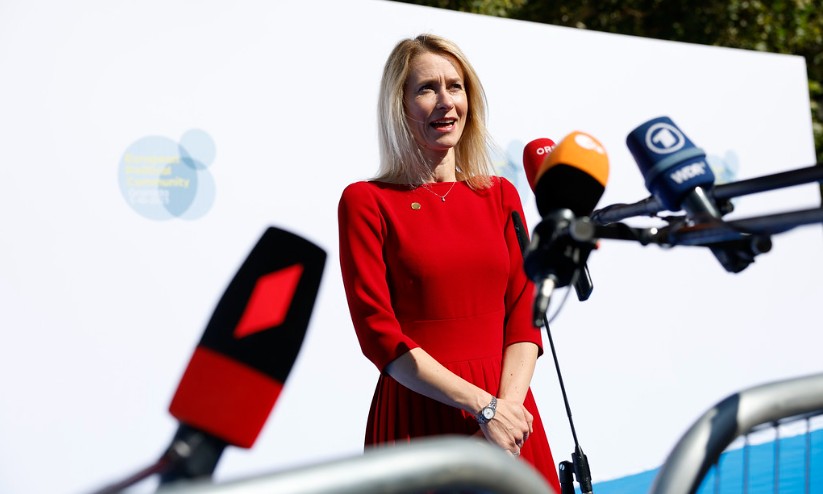
Reinforcing the European Union’s diplomatic posture, High Representative Kaja Kallas emphasized that access to media and freedom of expression are not optional privileges, but essential components of free societies.
Core Directives & Statements from EU Leadership
+-------------------------------------------------------------------------+
| KAJA KALLAS (HIGH REPRESENTATIVE):                                      |
| "Access to media, along with freedom of expression are not 'nice to     |
|  haves', they are fundamental human rights. A free press is the         |
|  heartbeat of democracy."                                               |
+-------------------------------------------------------------------------+
| EXECUTIVE VICE-PRESIDENT HENNA VIRKKUNEN & COMMISSIONER MICHAEL MCGRATH:|
| Emphasize the implementation of the European Media Freedom Act (EMFA)   |
| to protect editorial independence and shield journalists from digital   |
| surveillance and coercive state pressure.                               |
+-------------------------------------------------------------------------+
| EEAS JOINT DIPLOMATIC APPEAL:                                           |
| Calls on all UN member states to conduct impartial, independent, and    |
| effective investigations into all attacks against journalists.          |
+-------------------------------------------------------------------------+
Highlighting the growing dangers faced by reporters in conflict zones, investigative journalists, and women media professionals, Kallas reiterated that when a journalist is killed or silenced, society as a whole loses its access to truth and accountability.
Over 13,000 Journalists Supported Through EU Crisis Mechanism
As part of its global press freedom commitment, the EU revealed that its dedicated human rights mechanism, ProtectDefenders.EU, has delivered direct emergency assistance, relocation resources, and legal aid to nearly 13,000 journalists at risk across the globe since its inception in 2015.
EU Journalist Protection Metrics & International Data (2015–2026)
+-------------------------------------------------------------------------+
| TOTAL JOURNALISTS SUPPORTED: ~13,000 media workers at risk since 2015   |
| SUPPORT MECHANISM: ProtectDefenders.EU (EU HRD Emergency Framework)     |
| LEGAL STATUS UNDER IHL: Civilians protected under Geneva Conventions     |
| GLOBAL CONCERNS: Online harassment, unlawful surveillance, SLAPPs,     |
|                  transnational repression, and targeted violence.       |
| GLOBAL IMPUNITY RATE: ~85% of crimes against journalists unpunished     |
+-------------------------------------------------------------------------+
Despite state protection frameworks and international instruments, global press freedom monitors report persistent safety crises for media practitioners operating in conflict zones, investigative journalists uncovering corruption, and female journalists who face disproportionate levels of gender-based cyber-harassment and online intimidation.
The Legal Framework: Civilians Under International Humanitarian Law
In its diplomatic address, the European Union emphasized that International Humanitarian Law (IHL) explicitly classifies journalists operating in armed conflicts as civilians who must be protected at all times.
“Attacks on journalists are attacks on democracy,” the joint EU leadership declared. “Journalists must be able to report freely and safely. When they are attacked or killed, those responsible must be brought to justice. On this International Day to End Impunity for Crimes against Journalists, we call on all States to protect journalists and ensure accountability.”
Key Threats Targeting Journalists Worldwide
+-------------------------------------------------------------------------+
| PHYSICAL & WAR-ZONE THREATS: Targeted strikes, arbitrary detention, and|
|                              enforced disappearance in active conflicts.|
| DIGITAL SURVEILLANCE: Unlawful deployment of commercial spyware and     |
|                       targeted device exploitation by state actors.     |
| JUDICIAL HARASSMENT: Abusive lawsuits (SLAPPs) and misapplied anti-     |
|                      terrorism codes to criminalize coverage.           |
| TRANSNATIONAL REPRESSION: Cross-border intimidation and extradition      |
|                         threats targeting exiled reporters.             |
+-------------------------------------------------------------------------+
Two-Sided Perspectives on Media Safety and Judicial Accountability
The international campaign to end impunity highlights continuing debates surrounding national sovereignty, international legal enforcement, and platform accountability.
Perspectives on Combating Impunity and Protecting Journalists
+-------------------------------------------------------------------------+
| HUMAN RIGHTS MONITORS & PRESS FREEDOM ADVOCATES                         |
| * Call for mandatory, independent international investigations when     |
|   states fail to prosecute perpetrators of crimes against journalists.  |
| * Demand strict international sanctions against governments using       |
|   spyware or military force to silence investigative reporters.          |
+-------------------------------------------------------------------------+
| STATE REPRESENTATIVES & REGULATORY GOVERNMENTS                          |
| * Maintain that national law enforcement agencies hold exclusive        |
|   jurisdiction to conduct criminal investigations within sovereign borders.|
| * Assert that security measures and accreditation rules aim to preserve |
|   public order and protect national security standards.                 |
+-------------------------------------------------------------------------+
Media Freedom Advocates
Press freedom watchdogs—including Reporters Without Borders (RSF), the Committee to Protect Journalists (CPJ), and the International Federation of Journalists (IFJ)—argue that non-prosecution of violence against reporters creates a culture of lawlessness. Advocates contend that when states fail to investigate murders, assault, or arbitrary detentions, international legal tribunals and diplomatic bodies must intervene to enforce accountability.
Sovereign State Authorities
Government representatives in high-scrutiny jurisdictions contend that domestic judicial systems retain sole responsibility for criminal inquiries and public safety regulations. Official spokespersons frequently argue that statutory restrictions and accreditation enforcement reflect national security policies rather than targeted attempts to suppress journalistic freedom.
Institutional Progress and Legislative Protections
Within the bloc, European regulators highlighted ongoing structural implementations under the European Media Freedom Act (EMFA). The legislative framework establishes binding EU-wide safeguards against the unlawful surveillance of journalists, protects editorial independence, and prevents state interference in public and private media outlets.
As international observances continue worldwide, the EU leadership reaffirmed its political commitment to expand funding for ProtectDefenders.EU, urging sovereign nations to honor international treaties and guarantee that media professionals can work without fear of violence, coercion, or arbitrary detention.
Kaja Kallas EU High Representative for Foreign Affairs and Security Policy and Vice-President of the European Commission Flickr Picture by EU2023ES