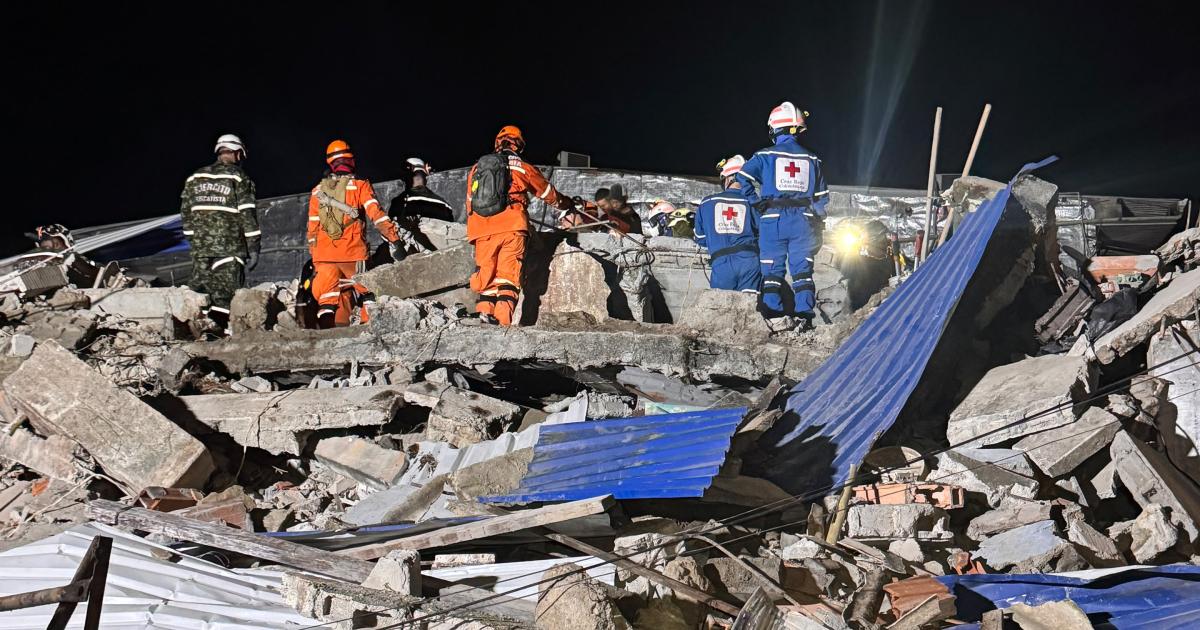
The European Union continues to mobilise assistance for Colombia following the devastating 7.4 magnitude earthquake. Sweden has offered 150 tents and 360 blankets, Germany is sending 3,000 kitchen sets and 2,500 water filters, while Luxembourg has offered 79 tents through the EU civil protection mechanism.
The Commission’s emergency response coordination centre is coordinating the European assistance and its delivery to Colombia. The Commission has also deployed a rapid response coordinator to Colombia to support the coordination of EU civil protection mechanism and humanitarian assistance on the ground.
The civil protection assistance complements the €2.1 million in emergency humanitarian funding announced by the European Commission on 12 August. EU humanitarian partners are providing health, water, sanitation and hygiene assistance, as well as shelter, food, protection and cash support to affected communities.
EU support was mobilised from the first hours following the earthquake. The Commission activated the Copernicus satellite mapping service to support rescue operations and provide initial damage assessments. The EU’s humanitarian partner, the German Red Cross, also immediately reallocated €100,000 from an EU-funded project to address the immediate needs of 2,500 affected families in Chocó and Valle del Cauca.
President of the European Commission, Ursula von der Leyen, said:
‘Europe’s heart is with the people of Colombia after the devastating earthquake. In moments of tragedy, solidarity means action. We are sending tents, water filters, food and other essential supplies to support communities in need. We stand with the Colombian people through this emergency and the recovery ahead.’
Commissioner for Preparedness and Crisis Management, Hadja Lahbib, said:
‘Colombia is facing immense loss, and Europe stands firmly with its people. From the moment the earthquake struck, we have been mobilising every tool at our disposal: humanitarian funding, satellite mapping, emergency shelter and expertise on the ground. This is European solidarity in action: countries coming together, across borders and oceans, to help people when they need it most.’
Background
When an emergency hits, any country can request assistance via the EU civil protection mechanism. An activation of the Mechanism triggers the emergency response coordination centre to mobilise assistance or expertise from European countries.
Operating 24/7, the Centre ensures rapid deployment of emergency support and acts as a coordination hub between all EU Member States, the 10 additional participating states, the affected country, and civil protection and humanitarian aid experts.