The United Nations Security Council should ensure that an international force remains in southern Lebanon to protect civilians and deter human rights abuses by the Israeli military and Hezbollah, Human Rights Watch said today.
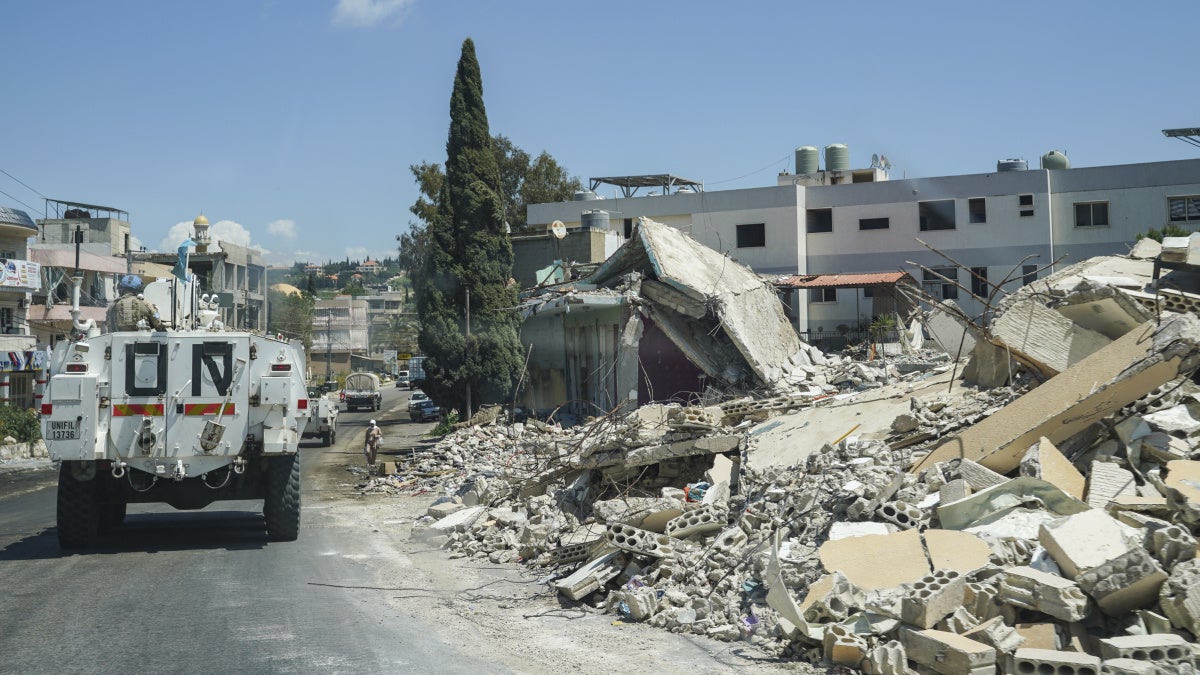
In August 2025, the Security Council unanimously decided to extend the mandate of the UN Interim Force in Lebanon (UNIFIL), which first deployed in 1978, one final time until the end of 2026, when it would begin a phased withdrawal. That decision came before the latest escalation of hostilities between Israel and Hezbollah in March 2026—and before Israeli forces displaced hundreds of thousands of civilians and occupied large swathes of southern Lebanon. Deliberate acts of displacement may amount to the war crime of forced displacement.
“Pulling the plug on UNIFIL without a robust international force in place would effectively abandon millions of Lebanese civilians to an uncertain and potentially disastrous fate,” said Louis Charbonneau, UN director at Human Rights Watch. “UN missions may not be a lasting solution, but the peacekeepers are a crucial deterrent against attacks on civilians and human rights abuses.”
The UN should delay UNIFIL’s departure and extend the mission’s mandate beyond December 31, 2026, until the security situation has improved sufficiently to consider further reducing the force, Human Rights Watch said. While the United States could block any Security Council adoption to extend UNIFIL’s presence, other council members support extending it and several UN and non-UN options have been proposed.
In accordance with Security Council Resolution 1701, adopted in August 2006 after 34 days of hostilities between Israel and Hezbollah, UNIFIL’s mandate includes supporting the Lebanese armed forces, monitoring the ceasefire, and reporting on violations along the “Blue Line” that divides Lebanon from Israel and the occupied Golan Heights. It also authorizes UNIFIL “to protect civilians under imminent threat of physical violence.”
The drawdown of UNIFIL is expected to take a year, based on the timeline in Resolution 2790 (2025). The resolution also says UNIFIL will be authorized “to contribute to the protection of civilians and the safe civilian-led delivery of humanitarian assistance” as it withdraws.
In August 2025, the US representative to the UN told Security Council members that the security situation in Lebanon had improved, claiming it was “radically different than just one year ago.” Since then, the security situation in southern Lebanon has dramatically worsened, Human Rights Watch said.
Despite the declaration of a ceasefire between Israel and Hezbollah on April 17, and the initiation of US-brokered talksbetween Israel and the Lebanese government, Hezbollah and the Israeli military have not ended their attacks. Israeli forces’ attacks harming Lebanese civilians and mass displacement have continued unabated. Since hostilities escalated on March 2, Israeli attacks have killed more than 4,333 people in Lebanon and wounded more than 12,250, according to Lebanon’s Ministry of Health.
The UN has also reported that UNIFIL personnel have been victims of deadly attacks during the latest hostilities.
The US and Israel have made clear that they oppose extending UNIFIL’s mandate past 2026, though as many as 14 out of the council’s 15 members would support delaying the removal of UNIFIL, diplomats told Human Rights Watch.
As a permanent Security Council member, the US could use its veto power to block any attempt to extend UNIFIL’s mandate or delay its termination.
Christina Markus Lassen, Denmark’s UN ambassador and holder of the council’s rotating presidency in August, said at a public meeting with civil society organizations that the council should revisit the decision to terminate UNIFIL’s mandate since it was made before the current escalation of hostilities in Lebanon.
In July, the permanent mission of Lebanon sent to council members a joint letter endorsed by 86 members of Lebanon’s parliament contending that in light of the country’s precarious security situation, UNIFIL should not only remain in southern Lebanon, but its capabilities should be expanded.
China’s UN envoy Fu Cong said in May said that the Security Council should revisit the decision to end UNIFIL’s mandate, noting that there was no real ceasefire in place.
Other options are being considered for an international presence in Lebanon. The August 2025 resolution called on UN Secretary-General Antonio Guterres to provide options for “the future of the implementation of resolution 1701 (2006) after the withdrawal of UNIFIL.”
In June, Guterres delivered a note to the council outlining what are essentially three variations of a single option—a small, medium, and larger sized peacekeeping force. Even the largest variation would be significantly smaller than UNIFIL. Guterres did not raise the possibility of simply delaying the withdrawal of UNIFIL.
In June, French President Emmanuel Macron and Italian Prime Minister Giorgia Meloni announced that they would assemble a multinational coalition to take over from UNIFIL after it departs. While details are scarce, France, Italy, and Spain are all major troop contributors to UNIFIL, which currently has nearly 7,500 peacekeepers from 47 countries. This coalition would presumably not be a UN mission, though it could seek UN authorization as have recent missions in Haiti.
Türkiye has also suggested it could support the Lebanese armed forces after UNIFIL’s departure. However, both the Turkish armed forces and the Lebanese military have been implicated in abuses in Syria.
The Lebanese government and Security Council members should ensure that protection of civilians is a priority for any future international presence in Lebanon, Human Rights Watch said. Such a force should be equipped to monitor and publicly report on human rights abuses and violations of international humanitarian law by all parties to the conflict, and support efforts to hold those responsible to account.
“The Security Council should not leave Lebanese civilians unprotected,” Charbonneau said. “The council will share much of the blame if UNIFIL’s departure creates a security vacuum that opens the door to further abuses.”